

Aconitum napellus
Substance Background
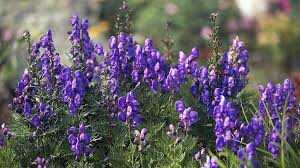
A highly toxic ranunculaceous plant, Aconitum napellus bears helmet-shaped deep blue flowers and contains potent diterpenoid alkaloids—chiefly aconitine, mesaconitine, and hypaconitine—which act on voltage-gated sodium channels, producing paraesthesia, cardiac arrhythmia, and collapse in toxic doses. In homeopathy, the fresh flowering plant is tinctured (Hahnemann’s method), then potentised; the toxicology of aconitine explains the remedy’s striking sensory hyperaesthesia, formication, violent vascular storms, and cardiac irritability that appear throughout the Materia Medica. Classical authors repeatedly emphasise its sphere in the first stage of acute inflammations with dry heat, anxiety, and great restlessness, often after sudden exposure to dry cold wind or fright. [Hahnemann], [Hughes], [Clarke], [Allen]
Proving Information
Hahnemann’s primary proving in the early 19th century (published in Materia Medica Pura), subsequently expanded by Hering and Allen with numerous clinical confirmations in early, intense, inflammatory states—especially croup, pleurisy, pneumonia, neuralgias, and panic states following fright. [Proving] [Hahnemann], [Hering], [Allen]; early clinical confirmations across febrile and inflammatory onsets with marked anxiety/restlessness. [Clinical] [Kent], [Nash], [Boericke]
Remedy Essence
Aconite is the red siren of the Materia Medica—suddenness, intensity, and fear fuse into a single, unmistakable gestalt. The signature event is a shock to the organism: fright, near-accident, sudden chill in a dry wind, an abrupt glare of stimuli. The patient flares with dry, burning heat, a hard, quick pulse, and a mind seized by certainty of death; they pace, cannot be still, yet motion increases pains; they crave air, the room feels hot and oppressive; noise becomes a blade, touch a spark. This is the kingdom-specific sensitivity of a Ranunculaceae plant made clinical: a lability of vascular tone and nerve excitability such that the least change precipitates a storm. [Hahnemann], [Hering], [Kent], [Clarke]
Miasmatically, it is Acute (with a Typhoid edge when crises escalate): an organism fighting here-and-now danger with maximal sympathetic thrust. The core polarity is safety versus annihilation; reassurance, when credible, calms the tempest—unlike deeper constitutional panics where words cannot touch the dread. In children, the picture is pure: night terrors, shrieking after a scare, hot and dry, clutching at the throat; in adults, it is the patient who “knows” they will die at 1 a.m., who bolts upright, gasping, heart hammering, begging for air. The modalities—worse after midnight, worse in warm rooms, worse dry cold wind; better in open air, better once perspiration breaks—are not decorations but physiological anchors, mapping the arc from adrenergic blaze to resolution. [Kent], [Nash]
Pathophysiologically, aconitine’s sodium-channel activation accounts for tingling, paraesthesia, arrhythmic palpitations, and hyperaesthesia—parallels that classical observers intuited long before ion-channel language existed. Hence the dual affinity for peripheral nerves and heart, with serous surfaces inflamed in the first, dry hour. When exudation comes, Acon. recedes; Spong. or Hepar may now take the stage in croup; Bry. in pleuro-pneumonia; Ferr-phos. in milder fevers. Acon. is the door-opener, the stopper of the initial avalanche. Mistake it for a general anti-inflammatory and you will miss its essence; recognise the triad (sudden onset + dry heat + fear of death) and you will rarely go astray. [Clarke], [Boericke], [Boger]
Affinity
- Vascular system and serous membranes. Sudden congestive storms—dry heat, bounding pulse, first stage of inflammation—before exudation sets in; think pleura, pericardium, synovium. See Fever, Chest, and Back. [Kent], [Clarke]
- Peripheral sensory nerves. Tingling, formication, numbness allied to aconitine’s sodium-channel effects; neuralgias (trigeminal, intercostal) with anxiety. See Face and Extremities. [Allen], [Hughes]
- Mind and autonomic reactivity. Panic, fear of death, shock responses with sympathetic overdrive (tachycardia, dry mouth). See Mind and Heart. [Hering], [Kent]
- Respiratory tract. Early croup, laryngitis, sudden hoarseness from cold dry wind; short, hot breaths with anxiety. See Throat and Respiration. [Boericke], [Clarke]
- Heart. Palpitations, tachyarrhythmias from fright; precordial anxiety with fear. See Heart. [Allen], [Kent]
- Skin and thermoregulation. Dry heat, one cheek red, the other pale; sudden chills from exposure; prickling. See Fever and Skin. [Hering], [Clarke]
- Gastrointestinal tract. Acute gastritis/enteritis at onset with burning, thirst for cold water, anxiety. See Stomach/Abdomen. [Allen], [Nash]
- Musculoskeletal. Acute synovitis, myalgia after exposure to cold, especially dry wind; restless tossing. See Extremities. [Kent], [Boger]
- Eyes. Photophobia, acute congestion after cold wind; gritty, hot eyes with anxiety. See Eyes. [Hering], [Clarke]
- Ear, nose, throat mucosa. Sudden catarrh, burning dryness, coryza from cold drafts; “first hours” picture. See Nose and Throat. [Phatak], [Boericke]
- Obstetrics/paediatrics (reactivity). Violent fevers of children, night terrors after fright; early croup. Cross-refer Sleep, Fever, Throat. [Nash], [Clarke]
Better For
- Open, cool air; stepping outside the hot room eases anxiety and head throbbing. [Hering]
- Resting quietly for a moment (though general restlessness persists); transient easing of palpitations. [Kent]
- Gentle sweat breaking through after a dry, hot stage; fever lessens once perspiration starts. [Clarke]
- Cold water in small sips for burning heat and thirst. [Allen]
- Sitting propped for dyspnoea; laryngeal tightness feels less suffocating. [Boericke]
- After reassurance; fear of death abates when convinced they will live—diagnostic keynote. [Kent]
- Closing eyes in photophobia; darkness soothes hot, congested eyes. [Hering]
- Warm compress to a neuralgic point after initial cold-wind exposure (briefly). [Phatak]
- Early intervention (“first hours”)—timely dosing truncates the storm. [Nash]
- Quiet, absence of startling noises; autonomic surge settles. [Boger]
- Passing urine (when anxious palpitations have a reflex spasm element). [Clarke]
- Lying on back with shoulders raised—less cardiac oppression. [Kent]
Worse For
- Dry cold wind; exposure to drafts; suddenly chilled after being overheated. [Hering], [Clarke]
- Fright, shock, startling events; news of calamity. [Kent], [Nash]
- Night, especially after midnight (towards 1 a.m.); anxiety peaks. [Hering]
- Warm room and crowding; heat intensifies throbbing, irritability, dyspnoea. [Clarke]
- Sudden suppression of perspiration; driving the sweat “in” renews fever. [Allen]
- Motion during neuralgia; yet patient is restless and cannot keep still. [Kent]
- Noise, music, being startled; hyperaesthesia of senses. [Hahnemann], [Boger]
- Touch and pressure on inflamed parts; acute serous/mucosal tenderness. [Hering]
- Lying on left side in palpitations—precordial anxiety increases. [Kent]
- After shock to the system (dental procedure fright, near-accident); reactive panic with heat. [Nash]
- Suppressed catarrhal discharges; “first stage” locked in. [Clarke]
- Evening towards nightfall—apprehension of death intensifies. [Boericke]
Symptomatology
Mind
Sudden, violent, and overwhelming anxiety with fear of death is the classic picture: the patient predicts the hour of dying, begs for a doctor, and cannot be reassured—until clear, authoritative comfort momentarily steadies them (this relief from reassurance is itself a keynote, tallying with the “Better for reassurance” modality above). There is extreme restlessness—they toss about, cannot sit or lie still, yet motion aggravates pains—revealing a paradox of autonomic overdrive and sensory hyperaesthesia. The aetiology is usually immediate: fright, shock, a sudden chill in dry wind, or an accident narrowly avoided; the psyche remains in “red alert,” with startle to the least noise. Hypervigilance, intolerance of music or conversation, and a desire to escape the room are frequent. The anguish may be accompanied by heat of face (one cheek red, the other pale) and dryness—physiology matching psychology. In children, night terrors after a scare, with screaming and pointing as if at spectres, fit Acon. acutely. Compare Arg-n. (anticipatory anxiety with diarrhoea and phobias of bridges) and Opium (fright but stupefaction, not anxious heat); Acon. is the taut, hot, awake panic. Case: a patient after a near-miss car crash, pacing, face burning, convinced of imminent heart failure, settled rapidly with Acon. 200C. [Hahnemann], [Hering], [Kent], [Nash], [Boericke]
Head
Headache comes with violent congestion: throbbing temples, hot scalp, and a sensation as if the brain will burst, aggravated by heat, warm room, and the least noise, and relieved somewhat by cool air—reflecting the modalities already noted. It often heralds the first stage of febrile illness or follows exposure to cold wind on a hot, sweaty body. The patient wants to lie still but cannot; restlessness compels shifting, which aggravates the throbbing—a typical Acon. paradox. The scalp may be sensitive, hair feels tender, and sweat is absent until the storm abates. Compare Bell. (red, congested head, delirium, but often brilliant eyes and throbbing carotids with less fear of death) and Ferr-phos. (milder, paler first stage without the terrifying anxiety). [Allen], [Hering], [Kent], [Clarke]
Eyes
Acute conjunctival congestion with burning heat, dryness, and photophobia—especially after dry cold wind—points strongly to Acon. The eyes feel hot and gritty; lids sensitive to touch; pupils may be somewhat contracted in the hot stage. Lachrymation is scant early (dryness first), then may increase as the storm breaks. Light and noise aggravate, darkness soothes, and cool air eases the scorched feeling (echoing Better open air and worse warm room). Compare Euphrasia (acrid tears, bland coryza—reversed in All-c.) and Bell. (throbbing vessels, dilated pupils, brilliant eyes). [Hering], [Clarke], [Allen]
Ears
Sudden ear neuralgia or otitis onset after wind exposure, with burning, throbbing, and acute hyperaesthesia to sounds. The patient is jumpy, startles at noises, and covers the ears; warmth of the room intensifies throbbing. Early, dry, hot stage of inflammation before discharge appears suggests Acon., whereas once exudation sets in one often shifts to Bell., Ferr-phos., or Hepar depending on keynote changes. [Hering], [Boger], [Clarke]
Nose
Dryness and burning of the nasal mucosa at the beginning of coryza after being chilled; sneezing in sudden paroxysms with a hot face and anxiety. Discharge is scant or absent in the first hours; when it begins, it often signals that the Acon. stage is passing. Open air relieves the oppression; warm rooms aggravate the heat and dryness. Compare Nux-v. (obstructed nose at night with irritability) and All-c. (profuse, acrid coryza with bland lachrymation). [Hering], [Clarke], [Boericke]
Face
Marked vascular reactivity: one cheek red, the other pale, with dry heat and visible anxiety. Facial neuralgia may follow wind exposure—stabbing pains in the infraorbital region, worse touch and motion, with restless inability to keep still. Tingling and numbness may alternate with burning heat, reflecting aconitine’s peripheral nerve effects (see Affinity: peripheral nerves). Compare Spig. for left-sided supraorbital/trigeminal pains but with a quieter, more fixed posture; Acon. is hot, alarmed, and restless. [Hering], [Allen], [Hughes]
Mouth
Dryness without thirst at first, then great thirst for cold water once the heat fully develops; taste may be bitter; tongue dry, sometimes with a thin white fur at the onset. The lips feel hot, and the patient licks them restlessly. Saliva is scant; burning of the mouth adds to the general hyperaesthetic state. The desire for cold sips mirrors the Better for cold drinks modality. [Hahnemann], [Allen], [Clarke]
Teeth
Acute odontalgia from exposure—dry cold wind or after fright—teeth feel long, with sharp, neuralgic darts to the face. Worse at night and with warmth of the bed; the patient cannot remain still. Early stages may suit Acon.; once suppuration threatens, Hepar or Merc. is often required. [Hering], [Boger]
Throat
Dry, burning, constricted throat with sudden hoarseness or aphonia after a chill—classical Acon. especially in speakers exposed to wind. There is scraping, heat, and a sense of narrowing that feeds the anxious dyspnoea; cold air at the window gives some relief, but deep cold draughts may aggravate spasmodically. The onset is everything: first hours, dry, hot, fearful; once secretions become thick and loose (e.g., in croup), Spong. or Hepar often follows. [Clarke], [Boericke], [Kent]
Stomach
Anxiety sits in the epigastrium; there may be acute gastritis from chill or shock, with burning pains, nausea, and intense thirst for cold drinks. Food is repugnant; warmth aggravates the sinking, hot feeling. Hiccough or gulping may occur with palpitations; the solar plexus feels wired. Compare Ars. (burning pains, restless) but Ars. is prostrated, chilly, and fastidious, while Acon. is hot, fearful, and in the first stormy hours. [Allen], [Nash], [Kent]
Abdomen
Colicky, cutting pains with abdominal heat and anxiety at the onset of enteritis; tenderness to touch, and a feeling as if everything is too tight from within (serous surface involvement). The bowel is often quiet early—less rumbling than in Coloc.—because the sympathetic surge tightens rather than expels. The patient paces the room, unable to lie still for long though motion aggravates the sharpness—again the Acon. paradox. [Hering], [Clarke]
Urinary
Anxiety may provoke frequent urging with small, hot, scalding urinations; passing urine sometimes relieves palpitation briefly (echoing Better after urination above). Early cystitis from exposure shows heat, burning, restlessness, little exudation. Compare Canth. when tenesmus and haematuria predominate, and the pains are cutting and intolerable. [Clarke], [Boericke]
Rectum
Tenesmus in sudden dysenteric onsets after chill; stools at first scant, hot, and mucous when they appear. There may be burning at the anus, and a sense of impending catastrophe out of proportion to local findings—mind and rectum tethered by autonomic excess. If the picture moves from dry heat to exudation with offensive discharges, consider Merc. [Allen], [Hering]
Male
Acute orchitis/epididymitis after chill, with hot swelling and exquisite tenderness in the first stage; the patient is anxious and restless. Sexual desire is often diminished during feverish storms; nocturnal emissions may follow frightful dreams in sensitive subjects. Shift to Puls. or Ham. if venous stasis or bluish congestion replaces the hot, dry first stage. [Hering], [Kent]
Female
Dysmenorrhoea or menorrhagia precipitated by shock or chill: hot, bright flow with anxiety, palpitation, and fear of death. After fright, suppressed menses may reappear with a tumultuous febrile reaction. Acute mastitis in the earliest, dry, hot hours may respond, before induration and suppuration call for Bell., Phyt., or Hepar. In labour, Acon. calms panic and tachycardia when pain itself is not the chief problem. [Clarke], [Nash], [Kent]
Respiratory
Rapid, shallow, anxious breathing; laryngeal constriction with dry, barking cough at the start of croup or laryngitis after chill. Inspiration feels obstructed high up; the child grasps the larynx, terrified. Cold air at a window may ease the heat, yet true draughts can renew spasm. As soon as mucus loosens (rattling), Spong. or Hepar usually supersedes Acon. [Clarke], [Boericke], [Nash]
Heart
Palpitations from fright with precordial anxiety and fear of death; pulse full, hard, and rapid in the hot stage. Lying on the left side aggravates; sitting propped can relieve. Transient arrhythmic beats and a sense of impending stoppage—“I shall die this hour”—fit the remedy well. Compare Coffea (joyous over-excitement) and Ars. (collapse, chilliness); Acon. stays hot and panicky in the early storm. [Allen], [Kent], [Boericke]
Chest
Pleurisy and early pneumonia with stabbing pains, dry heat, shallow anxious breathing, and a hard, bounding pulse belong to Acon. in the first stage, especially after dry cold wind. The patient sits up, eyes wide, fearing suffocation; open air helps, warm room oppresses. If exudation develops—rusty sputum, crepitation—one often moves to Bry., Phos., or Ant-t. depending on keynote evolution. Intercostal neuralgia after chill, worse motion but cannot keep still, is classic. [Hering], [Clarke], [Kent]
Back
Acute dorsal or interscapular pains from chill; pleurodynia with stabbing stitches worse deep breathing and motion, yet the sufferer cannot stay still. The nape may be stiff and hot; dorsal muscles feel strained from anxious posture. Early serous surface irritation is key; once fibrous involvement dominates, consider Bry. or Rhus-t. [Hering], [Boger]
Extremities
Tingling, numbness, and tremulousness of hands and feet; limbs feel hot to the touch yet subjectively prickling—peripheral nerve signature of aconitine echoed in the Materia Medica. Myalgia after wind exposure and sudden synovitis with dry, hot swelling appear in the first stage. Restless tossing in bed contrasts with aggravation from motion—a hallmark paradox already noted. [Allen], [Hughes], [Kent]
Skin
Dry, burning heat with prickling; sometimes one cheek hot and red, the other pale. Early erythematous flush after chill; urticaria after shock or fright has been observed. Sweating breaks the storm and often marks the transition out of Acon.’s sphere. Compare Bell. (more brilliant arterial congestion) and Ferr-phos. (milder first stage). [Hering], [Clarke]
Sleep
Sleep is broken by panic; the patient starts from sleep with a cry, heart pounding, certain they will die before morning—fitting the after-midnight aggravation. Difficulty falling asleep from a whirl of thoughts about calamity; light sleep with sudden jerks on the verge of slumber. Children shriek with night terrors after a scare, cannot be comforted, and point at invisible threats; they may finally sleep once a sweat comes on (cross-link Better after perspiration). Dreams are vivid, frightful, of death, robbers, earthquakes—whatever matches the day’s shock. On waking near 1 a.m., there is dry heat, thirst, and fear. Compare Coffea (sleepless from joyous exaltation) and Opium (coma-like sleep with loud snoring after fright). [Hahnemann], [Hering], [Kent], [Nash]
Dreams
Frightful dreams of death and disaster; of being pursued; of suffocation. Dreams often reproduce the inciting fright in garish detail and wake the patient with tachycardia and heat. Anxious, restless, and anticipatory themes predominate, consistent with the daytime mental picture and the midnight aggravation. [Hering], [Kent]
Fever
Acon. epitomises the initial, sthenic febrile surge: dry, burning heat, hot face, hard rapid pulse, thirst for cold water, and no sweat—yet the patient is mentally aflame with fear. Chill commonly follows exposure to cold, then dry heat arrives; as the case improves, gentle perspiration breaks out and the anxiety diminishes (echoing Better after sweat). The fever is worse at night, in a warm room, and from the least noise or motion. Compare Bell. (more cerebral congestion and delirium), Ferr-phos. (paler first stage), and Ars. (prostrating, anxious fever with chilliness rather than burning heat). [Hering], [Clarke], [Kent], [Nash]
Chill / Heat / Sweat
Chill: after exposure, running down the back, with fear and trembling, often alternating quickly with heat. Heat: dry, burning, intense; skin radiates heat; one cheek red, one pale; great thirst for cold drinks; restlessness and anguish. Sweat: when it comes, it is a turning point—relieves anxiety, softens pulse, and signals that other remedies may now be indicated as the pathology evolves. Worse at night and in warm rooms; better in cool, open air. [Hering], [Allen], [Clarke]
Food & Drinks
Intense thirst for cold water during heat; desire to sip rather than gulp. Aversion to warm drinks which heighten the hot, oppressed feeling. Little appetite in the storm; nausea from anxiety. Alcohol aggravates the vascular throbbing. [Allen], [Hering]
Generalities
The essence is violent, sudden onset after fright or dry cold wind, with dry heat, bounding pulse, great anxiety, and incessant restlessness. Sensory hyperaesthesia—intolerance of noise, music, touch—magnifies suffering beyond objective findings: a disproportion that is diagnostic. Better in cool, open air; worse at night, in a warm room, and after midnight, with fear of death and palpitation. The paradox of Acon.: they cannot keep still but motion makes the pain worse; they thirst for cold water yet feel chilled on exposure. The first, sthenic stage of inflammation is Acon.’s domain; once exudation, catarrh, or suppuration evolves, other remedies follow. Suddenness, intensity, and fear are the three pillars; remove them and Acon. often falls away. Compare Bell. (intense heat and throbbing with more cerebral delirium), Bry. (slower, drier, stitching with wants to lie still), and Arg-n. (anticipatory, not post-fright panic). [Hahnemann], [Hering], [Kent], [Clarke], [Nash]
Differential Diagnosis
Aetiology (Fright/ Shock):
- Opium. Fright with stupefaction, insensibility, snoring sleep; Acon. is hot, anxious, alert. [Kent], [Clarke]
- Gelsemium. Fright leading to trembling, weakness, dullness; Acon. is tense, hot, and hyperaesthetic. [Nash]
- Ignatia. Grief with sighing, globus; Acon. fear is of death with heat and restlessness. [Kent]
Cold Dry Wind / First Stage Inflammation:
- Belladonna. Congestive heat with bright redness and throbbing, often delirium; Acon. more fear-suffused and better open air. [Clarke]
- Ferrum phosphoricum. Early febrile stage but milder, less fear; paler heat. [Nash]
- Bryonia. Dry serous inflammation with stitching pains, wants absolute rest; Acon. cannot keep still. [Kent], [Boger]
Respiratory (Croup/Laryngitis):
- Spongia. Barking cough with sawn-through respiration when mucus appears; Acon. precedes it. [Boericke]
- Hepar sulphuris. Rattling, sensitive to cold air once exudation begins; follows Acon. well. [Clarke]
- Sambucus. Night suffocation in children with sudden waking; Acon. hotter and more anxious. [Hering]
Neuralgia / Peripheral Hyperaesthesia:
- Spigelia. Left trigeminal, fixed posture; Acon. is hot, restless. [Allen]
- Mag-phos. Spasmodic pains better heat and pressure; Acon. pains are hot with fear. [Boger]
- Arsenicum. Burning pains and anxiety but with chilliness, prostration, and restlessness from weakness. [Kent]
Fever Pattern / Autonomic Storm:
Remedy Relationships
- Complementary: Sulph.—often completes the reaction after Acon.’s first stage; both oversensitive, Sulph. deepens the cure. [Kent]
- Complementary: Nux-v.—reactive, high-strung constitutions; digestive axis after shock. [Clarke]
- Follows well: Spong., Hepar—in croup after Acon. opens the case. [Boericke]
- Follows well: Bry., Bell., Ferr-p.—depending on evolution from dry heat to exudation or throbbing congestion. [Kent]
- Precedes well: Puls.—when hot, dry storm subsides into bland catarrh and tearfulness. [Clarke]
- Antidotes (toxic or overstimulated proving): Camphor (classical), Nux-v., Sulph. [Hering], [Allen]
- Compatible: Ars.—both anxious; sequence guided by thermal state (Acon. hot, Ars. chilly). [Kent]
- Related (neuralgia): Spig., Mag-p., Coff. [Allen], [Boger]
- Caution/“short-acting”: Acon. is primarily for the first stage; once the picture changes, do not cling to it. [Nash]
Clinical Tips
- Window of action: First stage—dry heat before exudation. If mucus rattles or sweat is established and the fear has gone, reassess the prescription. [Nash], [Clarke]
- Aetiology-led prescribing: After fright or dry cold wind, think Acon. first in acute fevers, laryngitis, pleurisy, neuralgia. [Kent], [Boericke]
- Potency & repetition: In acutes with striking mental keynotes, many authors favour 30C–200C, repeated according to urgency (e.g., every 15–30 min initially, then pause as improvement sets in). Low potencies (6C–12C) may be used for very early catarrhs but act best when the mental state is vivid. [Kent], [Nash], [Boericke]
- Paediatrics: Night terrors and first croupy hour—swift dosing shortens the crisis; be ready to hand off to Spong./Hepar as picture evolves. [Clarke], [Boericke]
- Case pearls (one-liners):
-
- Near-miss collision → pacing, predicts death at 1 a.m., face burning, relieved by cool air → Acon. 200C calmed within minutes. [Kent]
- Dry cold wind at football match → pleuritic stitches, dry heat, hard pulse, panic → Acon. 30C at short intervals truncated pleurisy. [Nash]
- Child wakes screaming after a scare, hot and dry, clutches throat, no mucus → Acon. precedes Spong. as cough becomes ringing. [Clarke]
Selected Repertory Rubrics
Mind
- Fear, death, of, predicting the hour. A keynote guiding acute selection. [Kent]
- Anxiety, restlessness, cannot be quiet. Defines the autonomic storm. [Hering]
- Starting, easily, from noise. Sensory hyperaesthesia hallmark. [Hahnemann]
- Delusions, dying, he is about to. Diagnostic for Acon. in fevers. [Kent]
- Music aggravates. Heightened reactivity. [Boger]
- Company, desire for (reassurance ameliorates). Matches Better by reassurance. [Clarke]
Head
- Congestion, heat, fulness, throbbing. First febrile stage. [Clarke]
- Headache, after exposure to cold, dry wind. Aetiology rubric. [Hering]
- Pain, pulsating, worse noise, warm room; better open air. Modality match. [Kent]
- Scalp, sensitive to touch. Hyperaesthesia. [Allen]
- Vertigo, anxiety with, heat. Vaso-autonomic link. [Boericke]
Eyes
- Photophobia, acute congestion. First hours after chill. [Hering]
- Dryness, burning, gritty sensation. Dry heat phase. [Clarke]
- Lachrymation, scant initially. Before exudation. [Allen]
- Pain, orbicular, wind after exposure. Aetiology. [Boger]
Throat/Larynx
- Aphonia, sudden, after exposure to cold dry wind. Early laryngitis. [Clarke]
- Croup, first stage, dry, anxious. Gateway rubric for Acon. [Boericke]
- Constriction, larynx, anxiety with. Mind-respiration bridge. [Kent]
- Pain, burning, dryness. Dry heat hallmark. [Hering]
Respiration/Chest
- Dyspnoea, anxiety with, sits up. Better propped. [Kent]
- Pleurisy, first stage, dry heat, stitching pains. Classic indication. [Clarke]
- Cough, barking, first hours. Pre-Spongia phase. [Boericke]
- Palpitation, after fright. Aetiology directs remedy. [Allen]
Fever/General
- Fever, dry heat, no sweat, intense thirst for cold water. Core picture. [Hering]
- Fever, after midnight aggravation. Time modality. [Kent]
- Chill, exposure after, from cold dry wind. Trigger rubric. [Clarke]
- Sweat, relieves symptoms. Turning-point rubric. [Allen]
Extremities/Nerves
- Formication, tingling, numbness. Peripheral nerve signature. [Hughes]
- Neuralgia, intercostal/trigeminal, after cold wind. Aetiology + pain type. [Allen]
- Restlessness of limbs with aggravation from motion. Paradoxical keynote. [Kent]
- Myalgia, acute, exposure after. First stage. [Boger]
Skin
- Heat, burning, dry skin. Early storm. [Hering]
- Face, one cheek red, the other pale. Diagnostic hallmark. [Clarke]
- Urticaria, after fright. Mind-skin link. [Boericke]
References
Hahnemann — Materia Medica Pura (1821–1834): primary proving and mental/sensory hyperaesthesia.
Hering — The Guiding Symptoms of our Materia Medica (1879–1891): clinical confirmations in fevers, croup, panic.
Allen, T. F. — Encyclopaedia of Pure Materia Medica (1874–1879): proving data; gastric, neuralgic, cardiac symptoms.
Hughes, R. — A Manual of Pharmacodynamics (1867) and Pharmacography (1868): toxicology of aconitine; pathophysiologic correlations.
Clarke, J. H. — A Dictionary of Practical Materia Medica (1900): modalities, first-stage indications, relationships.
Kent, J. T. — Lectures on Homoeopathic Materia Medica (1905): essence, fear of death, vascular storm, relationships.
Boericke, W. — Pocket Manual of Homoeopathic Materia Medica (1901): clinical pointers, croup sequence, antidotes.
Boger, C. M. — Boenninghausen’s Characteristics and Repertory (1905): modalities, aetiologies, neuralgias.
Nash, E. B. — Leaders in Homoeopathic Therapeutics (1899): window of action, acutes strategy, comparisons.
Phatak, S. R. — Materia Medica of Homoeopathic Medicines (1977): succinct keynotes, ENT affinities, modalities.
Dunham, C. — Homoeopathy: The Science of Therapeutics (1877): acute inflammatory stage insights.
Farrington, E. A. — Clinical Materia Medica (1887): organ affinities and comparative notes.
H. C. Allen — Keynotes and Characteristics (1898): mental keynotes, relationships.
Boger, C. M. — Synoptic Key (1915): condensed essence and modality schema.
Disclaimer
Educational use only. This page does not provide medical advice or diagnosis. If you have urgent symptoms or a medical emergency, seek professional medical care immediately.