
Spongia tosta
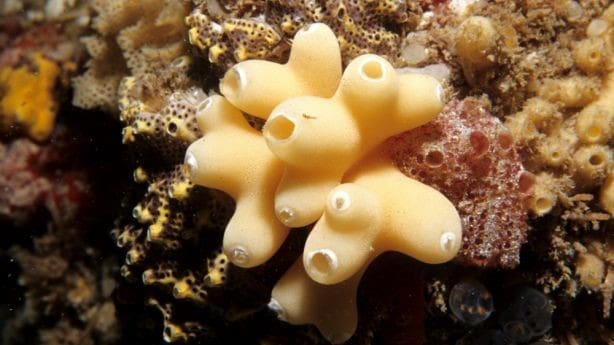
Substance Background
Prepared from the roasted marine sponge, rich in iodine and bromine compounds, calcareous spicules and albuminoid matter; roasting (“tosta”) modifies albumen and liberates iodine/bromine fumes, then triturated/tinctured for homoeopathic use. Traditional use of sponge ash for goitre and glandular swellings antedates homoeopathy; toxicologic/physiologic effects of iodine–bromine on thyroid and mucosae give a natural rationale for its laryngo-tracheal, thyroid and cardiac sphere: dryness, spasm, irritable mucosa, vascular reactivity, and glandular induration [Hughes], [Clarke]. Spong. stands as the middle croup remedy—between Acon. (hot, dry storm) and Hepar (moist, rattling, hypersensitive)—with the classic “sawing through wood” respiration, excruciating laryngeal dryness (as if air passed through a dry sponge), and suffocative night wakings [Hahnemann], [Hering], [Boericke].
Proving Information
Primary data from Hahnemann’s school and compiled by Hering/Allen: [Proving] dryness and rawness of larynx/trachea, barking cough, crowing inspiration, hoarseness/aphonia, night suffocation, anxiety, palpitation, and glandular tenderness; [Toxicology] and [Clinical] experience enlarge the heart/thyroid/testicular spheres (valvular disease with loud murmurs and palpitation; goitre; orchitis after mumps) [Hahnemann], [Hering], [Allen], [Clarke], [Boericke], [Farrington]. The croup chronology—Acon. → Spong. → Hepar—is repeatedly confirmed at the bedside [Boger], [Kent].
Remedy Essence
Spong. is the essence of dry, crowing laryngeal spasm with iodic glandular colouring. The core polarity is Warmth & Lubrication vs. Cold & Dryness. The organism reacts to cold inspired air and night’s first sleep with laryngeal closure and saw-like inspiration; it rescues itself by sitting up, warming the airway, and lubricating with warm sips. This is not the flaming terror of Acon., nor the rattling sensitivity of Hepar; it is a mid-stage dryness—harsh, wooden, crowing—with voice failure and thyroid throbbing that can be heard as much as felt [Hering], [Farrington], [Boger]. The kingdom signature (animal—Porifera) and iodine/bromine content illuminate the thyroid–larynx–heart triangle: goitre with choking, valvular roughness with laryngeal reflex cough, and dry tracheal mucosa that insists on warmth.
Miasmatically sycotic, Spong. builds tissue (goitre, indurations) and produces spasm over secretion. The pace is nocturnal, the reactivity high under triggers (cold air, inspiration, speech), the thermal state warm-seeking. Its modalities are the clinical compass: better warm drinks/room, sitting up, gentle pressure; worse before midnight, inspiration, cold air, talking, lying. Distinguish it from Samb. (silent closure with sweat), Dros. (deep paroxysms/gagging), Brom. (membranes/cyanosis, worse warm room), Phos. (burning, haemorrhagic, craves cold), Caust. (voice better cold drinks), and in croup from Acon. (fiery onset) and Hepar (rattling sequel). In heart cases, the laryngeal colour and thyroid–carotid throbbing steer you to Spong. rather than Digitalis/Cactus/Spigelia. Cure is tracked by a reproducible arc: first sleep unbroken, sawing diminishes, voice holds, lying tolerated, thyroid quiet. Practically: when a parent says, “He wakes barking, crowing, and it stops the moment he sips something warm,” you are in Spong. territory. [Hering], [Clarke], [Boger], [Farrington], [Kent], [Boericke], [Phatak], [Tyler].
Affinity
- Larynx & Trachea — extreme dryness (“as if a plug”), saw-like, barking cough, crowing inspiration, nightly suffocative paroxysms; pain and fear on inspiration (see Throat/Respiration/Sleep). [Hering], [Kent], [Clarke].
- Thyroid & Cervical Glands — goitre, throbbing, choking, sensitive neck; iodic–bromic glandular reactivity; hyper/hypo pictures by alternation (see Neck/Face/Generalities). [Clarke], [Hughes], [Boericke].
- Heart & Valves — palpitation, angina, loud valvular murmurs, fear of suffocation, dyspnoea worse lying, better sitting up; reflex cough from cardiac irritation (see Heart/Chest/Respiration). [Farrington], [Boger], [Kent].
- Male Genitalia — orchitis/epididymitis (esp. after mumps), indurated testes, drawing cord pains (see Male). [Hering], [Clarke].
- Mucosae (dry) — dryness of larynx, trachea, mouth; harsh, rasping breathing; voice hoarse/aphonic (see Mouth/Throat/Voice). [Allen], [Boericke].
- Anxiety / Night terrors of suffocation — wakes gasping, springs up to breathe; child clutches larynx (see Mind/Sleep). [Hering], [Kent].
- Croup / Laryngitis / Laryngotracheitis — the middle stage: hot, dry, barking; no rales; sound as of sawing wood (see Respiration). [Boger], [Farrington].
- Asthma (laryngeal, dry) — dry, whistling, worse before midnight; better warm drinks; worse cold air (see Respiration/Generalities). [Clarke], [Phatak].
- Hoarseness of singers/speakers — dry, scraping, voice tires easily (see Voice). [Allen].
- Gouty/Scrofulous habit — enlarged glands, goitrous neck, dry catarrhs (see Generalities). [Clarke].
- Pain pattern — cutting, raw, sawing sensations in larynx on breathing/coughing; relieved by food/warm drink (see Throat/Stomach). [Hering], [Boericke].
- Circulatory throbbing — carotids, thyroid, precordium throb with nervousness and heat (see Heart/Neck). [Clarke].
Better For
- Eating or drinking warm things — cough and laryngeal dryness ease after warm drinks; a few mouthfuls may abort a paroxysm (Throat/Respiration). [Hering], [Boericke].
- Sitting up / bending slightly forward — dyspnoea and heart oppression lessen; child wants to be held erect (Respiration/Heart). [Kent], [Clarke].
- Warm room / warm, humid air — mitigates dryness; avoids cold drafts (Generalities/Respiration). [Phatak], [Farrington].
- Slow, quiet breathing — patient self-paces to avert the sawing spasm (Mind/Respiration). [Allen].
- Covering the neck/throat warmly — reduces rawness (Throat). [Clarke].
- After sleep interruption (brief) when sits up and sips warm water—paroxysm passes (Sleep/Respiration). [Hering].
- Gentle pressure on the larynx (some cases) relieves tickle (Throat). [Boger].
- Chewing/swallowing — transiently oils the dry windpipe (Throat/Stomach). [Boericke].
- Time: toward morning — spells abate after the long midnight aggravation (Sleep/Respiration). [Hering].
- Between attacks — open air (mild, not cold) can soothe (Respiration). [Clarke].
- Warm applications over thyroid/testis in glandular cases (Neck/Male). [Clarke].
- Distraction/quiet reassurance — reduces panic loop in children (Mind).
Worse For
- Before midnight (esp. ~11 p.m.) — croupy attacks, suffocative wakings, dry sawing respiration (Sleep/Respiration). [Hering], [Boger].
- Inspiration / deep breathing — worse on drawing breath; inspiration noisy, crowing; cough provoked by inhaling cold air (Respiration). [Kent], [Allen].
- Cold air / wind / uncovering throat — renews spasm and dryness (Generalities/Throat). [Clarke], [Phatak].
- Lying down, especially with head low — suffocation, must sit up (Respiration/Heart). [Hering], [Farrington].
- Talking, reading aloud, singing — hoarseness and cough (Voice/Throat). [Allen].
- Sudden fright / excitement — heart palpitates; breathing catches (Mind/Heart). [Kent].
- Exertion — palpitations, breathlessness, cardiac anxiety (Heart/Respiration). [Farrington].
- Dryness (heated rooms) without humidity — larynx “sticks” (Throat). [Clarke].
- Waking out of first sleep — bolt upright, grasps throat (Sleep/Mind). [Hering].
- Head turned back (extension) — tightens windpipe (Respiration). [Boger].
- After exposure to iodic sea-air (some goitre cases) — throbbing neck (Neck/Generalities). [Clarke].
- Swallowing saliva (empty) — scrapes larynx; provokes cough (Throat). [Allen].
Symptomatology
Mind
Fear of suffocation dominates; the patient startles from first sleep with a conviction of impending choking, springs up, grasps the throat, and cries for warm drink or fresh—but not cold—air [Hering], [Kent]. Anxiety is physical rather than ideational: air won’t go in unless I sit up and drink something warm. Children are clingy, panicky on waking, with an anxious, red face and dry, whistling inspiration; they plead not to be laid down again (Mind ↔ Sleep ↔ Respiration) [Hering], [Boger]. Irritability follows paroxysms; they become peevish, refuse to speak lest the voice fail or cough awaken (Voice link) [Allen]. Over-sensitive to fright or excitement: heart flutters, breath catches, and a dry fit threatens (Mind ↔ Heart). Unlike Acon., the fear is not burning restlessness but air-hunger from laryngeal spasm; unlike Samb., there is dry barking noise, not silent suffocation [Kent], [Farrington]. During the day the mood may be cheerful; anticipatory anxiety at bedtime is strong—child begs for warm drink “so I won’t cough.” Adults dread to retire for the same reason. A characteristic “I must swallow often to oil my pipe” behaviour appears—sips and swallows to stave off the rasp (Throat/Stomach). Consolation helps little during an attack; physical measures (upright posture, warm drink) quiet the mind because they relieve the organ cause. Improvement in voice and ease of inspiration reduces anxiety in lockstep—good tracking sign (Voice/Respiration). Case [Clinical]: Child with nightly bolt-upright terror, saw-like breathing relieved at once by warm milk and Spong. 200C—sleeps thereafter till morning [Hering], [Farrington].
Head
Light, hot head during paroxysm; face flushed or alternately pale with choking; carotids throb synchronously with thyroid pulsation (Face/Neck) [Clarke]. Headache from straining cough—vertex sore, temples beat; worse talking, better quiet warmth. Vertigo on looking up (laryngeal stretch reflex aggravates) [Boger]. Scalp sensitive to drafts. Head clears after warm drink and recumbent rest when the spasm passes. Compare Bell. (hot head with throbbing but moist mucosa), Acon. (hot fear with fever and dry skin) [Kent].
Disclaimer
Educational use only. This page does not provide medical advice or diagnosis. If you have urgent symptoms or a medical emergency, seek professional medical care immediately.