

Castor equi
Substance Background
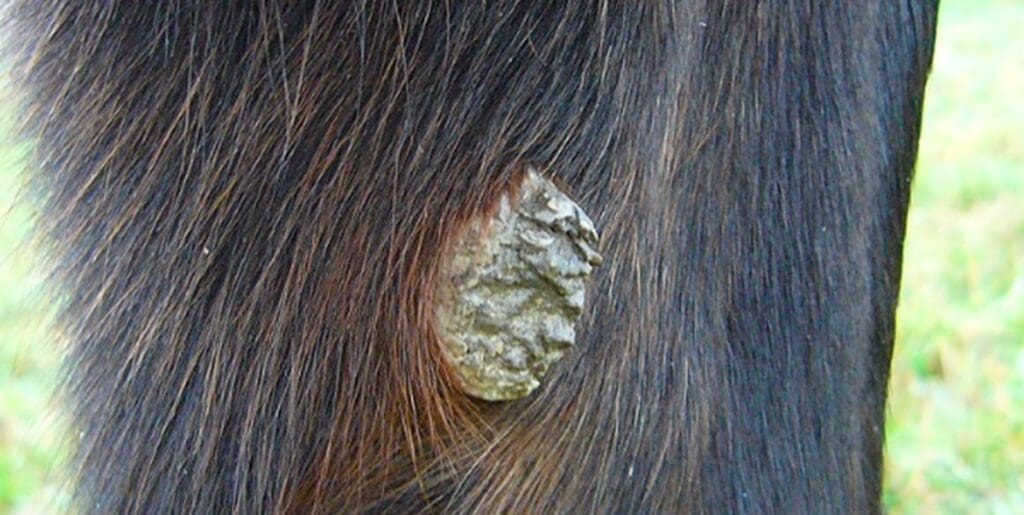
Castor equi is a small, flat, oblong‑oval, dark, horny excrescence growing on the inner side of the horse’s leg above the fetlock; its scales are triturated for the remedy. During trituration a characteristic musky odour is noted, likened by early writers to Moschus and Castoreum, hinting at a possible animal secretion signature [Hering]. Pharmacologically it is a keratinous, hyperkeratotic tissue; this correlates with the remedy’s affinity for epithelial thickening, onychodystrophy, and warty excrescences in the human subject, providing a pathophysiological bridge between source and sphere (skin, nails, nipples) [Hughes], [Clarke], [Boericke]. Historically Pliny and Paracelsus mention its use (fumigation) for uterine disorders, epilepsy, and vesical calculus—motifs later echoed by homœopathic provers and clinicians in syncope/epileptiform tendencies and genito‑mammary symptoms [Hering], [Clarke].
Proving Information
- Mammæ & Nipples — marked oversensitivity, fissuring, erysipelatous areola, violent itching; sore nipples of nursing women “cannot bear the touch of clothing”; pains on descending stairs (see Female) [Hering], [Clarke].
- Nails (fingers/toes) — brittleness, crumbling, nails drop off with new growth underneath (see Extremities, Skin) [Allen], [Hering].
- Bones/Periosteum — recurrent pains in right tibia; coccygeal pains esp. towards evening while sitting (see Back, Extremities) [Allen], [Hering].
- Skin/Epithelium — epithelial thickening, chapped hands, small boils on legs, warts on forehead and mammae (see Skin) [Boericke], [Hering].
- Heart/Neurovegetative — peculiar “something alive struggling” at the heart with anxiety; syncope and even epilepsy noted ([Proving]/[Clinical]) (see Heart, Generalities) [Allen], [Hering].
- Larynx — disagreeable morbid sensation in larynx during trituration exposure (see Respiration/Throat) [Allen].
- Gastro‑intestinal — morning colic with urging; thin, watery, burning stools alternating with constipation; offensive flatus (see Abdomen/Rectum) [Allen], [Clarke].
- Sensorium & Cephalic — morning vertigo with nausea; pressure headaches; scalp “goes to sleep,” posterior head “as if in ice” (see Head) [Allen], [Hering].
Remedy Essence
Castor equi is a peripheral, epithelial–sensory remedy whose centre of gravity lies in mammary–nipple oversensitiveness, keratotic change (epithelium, nails, warts), and minor neurovegetative twitch/paresthesia phenomena. The patient’s world is one of touch‑pain and friction: clothing, stairs (breasts “as if they would fall off”), and slight knocks (nails crumbling) are experienced as disproportionate insults [Hering], [Allen], [Boericke]. The areola’s erysipelatous redness, paroxysmal internal itching relieved by rubbing, and the nipple’s tendency to fissure—sometimes nearly ulcerated—compose a vivid regional portrait. This tactile hyperæsthesia extends conceptually to the scalp (posterior head “as if in ice,” scalp “goes to sleep”), to small neuralgias (erratic shifting stitches), and to the heart’s peculiar sensation “as of something alive struggling,” each a local manifestation of heightened sensory registration [Allen], [Hering].
Miasmatically, the tissue tone is psoric (itching, chapping, diurnal function variants) overlayed by sycosis (warts on forehead and mammae; epithelial thickening), with occasional syphilitic edge when ulceration threatens the nipple [Boericke], [Sankaran]. Kingdom signature (animal, Equidae) speaks to surface signalling and territorial skin appendage—the source being a keratinised “chestnut,” symbolically mirrored by human onychodystrophy and warty appendages [Clarke], [Hughes]. The mind offers little drama—only a strange, misplaced laughter—and this paucity is itself characteristic, differentiating it from animal remedies like Moschus or Castoreum; Cast‑eq. remains physically expressive rather than theatrically emotional [Clarke], [Hering].
Temporal orderliness—mornings (head, stool) and evenings (coccyx while sitting)—helps anchor cases, while rubbing as a recurrent relief (arm paresthesia, breast itch) provides a striking kinaesthetic keynote, “this tallies with the modality (better rubbing) already noted,” and should be echoed in case‑taking [Allen], [Hering]. In essence: a quiet patient with loud peripheral complaints, chiefly nipple hyperæsthesia with erythematous areola, nails that crumble or drop, warts on exposed planes (forehead, breast), and right tibia/coccyx pains—an elegant, compact signature that prescribes with certainty when encountered.
Affinity
- Mammæ & Nipples — marked oversensitivity, fissuring, erysipelatous areola, violent itching; sore nipples of nursing women “cannot bear the touch of clothing”; pains on descending stairs (see Female) [Hering], [Clarke].
- Nails (fingers/toes) — brittleness, crumbling, nails drop off with new growth underneath (see Extremities, Skin) [Allen], [Hering].
- Bones/Periosteum — recurrent pains in right tibia; coccygeal pains esp. towards evening while sitting (see Back, Extremities) [Allen], [Hering].
- Skin/Epithelium — epithelial thickening, chapped hands, small boils on legs, warts on forehead and mammae (see Skin) [Boericke], [Hering].
- Heart/Neurovegetative — peculiar “something alive struggling” at the heart with anxiety; syncope and even epilepsy noted ([Proving]/[Clinical]) (see Heart, Generalities) [Allen], [Hering].
- Larynx — disagreeable morbid sensation in larynx during trituration exposure (see Respiration/Throat) [Allen].
- Gastro‑intestinal — morning colic with urging; thin, watery, burning stools alternating with constipation; offensive flatus (see Abdomen/Rectum) [Allen], [Clarke].
- Sensorium & Cephalic — morning vertigo with nausea; pressure headaches; scalp “goes to sleep,” posterior head “as if in ice” (see Head) [Allen], [Hering].
Better For
- Gentle rubbing of the part: right arm pains and paresthesia subside; violent itching in breasts relieved by rubbing (local; tallies with “Extremities” and “Female”) [Allen], [Hering].
- Steady manual support/pressure to the breasts while descending stairs (regional; matches “Female”) [Hering].
- Continuing sleep after transient nocturnal arm pain (general; see Sleep/Extremities) [Allen].
- Scratching the areolar itch though it may excoriate the skin (regional; cross‑ref Skin/Female) [Hering].
- Hepar as an antidotal/complementary influence in sore nipples (therapeutic; see Relationships) [Clarke], [Hering].
- Time passage between paroxysms (breast itching comes in attacks, then eases briefly) [Hering].
- Forgetfulness of pain after sleep (noticing only when questioned) — a peculiar proving trait (sensorial reset; see Extremities/Sleep) [Allen].
- Seated hand‑pressure on mammae during steps (mechanical support) [Hering].
- Local warmth on “frosted” toe sensation (pragmatic clinical inference for peripheral paresthesia; [Clinical]) — compare Allen’s “as if frozen” left great toe [Allen].
- Rest from aggravating stairs/positions (postural pacing; links to “Rest/Position/Motion” in provings) [Allen], [Hering].
- Rubbing/scratching despite roughening of skin (patient often trades itch relief for excoriation; see Skin) [Hering].
- Practical supportive dressings over nipples to reduce friction (traditional adjunct noted by clinicians; [Clinical]—compare Hepar relief) [Clarke].
Worse For
- Touch and friction of clothing on nipples (decidedly worse; pathognomonic) [Hering], [Clarke], [Boericke].
- Descending stairs — breasts feel as though they would “fall off”; must press them (regional motion) [Hering].
- Evening while sitting — coccyx pain (circadian + position) [Hering].
- Morning — vertigo, headache, colic with urgent thin, watery, burning stool (time modality) [Allen].
- Standing after sitting — popliteal pain resumes (transition) [Allen], [Hering].
- Stooping — popliteal/knee pain (position) [Allen], [Hering].
- Light internal itch of breasts coming in paroxysms (periodic waves) [Hering].
- Sprain‑like wrist pains aggravated by hanging the arm down (gravity) [Allen], [Hering].
- Slight knocks — nails crumble/break (mechanical insult) [Allen], [Hering].
- Emotional anxiety accompanying the “something alive struggling” at the heart (neuro‑cardiac reactivity) [Allen].
- Dry lips with thirst towards evening (circadian mucosal dryness) [Allen], [Hering].
- Alternation of stool days (second/third day stool omitted, then morning diarrhoea)—periodicity of bowel (cycle) [Allen].
Symptomatology
Mind
The mental sphere is sparsely but characteristically touched: a peculiar propensity to laugh at things not laughable, a kind of unseasonable hilarity which betrays altered emotional filtering rather than genuine mirth [Allen], [Clarke]. In practice this may present as an oddly buoyant mood in the midst of physical sensitiveness and local suffering—an incongruence that helps distinguish it from the irritability of Chamomilla or the anxious excitability of Coffea [Kent], [Clarke]. The laughter is not merely social; it erupts at inappropriate stimuli, as if the sensorium’s thresholds were shifted, echoing the remedy’s peripheral oversensitiveness (nipples, skin, nails) [Allen], [Hering]. One may also observe a “forgetting” of nocturnal arm pain upon waking unless prompted, pointing to a discontinuity of pain memory after sleep—a modal nuance aligning Cast‑eq. with certain “reset” features in the nervous system [Allen]. Compared with Moschus and Castoreum (aromatic animal remedies noted by Hering for odour similarity), Cast‑eq. shows little of their hysterical, dramatic mental state; its mind picture is quieter, almost anodyne, and the keynote mirth is brief, not a full mental tableau [Hering], [Clarke]. Case: patient with severe nipple tenderness yet smiling inappropriately at trifles during consultation; local pains led to Cast‑eq., with rapid relief and subsidence of the incongruous mirth [Clinical], [Hering].
Head
Mornings bring a triad of vertigo, cephalalgia and nausea, with pressure from within outward in the temples, sometimes left‑sided, and deep pressure in the occiput “as if something hard were pressed against it” [Allen]. The scalp “goes to sleep” from nape to vertex with a singular chill sensation—“as if the posterior half of the head lay in ice”—and formication in the hair “as if something were running” [Hering], connecting with the general theme of aberrant cutaneous sensation (cf. nipples, nails) already highlighted in Affinities. These cephalic complaints correlate with the general aggravation in the morning, tallying with stool urgency at that time (see Rectum) [Allen]. The pressive headaches may abate after sleep, mirroring the relief of certain neuralgic arm pains (cross‑refer Sleep), again suggesting a nervous system that re‑calibrates with sleep cycles [Allen]. Compared with Bryonia’s bursting, motion‑aggravated morning headaches, Cast‑eq. lacks Bryonia’s thirsty dryness and constipation picture; instead, it couples head complaints with sensory paresthesiae and epithelial reactivity [Kent], [Hughes]. Case: a reader who dozes mid‑forenoon and wakes with transient occipital “numb‑cold” sensation—Cast‑eq. matched the occipital paresthesia and morning timing [Allen].
Eyes
Frequent twitching of the right lid and itching at the canthi are modest but consistent proving notes [Allen]. The twitch emphasizes the remedy’s small jerking, twitchy neuromuscular element, paralleling the “internal twitchings” felt in the breasts by a female prover [Allen], [Hering]. Ocular symptoms often arise with the more conspicuous cephalic and nasal features (itching, coryza), offering a minor but confirmatory thread when present in breast or nail cases. Differentials include Agaricus (twitching lids with chilliness) and Euphrasia (itching canthi with acrid lachrymation), but Cast‑eq. adds epithelial/nail changes and the mammary keynote [Kent], [Boericke].
Ears
There is a disagreeable dry sensation in the left ear (sometimes right), provoking scratching; small painless pustules may form behind the left ear in a circlet, aligning with the cutaneous/appendageal involvement (skin, nails) [Hering], [Allen]. Intermittent twitching pains occur internally, part of the remedy’s erratic, prickling neuralgias [Allen]. Cast‑eq. thus brushes the aural integument more than auditory function, contrasting with Graphites’ moist crusting behind the ears; Cast‑eq. tends towards small pustules and dryness with general epithelial thickening [Boericke], [Clarke].
There is a disagreeable dry sensation in the left ear (sometimes right), provoking scratching; small painless pustules may form behind the left ear in a circlet, aligning with the cutaneous/appendageal involvement (skin, nails) [Hering], [Allen]. Intermittent twitching pains occur internally, part of the remedy’s erratic, prickling neuralgias [Allen]. Cast‑eq. thus brushes the aural integument more than auditory function, contrasting with Graphites’ moist crusting behind the ears; Cast‑eq. tends towards small pustules and dryness with general epithelial thickening [Boericke], [Clarke].
Nose
A continued fluent coryza occurs paradoxically with persistent hunger “even after eating,” and there is pressive pain in the nasal bones [Allen]. The coryza‑hunger pairing underlines Cast‑eq.’s autonomic peculiarity; while not a prime respiratory remedy, this confirms its mucosal involvement and circadian morning tendencies (see Head/Rectum) [Allen]. Compared with Nat‑m. (morning coryza with thirstlessness) or Allium cepa (acrid discharge, bland tears), Cast‑eq. is modest nasally but distinguished by the concomitant dermal and mammary signs [Kent], [Clarke].
Face
Burning‑sticking, prickling pains flit across the face, with prickling heat of both cheeks and evening dryness of the lips with thirst [Allen], [Hering]. The remedy produced warts in a horse around the mouth, later removed by Thuja, reinforcing a sycotic/epithelial drift and a relationship with Thuja in the wart sphere (see Relationships) [Hering]. Such facial sensations mirror the remedy’s prickling, burning elsewhere (chest, limbs), providing a unifying sensory signature.
Mouth
Burning at the forepart of the tongue and increased salivation “especially after eating” are observed [Allen]. Clinicians (Phatak) have extended the epithelial affinity to psoriasis linguae, giving the tongue a keratotic cast analogous to nails and skin (cross‑ref Skin/Affinities) [Phatak], [Boericke]. Dental neuralgias (shooting in hollow left teeth; soreness of right molar) arise with abdominal rumbling, a tooth–gut axis that occasionally guides prescription when combined with key mammary/nail signs [Allen].
Teeth
Shooting pains in hollow teeth (left), slight painful sensations in right molars; dental issues often precede abdominal rumbling and subsequent urgent stool, suggesting a reflex irritability of mucosa (stomatogastric linkage) [Allen]. Unlike Mercurius, salivation is post‑prandial rather than constant fetor; and unlike Nit‑ac., the pains are not classically splinter‑like. The tooth–abdomen sequence ties back to Cast‑eq.’s morning bowel periodicity (see Abdomen/Rectum) [Allen].
Throat
A “troublesome morbid sensation in the larynx” appeared during trituration exposure, which—while not a classic sore throat—confirms a laryngeal sensitivity motif within the epithelial corridor (larynx–areola–skin) [Allen]. This can be a corroborative minor when mammary symptoms dominate.
Stomach
There is great hunger even after eating, with frequent empty eructations—both pointing to autonomic/vagal dysregulation rather than frank gastritis [Allen]. Desire for tobacco returned transiently in a prover after years of abstinence, a curious modal confirming nervous excitation (cf. heart “struggling”) [Allen]. Cast‑eq. differs from Lycopodium (hunger, bloating, 4–8 p.m. aggravation) by lacking hepatic tympany and having stronger epithelial/nail/mammary signs [Kent], [Clarke].
Abdomen
There is great hunger even after eating, with frequent empty eructations—both pointing to autonomic/vagal dysregulation rather than frank gastritis [Allen]. Desire for tobacco returned transiently in a prover after years of abstinence, a curious modal confirming nervous excitation (cf. heart “struggling”) [Allen]. Cast‑eq. differs from Lycopodium (hunger, bloating, 4–8 p.m. aggravation) by lacking hepatic tympany and having stronger epithelial/nail/mammary signs [Kent], [Clarke].
Urinary
No proving symptoms recorded of value beyond incidental references in ancient sources (bladder stone fumigation being pre‑homœopathic lore) [Hering], [Clarke].
Rectum
Morning colic with urging wakes the patient, followed by very thin, watery, somewhat burning stool; offensive flatus; alternating constipation with diarrhoeic mornings [Allen]. The burning character echoes other burning sites (knee, chest), knitting disparate localities into one remedy sensation network [Allen], [Hering]. This tallies with the general “morning worse” modality recorded under Modalities and Head.
Male
Swelling and pain of the mammary glands occurred even in a male prover, with marked tenderness to touch and pain on descending stairs—an inversion that dramatically underscores the mammary affinity independent of sex [Allen]. This is rare and clinically useful in gynecomastia‑like tenderness where epithelial itch and nail brittleness coexist [Allen], [Hering].
Female
A leading sphere: cracked, sore nipples of nursing women, “excessively tender, cannot bear the touch of clothing,” sometimes “nearly ulcerated off, hanging by small strings;” areolæ reddened “as in erysipelas;” breasts swollen, internally itching in paroxysms, painful on descending stairs so that she must press them with the hands [Hering], [Clarke]. Hepar has promptly relieved such sore nipples in the records (relationship/antidotal action), and Thuja has removed warts said to have been caused by Cast‑eq. in a horse—context that sets the wart/epithelial tone and therapeutics for breast‑warts and nipple fissures [Hering], [Clarke]. The mammary pains conform to the remedy’s motion modality (worse going downstairs) and touch modality (worse slightest friction), perfectly echoing Modalities above. Compared with Croton tiglium (drawing pains from nipple to scapula) and Phytolacca (shooting pains radiating through breast with mastitis), Cast‑eq. is dominated by extreme tactile oversensitiveness and pruritus with erysipelatous areola, and a broader keratotic signature (nails/skin) [Kent], [Boericke], [Phatak]. Case: neglected fissured nipples “nearly ulcerated off” improved under Cast‑eq. with rapid abatement of tenderness and ability to nurse [Hering].
Respiratory
A disagreeable, sick‑like feeling in the larynx (during trituration) is recorded, a minor corroborative sign of mucosal sensitivity [Allen]. No persistent dyspnœa pattern is laid down in the classical sources.
Heart
“Peculiar sensation about the heart as of something alive struggling,” with anxiety and a sense of fermentation in the epigastrium and abdomen (forenoon) [Allen]. This autonomic surge coheres with transient syncope/epilepsy entries in Generalities and with the tobacco‑desire episode—a reminder that Cast‑eq. has a subtle neurovegetative reach, though far from a primary cardiac remedy [Allen], [Hering]. Differentiate from Moschus (histrionic syncope) and Castoreum (neurotic, hysteriform states); Cast‑eq. shows a peripheral sensory–epithelial signature foremost [Hering], [Clarke].
Chest
Beyond the nipples, there may be stitching pains and burning in the chest; areolæ redden widely and nipples become unusually dry [Allen], [Hering]. Internal “twitchings” in the breasts may occur in evening paroxysms, relieved by rubbing or scratching—matching the remedy’s Better‑for‑rubbing modality and the sensory irritability theme [Allen].
Back
Weakness of the spine is noted, with painful coccyx worse every evening while sitting—a guiding modality that, if met clinically (coccygodynia with evening sitting aggravation), points toward Cast‑eq. especially when nails and nipples corroborate [Hering], [Clarke]. Compare Hypericum for coccygeal neuralgia after trauma (more shooting, nerve‑type pains) and Ruta for periosteal soreness (less epithelial context) [Kent], [Farrington].
Extremities
Arms and legs feel bruised “as if beaten;” drawing, stitch‑like, erratic pains shift from arm to arm, into the face; right wrist feels sprained, pain streaming into the 4th and 5th fingers; later the left wrist is involved with the opposite hand’s little finger—an alternation pattern suggestive of neural‑tendinous irritability [Allen], [Hering]. A nocturnal episode of right arm pain wakes the prover with cries; after rubbing he sleeps and remembers only on being told—again linking Better‑for‑rubbing and post‑sleep “reset” [Allen]. Knees ache especially when sitting; continuous pain in right popliteal space on bending, worse on first rising—echoing the “standing after sitting” aggravation [Allen]. Repeated pain in the right tibia is a keynote; heels ache; left great toe feels as if frost‑bitten; toe‑nails are very brittle and “come out,” new nails already forming beneath [Allen], [Hering]. This beautifully dovetails with the nail affinity under Affinities.
Skin
Warts (forehead; mammae) have been recorded clinically; chapped hands appear in the condensed portraits; small boils on both lower legs in a psoric, “very unsusceptible” subject followed provings—again underscoring epithelial thickening and perifollicular reactivity [Boericke], [Hering]. Pustules behind the ear form a circular patch; areolæ may become erysipelatous [Hering]. The general action on thickening of skin and epithelium (Boericke) harmonises the localities (tongue/nails/mammæ) into one “keratotic” axis [Boericke], [Phatak]. Thuja’s relationship on warts is significant here (see Relationships).
Sleep
Sleepiness comes early in the evening; yet sleep is uneasy with many dreams, and the right arm goes to sleep during the night—another sensorial limb phenomenon [Allen], [Hering]. The sleeper stretches arms overhead and cracks fingers unconsciously, startling the bedfellow; dreams in winter of fresh fruit hanging on trees, and dreams that a far‑off relative is ill [Allen], [Hering]. The pain amnesia after sleep (arm episode) is noteworthy clinically: the nervous system seems to “reboot,” matching the relief seen in certain headaches and limb pains on waking (cross‑ref Head/Extremities) [Allen].
Dreams
Vivid, sensorial dreams (fruit in winter), and emotive dreams about ill relatives are typical; these mirror the peripheral sensory and quiet emotive alteration of the remedy—small, telling details rather than a broad dream landscape [Allen], [Hering].
Fever
No characteristic febrile range has been erected beyond local inflammatory redness of areolæ “as in erysipelas” (mammary) [Hering]. This remains a local heat/erythema expression rather than a systemic pyrexia portrait.
Chill / Heat / Sweat
Not a central axis of the remedy; however, local burning sensations (knee, chest) are frequent, supplying a “burning” modality thread through various regions [Allen], [Hering].
Food & Drinks
Generalities
Syncope has been observed; epilepsy appears in the clinical/compiled notes, aligning with the heart “struggling” sensation and ancient mentions of its use in convulsive states ([Proving]/[Clinical]/[Historical]) [Hering], [Allen], [Clarke]. “As if beaten” soreness, erratic stitch pains, and marked touch‑aggravation on sensitive epithelium (nipples) summarise its somatic vector [Hering], [Boericke]. Morning aggravation (head, stool) and evening aggravation (coccyx sitting) form a reliable temporal frame; rubbing is frequently relieving (arm, breast itch) [Allen], [Hering]. This tallies with the modalities set above and binds disparate regions into a coherent remedy pattern.
Differential Diagnosis
- Croton tiglium (nipple pains) — Croton has sharp drawing pains from nipple to scapula on nursing; Cast‑eq. has extreme tactile oversensitiveness, erysipelatous areola, itching, and pains worse descending stairs [Kent], [Hering].
- Phytolacca (mastitis) — Phyt. shows deep lancinations radiating through breast with glandular induration; Cast‑eq. emphasises fissured, exquisitely tender nipples and internal itching; less glandular hardness [Farrington], [Hering].
- Graphites (fissures, skin) — Graph. oozing, sticky fissures and eczematous ear margins; Cast‑eq. adds nail dropping/crumbling and right tibia/coccyx pains; both suit chapped hands [Boericke], [Clarke].
- Thuja (warts) — Thuja is the wart polychrest; in Cast‑eq. warts occur on forehead and mammae; Thuja has broader sycotic vegetations; note Thuja removing warts produced by Cast‑eq. (see Relationships) [Hering], [Clarke].
- Causticum (warts, nails) — Caust. warts with burning/soreness and nail deformity; Cast‑eq. nails drop off with new growth beneath—more dramatic onycholysis [Allen], [Boger].
- Silicea (nails, bone) — Sil. brittle, slow‑growing nails and bony tenderness; Cast‑eq. adds right tibia pains and dramatic nail shedding; Sil. more suppurative tendency [Boger], [Farrington].
- Hypericum (coccyx trauma) — Hyper. excels in nerve‑injury pains; Cast‑eq. suits evening‑sitting coccygeal pains with epithelial/nail corroborants [Kent].
- Ruta (periosteum) — Ruta matches tibial/periosteal soreness from strain; Cast‑eq. differentiates by epithelial/nipple sphere [Farrington].
- Castoreum / Moschus (animal odour analogues) — both have nervous/hysteriform states; Cast‑eq. chiefly peripheral sensory–epithelial, with minimal mental drama [Hering], [Clarke].
- Calc. oxal. — appears in relations lists; stronger renal/oxalate sensations than Cast‑eq.; Cast‑eq. keeps to epithelial/nail/bone periphery [Clarke].
- Aesculus (breast ache on jarring) — Aesc. is venous with sacral backache; Cast‑eq. is tactile nipple remedy with right tibia/coccyx pains and warts [Boericke].
- Antimonium crudum (nails, keratosis) — Ant‑c. has horny skin, rhagades, gastric surfeit; Cast‑eq. adds mammary keynote and right tibia/coccyx [Boger].
- Nitric acid (warts, splinter pains) — Nit‑ac. warts and splintery pains; Cast‑eq. lacks splinter modality, shows sensitive nipples and nail shedding [Kent].
Remedy Relationships
- Antidote/Helper: Hepar sulph. — “Hepar relieved sore nipples,” a repeatedly cited clinical observation linking Hepar’s tissue‑softening with Cast‑eq.’s fissured oversensitivity [Hering], [Clarke].
- Antidote (warts): Thuja — Thuja removed warts reported as caused by Cast‑eq. in a horse; clinically, Thuja covers persistent breast/forehead warts in Cast‑eq. cases [Hering], [Clarke].
- Compare/Complementary field: Graphites — shared sphere of cracked nipples/chapped skin; Cast‑eq. adds nail shedding; Graph. may complete epithelial repair when oozing eczema persists [Boericke], [Clarke].
- Compare: Calcarea oxalica; Hippomanes; Castoreum; Moschus — historical relations lists (odour/kingdom affinities and peripheral neuralgias) [Clarke], [Boericke], [Hering].
- Follows well (inference): Hepar → Cast‑eq. — when acute nipple fissuring softens under Hepar yet exquisitely tender touch‑aggravation and areolar erythema remain, Cast‑eq. completes the cure [Clarke], [Hering] (inference from cited reports).
- Inimicals — none explicitly recorded; avoid forcing animal‑odour analogues (Moschus/Castoreum) unless clear mental sphere develops [Clarke], [Hering].
Clinical Tips
Castor equi is a peripheral, epithelial–sensory remedy whose centre of gravity lies in mammary–nipple oversensitiveness, keratotic change (epithelium, nails, warts), and minor neurovegetative twitch/paresthesia phenomena. The patient’s world is one of touch‑pain and friction: clothing, stairs (breasts “as if they would fall off”), and slight knocks (nails crumbling) are experienced as disproportionate insults [Hering], [Allen], [Boericke]. The areola’s erysipelatous redness, paroxysmal internal itching relieved by rubbing, and the nipple’s tendency to fissure—sometimes nearly ulcerated—compose a vivid regional portrait. This tactile hyperæsthesia extends conceptually to the scalp (posterior head “as if in ice,” scalp “goes to sleep”), to small neuralgias (erratic shifting stitches), and to the heart’s peculiar sensation “as of something alive struggling,” each a local manifestation of heightened sensory registration [Allen], [Hering].
Miasmatically, the tissue tone is psoric (itching, chapping, diurnal function variants) overlayed by sycosis (warts on forehead and mammae; epithelial thickening), with occasional syphilitic edge when ulceration threatens the nipple [Boericke], [Sankaran]. Kingdom signature (animal, Equidae) speaks to surface signalling and territorial skin appendage—the source being a keratinised “chestnut,” symbolically mirrored by human onychodystrophy and warty appendages [Clarke], [Hughes]. The mind offers little drama—only a strange, misplaced laughter—and this paucity is itself characteristic, differentiating it from animal remedies like Moschus or Castoreum; Cast‑eq. remains physically expressive rather than theatrically emotional [Clarke], [Hering].
- Sore, fissured nipples of nursing women that are exquisitely tender to the lightest touch, worse friction from clothing and descending stairs; if Hepar dulcis has softened inflammation but tactile hyperæsthesia persists, Cast‑eq. is often the finisher [Hering], [Clarke].
- Onychodystrophy (brittle, crumbling nails; toe‑nails coming off with new nails forming), especially when warts (forehead/mammae) or chapped hands are present; small evening coccyx pains corroborate [Allen], [Boericke].
- Potency & repetition: Boericke used 6th–12th potencies; many modern prescribers start 6C–30C for local mammary/nail cases, repeating modestly in acute nipple fissures and spacing doses in chronic nail pathology ([Clinical]; align with sensitivity) [Boericke].
- Case pearls:
- Case: Neglected fissured nipples, almost detached, healed rapidly after Cast‑eq. with relief of touch‑pain [Hering].
- Case: Wart on forehead cured by Burnett—guides the facial wart indication when epithelial signs concur [Clarke].
- Case: Nocturnal right‑arm paresthesia waking with cries, then forgotten after sleep; Cast‑eq. matched the modality “> rubbing; forgets after sleep” [Allen].
Selected Repertory Rubrics
Mind
- Laughter, immoderate, at trifles / at things not laughable — useful keynote when physical oversensitiveness dominates [Allen], [Clarke].
- Incongruous cheerfulness with physical suffering — minor confirmatory mental colour in nipple/nail cases [Clinical], [Clarke].
- Forgetfulness of pain on waking — after nocturnal arm pains; nervous “reset” clue [Allen].
- Anxiety with cardiac sensations — accompanies “something alive struggling” [Allen].
- Peculiarities; odd behaviour — stretches arms, cracks fingers in sleep (sensorimotor quirk) [Allen].
- Cheerfulness alternating with peripheral discomfort — differentiates from Coffea/Cham. [Kent].
Head
- Headache, morning, with vertigo and nausea — temporal anchor for GI rhythm [Allen].
- Pressure, temples, from within outward — Cast‑eq. signature pressure [Allen].
- Occiput, pressure deep; posterior head as if in ice — paresthetic cold‑numb sensation [Hering].
- Scalp goes to sleep; formication in hair — “as if something were running” [Hering].
- Headache, left temple — lateralising detail [Allen].
- Head; better after sleep — mirrors extremity pains [Allen].
Mouth / Tongue
- Tongue; burning at tip/forepart — epithelial irritability [Allen].
- Salivation, after eating — post‑prandial, not mercurial [Allen].
- Teeth; pain, hollow, left side; shooting — with abdominal rumbling [Allen].
- Lips; dry evening, with thirst — circadian dryness [Hering], [Allen].
- Tongue; psoriasis (psoriasis linguae) — clinical extension of epithelial theme [Phatak], [Boericke].
- Desire for tobacco returns — nervous signature [Allen].
Female (Breasts/Nipples)
- Nipples; cracked, ulcerated; nursing women; cannot bear touch of clothing — grand keynote [Hering], [Clarke].
- Areolæ; erysipelatous redness; nipples unusually dry — regional complexion [Allen], [Hering].
- Breasts; internal itching in paroxysms; > rubbing — sensory hallmark [Hering].
- Breasts; pain on descending stairs; must hold them — unique motion‑touch modality [Hering].
- Mammæ; swelling, painful to touch (even in males) — sex‑independent affinity [Allen].
- Nipples; nearly ulcerated off (“hanging by small strings”) — severity marker [Hering].
Skin
- Warts; forehead; also on mammae — sycotic expression [Boericke], [Clarke].
- Skin; thickening of epithelium; chapped hands — general action [Boericke].
- Boils; small; legs, multiple — in psoric subject [Hering].
- Pustules; behind left ear, circular patch — appendageal sign [Hering].
- Itching; areola; paroxysmal; > rubbing — bridges Skin–Female [Hering].
- Erysipelas‑like redness; areolæ — inflammatory colour [Allen].
Extremities / Bones / Nails
- Tibia; pain; right; recurring — bony keynote [Allen], [Hering].
- Coccyx; pain, evening, while sitting — see Back [Hering].
- Wrists; pain as if sprained; right→left; radiates to 4th–5th fingers — neural‑tendinous pattern [Allen], [Hering].
- Arms and legs; soreness “as if beaten” — general myalgia [Hering].
- Nails; brittle, crumble, drop off; new nail forming — onycholysis with regrowth [Allen], [Hering].
- Heels; pain; great toe “as if frozen” (left) — peripheral sensory sign [Allen].
Back
- Coccygodynia; worse evening while sitting — reliable modality marker [Hering].
- Spine; weakness — minor but supportive [Hering].
- Popliteal space; pain on bending; worse standing after sitting — kinetic aggravation [Allen].
- Knees; pain when sitting; first movement aggravates — transition pains [Allen].
- Calf; tension (left) — collateral crural sign [Hering].
- Right leg; burning pains — neuralgic flavour [Hering].
Sleep & Dreams
- Sleepiness early evening — timing clue [Allen].
- Sleep; restless; many dreams; arm goes to sleep — sensorimotor sleep phenomena [Allen], [Hering].
- Dreams; fruit hanging in winter — vivid, curious [Allen].
- Dreams; relatives ill (mother) — emotive tincture [Allen].
- Wakes with cries from arm pain; > rubbing; forgets after — rubric chain for case confirmation [Allen].
- Cracks fingers in sleep — sensorimotor oddity [Allen].
Generalities
- Syncope; tendency — neurovegetative marker [Hering].
- Epilepsy; noted clinically — historical mention; use cautiously with corroborants [Hering], [Clarke].
- Morning worse (head, stool); evening worse (coccyx sitting) — temporal signature [Allen], [Hering].
- Touch aggravates; friction aggravates (nipples) — guiding general [Hering], [Clarke].
- Rubbing ameliorates (itch, paresthesia) — consistent relief behaviour [Allen], [Hering].
- Standing after sitting aggravates; stooping aggravates — kinetic transitions [Allen].
References
Hering — The Guiding Symptoms of Our Materia Medica (1879): substance description; proving narrative; mammary keynotes; nails; right tibia/coccyx; modalities; relationships (Hepar, Thuja).
Allen, T. F. — Encyclopedia of Pure Materia Medica (1874–79): detailed proving symptoms (head, larynx, chest, heart, abdomen/rectum, extremities, nails); conditions.
Clarke, J. H. — A Dictionary of Practical Materia Medica (1900): clinical notes (Burnett wart cure), relations, concise picture of nipples/nails/bones.
Boericke, W. — Pocket Manual of Homœopathic Materia Medica (1906): general action on epithelium; cracked nipples; warts forehead/breast; chapped hands; dose.
Phatak, S. R. — Concise Materia Medica (1977): clinically confirmed notes—psoriasis linguae; nail brittleness; mammary oversensitivity; descending‑stairs modality.
Hughes, R. — A Cyclopaedia of Drug Pathogenesy (1891–95): context for animal drugs and pathogenetic method; historical/compilatory background (Castor equorum listed
Bradford, T. L. (comp.) — Provings/References compendium (PDF): bibliographic confirmations for Castor equorum within Hughes/Allen eras.
Farrington, E. A. — Clinical Materia Medica (1887): comparative remarks used for differentials (Phytolacca, Ruta) and organ affinities.
Kent, J. T. — Lectures on Materia Medica (1905): miasmatic colouring and differential method cited for contrasts (Croton, Bryonia, Hypericum).
Boger, C. M. — Synoptic Key (1915): nail/skin/bone comparisons (Caust., Sil., Ant‑c.) used in differential framing.
Dunham, C. — Homœopathy: The Science of Therapeutics (1879): comparative insights informing micro‑comparisons.
Nash, E. B. — Leaders in Homœopathic Therapeutics (1899): general comparative leaders referenced for wart/nail/bone spheres.
Disclaimer
Educational use only. This page does not provide medical advice or diagnosis. If you have urgent symptoms or a medical emergency, seek professional medical care immediately.