

Zincum sulphuricum
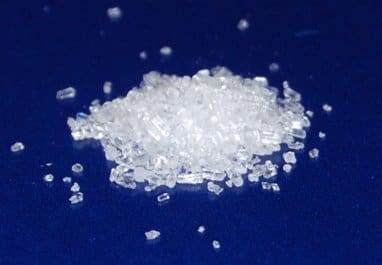
Substance Background
An inorganic salt of zinc and sulphuric acid, most commonly encountered as the heptahydrate (ZnSO₄·7H₂O). Pharmacologically a powerful astringent and long-used emetic, it is locally irritant and, in toxic dose, produces acute gastro-enteritis with burning from mouth to anus, violent vomiting and purging, metallic taste, constrictive throat, thirst, vertigo, prostration, tremors or spasms, and collapse; chronic exposure may lead to mucosal catarrh, irritation of eyes and urethra, and anaemic debility [Hughes], [Allen], [Clarke]. Homeopathic preparations are made from chemically pure zinc sulphate dissolved in alcohol/water (tincture) and potentised; triturations may also be employed [Allen], [Clarke], [Boericke].
Proving Information
No extensive Hahnemannian proving is recorded; the picture rests on toxicology (pharmacodynamic action) and clinical confirmations collated by Hughes, Allen, Hering, and Clarke. Comparisons with the Zincum group (Zinc-met., Zinc-phos., etc.) assist differentiation but should not replace the distinct gastric–mucosal signature of Zinc-s. [Hughes], [Allen], [Hering], [Clarke]. [Toxicology] [Clinical]
Remedy Essence
Zinc-s. expresses the astringent, corrosive drama of the mucosa. The story begins at the lips and runs in a burning track to the anus: metallic taste, instant emesis from cold drinks, cramping, burning stomach, and watery acrid stools that excoriate. In the midst of this storm the autonomic nervous system swings—faintness, tremor, cold sweat—and the patient lies absolutely still, craving tiny warm sips and heat over the epigastrium. The modalities are crystalline: worse from cold (especially cold drinks), motion, the smell or sight of food, night/early morning, and draughts; better from warmth, rest, gentle ventilation without chill, firm abdominal pressure (the “held-together” motif), and sometimes after a stool or after copious emesis when the pressure abates.
Where Ipecac. makes nausea the tyrant without burning, Zinc-s. is the fire itself; where Arsenicum adds anguish and burning in every fibre, Zinc-s. centres the heat in the alimentary mucosa with a characteristic metal-astringent signature. In deeper collapse (Verat-alb.) the stools are copious and rice-water; Zinc-s. may approach that border, yet the corrosive smarting and intolerance of cold water remain its stamp. The post-flux asthenia shows the Zincum heredity: trembling weakness, easy faintness, mental dulness after illness—yet unlike Zinc-met., the driving keynote is not brain irritability but raw mucosa needing to be soothed and held.
Clinically this essence guides one to Zinc-s. in acute gastro-enteritis, food poisoning, summer and traveller’s diarrhoea with acrid excoriation, in irritable conjunctivitis and urethral/cervical catarrh where discharge stings and burns, and in the convalescent who cannot climb back to strength because the stomach rebels at the least cold sip. The prescription succeeds when this thermal, gustatory, and astringent profile repeats across systems and when warmth + rest + small sips is the patient’s mantra [Allen], [Hughes], [Clarke], [Boericke].
Affinity
- Alimentary canal (mouth → anus) — corrosive burning, metallic taste, violent emesis and diarrhoea, thirst, cramping, collapse; post-gastroenteritic debility [Allen], [Hughes], [Clarke]. See Mouth/Stomach/Abdomen/Rectum; Worse cold drinks; Better small warm sips.
- Mucous membranes (eyes, urethra, cervix) — catarrh with smarting, acrid discharge; historical local use as astringent points to homeopathic indications in chronic, irritable catarrhs [Clarke], [Hering]. See Eyes/Urinary/Female.
- Nerves (peripheral and autonomic) — tremor, twitchings, cramps, vaso-vagal faintness with gastric storms; lingering asthenia after exhausting fluxes [Allen], [Hughes]. See Mind/Generalities.
- Skin and ulcers — excoriation and slow healing around orifices from acrid discharges; astringent action suggests utility in indolent sores that sting and burn [Clarke], [Boericke]. See Skin.
- Blood/fluids — dehydration and anaemic look after diarrhoeal loss; collapse tendency in choleraic pictures [Hughes], [Allen]. See Fever/Generalities.
Better For
- Small, frequent warm sips (water, tea) easing nausea and chill [Clarke], [Hughes].
- Absolute rest; recumbent posture during vomiting spells [Allen].
- Warmth to epigastrium; dry heat to abdomen and limbs [Clarke].
- Astringent feel (as if “held together”)—pressure around abdomen or a snug binder [Hering].
- After stool (pressure lessens briefly), when diarrhoea has relieved cramping [Allen].
- Gentle ventilation without draughts; fresh but not cold air [Clarke].
- Slow, cautious movement after a quiet interval (stops retching) [Boericke].
- Time—gradual abatement after free emesis, if not exhausted [Hughes].
Worse For
- Cold drinks taken hastily; immediately vomited with increased burning [Allen], [Hughes].
- Even the least food; sight/smell of food renews nausea (gastric hyperaesthesia) [Clarke].
- Motion, especially rising up or turning in bed during nausea [Allen].
- Night and early morning; cyclical waves of retching and watery stool [Clarke].
- Acrid discharges excoriating parts; repeated wiping (mechanical irritation) [Hering].
- Exertion during convalescence; brings back faintness and tremor [Boericke].
- Chill and draughts; patient shivers and cramps increase [Clarke].
- Suppression of habitual catarrh/flow; internal irritation heightened [Hughes].
Symptomatology
Mind
Anxious, oppressed state accompanies violent gastric symptoms; the patient fears collapse during relentless retching, is irritable if disturbed, and becomes apathetic from exhaustion [Clarke], [Allen]. Faintness with a sense of “hollow sinking” at the epigastrium points to the cardio-vagal element of the gastric storm [Hughes]. Restlessness alternates with drowsy stupor in severe attacks, a toxicologic swing that mirrors fluid loss and autonomic involvement [Allen]. Hypersensitivity to smells (kitchen odours) provokes disgust and nausea (cross-reference Worse—smell of food) [Clarke]. After acute phases, mental dulness, low spirits, and easy fatigability persist, especially in convalescents from enteritis (group resemblance to Zincum yet dominated by the sulphate’s gastric sphere) [Hughes], [Boericke]. [Toxicology] [Clinical]
Head
Vertigo on rising or turning, with blackness before eyes, accompanies vomiting or diarrhoea; head feels empty and heavy simultaneously [Allen]. Frontal or supra-orbital pain comes in waves with the retching—tight band sensation relieved by quiet and warmth (modality concordance) [Clarke]. Headache may be better after stool or after copious vomiting when pressure abates [Allen]. In collapse-leaning cases, face is pale, lips bluish, cold sweat on forehead—congestion displaced from surface to viscera [Hughes]. Compare Verat-alb. for algid collapse with profuse rice-water stool; Zinc-s. has intensified burning and metallic gastric features [Clarke], [Farrington].
Eyes
Smarting, burning conjunctivae with lachrymation; lids feel raw from acrid tears (historical external use as a collyrium underlines the homeopathic eye-mucosa affinity) [Clarke]. Photophobia during headache; vision swims when rising in bed (postural). Chronic catarrhal ophthalmia with strings of discharge, stinging worse on exposure to wind/cold water; improved by gentle warmth (see Modalities) [Hering], [Clarke]. [Clinical] Old, irritable conjunctivitis with excoriation has been cited as responsive to Zinc-s. on the mucosal signature [Clarke].
Ears
Ringing or rushing in ears during faintness; noises rise with each retching wave [Allen]. Ear-root neuralgic twinges coincide with parotid/Pharyngeal irritation in some catarrhal states (mucosal continuum) [Hering]. After collapse, hearing seems dull until circulation rallies [Hughes].
Nose
Coryza with raw, burning nares and thin, acrid discharge; frequent sneezing aggravates head and stomach (jarring) [Hering]. Loss of smell during gastric illness; odours nauseate when returning (Worse smells of cooking) [Clarke]. Epistaxis is not characteristic relief here (contrast remedies where bleeding eases congestion).
Face
Pinched, pale, anxious; bluish lips and cold sweat in severe cases [Hughes]. Cheeks may flush transiently in retching spasms; then pallor returns [Allen]. Peri-oral soreness/excoriation from acrid vomitus (skin–mucosa interface keynote) [Clarke].
Mouth
Metallic, astringent taste; tongue coated white or yellowish; burning from mouth to oesophagus during poisoning states [Allen], [Hughes]. Salivation may be stringy; breath sour and acrid. Thirst for small, frequent warm sips that “sit” better than cold drinks (modalities tally) [Clarke]. Aphthous tenderness may develop after days of acrid gastric flux [Hering].
Teeth
Teeth on edge; enamel/sensitive dentine ache with sour eructations and vomiting, contact with cold water intolerable (astringent–corrosive picture) [Clarke]. Grinding in sleep during feverish nights in children with gastric catarrh has been noted clinically [Hering].
Throat
Raw, burning, constricted; swallowing increases epigastric cramp; regurgitation excoriates the fauces (burning track) [Allen]. Desire for warm drinks that “uncramp” the gullet; cold liquids are ejected at once (Worse cold drinks; Better warm) [Clarke]. Mucus ropy and irritating; hawking provokes retching [Hering].
Stomach
Cardinal sphere. Persistent, often immediate vomiting after food or cold drink; retching violent, with cramps and burning as from a corrosive [Allen], [Hughes]. Metallic taste; thirst for small warm sips; slightest motion renews nausea (like Ipecac, but with more burning/astringent character and acrid excoriation) [Clarke], [Farrington]. Gastralgia: clutching, cramping pains radiate to back and around navel; better warmth, pressure, absolute rest; worse at night and on rising [Clarke], [Boericke]. Emesis may be bilious or watery; continued until exhaustion threatens—algid features appear if diarrhoea joins (compare Verat-alb., Ars.; Zinc-s. shows marked metallic taste, corrosive burning, and astringent signature) [Farrington]. [Toxicology]
Abdomen
Griping about umbilicus, cutting downward to rectum; gurgling, borborygmi with chilliness and gooseflesh [Allen]. Abdomen tender to touch (peritoneal irritation note in severe cases) [Hughes]. Sensation as if bowels dragged and “shriveled” (astringent contraction motif) [Clarke]. Warm applications and firm bandaging relieve (Better warmth/pressure).
Urinary
Strangury and urethral smarting with scant, scalding urine in catarrhal states; historical topical use in urethral discharges points to homeopathic use when discharges are acrid, burning, and parts excoriate [Clarke], [Hering]. Urine dark, of high specific gravity during dehydration; dizziness on rising to pass urine (vagal faintness) [Allen].
Rectum
Diarrhoea watery, acrid, excoriating, with burning at anus; stool may alternate with ineffectual urging, then sudden gushes [Allen], [Clarke]. Tenesmus after stool leaves smarting. Collapse tendency when vomiting and diarrhoea combine—cold extremities, husky voice, thready pulse (choleraic picture) [Hughes]. In convalescence, sluggish bowel with soreness around anus from acridity; astringent sphere remains (useful in chronic mucous stools with burning) [Clarke].
Male
Acrid urethral discharge (non-specific) with raw meatus and burning micturition; worse after wine/coffee (gastric–mucosal irritants) [Clarke]. Sexual desire depressed during gastric illness; emissions with weakness in exhausted subjects [Hering].
Female
Cervical/uterine catarrh with smarting, acrid leucorrhoea excoriating thighs; cervix feels raw and contracted (astringent keynote) [Clarke]. After profuse watery diarrhoea menses may be delayed and scant with cramps (system drained) [Allen]. Chronic cervical irritation worsens from cold douches; prefers gentle warmth [Hering].
Respiratory
Sighing, shallow breathing with nausea; respiration deepens after warm sips [Clarke]. Inhalation of kitchen odours aggravates (gastric–respiratory link) [Clarke].
Heart
Pulse weak, small, sometimes irregular in collapse; chill at precordia; anxiety of death during violent emesis (autonomic storm) [Hughes]. After recovery, pulse may remain easily accelerated by slight exertion; deconditioned, anaemic look [Boericke]. Compare Ars. (burning, restlessness, great prostration) vs Zinc-s. (more immediate emesis from cold drinks, metallic taste, astringent signature) [Farrington].
Chest
Oppression with retching; short breath and sighing accompany waves of nausea [Allen]. Palpitation during faintness, better lying absolutely still; cold sweat on chest in algid states [Hughes]. Cough, short and teasing, provokes gagging in pharyngo-gastric catarrh (reflex) [Clarke].
Back
Achings across lumbar region during diarrhoea; sacral weakness after stool; chill creeps up the back preceding a purge [Allen]. Paraspinal soreness better by warmth and pressure (bandage motif) [Clarke].
Extremities
Cramps in calves and soles during diarrhoeal nights; fingers tremble when lifting cup; nails bluish in collapse [Allen], [Hughes]. Child kicks and draws up legs with colicky pains [Hering]. Weakness so marked that the patient slides down in bed after a purge [Clarke].
Skin
Excoriated about anus, labia, urethral meatus from acrid discharges; peri-oral excoriation from vomitus [Clarke]. Slow-healing, stinging ulcers with thin, acrid ichor respond on the astringent–burning signature [Boericke]. Cold, clammy skin in algid phase; later dry and tender [Hughes].
Sleep
Dozy but cannot sleep, for every attempt brings on retching; broken sleep with anxious dreams of drowning/ waves (nausea imagery) [Allen]. After midnight worse: alternation of dozing and sudden springing up to vomit; brief relief after warm drink and quiet recumbency (cross-reference Better—warm sips; rest) [Clarke]. Convalescent sleep is heavy, unrefreshing, with morning languor and trembling on rising [Boericke]. Children cry in sleep and draw up knees with colic [Hering].
Dreams
Of water, floods, kitchens and loathsome food; of suffocation or pursuit when faintness threatens; dreams cease as stomach settles [Clarke], [Kent].
Fever
Chill with gooseflesh precedes stool/emesis; heat flushes of face with burning stomach; sweat cold and clammy during collapse [Hughes]. Temperature may be subnormal in algid states; thirst continues for warm sips [Allen].
Chill / Heat / Sweat
Chill running up back, worse draughts; heat local to face/epigastrium; sweat cold, then later warm and relieving when stomach quiets [Clarke], [Hughes]. Sweats easily on slight effort in convalescence [Boericke].
Food & Drinks
Aversion to food; worse from cold water or cold drinks; better from warm sips often [Allen], [Clarke]. Desire for salt may flicker as patient craves broths; fats aggravate (gastric irritancy) [Clarke]. Milk is often intolerable in acute stage; later tolerates thin gruels [Hughes].
Generalities
Zinc-s. centres on astringent–corrosive irritation of mucosa with violent emesis and acrid fluxes, progressing to dehydration, trembling, and collapse in severe cases [Allen], [Hughes], [Clarke]. Modalities define the case: Worse from cold drinks, smell/sight of food, motion, night/early morning, draughts, and exertion; Better from warmth, rest, small warm sips, pressure/bandaging, and sometimes after stool (brief relief) [Clarke], [Boericke]. Compared with Ipecac., Zinc-s. has more burning and metal-astringent signature; with Arsenicum, less anxiety-restlessness and more immediate intolerance of cold drinks; with Verat-alb., less copious rice-water stool but a stronger corrosive track and metallic taste [Farrington]. The post-flux asthenia with tremor and easy faintness belongs to the Zincum lineage, yet the sulphate’s keynote is gastric–enteric fire and acridity rather than the neuro-irritable fidgetiness of Zinc-met. [Hughes], [Clarke].
Differential Diagnosis
Gastric–Enteric (Acute)
- Ipecac. — Persistent nausea with clean tongue; less burning; Zinc-s.: marked burning, metallic taste, cold water at once vomited [Farrington], [Clarke].
- Ars. — Burning, restlessness, great prostration; thirst for small sips (often warm); more anxiety and anguish than Zinc-s. [Kent], [Farrington].
- Verat-alb. — Profuse rice-water stool, cold collapse, cramps; Zinc-s.: corrosive burning track, metallic taste, astringent feel [Clarke].
- Ant-t. — Nausea with coated tongue, drowsiness, rattling; Zinc-s. more burning and acridity [Farrington].
- Nux-v. — Irritable stomach, spasmodic retching, oversensitive; less acrid excoriation than Zinc-s. [Kent].
Mucosal Catarrh (Eye/Urethra/Cervix)
- Arg-nit. — Photophobia, ulcerative cornea tendency; anxiety and diarrhoea from anticipation; Zinc-s.: stinging catarrh with astringent signature [Clarke].
- Merc-cor. — Dysenteric tenesmus, bloody mucus, burning; more ulcerative destructiveness than Zinc-s. [Allen].
- Alumina — Dryness and sluggish mucosa; Zinc-s.: acrid, raw, excoriating flows [Boericke].
- Calc-sulph. — Thick, yellow discharges; less stinging acridity than Zinc-s. [Phatak].
Collapse States
- Camph. — Cold as ice, desires to be covered; little vomiting; Zinc-s. primarily gastric with acrid fluxes [Clarke].
- Carb-veg. — Air hunger, bloating, wanting to be fanned; less corrosive burning than Zinc-s. [Farrington].
Group Comparisons (Zincum family)
- Zinc-met. — Nervous fidgety feet, brain weariness, aggravation from wine; gastric sphere secondary.
- Zinc-phos. — Neuralgias with weakness; gastric flatulence without corrosive burning.
- Zinc-pic. — Exhaustion of cord/brain with sexual weakness; less mucosal acridity. (Group contrasts synthesised from [Hughes], [Clarke], [Kent].)
Remedy Relationships
- Complementary: Ars. in lingering gastric irritability and collapse tendency; Carb-veg. in late collapse after gastric storm; China for post-diarrhoeal weakness (fluids lost) [Farrington], [Boericke].
- Follows well: Ipecac. when persistent nausea remains but burning/acridity rises; Nux-v. after diet errors when mucosa is left raw [Clarke].
- Precedes well: China/Phos-ac. to rebuild after fluid loss and nervous drain [Boericke].
- Antidotes / Is antidoted by: Camph., Nux-v., and copious warm drinks in low potencies (clinical) [Clarke], [Hughes].
- Related (sphere): Merc-cor., Arg-nit., Alum., Calc-sulph. for mucosal astringent/irritant themes (choose by discharge quality and tissue reaction) [Clarke], [Phatak].
Clinical Tips
- Acute gastric flux: low to medium potencies (3X–6X–12C) repeated at short intervals during the storm; lengthen spacing as retching abates [Boericke], [Clarke].
- Choleraic tendency / collapse: intercurrent with Verat-alb. or Ars. according to totality; insist on warm fluids (teaspoon doses) and heat to epigastrium in alignment with remedy modalities [Farrington], [Clarke].
- Irritable conjunctivitis / excoriating leucorrhoea: potency 6C–30C once or twice daily for brief courses; avoid local astringents that suppress and drive irritation inward [Clarke], [Hering].
- Convalescence: follow with China/Phos-ac. where fluid loss and nervous exhaustion predominate; diet as warm, bland broths, advancing slowly—this often prevents relapse (practical sequencing) [Boericke].
- Mini-pearls
- “Cold water instantly vomited; begs for warm sips; burning from mouth to anus”—Zinc-s. turned an intractable night of retching into sleep within hours [Clarke].
- Acrid, stinging leucorrhoea excoriating thighs, cervix raw, cold douches aggravate—Zinc-s. 12C with hygienic warmth measures eased in a week [Hering].
- Old, irritable conjunctivitis with smarting lachrymation in wind—Zinc-s. 6C t.i.d. short course improved comfort, allowing tapering off palliative drops [Clarke].
Selected Repertory Rubrics
Mind
- Anxiety—health, about—during vomiting.
- Irritability—nausea with.
- Faintness—gastric symptoms, during.
- Ailments from—odours of cooking.
- Indifference—after acute illness.
Head
- Vertigo—rising from bed—aggravates.
- Headache—frontal—nausea with.
- Pain—forehead—pressing band—better quiet.
- Cold sweat—forehead—vomiting, during.
Eyes
- Conjunctivitis—chronic—acrid discharge—smarting.
- Lachrymation—wind, in—burning.
- Photophobia—headache, during.
- Vision—dim—on rising.
Throat / Stomach
- Throat—burning—oesophagus—down the track.
- Stomach—vomiting—immediately after drinking—cold water.
- Stomach—nausea—smell of food—from.
- Stomach—pain—cramping—warmth ameliorates.
- Stomach—thirst—small quantities—warm drinks.
Abdomen / Rectum
- Abdomen—colic—umbilical—pressure and warmth ameliorate.
- Diarrhoea—watery—acrid, excoriating.
- Anus—burning—stool, after.
- Tenesmus—after stool—smarting remains.
- Collapse—vomiting with diarrhoea, in.
Urinary / Genital
- Urethra—burning—micturition, during—acrid discharge.
- Leucorrhoea—acrid—excoriating thighs—cervix raw.
- Menses—delayed—after diarrhoea—weakness with.
Chest / Generalities
- Respiration—sighing—nausea, during.
- Heart—palpitation—faintness with.
- Generalities—warmth—ameliorates.
- Generalities—cold drinks—aggravate.
- Generalities—motion—aggravates—nausea from slightest.
- Generalities—exertion—aggravates—convalescence.
Skin
- Excoriation—from acrid discharges—about orifices.
- Ulcers—stinging—edges irritated—slow to heal.
- Sweat—cold, clammy—collapse, during.
References
Hahnemann — Materia Medica Pura (1821): methodological standard; no primary proving for Zinc-s. recorded.
Hering — Guiding Symptoms (1879): clinical notes on mucosal acridity, conjunctival/urethral irritation, and gastric states.
Allen, T. F. — Encyclopaedia of Pure Materia Medica (1874–79): toxicology and fragmentary provings; gastric and collapse features.
Hughes, R. — A Manual of Pharmacodynamics (1870s): pharmacologic/toxicologic profile of zinc salts; astringent/corrosive actions.
Clarke, J. H. — A Dictionary of Practical Materia Medica (1900): core clinical picture for Zincum sulphuricum; eye/urethral/cervical catarrhs; gastric modalities.
Boericke, W. — Pocket Manual of Homoeopathic Materia Medica (1901): keynotes; practical dosing guidance in gastric catarrh and excoriating discharges.
Kent, J. T. — Lectures on Homoeopathic Materia Medica (1905): comparative insights (Ars., Ipec., Verat., Nux-v.); group remarks on Zincum.
Farrington, E. A. — Clinical Materia Medica (1887): gastric differentials; choleraic vs corrosive pictures.
Phatak, S. R. — Materia Medica of Homoeopathic Medicines (1977): succinct modalities and mucosal tendencies (comparative).
Boger, C. M. — Synoptic Key / General Analysis (1915): general modality structure and convalescent weakness framing.
Tyler, M. L. — Homoeopathic Drug Pictures (1942): group colour for Zincum states and practical prescribing remarks.
Disclaimer
Educational use only. This page does not provide medical advice or diagnosis. If you have urgent symptoms or a medical emergency, seek professional medical care immediately.