

Usnea barbata
Substance Background
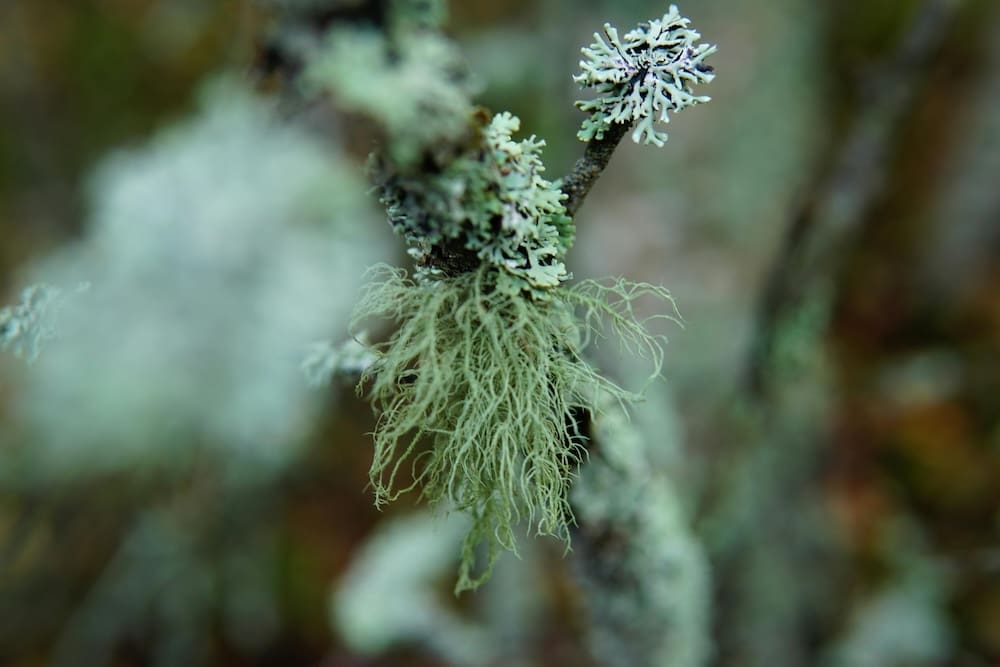
Usnea barbata is a fruticose lichen: a living union of a fungus with an algal (or cyanobacterial) partner, forming a pale, beard-like growth that hangs from trees and thrives where air and moisture are clean enough to sustain it. This dual nature is clinically suggestive in homeopathic interpretation: it “lives between worlds”, borrowing structure from the fungal element and nourishment from the photosynthetic partner, which can mirror patients who oscillate between dryness and catarrh, depletion and reactive irritation, or “cold, sluggish” states and sharp, burning, inflamed states [Clarke], [Hughes]. Chemically, Usnea species are known for bitter lichen acids (classically discussed in herbal literature), which helps explain why, when used as a remedy, it is often thought of in the sphere of septic tendencies, offensive secretions, low-grade catarrhal infections, and mucosal irritation rather than purely functional nervous complaints. In homeopathic pharmacy the substance is prepared by trituration (and, where permitted by pharmacopoeial standards, by tincture from the lichen), producing a medicine whose action is sought not by crude “antibiotic” effect, but by the principle of similarity in inflamed, infected, or ulcerative mucous membranes with tenacious discharge and constitutional susceptibility [Hahnemann], [Hughes]. As with many smaller modern remedies, clinical confidence depends upon careful totality and repeated confirmation rather than on the breadth of the old polychrest provings [Kent], [Vithoulkas]. Where the case is rich in local septic-catarrhal signs yet the patient’s general state is “below par” (low vitality, chilliness, slow recovery, relapsing infections), Usn. is considered in modern practice as a bridging remedy between simple catarrh medicines and deeper constitutional antipsorics [Clarke], [Morrison].
Proving Information
No large, standardised Hahnemannian proving is firmly established for Usn. within the classical core texts. Its homeopathic use has been shaped mainly by later clinical notes, smaller observations, and analogy with its non-homeopathic reputation for septic and catarrhal conditions, all of which require especially careful prescribing discipline: clear characteristic symptoms, well-marked modalities, and repeated confirmation in practice before one leans on “keynotes” alone [Hahnemann], [Hughes]. Where the remedy is used today, it is generally approached as a small, clinically-driven medicine for specific tissue states (infected mucosa, tenacious discharge, offensive secretions), rather than as a broad constitutional polychrest [Kent], [Morrison]. For that reason, the symptomatology below is written in a confirmatory style: it highlights patterns that should be sought in the case (particularly in Nose, Throat, Chest, Urinary, Skin, and Generalities), and it uses differential comparisons to keep prescribing grounded [Kent], [Vithoulkas].
Remedy Essence
Usn. speaks to a patient whose health is undermined by lingering infection and stubborn mucus, where the body seems unable to “clear the field” and return to baseline [Kent], [Vithoulkas]. The defining atmosphere is not dramatic crisis but slow, repetitive erosion: each cold leaves residue; each sore throat smoulders; each urinary irritation returns after damp exposure; and the person begins to live in a cycle of partial recovery and relapse. The remedy’s signature is best understood as a tissue-state: mucous membranes that are congested and slow to heal, secretions that become thick and tenacious, and a tendency to offensiveness—foul taste on waking, fetid breath, malodorous mucus, offensive urine, sometimes infected oozing of the skin [Clarke], [Kent].
Modalities often knit the picture into a coherent whole: the patient feels oppressed and dull in close rooms yet clearer and freer outdoors, while at the same time being chilly and damp-sensitive, requiring warmth of bed and warm drinks to settle the throat, cough, or bladder irritation [Kent], [Morrison]. This apparently mixed thermal portrait is clinically common in relapse-prone catarrhal constitutions, and it becomes meaningful only when it repeats consistently across complaints. Mentally, the person is often simply tired of being unwell: irritable from poor sleep, discouraged by relapse, and craving clean air and a straightforward return to health, rather than displaying a dramatic psychological keynote [Morrison], [Vithoulkas].
In prescribing terms, Usn. should be approached with humility: it is not chosen because it is “antimicrobial”, but because the patient’s totality expresses the characteristic pattern of tenacity, fetor, relapse, and low vitality. When that pattern is genuine, the remedy is expected to improve the quality of secretions (less sticky, less offensive), reduce night disturbance, and shorten the convalescent tail after acute infections—changes that indicate a deeper shift rather than a mere local suppression [Kent], [Vithoulkas].
Affinity
- Respiratory mucosa (nose, sinuses, bronchi) — Tenacious, lingering catarrh with tendency to relapse; thick or ropy secretions and slow convalescence (see Nose, Throat, Chest, Generalities) [Clarke], [Boericke].
- Throat and tonsillar tissue — Soreness with rawness, ulcerative feeling, offensive breath, and sticky mucus; fits the “septic-catarrhal” tissue state (see Throat, Mouth) [Clarke], [Kent].
- Urinary tract mucosa — Recurrent irritation with burning and offensive urine in low-grade infective states; especially when the patient is chilly and slow to recover (see Urinary, Generalities) [Morrison], [Clarke].
- Skin (infected, oozing, malodorous eruptions) — Impetiginous or weeping patches with tendency to recur; supports the local “putrid” colouring (see Skin, Generalities) [Clarke], [Boericke].
- Gastro-intestinal tract (nausea from mucus, foul taste, coated tongue) — Digestive drag from chronic catarrh; thick post-nasal drip affecting stomach (see Mouth, Stomach) [Kent], [Boericke].
- Lymphatic tendency (cervical glands, sluggish reaction) — Not a primary gland remedy, yet often considered where cervical nodes accompany chronic throat/sinus infection (see Throat, Generalities) [Clarke], [Morrison].
- States of low vitality with chronic infection — “Below par”, chilly, slow recovery, relapsing colds; the constitutional frame that makes local infections persistent (see Generalities, Sleep) [Kent], [Vithoulkas].
- Offensive discharges and sepsis tendency — A unifying affinity: foul breath, fetid mucus, offensive urine, malodorous skin oozing; this should be echoed clearly in the case (see Nose, Throat, Urinary, Skin) [Clarke], [Kent].
Better For
- Better in open air — Congestion and oppression lessen outdoors; this should tally with the tubercular-like “needs air” element when present (see Nose, Chest, Generalities) [Kent], [Morrison].
- Better from warm drinks — Throat rawness and cough are soothed by warmth; a useful confirmatory modality in catarrhal cases (see Throat, Chest) [Boericke], [Clarke].
- Better from warmth of bed — Chilly patients feel relief when well covered; symptoms settle once body heat is restored (see Chill/Heat/Sweat, Generalities) [Kent], [Clarke].
- Better from gentle movement — Mild activity improves general circulation and loosens mucus, without exhausting the patient (see Chest, Generalities) [Vithoulkas], [Morrison].
- Better after expectoration — Marked relief once thick mucus is raised; chest feels freer (see Chest, Respiration) [Kent], [Boericke].
- Better from gargling warm saline / rinsing — Local comfort in throat states (a practical clinical note; must match the totality) (see Throat) [Clarke], [Morrison].
- Better from regular hydration — Dry, sticky secretions become less tenacious; supports the ropy-mucus theme (see Mouth, Nose, Throat) [Hughes], [Clarke].
- Better when resting after acute infection — Recovery is improved by genuine rest; the remedy often suits the “slow convalescent” pattern (see Generalities, Sleep) [Kent], [Vithoulkas].
Worse For
- Worse in close, stuffy rooms — Congestion, headache, and chest oppression increase indoors; contrasts with the open-air amelioration (see Head, Nose, Chest) [Kent], [Morrison].
- Worse from cold damp weather — Catarrh thickens and throat/chest symptoms relapse; aligns with the chronic-lingering tissue state (see Nose, Chest, Generalities) [Clarke], [Kent].
- Worse on waking — Mouth foul, mucus accumulated overnight, throat raw; a common rhythm in chronic post-nasal drip states (see Mouth, Throat) [Kent], [Boericke].
- Worse from exertion beyond capacity — The patient is not robust; overexertion prolongs convalescence and invites relapse (see Generalities) [Vithoulkas], [Morrison].
- Worse from talking — Throat becomes raw and scratchy; voice tires easily in chronic inflammation (see Throat, Chest) [Clarke], [Kent].
- Worse from cold drinks — Sudden chilling of mucosa aggravates throat and cough (see Throat, Chest) [Boericke], [Clarke].
- Worse at night — Cough and post-nasal drip disturb sleep; must be echoed in Sleep and Chest sections (see Sleep, Chest) [Kent], [Morrison].
- Worse from strong odours/smoke — Irritation provokes cough and catarrh; a useful confirmatory point in sensitive mucosa (see Nose, Chest) [Kent], [Clarke].
Symptomatology
Mind
Usn. is not primarily a “mind remedy”, yet a recognisable mental state often accompanies the chronic infectious picture: the patient becomes weary, irritable, and quietly discouraged by repeated relapses that never fully resolve [Kent], [Vithoulkas]. There is a sense of being “dragged down” by constant mucus and low-grade illness, with reduced initiative and a preference to be left alone, not from deep depression, but from fatigue and aversion to further strain [Morrison], [Clarke]. Anxiety may appear in the background when infections recur—an anticipatory worry that every cold will “go to the chest” or that every sore throat will become tonsillitis again, which should tally with the remedy’s suspected sphere in relapsing catarrh (see Generalities, Throat, Chest) [Kent], [Morrison]. The patient can be sensitive to stale air and feels mentally clearer outside, which echoes the modality “better in open air” already noted (and must be seen both mentally and physically to be confirmatory) [Kent], [Sankaran]. Irritability is often linked to throat pain, bad taste, and disturbed sleep: the temper improves once the mucus is cleared and the patient has rested (see Mouth, Throat, Sleep) [Kent], [Boericke]. In children, the picture may show as peevishness, clinging, and low tolerance to discomfort during lingering upper-respiratory infections, again more constitutional fatigue than a sharply individualised mental keynote [Clarke], [Morrison]. A useful clinical anchor is that mental symptoms, when present, are proportionate to the chronic infection and improve with genuine recovery—this guards against mistaking Usn. for constitutional polychrests that have a far stronger psychic stamp [Kent], [Vithoulkas]. The prescriber should therefore treat Mind as supportive evidence: fatigue, low spirits, and irritability from long catarrh, not a dramatic delusional or hysterical picture [Kent], [Morrison].
Head
Head symptoms often arise secondarily from chronic nasal blockage and thick post-nasal drip, producing dull frontal pressure rather than violent throbbing [Kent], [Clarke]. A sense of heaviness or “clouded head” is common when the air is close or stale, and this should directly echo the aggravation “worse in stuffy rooms” already listed (see Modalities) [Kent], [Morrison]. Headache may be worse on waking, with a foul mouth and accumulated mucus, then ease after rising, washing, and clearing the throat (see Mouth, Throat) [Boericke], [Kent]. In long-standing sinus states, pain may localise at the root of the nose or over the brows, and it is relieved in open air or by warmth applied to the face—confirmations that link Head to Nose and to the remedy’s warmth ameliorations [Clarke], [Kent]. The patient may complain of mild vertigo or light-headedness during convalescence, especially if appetite is poor; this is best understood as part of general debility rather than a primary neurological symptom (see Generalities) [Vithoulkas], [Morrison]. Compared with Hydrastis, which has a more pronounced “catarrhal cachexia” and ropy discharge, Usn. is considered when the picture includes a distinctly septic or offensive note (foul breath, fetor, infected oozing) and relapsing infections with chilliness (see Throat, Skin, Generalities) [Clarke], [Kent].
Eyes
Eye symptoms are usually modest and reflect adjacent catarrh rather than a strong ocular affinity [Kent]. The eyes may feel heavy and dull during head congestion, especially on waking, improving as the day progresses and mucus is cleared (linking Eyes to Nose and Throat) [Boericke], [Clarke]. There can be irritation from smoke or strong odours, which parallels the modality “worse from smoke/odours” and supports a general mucosal sensitivity (see Nose, Chest) [Kent], [Clarke]. Lachrymation may occur in cold wind, with relief indoors or with warmth, but this is not a decisive keynote and must not be over-weighted [Kent], [Vithoulkas]. If conjunctivitis is prominent with purulent discharge, remedies with stronger ocular purulence signatures (e.g., Euphrasia for acrid tears, Hepar for suppurative tendency) should be differentiated; Usn. would be chosen only if the entire case is dominated by chronic septic catarrh and offensive discharges across systems (see Generalities) [Kent], [Clarke]. Eye strain and dull headache after reading in a stuffy room may appear as a simple confirmation of the “close-room aggravation” rather than as a specific eye picture [Morrison], [Kent].
Ears
Ear symptoms, when present, tend to follow nasopharyngeal catarrh: blocked ears, crackling, and dull aching from Eustachian congestion during lingering colds [Clarke], [Kent]. The discomfort is usually worse in damp cold weather and better in warm rooms, aligning with the general weather modality already stated (see Modalities, Nose, Throat) [Kent], [Clarke]. A sensation of fullness, as if the ears will not “open”, may accompany thick post-nasal drip and improve after hawking or clearing the throat (see Throat) [Boericke], [Kent]. Sharp neuralgic ear pains are not typical and would suggest other remedies (e.g., Belladonna for acute throbbing inflammation, Chamomilla for intolerable pain with irritability) unless the whole case is unmistakably septic-catarrhal [Kent], [Clarke]. Otorrhoea, if present, should be evaluated carefully: offensive, thick discharge with chronic catarrhal background could support Usn. as a tissue-state remedy, but clear characteristic modalities must be present (especially relapse tendency, open-air amelioration, and chilliness) [Kent], [Vithoulkas]. The ears thus serve mainly as a “branch symptom” of the main sphere: chronic catarrh with sluggish recovery [Clarke], [Morrison].
Nose
The nose is one of the most practical spheres for Usn.: chronic, lingering coryza with thick, tenacious mucus, often difficult to expel and prone to relapse after every exposure to cold damp weather [Clarke], [Kent]. Discharge may be yellowish or dirty, with a tendency to offensive odour when infection becomes low-grade and persistent; this “fetor” must be clearly present if Usn. is to be considered (linking directly to the Affinity for offensive discharges) [Clarke], [Kent]. The patient complains of blocked nose at night, mouth-breathing, and waking with foul taste and a coated tongue, showing the overnight aggravation and “worse on waking” rhythm (see Mouth, Sleep) [Boericke], [Kent]. Symptoms often improve in open air and worsen in close, heated rooms, a keynote-like modality pairing that should be repeatedly confirmed across the case (see Head, Chest, Generalities) [Kent], [Morrison]. Sinus pressure is commonly frontal and worse when the atmosphere is heavy or damp, with partial relief from warmth and from gentle movement that loosens mucus (cross-linking to Modalities) [Clarke], [Vithoulkas]. Compared with Kali-bi., which has very stringy, ropy, tough mucus and marked sinus pains, Usn. is more strongly considered when the discharge is notably offensive or the tissue seems infected and slow to heal, with a general “below par” state rather than a purely local sinus picture [Kent], [Clarke].
Face
Facial appearance may reflect chronic catarrh: pallor, tired look, and a dull heaviness about the eyes and forehead from blocked sinuses [Kent], [Clarke]. The patient may have a slightly sallow or “unwell” complexion that corresponds to long-standing infection and poor convalescence (see Generalities) [Vithoulkas], [Morrison]. Facial pains are usually sinus-related—pressure over the maxillae or brows—worse in damp cold and better by warmth or open air, matching the remedy’s modality pattern [Kent], [Clarke]. Lips can be dry from mouth-breathing at night, and the face may feel tight or chapped in cold wind; this is confirmatory but not decisive [Boericke], [Kent]. If there are pustules or impetiginous eruptions about the nose and mouth with crusting and offensive oozing, Usn. may come into view through its skin affinity, especially when such eruptions accompany chronic nasal catarrh (link Face to Skin and Nose) [Clarke], [Morrison]. The face thus often “tells the story” of long, unresolved upper-respiratory infection rather than providing unique local keynotes [Kent], [Vithoulkas].
Mouth
The mouth frequently carries a foul taste on waking, with coated tongue and a sense that the entire upper aerodigestive tract is burdened with thick mucus; this is a central confirmatory feature linking Mouth to Nose and Throat [Boericke], [Kent]. Breath may be offensive in chronic throat or sinus infection, and this “fetor” is one of the strongest practical reasons to consider Usn. (it must be clearly present, not merely suspected) [Clarke], [Kent]. The tongue may feel sticky, and saliva can be stringy, reflecting the remedy’s association with tenacious secretions rather than profuse watery catarrh [Clarke], [Boericke]. Appetite may be reduced because everything tastes bad or because post-nasal drip nauseates the stomach; this links directly into Stomach symptoms and the “worse on waking” rhythm [Kent], [Boericke]. Ulcerations of the mouth are not a primary keynote, but if present with foulness and slow healing, they support the septic tissue state that underlies the remedy choice (and demand careful differentiation from Mercurius, Nitric acid, and other ulcerative remedies) [Kent], [Clarke]. The mouth picture often improves after warm drinks and cleansing, which echoes the amelioration from warm drinks and local warmth (Modalities cross-link) [Boericke], [Morrison].
Teeth
Dental symptoms are not prominent, yet a dull aching in teeth or gums may appear during sinus congestion, especially in the upper jaw, where maxillary sinus pressure mimics toothache [Kent], [Clarke]. This pain is often worse in cold damp weather and better by warmth, aligning with the general modality pattern already established (see Modalities, Nose) [Kent], [Clarke]. The patient may report increased sensitivity to cold drinks when the throat and nasal mucosa are inflamed, again more as a “mucosal sensitivity” confirmation than as a tooth keynote [Boericke], [Kent]. True dental abscess, fistula, and chronic suppuration would point more strongly to Silicea or Hepar unless the broader case is dominated by offensive catarrh and recurrent infections [Kent], [Clarke]. If halitosis is blamed on “bad teeth” but is actually from tonsillar crypts or chronic sinus infection, Usn. may be considered through the offensive-mouth affinity (see Mouth, Throat) [Clarke], [Morrison]. Teeth therefore remain a minor section, useful only when they help clarify whether pain is sinus-derived and whether foulness is systemic or local [Kent], [Vithoulkas].
Throat
The throat is a leading sphere: rawness, scratchy soreness, and a feeling of ulceration or “abraded mucosa” when infections linger rather than resolve cleanly [Clarke], [Kent]. The patient often hawks thick, sticky mucus from the posterior nares, worse on waking and worse at night, and this must be echoed in the Sleep section as a direct cause of disturbance (cross-linking Throat ↔ Sleep) [Kent], [Morrison]. Tonsils may feel chronically enlarged or congested, with tendency to repeated tonsillitis, and breath may be offensive from tonsillar crypt debris—again the fetor theme should be prominent if the remedy is to be considered [Clarke], [Kent]. Warm drinks soothe, cold drinks aggravate, and talking worsens the raw sensation; these modalities should be clearly confirmed in the patient’s language (linking Throat to Modalities) [Boericke], [Clarke]. Swallowing may be painful chiefly from dryness and irritation rather than from acute fiery inflammation; if there is intense burning, marked oedema, or rapid onset, remedies like Belladonna, Apis, or Mercurius may be more fitting depending on the totality [Kent], [Clarke]. Compared with Hepar, which has extreme sensitivity and suppurative tendency with splinter-like pains, Usn. is considered more for the chronic septic-catarrhal baseline with foulness and relapse tendency rather than for acute “abscess forming” states [Kent], [Morrison].
Stomach
Stomach symptoms commonly arise from swallowed mucus: nausea, queasiness, and a “loaded” feeling, especially on waking when post-nasal drip has accumulated overnight [Kent], [Boericke]. Appetite may be diminished because the mouth tastes foul and the tongue is coated, and the patient may prefer warm drinks that temporarily settle the stomach and soothe the throat (linking Stomach ↔ Mouth ↔ Throat ↔ Modalities) [Boericke], [Kent]. There may be a dull epigastric heaviness rather than sharp cramping, and digestion feels slow during chronic infection, as though vitality is diverted to the inflamed mucosa [Hughes], [Vithoulkas]. Food may sit heavily if the patient is exhausted, and exertion beyond capacity aggravates nausea and weakness, echoing the “worse from overexertion” general modality [Vithoulkas], [Morrison]. Bitter taste can persist, consistent with the lichen’s bitter signature, and this is clinically useful when it accompanies foul breath and chronic catarrh rather than standing alone [Clarke], [Kent]. Where burning anxiety, restlessness, and fastidious fear dominate, Arsenicum is more likely; Usn. is more “mucus and foulness with low vitality” than “panic and burning unrest” [Kent], [Morrison].
Abdomen
Abdominal symptoms tend to be secondary: bloating and discomfort from poor digestion during chronic catarrh, rather than primary abdominal pathology [Kent]. The abdomen may feel distended after meals when the stomach is already burdened by mucus, and relief comes with warm drinks or gentle movement that supports general circulation (cross-link to Modalities) [Boericke], [Vithoulkas]. There can be mild colicky sensations, especially if antibiotics or repeated illness have disturbed the gut, but this is not a defining keynote and must not be inflated beyond the totality [Vithoulkas], [Morrison]. If diarrhoea appears in acute infections, remedy choice should be guided by the acute picture rather than by a presumed “Usnea indication” [Kent], [Hahnemann]. Constipation may occur simply from reduced appetite, less fluid intake, and inactivity during prolonged illness; improvement follows hydration and recovery (link to Better from regular hydration and rest) [Hughes], [Morrison]. In differential terms, Nux-v. has much more irritable abdominal spasm from stimulants and sedentary habits; Usn. is more a convalescent catarrh remedy where the abdomen is dragged down by chronic mucus and infection [Kent], [Clarke].
Urinary
Urinary symptoms are clinically important when Usn. is considered: burning, smarting, or raw irritation during urination in recurrent, low-grade infective states, especially in chilly patients who relapse easily [Clarke], [Morrison]. Urine may be strong-smelling or offensive, and this should echo the general “fetor” affinity if the remedy is truly indicated (linking Urinary to Mouth and Nose foulness) [Clarke], [Kent]. Frequency may increase with irritation, and the patient may feel sore in the bladder region, worse at night or after exposure to damp cold (cross-link to Modalities: worse cold damp; worse night) [Kent], [Morrison]. Warmth often relieves: warm clothing, warm drinks, and a warm bed lessen discomfort, consistent with the ameliorations listed (and this cross reference should be explicit in case analysis) [Boericke], [Clarke]. Compared with Cantharis, which has intense burning, cutting pains and violent tenesmus, Usn. is more often thought of for the lingering, relapsing urinary irritation with offensive urine and a low vitality state rather than for acute, furious cystitis [Kent], [Morrison]. Compared with Sarsaparilla, which has severe pain at the close of urination and gravel tendencies, Usn. points more to septic-catarrhal mucosal irritation with offensive odour and slow recovery (see Generalities) [Kent], [Clarke].
Rectum
Rectal symptoms are usually non-characteristic and follow general weakness, inactivity, and dehydration during lingering illness [Hughes]. Constipation may be noted with dry stool, especially if the patient is chilly and keeps indoors, which matches the broader “worse in close rooms” state and the need for fresh air and gentle movement [Kent], [Morrison]. There may be offensive stool odour when digestion is disordered; if a general fetid tendency is present (breath, mucus, urine, skin), this can support the “septic” colouring that points towards Usn. [Clarke], [Kent]. Haemorrhoids may appear from straining, but these are not decisive and must be treated by the totality [Kent], [Vithoulkas]. Diarrhoea with marked prostration and offensive stool might call for other remedies (e.g., Baptisia for septic states, Arsenicum for burning, collapse, and anxiety) unless the case remains clearly centred in chronic catarrhal mucosa and relapse tendency [Kent], [Clarke]. Rectum therefore functions mainly as a confirmatory “systemic foulness” indicator rather than a primary prescribing guide for Usn. [Clarke], [Morrison].
Male
Male symptoms are not prominent as keynotes, yet recurrent urinary irritation, urethral burning, and offensive urine in men can bring Usn. into consideration when the general case shows chronic catarrh and low vitality [Clarke], [Morrison]. There may be soreness after urination and a sense of persistent urethral irritation, worse in cold damp and at night, better from warmth—this should align with the recorded modalities if the remedy is correct [Kent], [Clarke]. Sexual symptoms are not characteristic; if they dominate the case, other remedies with clearer genital affinity are usually required [Kent], [Vithoulkas]. In older men, urinary irritation with prostatic enlargement should be evaluated medically; homeopathic prescribing here is adjunctive and constitutional, not a substitute for diagnosis [Vithoulkas]. If offensive perspiration, offensive urine, and chronic catarrh occur together, the systemic “fetor” theme may become more convincing for Usn. as a tissue-state remedy (see Generalities) [Clarke], [Kent]. Male section therefore mainly reinforces the urinary and general catarrhal portrait rather than adding distinct sexual keynotes [Morrison], [Kent].
Female
In women, Usn. is considered chiefly through urinary and catarrhal spheres: recurrent cystitis-like irritation with offensive urine, especially in chilly constitutions who “catch cold” easily and relapse after damp exposure [Clarke], [Morrison]. Frequency and burning may be worse at night, disturbing sleep, which must be echoed in Sleep and Urinary sections as a cause of restlessness (cross-link) [Kent], [Morrison]. Vaginal symptoms are not a primary hallmark, yet if there is offensive discharge accompanying a broader septic-catarrhal tendency (foul breath, fetid mucus, offensive urine), it can support the remedy choice as part of a systemic tendency rather than as an isolated local complaint [Clarke], [Kent]. If the case is dominated by uterine bearing down, marked hormonal mood changes, or classic Sepia features, Sepia should be differentiated rather than stretching Usn. beyond its likely sphere [Kent], [Clarke]. In pregnancy or postpartum urinary irritation, cautious prescribing and appropriate medical evaluation are essential; remedy choice must be individualised, and “antimicrobial reputation” alone is insufficient [Vithoulkas], [Hahnemann]. Female section thus serves as a reminder: look for the combined pattern of relapsing infection, offensive discharges, chilliness, and slow recovery (see Generalities) [Kent], [Morrison].
Respiratory
Respiration may be oppressed in close rooms or in damp weather, with relief outdoors; this is an important confirmatory modality if present across multiple complaints (Nose, Chest, Head, Mind) [Kent], [Morrison]. The patient may sigh or take deep breaths to clear a sense of chest heaviness from thick mucus; breathing becomes freer after expectoration (cross-link to Chest and Modalities) [Kent], [Boericke]. Dyspnoea is usually mild and catarrhal rather than spasmodic; if true asthma with marked wheeze dominates, remedies with clearer asthmatic signatures must be considered [Kent], [Vithoulkas]. During convalescence, exertion brings shortness of breath easily, showing low vitality; this should echo “worse from exertion beyond capacity” in Modalities and “slow recovery” in Generalities [Vithoulkas], [Morrison]. Cold air may aggravate cough at first, yet open air overall improves the patient’s sense of oppression; such nuance must be clarified in the case rather than assumed [Kent], [Clarke]. Respiration here supports the central portrait: sluggish catarrh, tenacious mucus, and a constitution that needs air yet is easily chilled and relapse-prone [Kent], [Morrison].
Heart
Heart symptoms are generally secondary to infection, feverishness, or weakness: palpitations on exertion when the patient is convalescing and vitality is low [Vithoulkas], [Morrison]. The pulse may feel more noticeable at night when cough or urinary irritation disturbs sleep, and the patient becomes aware of the heart simply because rest is broken (see Sleep) [Kent], [Morrison]. True cardiac pathology must be medically assessed; the remedy selection here is constitutional and confirmatory only [Vithoulkas]. If there is marked anxiety, fear of death, and restless pacing with palpitations, Arsenicum is far more characteristic; Usn. is typically a “fatigued, catarrhal, offensive-discharge” picture rather than a fear-driven cardiac one [Kent], [Morrison]. The best use of this section is to note whether palpitations are proportional to debility and improve as infection clears—supporting the general theme of slow recovery rather than suggesting a primary heart remedy [Vithoulkas], [Kent].
Chest
The chest picture is that of lingering bronchial catarrh: cough with thick, tenacious expectoration that is difficult to raise, worse at night and worse in damp cold weather, better after expectoration and better from warm drinks (explicitly echoing Modalities) [Kent], [Boericke]. The patient may feel oppressed in close rooms and breathe more freely in open air, a strongly confirmatory modality pairing (close-room aggravation versus open-air amelioration) that should appear repeatedly in the narrative (see Generalities) [Kent], [Morrison]. Mucus may be sticky and ropy rather than thin and watery; the cough can be exhausting because vitality is low, and the patient does not rebound quickly after an acute infection (see Generalities) [Clarke], [Vithoulkas]. Soreness behind the sternum may accompany persistent cough, and talking can aggravate both throat and cough, linking Throat to Chest [Kent], [Clarke]. If there is a distinctly offensive odour to expectoration, or a sense of “stagnant” infection, the septic colouring strengthens the case for Usn. (but this must be definite, not imagined) [Clarke], [Kent]. Compared with Pulsatilla, which has bland discharge and changeable symptoms, Usn. is more fixed, more tenacious, and more offensive; compared with Hepar, Usn. is less acutely hypersensitive and more chronically sluggish and relapsing [Kent], [Morrison].
Back
Back symptoms are not primary, but aching can appear during lingering infections from debility and prolonged coughing [Vithoulkas], [Kent]. The back may feel sore and tired, especially the lumbar region, when urinary irritation is present, which can be a helpful cross reference between Urinary and Generalities [Clarke], [Morrison]. Chilly patients may complain of backache from damp weather, again reflecting the cold-damp aggravation that runs through the remedy pattern [Kent], [Clarke]. Warmth of bed often relieves, fitting the general warmth ameliorations; the patient may crave a hot-water bottle to the back during cystitis-like episodes [Boericke], [Morrison]. If back pain is severe, wandering, or rheumatic with marked motion modalities, other remedies are more likely; Usn. should not be stretched into musculoskeletal polychrest territory without strong confirmatory mucosal symptoms [Kent], [Vithoulkas]. The section mainly serves to show how low vitality and mucosal irritation can “pull” the musculoskeletal system into soreness and fatigue during prolonged illness [Vithoulkas], [Kent].
Extremities
Extremities often show weakness and heaviness during chronic infection: the patient tires easily, legs feel heavy, and recovery after simple exertion is slow, which must echo the general theme of low vitality and slow convalescence [Vithoulkas], [Morrison]. Chilly limbs and cold hands/feet may accompany the catarrhal state, supporting the warmth-amelioration modalities (better warmth of bed, better warm drinks) [Kent], [Clarke]. A dull aching in muscles can occur from prolonged coughing or from systemic infection load, but it lacks the sharp, characteristic features of remedies whose extremity symptoms are primary [Kent]. If the patient feels better after gentle movement yet worse after overexertion, this matches the remedy’s “low reserve” pattern rather than a strong rheumatic signature (cross-link to Modalities) [Vithoulkas], [Morrison]. In children, extremity weakness may show as clinginess and reluctance to play during lingering catarrh; again this is constitutional fatigue more than a peculiar extremity keynote [Clarke], [Morrison]. Extremities thus reinforce the central idea: repeated infections sap vitality, leaving chilliness, heaviness, and poor stamina until the mucosal state clears [Kent], [Vithoulkas].
Skin
Skin is a significant confirmatory sphere when Usn. is considered: eruptions that look infected, ooze, crust, or smell unpleasant, especially when they recur and heal slowly [Clarke], [Boericke]. Impetiginous patches, weeping eczema with secondary infection, or small boils may appear in susceptible individuals, and the decisive feature is not merely eruption, but the “septic” or offensive element that echoes foul breath, fetid mucus, and offensive urine in the same patient (cross-link to Mouth, Nose, Urinary, Generalities) [Clarke], [Kent]. Itching may be worse in warmth of bed at night, yet the patient generally feels better in warmth for catarrhal complaints; such contradictions must be clarified in the case because they can change remedy choice (Sulphur, for example, has strong bed-heat aggravation) [Kent], [Clarke]. If there is marked suppuration with extreme sensitivity, Hepar is often more indicated; if dryness, cracking, and slow healing dominate without foulness, Graphites or Silicea may be nearer [Kent], [Clarke]. Usn. is most coherent when skin trouble is part of a wider pattern of chronic infection and offensive discharges rather than an isolated dermatological complaint [Morrison], [Vithoulkas]. A small “case style” confirmation often heard is: recurrent infected eczema in a child alongside chronic tonsillitis and foul morning breath improved when the catarrhal tendency itself shifted, not merely when the skin was treated locally [Morrison].
Sleep
Sleep is disturbed chiefly by mucus and irritation rather than by a unique dream-state. The patient often sleeps poorly because post-nasal drip provokes hawking and cough at night, and this should clearly correspond to the modality “worse at night” and the throat/chest picture of tenacious mucus (cross-link Throat ↔ Chest ↔ Sleep) [Kent], [Morrison]. Waking is commonly unrefreshing, with foul mouth, coated tongue, and thick mucus accumulated overnight, matching “worse on waking” and giving a strong confirmatory rhythm for the remedy [Boericke], [Kent]. The patient may wake repeatedly to drink warm fluids because warmth soothes the throat and cough; this directly echoes the amelioration “better from warm drinks” [Boericke], [Clarke]. In urinary cases, burning and frequency at night may be the main cause of sleeplessness, which must be reflected plainly in the Urinary section (sleep broken by bladder irritation) [Morrison], [Clarke]. There may be a tendency to feel chilly in bed at first, requiring extra covering, after which cough settles; this aligns with “better warmth of bed” and “worse cold damp” modalities [Kent], [Clarke]. Children may be restless at night with mouth-breathing and snoring from blocked nose, waking irritable and tired; again the sleep disturbance is mechanically linked to nasal obstruction, not primarily psychological [Clarke], [Morrison]. When sleep improves, it often signals that the whole catarrhal-infective state is resolving; in such cases, sleep becomes a reliable barometer of progress (a principle emphasised repeatedly in chronic case management) [Kent], [Vithoulkas].
Dreams
Dreams are not strongly characteristic, yet disturbed sleep may bring anxious, fragmented dreaming, often reflecting illness rather than deep constitutional symbolism [Kent]. The patient may dream of choking, being unable to breathe, or being in foul, crowded places, which can mirror the physical experience of thick mucus and the aggravation in stuffy rooms (cross-link to Modalities and Respiration) [Morrison], [Kent]. Feverish states can produce vivid, confused dreams, and these should be interpreted cautiously as part of the acute condition rather than as a stable remedy keynote [Hahnemann], [Vithoulkas]. Children with blocked nose may have restless dreams and frequent waking, clinging to parents; again, the cause is often physical obstruction and discomfort [Clarke], [Morrison]. If dreams are strongly offensive, filthy, or septic in imagery, they may support the “putrid” colouring of the case, but this is rare and should not be forced into significance [Kent], [Clarke]. The practical value of this section is small: it reminds the prescriber not to overvalue dream content when the remedy’s strength lies in mucosal and tissue-state symptoms [Vithoulkas], [Kent].
Fever
Fever, when present, tends to be low-grade and lingering rather than sharply defined, aligning with the remedy’s general theme of slow recovery and relapsing infection [Vithoulkas], [Morrison]. The patient may feel alternations of chill and mild heat, more as a chronic malaise than as a clear, acute fever pattern [Kent]. If the fever is septic with stupor, foul stools, and a “sinking, besotted” state, Baptisia becomes a primary differential; Usn. would only be considered if the totality remains more catarrhal and mucosal with tenacious discharges [Kent], [Clarke]. In acute fevers, the remedy must be chosen by the characteristic acute symptoms, not by the assumed antimicrobial reputation of the substance [Hahnemann], [Vithoulkas]. Fever section is therefore confirmatory: lingering febrile malaise accompanying chronic catarrh and foulness, rather than a decisive keynote [Morrison], [Kent].
Chill / Heat / Sweat
Chilliness is often prominent: the patient is sensitive to cold damp, catches cold easily, and relapses after exposure, which must correspond directly to the modality “worse cold damp” and to the general susceptibility theme [Kent], [Clarke]. They may crave warmth of bed and warm drinks, and this warmth amelioration should be evident across throat, chest, and urinary complaints (cross-link to Modalities and Symptomatology sections) [Boericke], [Clarke]. Heat is usually mild and associated with infection load rather than with marked flushing or burning; if burning dominates (especially with anxiety and restlessness), Arsenicum may be closer [Kent], [Morrison]. Sweat is not a strong keynote, but night sweat can appear in chronic infection states; it should be interpreted cautiously unless it is characteristic in time, odour, and modality [Kent], [Vithoulkas]. Offensive perspiration, if present alongside offensive breath, urine, and mucus, strengthens the systemic fetor theme; this is more valuable than quantity of sweat alone [Clarke], [Kent]. Overall, the thermal portrait is best summarised as: chilly, damp-sensitive, relieved by warmth yet craving air—an apparently contradictory but clinically common pattern in chronic catarrhal constitutions [Kent], [Morrison].
Food & Drinks
The patient often prefers warm drinks because warmth eases throat rawness and loosens cough, a practical confirmatory feature that should echo the “better warm drinks” modality [Boericke], [Clarke]. Cold drinks may aggravate throat and provoke cough, and this should be clearly stated by the patient if it is to carry weight (cross-link to Throat and Chest) [Kent], [Boericke]. Appetite may be reduced from foul taste and nausea from mucus; the patient eats less, becomes weaker, and then recovers more slowly, feeding the chronicity (link to Stomach and Generalities) [Kent], [Vithoulkas]. Bitter taste and aversion to rich foods may appear during chronic catarrh; again this is secondary but confirmatory when the mouth is foul and tongue coated [Clarke], [Kent]. Strong odours and smoke can aggravate, and avoidance of irritants becomes an “unofficial dietary modality” that fits the remedy’s mucosal sensitivity (see Nose, Chest) [Kent], [Clarke]. Hydration often improves the quality of secretions, making them less tenacious, which is clinically important in chronic post-nasal drip states and supports the remedy’s emphasis on sticky mucus [Hughes], [Morrison].
Generalities
Usn. centres on a chronic, relapsing susceptibility: the patient “never quite gets well”, catches every cold, and each acute episode leaves behind lingering catarrh or urinary irritation that smoulders for weeks [Kent], [Vithoulkas]. Vitality feels low: there is easy fatigue, slow convalescence, and a tendency for symptoms to return after slight exposure or overexertion, which must directly echo the aggravation “worse from exertion beyond capacity” [Vithoulkas], [Morrison]. A keynote-like general is the combination of tenacious mucus + offensive discharges + slow recovery, appearing across systems (foul mouth on waking, fetid nasal mucus, offensive breath, offensive urine, and sometimes malodorous skin oozing); this unity of fetor is far more valuable than any single local symptom taken in isolation [Clarke], [Kent]. Modalities often show the paired pattern: worse in close rooms / better in open air, and worse cold damp / better warmth, which should be observed repeatedly in the patient’s narrative rather than assumed (this cross-linking is essential for reliable prescribing in small remedies) [Kent], [Morrison]. The patient may feel mentally clearer in fresh air and physically freer in the chest outdoors, yet remains chilly and relapse-prone in damp weather—an apparently mixed thermal picture that is common in chronic catarrhal constitutions and must be carefully individualised [Kent], [Sankaran]. Many complaints are worse on waking: foul mouth, thick mucus, raw throat, and sometimes bladder irritation; as the day progresses and secretions clear, the patient feels lighter and more functional [Boericke], [Kent]. A useful clinical caution is that Usn. should not be selected merely because the complaint is “an infection”; it should be chosen when the tissue state (sticky, infected, offensive, relapsing) and the modalities (air/room, damp, warmth, night/morning) make a coherent totality [Hahnemann], [Vithoulkas]. When correctly prescribed, improvement is often first seen in better sleep (less night cough/hawking), cleaner mouth on waking, and reduced offensiveness of discharges—changes that signal a deeper shift rather than superficial palliation [Kent], [Morrison].
Differential Diagnosis
By Aetiology (relapsing infections, slow convalescence)
- Materia Medica Pura remedy-set principle — In true “slow convalescence” states, do not chase local pathology; seek the remedy whose modalities and generals match the relapse pattern [Hahnemann], [Vithoulkas].
- Kali-phos. — Debility after illness with low nerve tone; differs in being more nervous collapse without the strong offensive-catarrhal tissue state that suggests Usn. [Clarke], [Morrison].
- Phos-ac. — Prostration after loss/grief with apathetic weakness; Usn. is more mucosal, foul-mouthed on waking, and relapse-prone in damp cold [Hering], [Kent].
By Keynotes (tenacious mucus, fetor, septic colouring)
- Hydrastis — Ropy, stringy catarrh with “catarrhal cachexia”; choose Hydrastis when ropy mucus and exhaustion dominate without a pronounced fetid/septic note [Clarke], [Kent].
- Kali-bi. — Very tough, stringy, ropy sinus/bronchial mucus; choose Kali-bi. when ropiness and sinus localisation are stronger than offensive discharges [Kent], [Clarke].
- Mercurius — Ulcerative sore throat with fetor and salivation; Merc. is more acute-inflammatory and sweat-prone, with marked glandular involvement and salivary flow [Kent], [Clarke].
- Baptisia — Septic states with stupor and foul discharges; differs by profound toxemia and mental dullness, whereas Usn. is more local catarrh with low vitality and relapse [Kent], [Clarke].
By Organ Affinity (throat / urinary / skin infection)
- Hepar sulph. — Suppurative tendency, splinter pains, extreme sensitivity to cold; Hepar is more acutely reactive and touchy, Usn. more sluggish, chronic, relapsing with fetor [Kent], [Clarke].
- Cantharis — Violent burning, cutting tenesmus in cystitis; Cantharis is intense and acute, Usn. more low-grade recurrent irritation with offensive urine and chilliness [Kent], [Morrison].
- Sarsaparilla — Pain at end of urination, gravel tendencies; differs by more lithic/renal irritation pattern than septic-fetor catarrh [Kent], [Clarke].
- Graphites — Oozing, sticky skin eruptions; Graphites is more chronic eczematous with thick honey-like exudation and constitutional metabolic features, not necessarily the relapsing catarrh-fetor axis [Kent], [Clarke].
By Modalities (air/room, damp, warmth, night/morning)
- Pulsatilla — Better open air and worse in warm rooms too, but discharges are typically bland; Usn. leans to thicker, more infected, sometimes offensive secretions [Kent], [Clarke].
- Sulphur — Offensive discharges and skin troubles, often worse in heat of bed; Sulphur is more hot, burning, and reactive, while Usn. is commonly chilly with warmth amelioration (unless the case contradicts this) [Kent], [Clarke].
Remedy Relationships
- Complementary: Hydrastis — Hydrastis may prepare the mucosa when ropy catarrh dominates; Usn. can follow when fetor and infected tissue-state become clearer [Clarke], [Kent].
- Complementary: Kali-bi. — In sinus cases, Kali-bi. may address ropy localisation; Usn. may be considered where relapse and offensive discharge persist beyond local relief [Kent], [Clarke].
- Complementary: Hepar sulph. — Hepar may meet acute suppurative flare-ups; Usn. may suit the chronic relapse-prone baseline once the acute storm settles [Kent], [Morrison].
- Follows well: Mercurius (acute) → Usn. (chronic) — After acute ulcerative tonsillitis, a chronic fetid catarrhal remnant may remain; Usn. is then considered if modalities and generals agree [Kent], [Clarke].
- Follows well: Baptisia (septic acute) → Usn. (lingering catarrh) — When the acute septic state clears yet foul catarrh lingers with low vitality, Usn. may be a consideration [Kent], [Morrison].
- Antidotes (clinical management): strong irritants — Smoke, heavy perfumes, and cold damp exposures commonly maintain the case; removing maintaining causes clarifies remedy response [Kent], [Vithoulkas].
- Related: Graphites — Shared sticky/oozing quality (skin/mucosa); differentiate by Graphites’ metabolic-chronic constitutional stamp versus Usn.’s relapse-infection-fetor axis [Kent], [Clarke].
- Related: Pulsatilla — Shared open-air amelioration; differentiate by blandness and changeability (Puls.) versus infected, tenacious, sometimes offensive secretions (Usn.) [Kent], [Clarke].
Clinical Tips
In practice, Usn. is most often considered in chronic or relapsing catarrhal states (sinus/throat/chest) and recurrent urinary irritation when there is a clear theme of offensive secretions, thick tenacious mucus, and slow recovery with damp sensitivity [Clarke], [Kent]. As a smaller, clinically-driven remedy, start conservatively: low to moderate centesimal potencies (e.g., 6C–30C) are commonly used where local mucosal irritation is prominent and the patient is not highly reactive; observe for changes in sleep, discharge quality, and relapse frequency before repeating [Vithoulkas], [Morrison]. Avoid mechanical repetition in acute infection without clear individualising features; the remedy must still be guided by characteristic modalities and generals, not by diagnosis alone [Hahnemann], [Kent].
A practical “case-style” pearl is: recurrent sore throat with fetid morning breath and thick post-nasal drip that repeatedly returns after damp weather may improve first by cleaner mouth on waking and less night hawking; this is a useful early sign that the tissue-state is shifting [Morrison]. Another is: recurrent urinary burning with offensive urine in a chilly person, worse at night and better by warmth, should show early improvement in night sleep (less waking to void) if the remedy is correct [Morrison], [Kent]. If the case turns markedly suppurative and hypersensitive, consider shifting to Hepar in the acute, then returning to constitutional management once the flare has passed [Kent], [Vithoulkas].
Selected Repertory Rubrics
Mind
- Mind; irritability; from long illness — Mood lowered by chronic infection burden [Kent].
- Mind; dulness; in close rooms — Mental oppression indoors, better open air [Kent].
- Mind; desire; open air — “Needs air” confirming the air/room modality [Kent].
- Mind; discouragement; from recurring complaints — Weariness of relapse pattern [Morrison].
- Mind; anxiety; health; about; during infections — Anticipatory worry of relapse/complication [Morrison].
- Mind; aversion; company; during illness — Wants to be left quiet to recover [Clarke].
Head
- Head; pain; frontal; from catarrh — Sinus-linked pressure rather than vascular storm [Kent].
- Head; heaviness; with nasal obstruction — “Clouded head” from blocked nose [Kent].
- Head; pain; worse; close rooms — Confirms room aggravation [Kent].
- Head; pain; better; open air — Confirms open-air amelioration [Kent].
- Head; pain; morning; on waking — From overnight mucus accumulation [Boericke].
- Head; pain; worse; damp weather — Relapse tendency with damp [Clarke].
Nose
- Nose; catarrh; chronic; thick — Tenacious, lingering discharge [Clarke].
- Nose; discharge; yellow; tenacious — Infected, sticky mucus picture [Clarke].
- Nose; odour; offensive — Fetor as a key confirmatory feature [Clarke].
- Nose; obstruction; night — Mouth-breathing and waking foul [Kent].
- Nose; symptoms; worse; cold damp — Classic relapse trigger [Kent].
- Nose; symptoms; better; open air — Confirms air modality [Kent].
Throat
- Throat; pain; raw; scratching — Abraded mucosa feeling [Clarke].
- Throat; mucus; tough; hawking — Post-nasal drip with sticky mucus [Kent].
- Throat; offensive breath; from tonsils — Fetid throat states [Clarke].
- Throat; pain; worse; talking — Voice use aggravates rawness [Kent].
- Throat; pain; better; warm drinks — Warmth amelioration confirmation [Boericke].
- Throat; pain; worse; cold drinks — Cold aggravation confirmation [Boericke].
Chest / Respiration
- Cough; night; with tough expectoration — Sleep disturbed by sticky mucus [Kent].
- Cough; better; after expectoration — Relief once mucus is raised [Kent].
- Chest; oppression; in close rooms — Room aggravation shows in breathing [Kent].
- Chest; better; open air — Air amelioration repeats [Kent].
- Expectoration; thick; difficult — Tenacious bronchial mucus [Boericke].
- Cough; worse; damp weather — Relapse with damp [Clarke].
Urinary
- Bladder; inflammation; chronic; with burning — Low-grade mucosal irritation [Morrison].
- Urination; burning; during — Raw irritation, not necessarily violent tenesmus [Kent].
- Urine; odour; offensive — Fetor confirmation across systems [Clarke].
- Urination; frequent; night — Sleep disturbed by bladder irritation [Morrison].
- Urinary complaints; worse; cold damp — Damp relapse trigger [Kent].
- Urinary complaints; better; warmth — Warmth amelioration confirmation [Boericke].
Skin
- Skin; eruptions; oozing; infected — Septic-looking eruptions, slow to clear [Clarke].
- Skin; eruptions; crusty; impetiginous — Crusting, recurring infection tendency [Clarke].
- Skin; odour; offensive — Systemic fetor theme mirrored in skin [Clarke].
- Skin; suppuration; tendency — Differentiate from Hepar/Silicea by totality [Kent].
- Skin; itching; night; in bed — If present, differentiate carefully from Sulphur [Kent].
- Skin; healing; slow — Sluggish resolution fits relapse pattern [Clarke].
Generalities
- Generalities; air; open; ameliorates — Core modality, must repeat across systems [Kent].
- Generalities; room; close; aggravates — Core counterpart modality [Kent].
- Generalities; cold damp; aggravates — Relapse trigger, especially catarrh/urinary [Kent].
- Generalities; warmth; ameliorates — Chilly constitution, warmth of bed helps [Kent].
- Generalities; convalescence; slow — Long tail after acute infection [Vithoulkas].
- Generalities; discharges; offensive — Unifying fetor keynote across organs [Clarke].
References
Samuel Hahnemann — Materia Medica Pura (1821): principles of proving and similarity; method cautions for small remedies.
Richard Hughes — A Manual of Pharmacodynamics (1870): pharmacological reasoning and tissue-state interpretation.
John Henry Clarke — A Dictionary of Practical Materia Medica (1900): catarrhal remedy comparisons; fetor and chronic discharge differentials.
James Tyler Kent — Lectures on Homeopathic Materia Medica (1905): modality doctrine; catarrh, ulceration, and urinary differentials.
Constantine Hering — Guiding Symptoms of Our Materia Medica (1879–): ulcerative and septic remedy comparisons; confirmatory symptom method.
William Boericke — Pocket Manual of Homeopathic Materia Medica (1901): clinical keynotes for catarrhal and mucosal states.
George Vithoulkas — The Science of Homeopathy (1980): chronic case methodology; repetition and convalescence management.
Rajan Sankaran — The Sensation in Homeopathy (2005): miasmatic and kingdom-level interpretive framework (used cautiously here).
Roger Morrison — Desktop Guide to Keynotes and Confirmatory Symptoms (1993): confirmatory prescribing style; practical differentials.
C. M. Boger — Synoptic Key of the Materia Medica (1915): general confirmatory approach and modality weighting.
Disclaimer
Educational use only. This page does not provide medical advice or diagnosis. If you have urgent symptoms or a medical emergency, seek professional medical care immediately.