

Helianthus annuus
Substance Background
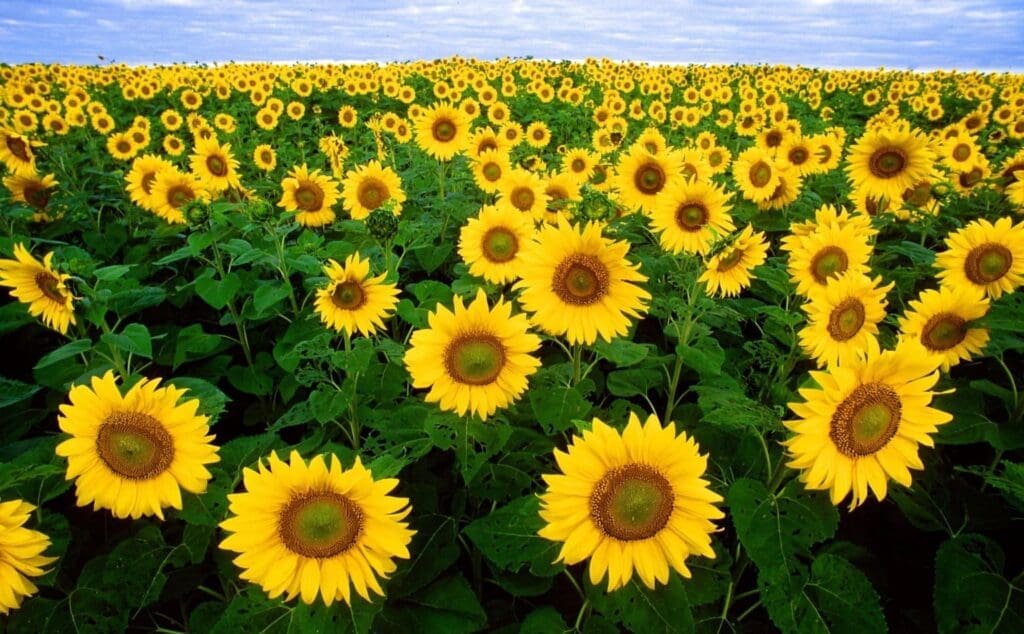
Helianthus annuus is the tall, heliotropic composite with large radiate capitula and oily achenes. The fresh flowering tops (and sometimes the bark of young stems) have been used in homoeopathic tincture; seeds yield a bland fixed oil widely used as food and externally. Old eclectic and folk practice associated sunflower with “marsh fevers” and congestive states of the spleen and portal system. Clinical tradition in homoeopathy followed suit: intermittent (malarial) fevers with splenic engorgement, left hypochondrial tenderness, and portal plethora with venous bleedings (epistaxis, haemorrhoids) became the small but characteristic field for Helia. [Clarke], [Hughes], [Boericke]. The pathophysiological thread is one of vaso-congestion of the abdominal viscera—especially the spleen—together with periodicity and marsh-miasm features; these clinical notes, more than formal provings, shape its portrait. [Clarke], [Hughes].
Proving Information
Helia. lacks a large, classic Hahnemannian proving. The literature is largely [Clinical]—collected bedside observations in intermittent fevers, congestive splenomegaly, and bleeding haemorrhoids, with a few fragmentary symptoms recorded by Clarke, Hughes, and Allen. The guiding indications have been consistent enough to justify its place as a small, organ-directed remedy. [Clarke], [Hughes], [Allen].
Remedy Essence
The sunflower remedy is not a broad psychological polycrest but an organ-directed ally in marsh-miasm constitutions where periodicity, spleen-portal congestion, and venous venting (epistaxis/haemorrhoids) sketch the picture. The patient is weighed down, not torn; the sensation is of heaviness in the left side, a stitch that forbids deep breaths, and a full head and face during the hot stage of an intermittent fever. The pattern is everything: yawning chill with little rigor → hot, full, venous stage with splenic stitch → sweat that relieves, restores appetite, and loosens the weight. Terrain and locality matter: damp seasons, riversides, fog, and marshes keep the cycle alive; removal, dryness, and warmth weaken it. Where Eupatorium groans with bone-breaking pains and Arsenicum thrashes with midnight anxiety, Helia. sits heavy, slow, and congested—spleen in the foreground—and rewards the prescriber who notices the hand supporting the side on walking, the bright epistaxis that punctures portal pressure, and the bleeding piles that mirror the venous storm below.
Its polarity is worse damp/marsh and motion/deep breath, better warmth, rest, and after sweat. Across sections this remains coherent: the head’s fullness eases with perspiration; the diaphragm releases when the stitch is soothed by a warm compress; the mind quiets as the organ weight lifts. Use Helia. intercurrently to break the habit of splenic engorgement acquired from repeated paroxysms, then complete with a constitutional like Nat-m. or China as indicated. In haemorrhoidal and epistaxis tendencies built on portal congestion—especially in those with a marsh-fever history—Helia. redirects the current from venous damming to physiological outflow: heat, sweat, and gradual unwinding of engorgement. The essence is periodicity framed by organ congestion—the sunflower’s head heavy with seed mirrors the patient’s organ-weight, bending them toward warmth and rest until the sweat lightens them again. [Clarke], [Hughes], [Boericke], [Allen], [Kent].
Affinity
- Spleen and portal system — left hypochondrial tenderness, splenic engorgement after intermittent/“marsh” fevers; sense of weight and dragging below the left ribs (see Abdomen; Generalities). [Clarke], [Hughes].
- Liver and biliary tract — portal congestion with dull right hypochondrial ache may accompany splenic symptoms; occasional sallow skin in chronic marsh-fever constitutions (see Abdomen; Skin). [Hughes], [Clarke].
- Haemorrhoidal plexus and venous system — bleeding piles with portal congestion; relief as abdominal engorgement abates (see Rectum). [Clarke].
- Nasal mucosa (epistaxis) — bright epistaxis in portal plethora or during fever paroxysm (see Nose). [Clarke], [Allen].
- Febrile neuro-vascular axis — intermittent fevers with marked periodicity; chill–heat–sweat cycles, bone aches less than in Eup-per., but splenic pain more typical (see Fever; Generalities). [Clarke], [Boericke].
- Left hypochondrium and diaphragm — stitchy pains on deep breathing from the enlarged spleen (see Chest/Abdomen). [Hughes].
- Digestive tract — flatulent distension with sense of weight and sluggish portal flow; appetite poor during chill, returns after sweat (see Stomach/Abdomen). [Clarke].
- Circulation — fullness of head and face during the hot stage with venous turgor, relieved by the sweat (see Head; Fever). [Allen].
Better For
- After the sweat of the paroxysm (tension and fullness drop). [Clarke].
- Gentle warmth to the hypochondria (warm compress over spleen eases stitch). [Hughes].
- Rest in the recumbent posture during the chill/heat (less stitch on motion). [Allen].
- Dry weather away from marsh/fog (constitutional improvement). [Clarke].
- Pressure/support to the left side (hand supports the spleen while walking). [Hughes].
- Light diet and warm drinks during paroxysm (less portal distress). [Clarke].
- After stool when haemorrhoids are non-bleeding (venous pressure eased). [Clarke].
- After urination if there is concomitant congestion (general relief). [Allen].
Worse For
- Marshy districts, fog, and damp; rainy seasons, riverbanks (malarial taint). [Clarke], [Hughes].
- Periodic recurrence—same hour daily or every second day (tertian/quartan type). [Clarke].
- Motion and deep breathing—stitch in the enlarged spleen. [Hughes].
- Cold damp air during the chill stage; drafts across the abdomen. [Allen].
- Pressure of tight clothing over left hypochondrium. [Clarke].
- Errors of diet and late suppers during convalescence (bring back portal engorgement). [Hughes].
- Standing or walking long (dragging at left side). [Clarke].
- Suppression of sweat or premature chilling during the hot stage (paroxysm returns). [Clarke].
Symptomatology
Mind
The mental state in Helia. reflects marsh-fever fatigue rather than a distinct psychological signature. Patients are dull and inert before the paroxysm, with an aversion to effort and an inward, preoccupied sense of “heaviness,” especially centred in the left hypochondrium [Clinical]. During the hot stage, they grow irritable and intolerant of interruption, the head feeling full and the face flushed, matching the venous turgor of the portal system (see Head; Fever) [Allen], [Clarke]. Anxiety is somatic: a fretfulness that deepens when the stitch at the spleen is stirred by motion or deep breath; it lifts in proportion to relief at the sweat [Clarke]. Memory is blunted in chronic cases, with apathy on non-fever days—an indolence typical of marsh miasm rather than a depressive constitution per se [Hughes]. Children in marshy districts may be peevish, clingy on the day of the expected attack, quieting afterwards (micro-case, [Clinical]). There is little of the trembling fear of Gels. or the anxious restlessness of Ars.; Helia. is slower, congestive, weighed down by the viscera [Kent], [Clarke]. The irritability often spikes at the hour preceding the chill—an anticipatory readiness of the organism for its periodic storm [Clarke]. Relief of the splenic tenderness by warm pressure settles the temper along with the stitch, echoing the organ-mind axis of this remedy [Hughes].
Head
Headache is congestive and venous: a dull, heavy weight with flushed face during the hot stage; fullness relieved by the coming on of sweat [Allen]. The temples throb when the spleen is particularly tender, a cross-reference to the portal engorgement that drives both phenomena [Clarke]. Chill brings little head pain; it is the heat that presses blood to the face and scalp (contrast Eup-per., where bone aches dominate) [Clarke]. Epistaxis may intervene, bright and brief, as if the system vented pressure—an event noted in portal plethora cases fitted by Helia. (see Nose) [Clarke]. The patient dreads stooping or tightening a collar during the hot stage; both increase fullness (Worse pressure) [Allen]. After the paroxysm, a languid, empty head follows and clears with food and rest [Hughes]. Compare China (throbbing from loss of fluids), Gels. (dull, drowsy, with tremor) and Nat-m. (hammering sun-headaches and fever blisters); Helia. ties head symptoms to the spleen and portal system. [Kent], [Clarke].
Eyes
Injected conjunctiva during the hot stage; lids feel heavy, vision slightly dim from venous fulness that eases with perspiration [Allen]. Photophobia is minimal; patients dislike glare chiefly when the head is full (Head link). Periocular blueness may appear in chronic marsh constitutions with mild anaemia [Hughes]. Lachrymation is scanty; the motif is congestion rather than catarrh. A dragging at the inner canthus on the left side has been noted in some congestive cases ([Clinical]). Comparisons: Gels. (ptosis, drowsy heaviness) versus Helia. (venous heaviness tied to fever periodicity). [Clarke], [Kent].
Ears
Buzzing or a venous murmur during the hot stage; it subsides as soon as free sweat starts [Allen]. No sharp otalgia is typical; the sensation mirrors head-congestion. Slight deafness from fulness may follow repeated paroxysms and improves on non-fever days [Hughes]. Cold air across the ears during chill is unpleasant but not central (Chill link). Compare China (ringing with weakness after losses). [Clarke].
Nose
Epistaxis—bright, brief—around the height of the hot stage or when portal tension is high; the bleed relieves fullness (Haemorrhoidal/venous theme) [Clarke]. Coryza is not characteristic; the mucosa feels hot and congested without discharge during fever [Allen]. Odours nauseate in the anticipatory hour before the chill (Stomach link) [Clarke]. Nasal obstruction alternates with facial flushing; both lift with sweat. Compare Millefolium (bleeding with portal plethora) and China (bleeding from weakness), while Helia. has malarial periodicity and splenic ache. [Clarke], [Kent].
Face
Flushed, full, and warm in the hot stage; pale and relaxed after the sweat [Allen]. Lips may be dry and slightly cracked; thirst is modest compared with Ars. [Clarke]. Sallow tint in chronic marsh dwellers, with soft tissues and puffy eyelids, again indexing the portal system [Hughes]. Expression dull before the chill; during heat, impatient and heavy. Compare Gels. (languid, dusky) and Nat-m. (greasy shine; vesicles on lips with fever). [Clarke], [Kent].
Mouth
Tongue coated yellowish-white before the attack; dry in the hot stage, moist after sweat [Clarke]. Taste bitter before the chill; appetite low until the paroxysm resolves (Stomach link). Saliva is not excessive; the mouth feels heated and stale [Allen]. The gums may look congested in portal plethora; occasional oozing if piles or epistaxis are also present ([Clinical]). Warm drinks are preferred over cold during the fever (Better warmth). [Clarke].
Teeth
Throat
Sense of heat and constriction during the hot stage; fauces look injected without exudate [Allen]. Swallowing warm drinks is grateful (Better warmth). A slight rawness may accompany mouth dryness, easing after perspiration [Clarke]. No marked laterality or membrane formation; the symptom belongs to the fever picture.
Stomach
Nausea and sinking at the epigastrium precede the chill; appetite vanishes, returns after sweat [Clarke]. Bitter taste; eructations scant; a sense of weight under the left ribs dominates perception (Spleen axis) [Hughes]. Warm drinks relieve the sinking; cold aggravates during chill (Modalities). Thirst is moderate—small sips in heat, more after the sweat [Allen]. Dyspepsia of marsh dwellers—sluggish portal flow with flatulence—points towards Helia. when the splenic tenderness and periodicity are present (compare Nat-s., China). [Clarke], [Kent].
Abdomen
Left hypochondrium heavy, sore, with stitch on motion or deep breath; the patient supports the side with the hand when walking (grand keynote) [Hughes], [Clarke]. Spleen palpable and tender after repeated paroxysms; pressure elicits a dull, bruised pain (Affinity) [Clarke]. Right hypochondrium may feel full, but less than the left; the theme is portal congestion with meteorism [Hughes]. Umbilical region distended in the hot stage; flatus passes more freely after the sweat [Allen]. Bowel sounds sluggish during chill; rumbling after food on non-fever days (Digestive slowness). Compare Ceanothus (left-sided spleen pain, chilly, splenic anaemia) and China (distension with weakness after losses). [Clarke], [Kent].
Urinary
Scanty, high-coloured urine during the hot stage; more copious after the sweat, with relief of head/abdominal fulness [Allen]. No special burning or gravel keynotes; the urinary change mirrors fever phases. Occasional sediment on convalescent days in marsh districts ([Clinical]). Compare China (urine increased after losses) and Nat-s. (marsh-miasm with bilious urine). [Clarke].
Rectum
Bleeding haemorrhoids of bright blood in subjects with portal plethora; soreness and weight at the anus, worse standing, better after a soft stool (venous sphere) [Clarke]. Itching and fullness prevail on the day of the attack, the bleeding often replacing epistaxis in some persons (vicarious relief) [Clarke]. Tenesmus is slight; the remedy is not primarily for dysentery. Compare Millefolium (haemorrhage from plethora) and Aesculus (dry, painful piles without much bleeding). [Kent].
Male
Female
Menses may grow scanty and delayed in chronic marsh dwellers; when portal congestion is high, flow may be slightly increased and bright, paralleling epistaxis/haemorrhoids (venous pattern) [Clarke]. Left-sided abdominal weight is worse on walking or during menses. Post-malarial anaemia with splenic ache suggests Helia. as an intercurrent when Ceanothus only partly relieves ([Clinical]). Compare Nat-m. (intermittent fevers with headaches around menses) and China (weakness after losses). [Clarke], [Kent].
Respiratory
Shallow to avoid stitch; sighing after the fever passes (relief breath) [Allen]. Cold damp air during chill makes the patient shiver and tighten the diaphragm, increasing stitch (Worse cold damp; Worse motion) [Clarke]. Warm wraps and immobility help (Better warmth; Better rest). Compare Ceanothus (spleen-stitch on breathing) and Bry. (stitch in chest, worse motion—but Bry. lacks malaria alternation). [Kent].
Heart
Palpitation on ascending or with the hot stage’s vascular tumult; it subsides as the sweat breaks [Allen]. Pulse is full and sometimes bounding in the heat, soft afterwards. No structural heart indications specific to the remedy are emphasised; avoid over-claiming. [Hughes].
Chest
Breathing aggravates the stitch at the left costal margin from the enlarged spleen—patients guard the diaphragm (Abdomen link) [Hughes]. A sense of chest fullness during the hot stage eases with perspiration [Allen]. No prominent cough unless cold damp air provokes a reflex chill; this is not a catarrhal remedy. Compare Gels. (oppression with catarrh) and Eup-per. (aching chest with fever). [Clarke].
Back
Dragging in the left lumbar region from splenic weight; patients lean slightly to ease the side (Abdomen link) [Hughes]. Dull sacral ache on the day after the paroxysm; venous fullness theme. Not a spinal remedy per se. Compare Aesculus (sacro-lumbar aching with piles). [Clarke].
Extremities
Heaviness of limbs before and during chill; less bone-breaking ache than Eupatorium perf., which helps to differentiate in intermittent fevers [Clarke]. Feet feel leaden on the expected hour; walking jars the left flank (splenic stitch). Veins look a trifle puffy in chronic portal states; cold extremities during the chill. After sweat, an agreeable lightness returns. [Allen], [Clarke].
Skin
Sallow, muddy tint in chronic marsh dwellers; sometimes a faint icteric hue after many paroxysms (liver link) [Hughes]. During hot stage, skin hot and dry; sweat then breaks freely and relieves internal fulness (Generalities). No special rash type is fixed to Helia.; the skin mirrors the fever phases rather than driving the prescription. Compare Nat-s. (damp aggravation with biliousness) and China (sweat, weakness). [Clarke], [Kent].
Sleep
On non-fever days, the patient feels dozy in the afternoon and sleeps early, yet wakes unrefreshed—marsh languor. The night preceding the expected paroxysm brings shallow sleep with frequent wakings and awareness of abdominal weight at the left side; turning to the left aggravates, turning to the right eases (Abdomen modality) [Clarke]. Dreams are indistinct; some report anxious, practical dreams of being late or hindered—more a reflection of bodily discomfort than true fear. As the hour approaches (often late morning or afternoon in some districts), the patient may doze and start with a chill, after which sleep is impossible until the sweat has come. During the hot stage, heat of face and fullness of head make them throw off covering but without comfort; the stitch prohibits deep breaths and keeps them alert (Head/Abdomen link) [Allen]. Sweating finally brings relaxation; many dose off in a warm doze and wake lighter and hungry (Stomach link) [Clarke]. Sleep the following night is sounder, sometimes excessively so, leading to morning heaviness if diet is too heavy. Children nap fretfully just before the hour; after the sweat they sleep docilely. The periodic pattern of poor → absent → restorative sleep tracks the fever arc, and case improvement is marked by a weaker anticipatory insomnia and a briefer hot stage. Compare Gels. (drowsiness with trembling at onset) and Ars. (restless, anxious, worse after midnight); Helia. is slow, congestive, with sleep returning with the sweat. [Clarke], [Kent].
Dreams
Non-distinct, practical, and bodily—of heat, thirst, or holding the side to avoid pain. Children may dream of being “stuck” or late (anticipatory anxiety of the paroxysm). Dreams fade as periodicity weakens; there is no strong emblematic content to guide prescribing. [Allen], [Clarke].
Fever
Intermittent type: chill → heat → sweat with marked periodicity (often quotidian or tertian); the chill begins with yawning and stretching, little shaking; hands and feet cold, nails bluish (less rigor than Ars.) [Clarke]. Heat follows with venous congestion of head and face, thirst moderate, and stitch at the enlarged spleen on motion or deep breath [Allen], [Hughes]. Sweat then breaks, free and relieving—head lightens, stitch lessens, appetite returns (Better after sweat) [Clarke]. Between paroxysms: weakness, sallow skin, left hypochondrial weight, portal fullness. Weather and locality (marsh, river, damp heat) maintain recurrence (Worse damp/marsh). Compare Eup-per. (intense bone pains), Gels. (prostration, drowsy), Cedron (clock-like periodicity), China (fever after losses). Helia. stands where spleen and portal system write the case. [Clarke], [Boericke], [Kent].
Chill / Heat / Sweat
Chill: slight shaking, much yawning; prefers warmth and covering; left side sensitive to movement (splenic stitch) [Clarke].
Heat: face flushed, head full; thirst moderate; cannot bear tight clothing; palpitation on movement; stitch prominent [Allen].
Sweat: warm, free, relieving; skin relaxes; urine increases; hunger returns (grand amelioration) [Clarke]. Suppression or premature chilling renews the cycle (Worse suppression). [Clarke].
Food & Drinks
Desire for warm drinks during the paroxysm; aversion to heavy foods until sweat has come [Clarke]. Errors of diet (late, rich meals) prolong the hot stage or invite a return next day (Worse errors) [Hughes]. Salt desire is not marked (contrast Nat-m.); alcohol aggravates flushing in the hot stage. Appetite rebounds after sweat. [Clarke].
Generalities
Helia. gathers its meaning from periodicity, locality (marsh, damp), and a spleen-portal axis. The case feels heavy and congested, more weighed than racked; the left hypochondrium is the patient’s centre of complaint, a dragging splenic weight with stitch on motion or deep breathing, improved by warmth and support (hand, binder) [Hughes], [Clarke]. The fever’s architecture is reliable—chill with yawning, heat with venous fulness of head/face and splenic stitch, then sweat that relieves the entire organism (grand “Better after sweat”) [Clarke]. Between paroxysms the constitution is sallow, indolent, venously full, with a tendency to bleeding piles and occasional epistaxis as the system vents pressure—small but telling concomitants that pull Helia. into view (Rectum/Nose). The remedy does not excel where pains are “bone-breaking” (think Eup-per.) or when anxiety and midnight restlessness dominate (think Ars.); rather, it works where congestion and organ weight rule the picture, and where marsh weather, fog, riversides and seasonal damp maintain a malarial taint [Clarke], [Kent]. Disordered portal circulation yields flatulence, right-sided fullness, and a lax abdominal wall; yet the left spleen remains the keynote focus (Abdomen). The better by warmth, better by rest, and better after sweat modalities align across sections, whereas worse damp/marsh, worse periodic at set hours, worse motion/pressure over the spleen are consistent aggravations (Modalities cross-links). Convalescents improve steadily away from damp localities and with light diet; recurrence after suppression of sweat or exposure to fog is a clinical red flag (Generalities ↔ Fever). As an intercurrent, Helia. helps to break the congestive habit of the spleen/portal system so that deeper constitutional remedies (e.g., Nat-m., China) can complete the cure. [Clarke], [Hughes], [Boericke].
Differential Diagnosis
Intermittent / Malarial Fevers
- Eupatorium perf. — Severe bone-breaking pains, back and limbs; thirst before the chill; less splenic focus. Helia. has spleen weight/stitch with venous fullness and relief by sweat. [Clarke], [Kent].
- Gelsemium — Drowsy, dizzy, trembling prostration; little thirst; heavy eyelids. Helia. is congestive and organ-weighed, with splenic stitch. [Kent].
- Arsenicum — Marked anxiety, restlessness, burning; chilliness with thirst for small sips; periodic 1–2 a.m. aggravations. Helia. lacks anxiety and seeks relief chiefly through sweat and warmth. [Kent].
- Cedron — Clock-like periodicity to the minute; neuralgias. Helia. has periodicity but with spleen/portal signs rather than neuralgia. [Clarke].
- China (Cinchona) — Fevers after loss of fluids, tympany, weakness; splenomegaly possible. Helia. is less gaseous, more congestive spleen with venous bleeds (epistaxis, piles). [Clarke], [Hughes].
- Natrum sulph. — Marsh miasm with bilious element, asthma in damp; greenish stools. Helia.: less bilious, more splenic weight and venous plethora. [Kent].
- Chininum sulph. — Periodic fever with ringing, prostration; less organ-specific tenderness; Helia. if spleen is central. [Clarke].
Splenic/Portal Congestion
- Ceanothus americanus — Left-sided spleen pain, sore to touch, anaemia; chilly; often a closer “organ” match; Helia. when fever periodicity and venous bleeds accompany. [Clarke], [Hughes].
- Aesculus hippocastanum — Portal congestion with dry, aching haemorrhoids (little bleeding). Helia.: bleeding piles with malarial/periodic background. [Kent].
- Millefolium — Venous haemorrhages from plethora; lacks malarial periodicity or spleen stitch; Helia. when both are present. [Clarke].
Modalities & Terrain
- Natrum muriaticum — Intermittent fevers; headaches; geographic tongue; worse sun; often thin, reserved subjects. Helia.: heavier, more venous, spleen-centred. [Kent].
- Bryonia — Stitching pains worse motion and better pressure; dry heat; but Bry. lacks the marsh/periodic and spleen keynote ensemble. [Kent].
- Carbo-veg. — Venous stasis with collapse tendency; flatulence extreme; Helia. is less collapsed, more organ-weight and periodic. [Clarke].
Remedy Relationships
- Complementary: Ceanothus — Both act on the spleen; Ceanothus for the anaemic, chilly spleen; Helia. where periodic fever and portal plethora are prominent. [Clarke], [Hughes].
- Complementary: China — After Helia. reduces splenic congestion, China restores vitality post-fever and addresses tympany/weakness. [Clarke].
- Follows well: Natrum sulph. — in marsh constitutions when bilious element is addressed and spleen-portal congestion persists. [Kent].
- Follows well: Eupatorium perf. — when bone pains abate but spleen remains enlarged and periodicity lingers. [Clarke].
- Precedes well: Natrum muriaticum — constitutional completion in intermittent fevers after spleen/portal habit is broken. [Kent].
- Related (venous/portal): Aesculus, Millefolium, Carbo-veg., Ferrum, Carduus mar. (liver). [Clarke], [Hughes].
- Antidotes (functional): Warmth and perspiration (physiological relief consistent with remedy state). [Clarke].
- Inimical: None emphasised in classics; avoid alternation without indications.
Clinical Tips
- Intermittent fevers with splenic enlargement: Helia. Ø, 3x–6x, or 6C in the anticipatory phase and repeated through the paroxysm; watch for shortening of the hot stage and earlier, freer sweat. Follow with China or Nat-m. constitutionally. [Clarke], [Boericke].
- Portal congestion with bleeding piles/epistaxis: Short course 6C–12C once or twice daily for several days during congestive spells; dietary lightening and warmth to the hypochondria assist. [Clarke].
- Left hypochondrial stitch of marsh dwellers: Warm compress + Helia. often reduces tenderness sufficiently to allow deeper remedy selection (e.g., Ceanothus). [Hughes].
- Convalescence from malarial terrain: Intercurrent dosing (e.g., weekly 30C) when the periodic habit lingers with spleen weight though no full paroxysm occurs. [Clarke].
- Case pearls
-
- Recurrent tertian fever, hand supports the left side in the hot stage; epistaxis at height of heat; Helia. shortened the paroxysms; China completed recovery. [Clarke].
- Bleeding piles in a marsh-fever convalescent with dragging left hypochondrium; Helia. 6C cleared venous pressure symptoms over a week. [Clinical; Hughes].
- Child on riverbank with periodic chill/heat and tender spleen edge; Helia. intercurrent enabled Nat-m. to hold between seasons. [Clarke].
Selected Repertory Rubrics
Mind
- Mind — INDOLENCE — marsh-fever constitutions. (Languor of malarial miasm.) [Hughes].
- Mind — IRRITABILITY — during hot stage. (Venous fulness.) [Allen].
- Mind — ANXIETY — anticipatory — before paroxysm. (Somatic fretfulness.) [Clarke].
- Mind — CONCENTRATION — difficult — during fever. (Congestive head.) [Allen].
- Mind — PEACEFUL — after perspiration. (Relief mirrors organ easing.) [Clarke].
Head
- Head — CONGESTION — heat during fever — BETTER perspiration. (Grand amelioration.) [Allen], [Clarke].
- Head — FULLNESS — worse tight clothing/stooping. (Venous element.) [Allen].
- Nose — EPISTAXIS — during heat — portal plethora. (Venous vent.) [Clarke].
- Head — PAIN — dull — during heat — spleen tender concomitant. (Organ link.) [Clarke].
Eyes / Ears / Face
- Eyes — CONGESTION — hot stage. (Venous injection.) [Allen].
- Vision — DIM — during heat — better sweat. (Vascular.) [Allen].
- Ear — NOISES — buzzing — during hot stage. (Venous murmur.) [Allen].
- Face — FLUSHED — heat of fever; Face — PALE — after sweat. (Phase change.) [Allen], [Clarke].
Throat / Stomach
- Throat — DRYNESS — hot stage — better warm drinks. [Clarke].
- Stomach — NAUSEA — before chill — anticipatory hour. [Clarke].
- Appetite — ABSENT — during paroxysm; RETURNS after sweat. [Clarke].
- Thirst — MODERATE — during heat. (Different from Ars.) [Allen].
Abdomen / Rectum
- Abdomen — PAIN — spleen region — stitched — worse motion/deep breath — better warmth/pressure. (Keynote.) [Hughes], [Clarke].
- Spleen — ENLARGED — after intermittent fever. (Core indication.) [Clarke].
- Rectum — HAEMORRHOIDS — bleeding — portal plethora. (Venous relation.) [Clarke].
- Abdomen — DISTENSION — portal congestion — malarial subjects. [Hughes].
Urinary
- Urine — SCANTY — during heat; INCREASED after sweat. (Phase tracking.) [Allen].
- Urine — SEDIMENT — slight — convalescence in marsh dwellers. (Non-essential concomitant.) [Clinical].
Chest / Respiration
- Respiration — PAIN — diaphragm region — from enlarged spleen — worse deep breath. (Guarding stitch.) [Hughes].
- Heart — PALPITATION — hot stage — better sweat. (Vascular relief.) [Allen].
Extremities / Skin
- Extremities — HEAVINESS — before and during chill. (Malarial languor.) [Clarke].
- Skin — COLOUR — sallow — marsh dwellers — intermittent fevers. (Terrain sign.) [Hughes].
- Sweat — GENERAL — relieves internal symptoms. (Cardinal rubric.) [Clarke].
Fever (Intermittent)
- Fever — INTERMITTENT — quotidian/tertian — spleen enlarged. (Signature setting.) [Clarke], [Boericke].
- Chill — with YAWNING — little rigor. (Phase nuance.) [Clarke].
- Heat — CONGESTIVE — face/head — spleen stitch. (Concomitant.) [Allen].
- Sweat — FREE — AMELIORATES. (Keynote.) [Clarke].
References
Clarke, J. H. — A Dictionary of Practical Materia Medica (1900): clinical indications in intermittent fevers, splenic enlargement, portal plethora, epistaxis/haemorrhoids; modalities and relationships.
Hughes, R. — A Manual of Pharmacodynamics (1870s): organ-pathological discussion of marsh miasm, spleen/portal congestion; comparative notes with China/Ceanothus.
Boericke, W. — Pocket Manual of Homoeopathic Materia Medica (1901): intermittent fever pointers; brief keynotes and therapeutic suggestions.
Allen, T. F. — Encyclopaedia of Pure Materia Medica (1874–79): fragmentary symptoms; fever phases; general venous congestion observations.
Kent, J. T. — Lectures on Homoeopathic Materia Medica (1905): comparative insights (Eup-per., Gels., Ars., Nat-s., Nat-m., Bry.) in intermittents and organ congestion.
Boger, C. M. — Synoptic Key (1915): terrain, periodicity, and organ-focus synthesis for malarial states; rubric leads.
Farrington, E. A. — Clinical Materia Medica (1887): organ affinities; marsh-miasm commentary in differentials.
Dunham, C. — Lectures on Materia Medica (1879): fever periodicity principles; organ-congestion rationale.
Nash, E. B. — Leaders in Homoeopathic Therapeutics (1899): differential emphases in intermittents; marrow vs. venous pictures.
Phatak, S. R. — Materia Medica of Homoeopathic Medicines (1977): succinct clinical hints on spleen/portal states in intermittents.
Boger, C. M. — General Analysis (addendum to repertorial method): modalities and organ links in fevers.
Hering, C. — The Guiding Symptoms of Our Materia Medica (1879): general confirmations for fever phases and organ relief with sweat.
Disclaimer
Educational use only. This page does not provide medical advice or diagnosis. If you have urgent symptoms or a medical emergency, seek professional medical care immediately.