

Cineraria maritima
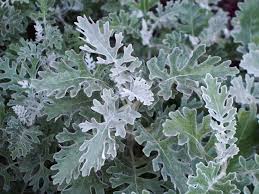
Substance Background
Cineraria maritima is the long-used homeopathic name for the plant widely known as “dusty miller”, now commonly treated taxonomically under Jacobaea maritima (Asteraceae), with older synonyms including Senecio cineraria and allied names in botanical checklists. [World Flora Online] In homeopathic practice it is chiefly known as a remedy of the eye, valued in cataract and corneal opacity, and it has been used both by internal potentisation (tincture through higher potencies) and, by strong clinical tradition, as a local application in drop form. [Boericke], [Clarke]
From the chemical side, plants in the Senecio/Jacobaea group are notable for pyrrolizidine alkaloids; profiles published for the Senecio cineraria group document multiple pyrrolizidine alkaloids (with otosenine and florosenine prominent among identified compounds), establishing a toxicological “signature” relevant to crude preparations. [PubMed] Pyrrolizidine alkaloids as a class are well documented as hepatotoxic (including association with sinusoidal obstruction/veno-occlusive patterns of liver injury), which is why any herbal or crude internal use is approached with caution in conventional toxicology; this toxicology context does not apply in the same way to potentised prescriptions, but it does matter when discussing mother tincture handling or non-homeopathic ingestion. [PubMed]
Modern experimental work has explored extracts of Cineraria maritima for antioxidant activity and ex vivo anti-cataract models, aligning mechanistically (in a pharmacognosy sense) with the clinical focus upon lens opacity; however, these studies concern extracts/formulations rather than proving symptomatology and should not be confused with classical homeopathic pathogenesis. [SpringerLink]
Proving Information
No comprehensive classical proving is consistently cited in the major traditional compilations for this remedy; it is repeatedly introduced instead as a clinically used ophthalmic medicine, especially for cataract and corneal opacity, and is often discussed in terms of method (persistence of application) rather than in terms of a full proving picture. [Clarke], [Boericke] A clinical report in the journal Homeopathy (1970) discusses an “experimental” approach to cataract treatment, reflecting continued clinical interest; this does not substitute for a classical proving but is relevant as part of the clinical literature trail. [Thieme Connect]
Remedy Essence
Cineraria maritima belongs to that small class of remedies whose name evokes not a grand constitutional portrait, but a precise clinical labour: the slow clearing of opacity. [Boericke], [Clarke] Its keynote is not a storm of sensations, nor a vivid mental drama, but a quiet insistence upon persistence—“kept up for several months”—as though the remedy’s very spirit were patience applied to clouded structures. [Boericke]
The image is almost emblematic: dusty miller, a plant robed in silver-grey, mirrors the “dusting over” of the lens and cornea in cataract and nebulae; and in the homeopathic imagination, it becomes a medicine for that haze which comes between the eye and the world. [Inference grounded in the remedy’s named indications]. [Boericke] Clinically, it is repeatedly yoked to two themes: opacity itself (cataract, corneal opacity), and trauma as the doorway into that opacity—“most effective in traumatic cases”, and repertory confirmation places it under trauma/injuries rubrics within the eye section. [Boericke], [Repertory of Small Remedies]
Yet it remains a remedy of humility: Clarke’s insistence that it be continued alongside internal constitutional prescribing teaches the prescriber to keep categories clear—constitutional similimum for the whole person, local specific for the local pathology when needed. [Clarke] In this way, Cineraria becomes a “handmaid” remedy: not often the monarch of the case, but a faithful servant of the eye, especially when the pathology is unmistakable and when the practitioner can commit to time, repetition, and method. [Boericke], [Clarke]
Affinity
- Lens (cataract processes): the keynote use is in cataract, with an emphasis on perseverance over months rather than rapid palliation; see Eyes. [Boericke]
- Cornea (opacities, nebulae): corneal opacity is repeatedly paired with cataract as the second great indication; see Eyes. [Boericke], [Clarke]
- Eye injuries and their sequelae: trauma-related contexts recur (clinically and repertorially), matching the long-standing assertion that it is “most effective in traumatic cases”; see Eyes and the Worse For aetiology line. [Boericke], [Repertory of Small Remedies]
- Post-inflammatory scarring tendencies (ocular): when opacity follows prior injury or inflammation, the remedy enters consideration as a local “clearing” medicine; see Eyes. [Clarke], [Repertory of Small Remedies]
- Visual function under clouding (blur/haze states): not a proved “vision symptom” so much as a clinical sphere—where opacity governs the whole experience of sight; see Eyes. [Boericke]
- Chronicity and slow repair: its genius, where it acts at all, is in long, steady use rather than quick change; this “time modality” belongs to its clinical identity; see Better For (months of use). [Boericke]
- Adjunct to constitutional prescribing: repeatedly recommended alongside internal constitutional treatment, suggesting its place as a local specific rather than a complete constitutional portrait; see Clinical Tips. [Clarke]
- Toxicological signature in crude form (pyrrolizidine alkaloids): relevant to mother tincture and non-homeopathic ingestion safety context; see Substance Background. [PubMed]
Better For
- Better from steady persistence of use over months in cataract and corneal opacity (a “slow medicine” requiring time), rather than intermittent trial; see Eyes. [Boericke]
- Better for cataract as a clinical target (including senile cataract in clinical tradition), when the case is genuinely one of lens opacity; see Eyes. [Clarke], [Repertory of Small Remedies]
- Better for corneal opacity (nebulae and related haze states), where opacity is the governing pathology; see Eyes. [Repertory of Small Remedies]
- Better in traumatic eye conditions and their opacity sequelae (matching the “traumatic cases” emphasis); see Eyes and Worse For (aetiology). [Boericke], [Repertory of Small Remedies]
- Better when used as a local adjunct simultaneously with internal constitutional homeopathic treatment (local plus constitutional strategy); see Clinical Tips. [Clarke]
- Better with local drop application repeated through the day (as classically advised for the clinical method); see Clinical Tips and Eyes. [Clarke]
- Better in cases described as “chromatic cataract” in later clinical discussion (where the rubric of cataract is still central); see Eyes. [Clinical]
- Better is reported in some clinical literature series as measurable improvement or arrest in a proportion of cases; this is reported, not proved pathogenesis, and must be read as clinical claim; see Eyes. [Clinical], [Thieme Connect]
Worse For
- Worse (i.e., most called for) after eye trauma/injury as an aetiological gateway into opacity conditions; see Eyes and repertory confirmation. [Boericke], [Repertory of Small Remedies]
- Worse when cataract is advanced and long-established yet the remedy is not continued long enough to test its reputed slow action (premature discontinuation); see Better For (months). [Boericke]
- Worse where there is corneal opacity following injury history (injuries with / trauma with), fitting its repertory placement; see Eyes. [Repertory of Small Remedies]
- Worse when relied upon as a sole “constitutional portrait” remedy despite the lack of a full proving picture; it is better held as an ocular adjunct in many traditions; see Proving Information and Clinical Tips. [Clarke]
- Worse for crude internal self-dosing of plant material or extracts, given pyrrolizidine alkaloid toxicology concerns (a different sphere from potentised prescribing); see Substance Background. [PubMed]
- Worse for expectation of rapid change: its reputed action, where present, is gradual and time-dependent; see Better For (months). [Boericke]
- Worse when local application is irregular or insufficiently frequent for the method described (drops “kept up” in routine); see Clinical Tips. [Clarke]
- Worse (clinically relevant context) where the entire complaint is not truly opacity (lens/cornea) but another eye pathology; the remedy’s centre of gravity is cataract/opacity rather than general ophthalmic inflammation; see Symptomatology scope. [Boericke]
Symptomatology
Mind
No proving symptoms recorded. The literature that introduces Cineraria maritima does not draw a mental portrait, and it is not set among the great constitutional mind remedies, but among local ocular specifics. [Clarke] Its clinical “character” is therefore inferred not from emotional pathogenesis but from the manner of its use: patient, persistent, and narrowly directed to opacity conditions rather than to a broad psycho-physical constellation. [Boericke] Where mental states appear in cataract sufferers (fear of blindness, irritability from impaired sight), these belong to the disease experience and cannot be honestly claimed as remedy-pathogenetic here. [Inference] The prescriber is thus counselled to seek the constitutional remedy for the person, while employing Cineraria as an auxiliary for the eye when indicated. [Clarke]
Eyes
The remedy stands with a distinct, almost single-pointed reputation: cataract and corneal opacity. [Clinical]. [Boericke], [Clarke] In cataract, it is not presented as a momentary palliative, but as something to be “kept up for several months”, a keynote of method that becomes part of its therapeutic identity (this tallies with the Better For modality of long persistence already noted). [Boericke] Its sphere is repeatedly described as most effective in traumatic cases, and repertory confirmation places “trauma with” and “injuries with” alongside rubrics of cataract and corneal opacity, supporting the clinical habit of thinking of it when opacity follows injury. [Boericke], [Repertory of Small Remedies]
[Clinical] Clarke describes local use: one drop, repeated through the day, and continued concurrently with internal constitutional homeopathic treatment—an explicit acknowledgement that this medicine may function as an ocular local, while the deeper remedy work proceeds internally. [Clarke] This is precisely where its differentiation matters: unlike Phosphorus or Silicea, which may be chosen as constitutionals with broad generals, Cineraria is chosen because the pathology is opacity itself and because the aetiological thread may be traumatic (this tallies with the affinity for injury sequelae already noted). [Boericke]
[Repertory] Its repertory placement explicitly includes: CATARACT (cine.) and OPACITY cornea (cine.), and it appears under TRAUMA with and INJURIES with, strengthening the internal coherence of its clinical portrait. [Repertory of Small Remedies] Later clinical literature continues this theme: reports discuss “chromatic cataract” and clinical outcomes in cataract series; such reports are not provings, but they do show that the remedy’s name has persisted in cataract discourse over decades. [Clinical]
Generalities
Cineraria maritima is best understood as a remedy whose “generals” are not the usual constitutional generals of heat, cold, cravings, moods, and weather sensitivity, but rather the generality of a local pathology that dominates the whole case: opacity of the lens or cornea, slowly progressive, altering the person’s function and quality of life. [Boericke], [Clarke] Its grand modality is time: it is prescribed with perseverance, “kept up for several months”, and often as an adjunct to internal constitutional treatment—thus its general method is patient continuity, not rapid alternation. [Boericke], [Clarke]
In the aetiological generalities, trauma is repeatedly emphasised: “most effective in traumatic cases”, and repertory confirmation repeats “trauma with” and “injuries with” in the eye section, so that the general prescriber’s thought becomes: opacity after injury, cataract after blow, scarring haze after former ocular insult—here Cineraria enters as a local specific. [Boericke], [Repertory of Small Remedies] Where the prescriber is tempted to construct an entire constitutional plan from this remedy alone, the absence of a full proving picture should restrain that impulse; it is safer, by the classical method, to match the constitutional remedy to the person and to use Cineraria, where appropriate, as a local helper for the opacity process. [Clarke]
Differential Diagnosis
Aetiology / Causation (especially trauma-driven opacity)
- Symphytum – Both may be thought of after injury; Symphytum stands more as the “injury remedy” in general, while Cineraria’s hallmark is injury followed by corneal opacity or cataract (eye-specific trauma rubrics support Cineraria). [Repertory of Small Remedies], [Boericke]
- Ledum – Often considered in trauma and puncture contexts; Cineraria is singled out when the trauma’s legacy is opacity (lens/cornea) rather than chiefly pain and bruised tissues. [Boericke]
- Thiosinaminum – A classic “scar/adhesion” theme in homeopathic therapeutics; it sits beside Cineraria in cataract lists, but Cineraria is the more specific “cataract/opacity” name, especially with traumatic colouring. [Boericke], [Repertory of Small Remedies]
Keynote Pathology (cataract, lens opacity)
- Phosphorus – May enter cataract discussions as a broader constitutional remedy; Cineraria is chosen for the local cataract focus and the demand for long persistence of use, rather than for a wide Phosphorus constitution. [Boericke]
- Silicea – Likewise often constitutional and deep; Cineraria remains narrowly ocular and opacity-centred (and is explicitly discussed as local adjunct). [Clarke], [Boericke]
- Causticum – A well-known chronic remedy sometimes listed with cataract; Cineraria distinguishes itself by its specific reputation for cataract/corneal opacity and its trauma emphasis. [Boericke]
- Naphthalinum – Repeatedly placed in cataract rubrics alongside Cineraria; where Cineraria is the named ocular local, Naphthalinum is often thought of when the cataract rubric is prominent yet the case suggests a different remedy identity. [Boericke], [Repertory of Small Remedies]
Corneal Opacity / Nebulae (clouding of cornea)
- Cadmium (Cadm.) – Appears alongside Cineraria under corneal opacity; differentiating requires the wider Cadmium picture (not supplied by Cineraria’s scant proving data). [Repertory of Small Remedies]
- Heloderma (Helo-h.) – Listed with corneal opacity; Cineraria remains the more clinically “named” opacity remedy, especially when cataract is also present or trauma is in the story. [Repertory of Small Remedies]
- Saccharum (Sacch.) – Also listed with corneal opacity; used here chiefly as a repertory neighbour rather than as a thematic twin. [Repertory of Small Remedies]
Method / Use-pattern (local adjunct over months)
- Quassia – Appears in cataract lists; Cineraria is the more explicitly described as needing months and often used locally with constitutional support. [Repertory of Small Remedies], [Clarke], [Boericke]
- Tellurium – In cataract lists; it differs by having a broader, distinct symptom identity elsewhere, whereas Cineraria stays almost purely in the opacity lane. [Repertory of Small Remedies]
Remedy Relationships
Not reliably established.
Clinical Tips
For local use, Clarke records one drop, 4–5 times daily, with the explicit counsel that it should be continued simultaneously with internal constitutional homeopathic treatment; this provides a classical frame for integrating local and constitutional strategy. [Clarke] Boericke emphasises duration—kept up for several months—and highlights traumatic cases as especially responsive in clinical tradition. [Boericke] Potency range is traditionally cited as tincture through the 30th, but the defining point in the old texts is not the number so much as the persistence and the eye-specific indication. [Clarke], [Boericke]
Clinical pearl (method): When the case is unequivocally cataract/corneal opacity and the patient is under a constitutional plan, Cineraria is often held as an ocular adjunct and judged only after sustained months, not days. [Boericke], [Clarke]
Clinical pearl (aetiology): A history of trauma preceding opacity is a strong clinical pointer, echoed by repertory placement under trauma/injuries rubrics for the eye. [Boericke], [Repertory of Small Remedies]
Clinical note (literature trail): Later clinical publications discuss cataract outcomes and experimental evaluations; these are best read as clinical reports rather than as proving evidence. [Thieme Connect]
Selected Repertory Rubrics
Eyes
- EYE – CATARACT (cine.) – Confirms the remedy’s core clinical focus; use when cataract is the governing pathology. [Repertory of Small Remedies]
- EYE – OPACITY – cornea (cine.) – Supports use in corneal haze/nebulae, especially when opacity dominates the case. [Repertory of Small Remedies]
- EYE – TRAUMA – with (cine.) – Places Cineraria in the aftermath of ocular trauma, aligning with “traumatic cases” emphasis. [Repertory of Small Remedies], [Boericke]
- EYE – INJURIES – with (cine.) – Reinforces the injury-to-opacity narrative as a practical prescribing gateway. [Repertory of Small Remedies]
References
John Henry Clarke — Dictionary of Practical Materia Medica: clinical description; local dosing method; “unproved” status; concurrent constitutional prescribing. [Clarke]
William Boericke — Pocket Manual of Homeopathic Materia Medica: keynote indications (cataract, corneal opacity); duration; traumatic emphasis; comparative list. [Boericke]
World Flora Online — Plant list entry for Jacobaea maritima: modern taxonomic placement relevant to synonyms/background. [World Flora Online]
Repertory of Small Remedies — Rubric confirmation for CATARACT, OPACITY cornea, TRAUMA with, INJURIES with (cine.). [Repertory of Small Remedies]
S. Durgapal et al. — In vitro antioxidant and ex vivo anti-cataract activity of ethanolic extract of Cineraria maritima (2021): laboratory model context for cataract-related pharmacognosy background (not proving). [SpringerLink]
T. S. Anitha et al. — Prevention of selenite-induced cataractogenesis by an ethanolic extract of Cineraria maritima (2011): experimental cataract context (background only). [PubMed]
R. Tundis et al. — Pyrrolizidine alkaloid profiles of the Senecio cineraria group (2007): analytical confirmation of pyrrolizidine alkaloids relevant to toxicology discussion. [PubMed]
M. G. Neuman et al. — Hepatotoxicity of Pyrrolizidine Alkaloids (2015): class toxicology overview supporting cautions about crude PA-containing botanicals. [PubMed]
EFSA — Assessments/communications on pyrrolizidine alkaloids in food/feed (2011, 2017): regulatory toxicology framing (background safety context). [EFSA]
EMA — Public statement on herbal medicinal products containing toxic unsaturated pyrrolizidine alkaloids (2021): safety/regulatory context for PA-containing botanicals. [EMA]
Quarterly Homeopathic Digest — Ophthalmological remedies discussion including chromatic cataract mention (1999): later clinical note (not proving). [Clinical]
Homeopathy (journal) — Cataract “experimental evaluation” report (1970): clinical report lineage for cataract outcomes discussions (not proving). [Thieme Connect]
Disclaimer
Educational use only. This page does not provide medical advice or diagnosis. If you have urgent symptoms or a medical emergency, seek professional medical care immediately.