

Asterias rubens
Substance Background
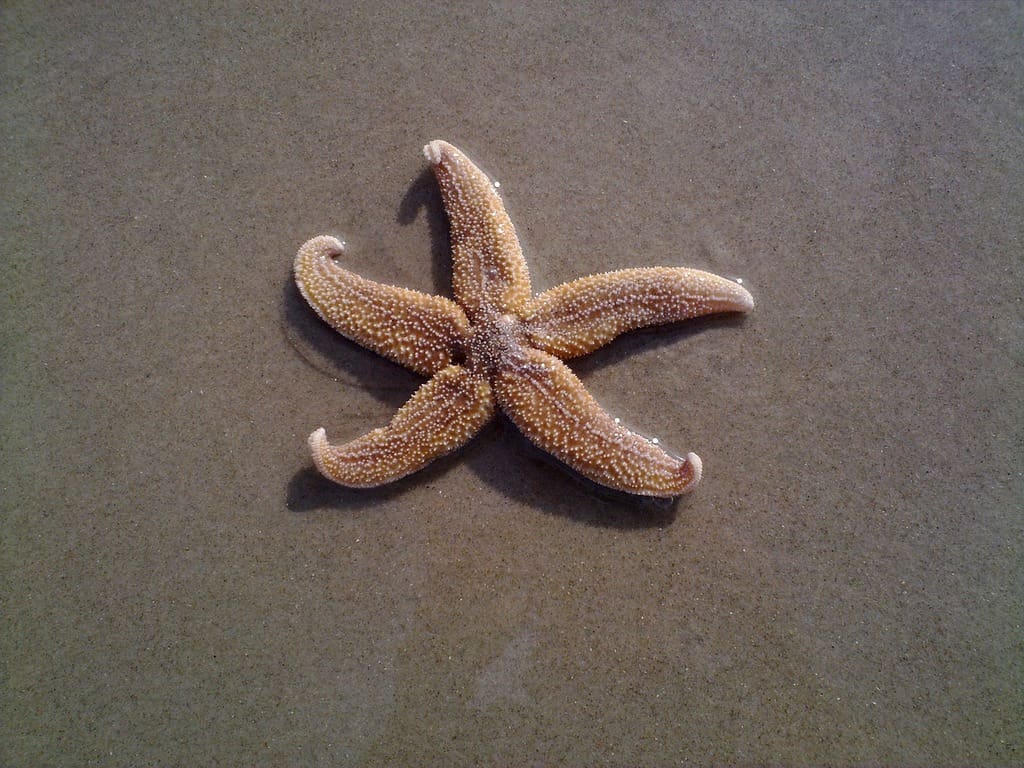
Asterias rubens is a marine echinoderm found in the North Atlantic and European coastal waters. The whole animal is macerated in alcohol to produce the tincture. It exerts a deep action on the cerebrospinal nervous system, particularly affecting the left side, and has a notable affinity for the female reproductive organs, breast tissue, and the vascular system. Historically, it was introduced into homeopathy for the treatment of epilepsy and has since been used for certain forms of paralysis, chorea, and scirrhous breast tumours [Hering].
Proving Information
Introduced by Dr. Tessier (Paris) in the mid-19th century, with toxicological observations and provings recorded by Hering, Allen, and Hughes.
Remedy Essence
Asterias rubens is a remedy for left-sided neurological and glandular affections, particularly in women. It unites two main spheres: the cerebrospinal system — with paralysis, epilepsy, chorea — and the mammary glands, with a specific action on induration and cancerous changes. The psychological tone is one of anticipatory dread, nervous weakness, and depression.
Affinity
- Nervous System: Paralysis, epilepsy, chorea, left-sided weakness [Hering, Allen].
- Female Breast & Reproductive Organs: Mastitis, scirrhus, irregular menses [Clarke].
- Vascular System: Varicose veins, congestions [Boericke].
- Left Side of the Body: Hemiplegia, left breast, left-sided headaches [Hering].
- Skin: Indurations, ulcers, chronic eruptions [Hughes].
Better For
- Gentle movement in paralysis (slight relief to rigidity) [Hering].
- Open air in certain headaches [Allen].
- Gentle pressure on affected breast in mastitis [Clarke].
Worse For
- Cold, damp weather, which aggravates neuralgic pains [Hering].
- Left-sided pressure and lying on left side (breast and heart symptoms) [Clarke].
- Mental excitement preceding epileptic fits [Allen].
Symptomatology
Mind
Patients often present with marked depression of spirits, sometimes to the point of weeping without cause [Clarke]. There is a peculiar anticipatory anxiety preceding epileptic attacks — a feeling of inevitable calamity [Hering]. Memory is weak; there may be confusion and inability to concentrate on reading or writing [Allen]. Restlessness may alternate with periods of mental dullness, especially in nervous diseases. Sexual thoughts may be exaggerated in certain cases of hysteria or neurological irritation [Hale].
Head
Headaches are often left-sided, neuralgic, and attended with throbbing in the temples [Hering]. There is a sensation of pressure from within outward, worse from mental effort and worse before menses [Allen]. In epileptic states, there may be a preceding aura beginning in the left hand and ascending to the head, followed by loss of consciousness [Hering].
Eyes
Dimness of vision precedes or follows convulsive attacks [Clarke]. Eyelids may twitch involuntarily, especially the left [Allen].
Ears
Noises in the left ear — ringing or buzzing — may occur in nervous exhaustion [Hering].
Nose
No characteristic proving symptoms recorded, although in some epileptic patients, sneezing has been observed as part of the aura [Allen].
Face
Flushing of the left cheek during headaches; twitching of facial muscles during sleep [Hering]. In paralysis, the left side of the face may droop [Allen].
Mouth
Tongue may tremble when protruded; speech can be slow or hesitant in paralysis [Hering].
Throat
Dryness of throat and slight difficulty in swallowing noted in paralytic states [Allen].
Stomach
Nausea and sinking sensation in epigastrium before fits; appetite diminished [Hering].
Abdomen
A sensation of dragging or weight in the lower abdomen, especially before menstruation [Clarke].
Urinary
Involuntary urination during convulsions; frequent urging without copious discharge in paralysis [Hering].
Rectum
Constipation with ineffectual urging in nervous disorders; occasional involuntary stool during epileptic seizure [Allen].
Male
Sexual desire may be diminished in long-standing paralysis [Hale].
Female
Marked affinity for left breast — pain, swelling, induration, and even scirrhous change [Clarke]. Pain may be shooting or burning, worse before menses. Menses may be irregular, scanty, or suppressed. Sensation of fullness and heaviness in pelvic organs before menstruation [Allen].
Respiratory
Breathlessness in damp weather; sighing respiration during attacks of depression [Hale].
Heart
Palpitation worse at night and when lying on left side; pulse may be irregular in nervous patients [Allen].
Chest
Oppression of chest, worse lying on left side; palpitations associated with breast pain [Hering].
Back
Pain in dorsal spine, worse between shoulder blades, sometimes extending to the left breast [Clarke].
Extremities
Paralysis or weakness, especially of the left arm and leg [Hering]. Numbness and tingling in fingers precede convulsions. Hands may tremble when attempting fine movements [Allen].
Skin
Indurations and nodular swellings, particularly over glands. Chronic ulcers with scanty discharge [Hughes].
Sleep
Sleep is disturbed by jerking of limbs and vivid dreams [Allen].
Dreams
Frightful dreams of danger or pursuit, waking in fright [Hering].
Fever
Heat of head with cold extremities in nervous fevers [Clarke].
Chill / Heat / Sweat
Chilliness in open air, alternating with flushes of heat [Allen].
Food & Drinks
Aversion to food before attacks; no peculiar cravings noted [Allen].
Generalities
Left-sided symptoms predominate. Suited to scrofulous or debilitated patients with a history of neurological disease, left-sided breast pathology, or chronic glandular induration [Hering, Clarke].
Differential Diagnosis
- Conium maculatum – Breast induration; Conium has more stony hardness and glandular origin, less nervous involvement.
- Lachesis mutus – Left-sided complaints, worse after sleep; Lachesis has more loquacity and general aggravation from heat.
- Cuprum metallicum – Epilepsy with violent cramps; Cuprum has more intense convulsions, less breast involvement.
- Silicea – Chronic indurations; Silicea has more suppuration tendency and chilliness.
Remedy Relationships
- Complementary: Conium, Silicea, Cuprum.
- Antidotes: Camphora, Nux vomica.
- Inimical: None known.
- Follows well: After acute breast inflammation has subsided, to resolve induration.
Clinical Tips
- Valuable in early stages of left breast scirrhus, especially before ulceration.
- Consider in left-sided hemiplegia post-stroke.
- Useful in epilepsy when aura begins in the left hand.
Selected Repertory Rubrics
Mind:
- Anxiety before epileptic attacks
- Depression, tearful
- Confusion of mind, inability to concentrate
Head:
- Headache, left-sided
- Aura in epilepsy beginning in hand
Female:
- Breast, left, induration
- Pain, left breast, before menses
Extremities:
- Paralysis, left side
- Trembling of hands
Generalities:
- Left-sided complaints
- Worse damp cold weather
- Better gentle motion
References
Hering C. – Guiding Symptoms: detailed breast, epilepsy, and left-sided modalities.
Clarke J.H. – Dictionary: cancerous breast changes, nervous system.
Allen T.F. – Encyclopedia: proving and toxicological notes.
Hughes R. – Cyclopaedia: vascular and nervous pathology.
Boericke W. – Pocket Manual: clinical notes.
Lippe A. – Keynotes: breast indications.
Hale E.M. – New Remedies: neurological focus.
Farrington E.A. – Clinical Materia Medica: cancer and nervous system.
Nash E.B. – Leaders: clinical keynotes.
Kent J.T. – Lectures: comparative left-sided remedy analysis.
Disclaimer
Educational use only. This page does not provide medical advice or diagnosis. If you have urgent symptoms or a medical emergency, seek professional medical care immediately.