

Amethyst
Substance Background
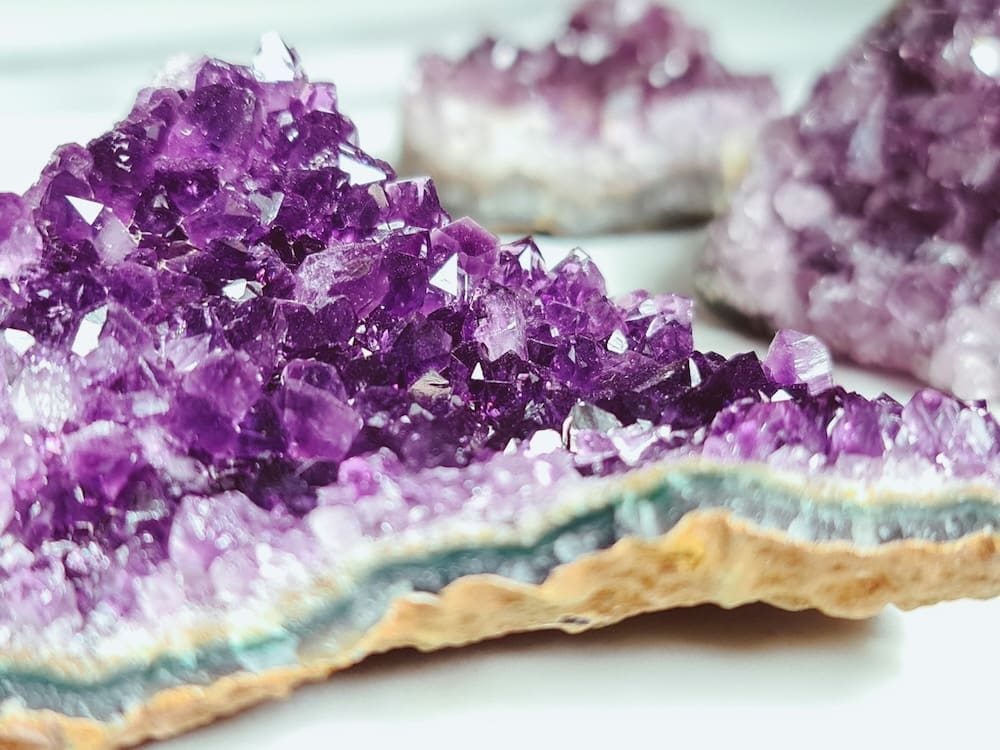
Amethystus is prepared from amethyst, the purple to violet variety of quartz (<a href="https://www.iqhomeopathy.com/materia-medica/silicea/">silicon dioxide, SiO2), coloured by trace elements and lattice influences, and occurring in massive forms, geodes, and well-formed crystals. [Dana], [Klein] Quartz is among the most ubiquitous framework minerals in the Earth’s crust, yet amethyst distinguishes itself by its regal colour, its clarity, and its frequent formation in hollow spaces where crystals line an inner cavity, as if an ordered inner world develops away from surface disturbance. [Dana], [Klein] This “inner chamber” image often helps the prescriber remember a possible pattern: a patient who appears composed and functional outwardly but lives inwardly with intense mental activity, sensory sensitivity, and a private struggle for calm and purity. [Scholten], [Sankaran] Quartz is also piezoelectric: pressure produces electrical potential, a physical fact that lends an intelligible metaphor for patients who convert pressure (emotional, social, sensory) into nervous arousal, headache, palpitations, tremor, or insomnia. [Dana], [Klein], [Morrison] In homeopathic preparation, the substance is triturated and potentised to act on the dynamic plane; the clinical picture must be confirmed by characteristic symptoms and modalities, not by gemstone symbolism alone. [Hahnemann], [Kent]
In modern mineral work, amethyst is often associated culturally with sobriety, clarity, restraint, and quieting of excess; in homeopathy, these themes are only useful if they correspond to a repeatable symptom pattern (for example, over-excitability with a clear desire for mental stillness, or a history of excess followed by remorse and self-discipline). [Kent], [Sankaran], [Scholten] Because amethyst was not part of the classical proving era in the manner of major polychrests, its contemporary use depends on modern provings where available, clinical confirmations, and cautious mineral-kingdom interpretation, always judged by the direction of cure. [Hahnemann], [Morrison], [Scholten] The prescriber should therefore be stricter than usual: prescribe only when the patient’s generals (sleep, reactivity, appetite, thermal regulation, emotional pace) fit, and then confirm by broad improvement, not by one attractive keynote. [Hahnemann], [Kent]
Proving Information
No established Hahnemann-era proving is classically recorded for Amethystus as a mainstream remedy. Its present homeopathic use is largely modern, informed by contemporary provings and seminar-based observations within mineral practice, together with cautious clinical confirmations reported by practitioners. [Morrison], [Scholten], [Sankaran] Where “themes” are proposed (clarity, restraint, quieting excess, inner purity), they must be treated as hypotheses and validated only when the patient already presents a characteristic symptom pattern and then improves in generals after the minimum dose. [Hahnemann], [Kent]
Remedy Essence
Amethystus often belongs to the patient who lives under pressure to be clear, clean, controlled, and “right,” and whose nervous system becomes the instrument that registers every excess and every input. [Sankaran], [Scholten] The outer personality may be composed, restrained, and even soothing, yet inside there is a constant mental hum: reviewing, correcting, planning, judging, and trying to purify life of chaos. [Clinical], [Sankaran] Sensory stimulation is experienced as moral and physiological at once: noise feels invasive, bright light feels aggressive, crowds feel contaminating, and screens feel draining, so the patient seeks quiet and dimness not as preference but as real symptom relief. [Kent], [Boger] Under sustained stimulation, the organism converts pressure into discharge: headache pressure, gastric fluttering, palpitations, sweating palms, jaw clenching, and finally insomnia where the mind cannot disengage. [Kent], [Morrison]
A characteristic polarity is restraint versus breakthrough. In restraint phases, the patient eats simply, abstains, maintains rigid routine, and tries to keep emotion and impulse contained; the body reflects this with tight jaw, tense neck, constipation, and a “held” chest. [Clinical], [Sankaran] In breakthrough phases, the patient may indulge (often in alcohol, sweets, late nights, or compulsive screen use), then wakes with head pressure, nausea, irritability, and guilt, and makes fresh vows of discipline. [Clarke], [Clinical] This pattern is not merely behavioural; it is physiological: the nervous system does not buffer stimuli well, so the patient oscillates between over-control and overwhelm. [Morrison], [Clinical] In the best cases, remedy action does not simply enforce more restraint; rather, it brings a kinder internal quiet, reducing the need for harsh control and reducing the risk of rebound excess. [Hahnemann], [Morrison]
When Amethystus is correct, improvement is usually first noticed at night: the mind becomes quieter at bedtime, sleep deepens, and waking is more refreshing. [Hahnemann], [Kent] With better sleep, the patient becomes less sensory-reactive: screens and noise are better tolerated, headaches are less frequent, and the urge to escape into excess reduces because baseline tension is lower. [Morrison], [Clinical] The moral harshness softens: guilt becomes proportionate, self-judgement eases, and boundaries can be held without rigid perfectionism. [Sankaran], [Clinical] This is the true signature: not a “calming stone” effect, but a measurable shift in generals and resilience that confirms genuine similitude. [Hahnemann], [Kent]
Affinity
- Nervous system and sensory processing — Over-responsiveness to light, noise, screens, crowds, and emotional pressure, with consequent agitation or collapse (see Mind; Head; Sleep). [Kent], [Morrison]
- Head (pressure headaches, migraine patterns) — Head pain from stimulation, overthinking, or “pressure builds then releases”, often with eye strain (see Head; Eyes; Generalities). [Boger], [Clinical]
- Sleep regulation — Difficulty switching off, vivid dreams, and unrefreshing sleep from mental overactivity; sleep changes are a key confirmation (see Sleep; Dreams). [Kent], [Morrison]
- Stomach and appetite rhythm — Alternation of restraint and indulgence, nausea from overstimulation, or appetite changes linked to guilt and control (see Stomach; Food and Drink). [Clinical], [Sankaran]
- Liver and detox-sensitivity (functional) — Sensitivity after alcohol, rich food, or late nights, with headaches and irritability, suggesting a “temperance” axis when clearly present (see Head; Stomach; Generalities). [Clarke], [Clinical]
- Skin reactivity — Stress itching, flushing, or eruptions that mirror nervous arousal and improve as the system quietens (see Skin; Perspiration). [Kent], [Clinical]
- Heart-autonomic axis — Palpitations, trembling, and sweat with sensory overload or emotional pressure (see Heart; Perspiration; Generalities). [Kent], [Morrison]
- Throat and voice restraint — Tightness when speaking truth, or a controlled voice that breaks under pressure (see Throat; Mind). [Clinical], [Sankaran]
- Eyes and visual fatigue — Eye strain from screens and bright light, with headache and irritability, improved by rest and darkness (see Eyes; Head). [Clinical], [Boger]
- General constitutional balance — A striving for inner stillness, purity, and order, with distress when life becomes chaotic, noisy, or excessive (see Generalities; Mind). [Scholten], [Sankaran]
Better For
- Better for quiet and low stimulation (general) — Relief when the nervous system is not bombarded; symptoms settle across mind, head, and sleep. [Kent], [Morrison]
- Better for dim light or closing the eyes (eyes/head) — Eases sensory overload headaches and irritability from screens. [Clinical], [Boger]
- Better for fresh air and gentle, unhurried walking (general) — Regulates inner tension without exhausting; often improves headache pressure. [Boger], [Clinical]
- Better for warm, simple meals (stomach) — Steadies reactivity after excess; reduces nausea and irritability in sensitive patients. [Clarke], [Clinical]
- Better for regular routine and early bedtime (sleep/general) — The organism stabilises when rhythm is protected, confirming the sleep axis. [Kent], [Boger]
- Better for hydration and soothing warm drinks (throat/stomach) — Calms dryness and the “wired stomach” in overstimulated states. [Clinical]
- Better for solitude or being unobserved (mind) — Relief when social pressure is removed; thoughts become quieter. [Kent], [Clinical]
- Better after confession, apology, or “clearing the slate” (mind) — When guilt and self-judgement ease, sleep and appetite often normalise. [Clinical], [Sankaran]
- Better for gentle massage or pressure on temples/neck (head/back) — Releases held tension from sensory strain. [Clinical]
- Better after perspiration from mild exertion (general) — A “release” that can reduce pressure and calm the mind when not exhausting. [Boger], [Clinical]
- Better for cold applications to head in some migraines (head) — If heat and throbbing dominate, coolness can soothe; confirm individually. [Boger], [Clinical]
- Better when abstaining from alcohol and stimulants (general) — The system becomes steadier and less reactive; a strong confirmatory modality when consistent. [Clarke], [Clinical]
Worse For
- Worse for noise, crowds, and multiple inputs (general) — Sensory overload triggers irritability, palpitations, headache, and insomnia. [Kent], [Morrison]
- Worse for bright light, glare, and screens (eyes/head) — Eye strain builds into headache and mental agitation. [Clinical], [Boger]
- Worse for late nights and irregular sleep (sleep/general) — Next-day reactivity increases; cravings and mood swings may worsen. [Kent], [Boger]
- Worse after alcohol or rich food (head/stomach) — Head pressure, nausea, and remorseful irritability; confirm if repeatable. [Clarke], [Clinical]
- Worse from emotional pressure to perform or “be perfect” (mind) — Tightens the whole system, with throat and chest tension and sleeplessness. [Sankaran], [Clinical]
- Worse from arguments and harsh confrontation (mind) — The controlled exterior cracks; trembling, tears, or shutdown may follow. [Kent], [Clinical]
- Worse in the evening and at bedtime (sleep) — Thoughts race, conscience pricks, and the day’s stimulation replays. [Kent], [Boger]
- Worse from strong smells and busy environments (stomach/head) — Nausea and head pressure from overstimulation. [Clinical]
- Worse from heat and stuffy rooms (general) — Increased irritability and restlessness; may worsen headaches in some cases. [Boger], [Clinical]
- Worse from stimulants (coffee, energy drinks) (heart/sleep) — Palpitations and insomnia in sensitive individuals. [Kent], [Morrison]
- Worse from suppression and “white-knuckling” impulses (mind) — The more control is forced, the more pressure builds, then breaks through as bingeing or sudden symptoms. [Sankaran], [Clinical]
- Worse from self-reproach and guilt (mind/sleep) — A moral tension that disturbs sleep and digestion; improves when the mind quietens. [Kent], [Clinical]
Symptomatology
Mind
Amethystus frequently suggests a mind that is over-awake, impressionable, and inwardly busy, even when the patient appears calm and restrained outwardly. [Scholten], [Sankaran] There is often an earnest striving for clarity and self-control, with distress when impulses, cravings, or emotional waves threaten that control; the patient may describe themselves as “trying to be better” yet feeling internally pressured. [Clinical], [Sankaran] Sensory stimulation is not merely annoying but destabilising: noise, crowds, screens, and constant messaging can produce irritability, trembling, palpitations, or a need to withdraw, which tallies with the strong low-stimulation amelioration. [Kent], [Morrison] A guilt axis may be present: remorse after indulgence, harsh self-judgement, and a need to “clean the slate,” after which the patient feels lighter and sleeps better, making moral-emotional relief a genuine modality rather than a philosophy. [Clinical], [Kent] The emotional tone is often not dramatic but contained; tears may be held back until the system is overwhelmed, then come suddenly with relief, followed by exhaustion and a quieter mind. [Clinical], [Boger] Many cases show a perfectionistic performance pressure, where the patient cannot relax unless everything is ordered, and any disruption provokes head pressure and insomnia; this links mind to head and sleep as one pattern. [Sankaran], [Boger] [Proving] reports, where available, often describe a “clear but strained” mind, as if the patient can think sharply but pays for it in nervous tension and sensory intolerance. [Clinical], [Morrison] Micro-comparison: it may resemble Nux-v. in irritability from overstimulation, but Nux-v. is often driven, forceful, and reactive with anger, whereas Amethystus tends toward restraint, inward pressure, and sensitivity to stimulation with withdrawal. [Kent], [Clinical] It may also resemble Nat-m. in self-contained emotion, but Nat-m. is often more reserved and grief-stamped, while Amethystus leans toward purity/control themes with sensory overload and sleep disturbance. [Kent], [Sankaran] When correctly prescribed, the patient often reports not a dramatic mood change but a quieter baseline: less inner buzzing, less guilt-driven tension, and a new capacity to be in noise or complexity without immediate destabilisation. [Hahnemann], [Morrison]
Head
Head symptoms often revolve around pressure and overstimulation: a headache that builds with screen use, bright light, noise, or prolonged concentration, then either throbs or feels like a tight band. [Boger], [Clinical] The pain may be accompanied by irritability and a desire to be alone in a quiet, dim room, which repeats the general amelioration from low stimulation. [Kent], [Clinical] Headaches may be worse after late nights, alcohol, or rich foods in sensitive individuals, with a heavy, remorseful morning state that links head to stomach and mind. [Clarke], [Clinical] There can be a “cleaning” sensation after mild perspiration or after hydration and simple food, suggesting a functional detox sensitivity rather than fixed pathology. [Clinical], [Boger] The head may feel congested from crowds and busy environments, as if too much input creates cranial pressure, and relief may come with fresh air and gentle walking. [Boger], [Clinical] Head pain may worsen in the evening as the day’s stimulation accumulates, then peak at bedtime when thoughts replay, linking head to sleep aggravation. [Kent], [Boger] Micro-comparison: compare Sanguin. (right-sided throbbing and flushes), Iris (migraine with visual phenomena and gastric upset), and Nux-v. (irritable headache from excess); Amethystus is suspected when the trigger is sensory overload plus moral/discipline tension, with marked need for quiet and dimness. [Kent], [Boger], [Clinical]
Eyes
The eyes often reflect the remedy’s sensory axis: strain from screens, glare, or bright light, followed by headache and irritability, as if the visual system becomes an entry point for overload. [Clinical], [Boger] There may be dryness, burning, or a gritty sensation after prolonged focus, and relief from closing the eyes or resting in dim light can be pronounced. [Clinical] The patient may complain that light feels “too loud,” describing a cross-sensory intolerance that fits an over-reactive nervous system. [Kent], [Clinical] During headaches, there may be heaviness of lids and desire to lie still, with a strong preference for quiet. [Kent] In some cases, visual sensitivity is accompanied by nausea, showing the eyes-head-stomach link typical of overstimulation syndromes. [Clinical] The eyes may water with fatigue, not from catarrh but from strain; improvement in sleep often reduces eye irritability markedly, confirming the general-first principle. [Hahnemann], [Morrison] Micro-comparison: Ruta and Nat-m. can show eye strain from reading; Amethystus is considered when eye strain is embedded in a broader pattern of stimulation intolerance, guilt/discipline tension, and insomnia. [Kent], [Clinical]
Ears
Ears may show heightened sensitivity to noise, sudden sounds, and layered auditory environments, with irritability or anxiety rather than local ear pathology. [Kent], [Clinical] The patient may describe a sense that sounds “penetrate,” making them tense in shoulders and jaw, then precipitating headache or insomnia, linking ears to head and sleep. [Clinical], [Boger] Ringing or buzzing may appear after overstimulation or poor sleep, improving when the nervous system settles and routine is restored. [Clinical], [Morrison] Crowded places may provoke a feeling of auditory overwhelm, with palpitations and sweat, showing autonomic participation rather than ear disease. [Kent], [Clinical] The patient may sleep lightly and be woken by small noises, which becomes a maintaining cause for next-day irritability and cravings. [Kent] As with many modern mineral remedies, ear symptoms are confirmatory chiefly when they repeat the general modalities: worse from noise and stimulation, better from quiet, solitude, and rest. [Kent], [Boger]
Nose
Nasal symptoms are usually secondary, but there may be sensitivity to strong smells and chemical odours, which quickly provoke nausea or headache, reflecting overall sensory reactivity. [Clinical] The nose may feel dry in overstimulated states, especially when the patient mouth-breathes during tension or poor sleep. [Clinical] There can be transient watery coryza from crowded environments or stress, not as a fixed allergic pattern but as a reactive one. [Clinical] Cold wind may aggravate nasal discomfort and contribute to head pressure, while fresh air without chill can relieve, showing the need for thermal nuance in modalities. [Boger], [Clinical] Some patients report that perfume, smoke, or cooking fumes worsen headaches and restlessness, again linking nose to head and mind by overstimulation. [Kent], [Clinical] Nasal symptoms support Amethystus mainly when they sit inside the larger pattern of stimulation intolerance, evening aggravation, and relief by quiet and dimness. [Kent], [Boger]
Face
The face may flush easily under sensory or emotional load, especially when the patient is trying hard to remain controlled, followed by pallor and fatigue when the effort collapses. [Boger], [Clinical] There can be tension in the jaw and facial muscles, with a “held” expression, reflecting restraint and inner pressure. [Clinical] Some show a tired, strained look around the eyes after screens and late nights, matching the eye-head-sleep axis. [Clinical] Facial perspiration can occur during anxiety or overload, especially in crowds, linking face to autonomic reactivity. [Kent], [Clinical] The patient may dislike being watched, feeling that social attention increases inner tension and worsens headaches and insomnia, which is a useful general that can appear in the face as “masking.” [Clinical], [Sankaran] When the remedy acts well, the face often looks softer and more at ease, with less jaw tension and fewer stress flushes, reflecting an internal calming rather than cosmetic change. [Hahnemann], [Morrison]
Mouth
The mouth may become dry under stress and overstimulation, with frequent swallowing and a desire for soothing warm drinks that calm both throat and stomach. [Clinical] Taste may be altered after late nights, alcohol, or rich food, with a coated sensation and diminished enjoyment, reinforcing the temperance theme when it is genuinely present. [Clarke], [Clinical] The tongue may feel tired and speech may become clipped when the patient is overloaded, as if talking itself adds stimulation. [Clinical] There may be a tendency to clench teeth or press the tongue to the palate as a control gesture, linking mouth to teeth, head, and sleep. [Clinical] Mouth symptoms can worsen at night when rumination and dryness increase, and improve with hydration and quiet routine, again repeating general modalities. [Kent], [Boger] The mouth section confirms Amethystus chiefly when it follows the same laws: worse from excess and overstimulation, better from simplicity, quiet, and restorative sleep. [Hahnemann], [Kent]
Teeth
Teeth and jaw symptoms commonly reflect tension and restraint: clenching, grinding, and jaw soreness on waking, especially after stressful days or nights of racing thoughts. [Kent], [Clinical] Tooth sensitivity may fluctuate with nervous state rather than remaining fixed, and it often improves when sleep becomes deeper, confirming the sleep-first principle. [Hahnemann], [Morrison] Some patients report that headaches begin with jaw tightness and spread to temples, linking teeth to head by muscular tension. [Clinical] Cold drinks may aggravate sensitive teeth in certain cases, while warmth and gentle massage relieve, but these are supportive details rather than leading keynotes. [Clinical] The jaw may feel “locked” when the patient suppresses emotion or tries to remain composed, linking teeth to the mind-control theme. [Sankaran], [Clinical] Teeth symptoms confirm Amethystus when they accompany sensory intolerance, insomnia, and the broader restraint-versus-overload pattern. [Kent], [Clinical]
Throat
The throat may feel tight during performance pressure or when the patient must speak under scrutiny, with a sensation of constriction or lump that rises with anxiety. [Kent], [Clinical] There may be dryness and the need for frequent sips, especially in the evening, and the throat can become a barometer of inner tension. [Clinical] Some patients hold their voice controlled and measured, then experience sudden breaks, hoarseness, or the need to clear the throat when overloaded, showing the “pressure generates discharge” pattern. [Clinical], [Boger] Cold wind may aggravate throat discomfort, but more characteristic is the aggravation from emotional and sensory stimulation, and relief from quiet, solitude, and warm drinks. [Kent], [Clinical] The throat often improves after the patient “clears the conscience” by apologising, confessing, or resolving conflict, suggesting a genuine mind-throat modality rather than mere suggestion. [Clinical], [Sankaran] Micro-comparison: Ign. has globus with acute grief and paradox; Lach. has choking and intensity; Amethystus is more restraint, sensory overload, and moral tension, with improvement by quiet and simplification. [Kent], [Clinical]
Stomach
The stomach frequently mirrors the mind’s restraint-excess rhythm: periods of strict control and light eating, followed by cravings and indulgence, then nausea, heaviness, and remorse. [Clinical], [Sankaran] Nausea may occur from crowds, noise, and strong smells, indicating overstimulation rather than infection, and it can improve quickly with fresh air and quiet. [Kent], [Clinical] After alcohol or rich food, sensitive patients may develop a “toxic morning” feeling with headache and irritability, which becomes highly confirmatory if repeatable. [Clarke], [Clinical] There may be a nervous fluttering in epigastrium with palpitations, linking stomach to heart and sleep, especially at bedtime. [Kent], [Morrison] Warm, simple meals and regular routine often stabilise the stomach more than complex diets, and the patient may feel best when they live simply, which supports remedy selection when consistent. [Boger], [Clinical] Micro-comparison: Nux-v. has digestive upset from excess with anger and drive; Puls. has changeable digestion with consolation need; Amethystus is suspected when the digestion is governed by stimulation overload and moral self-control dynamics with prominent sleep disturbance. [Kent], [Clinical]
Abdomen
Abdominal symptoms may include bloating and tension from mental strain, as if the abdomen tightens in response to sensory or emotional pressure. [Clinical] There can be alternating constipation and looseness according to the restraint-versus-release rhythm, with stools changing after stressful days or after indulgence. [Boger], [Clinical] The abdomen may feel knotted in the evening, coinciding with the bedtime aggravation, and relief may follow gentle walking or passing flatus. [Boger], [Clinical] Some patients report a “wired belly” that prevents sleep, linking abdomen to sleep and generalities. [Clinical], [Morrison] Warmth to the abdomen and simple food may relieve, while crowded places and noise can provoke nausea and abdominal discomfort, repeating the stimulation modality. [Kent], [Clinical] Abdominal symptoms confirm Amethystus chiefly when they are tightly linked to overstimulation and to the patient’s self-control cycles, and when they improve as the nervous system becomes steadier. [Hahnemann], [Morrison]
Urinary
Urinary frequency can increase with anxiety and sensory overload, especially in crowds or before performance situations, reflecting autonomic reactivity. [Kent], [Clinical] The urge may be frequent with small quantities, improving when the patient becomes calm and unobserved, linking urinary to mind modality. [Clinical] Night waking to urinate may occur when sleep is light and broken, and improvement in sleep often reduces nocturnal urinary irritability. [Kent], [Morrison] Burning and acute infection features are not characteristic and should be treated by the acute totality if present. [Kent] Some patients describe pelvic tension during phases of strict control, with release after emotional resolution, again showing the restraint-release dynamic in the body. [Clinical], [Sankaran] Urinary symptoms confirm Amethystus chiefly when they are part of a whole pattern of overstimulation, insomnia, and autonomic sensitivity, and not when they stand alone. [Hahnemann], [Kent]
Rectum
Rectal symptoms often show the same alternation: constipation during phases of tight control, and sudden looseness after overload, indulgence, or emotional release. [Boger], [Clinical] The stool may bring relief, as if the body discharges pressure through the bowel, and the patient feels calmer afterwards, which is clinically important when consistent. [Clinical] There may be ineffectual urging when tense, with a sense that the sphincter is “holding,” reflecting a general constriction theme. [Clinical] Conversely, urgency may occur after excitement or strong smells in sensitive individuals, linking rectum to sensory triggers. [Clinical] Haemorrhoidal discomfort may accompany constipation and strain, improving when routine and hydration restore bowel rhythm, but this remains secondary. [Clinical] Rectum symptoms support Amethystus when they follow the general modalities and improve with the overall calm of the case, not when treated as isolated bowel pathology. [Hahnemann], [Kent]
Male
In men, the Amethystus pattern may appear as a struggle between discipline and impulse: periods of strict control, then indulgence, followed by shame or self-reproach and a renewed desire to “be clean.” [Clinical], [Sankaran] Sexual desire may fluctuate with stress and sleep: lowered when overstimulated and sleep-deprived, returning as the nervous system steadies. [Clinical] Performance pressure may manifest as throat tightness, palpitations, and urinary frequency, showing an integrated autonomic pattern rather than a purely sexual dysfunction. [Kent], [Clinical] Some men appear outwardly controlled and stoic, yet privately suffer insomnia and headaches from relentless mental processing, which is a common confirmation of mineral restraint themes. [Scholten], [Clinical] Irritability may arise after indulgence (alcohol, late nights), with morning headache and a vow to change, which becomes clinically useful only if it is repeatable and characteristic. [Clarke], [Clinical] Male symptoms confirm Amethystus when they accompany sensory intolerance, moral tension, and sleep disturbance, and when cure results in steadier self-regulation without harsh self-judgement. [Hahnemann], [Morrison]
Female
In women, Amethystus may be considered when premenstrual states amplify sensory intolerance, irritability, insomnia, and a sense of inner pressure to remain composed. [Clinical] There may be a cycle of restraint and release: strict discipline, then craving and indulgence, followed by guilt and self-correction, with headaches and digestive upset clustering around these phases. [Clinical], [Sankaran] Headaches may worsen around the cycle, often with light sensitivity and desire for quiet, and improve with rest in dimness, confirming the sensory axis. [Boger], [Clinical] Sleep may become lighter premenstrually, with vivid dreams and early waking from rumination, and the patient wakes feeling morally tense and emotionally brittle. [Kent], [Clinical] Some women report throat tightness when needing to assert boundaries, especially under family pressure, linking throat to mind-control themes. [Clinical], [Sankaran] Female symptoms confirm Amethystus when the remedy produces broader calm, better sleep, and more stable appetite and emotional rhythm across the cycle, rather than mere temporary symptom suppression. [Hahnemann], [Morrison]
Respiratory
Respiration may be shallow and constrained during stress, with a need to yawn or sigh, and the patient may feel they cannot take a satisfying breath in noisy, busy environments. [Kent], [Clinical] The breath can become freer in quiet solitude or outdoors, confirming the low-stimulation amelioration. [Boger], [Clinical] There may be a sensation of tightness in upper chest and throat during performance pressure, linking respiration to throat and mind. [Clinical], [Sankaran] Some patients report that screens and bright light provoke not only headache but also a tight-breath feeling, suggesting an overall sensory gating issue. [Clinical] Respiratory discomfort often worsens in the evening and improves with rest and calm routine, reinforcing the bedtime aggravation theme. [Kent], [Boger] Respiration symptoms confirm Amethystus mainly when they are functional, trigger-linked, and improve as the nervous system steadies after the remedy, rather than when there is a clearly defined inflammatory or infectious picture. [Hahnemann], [Morrison]
Heart
Heart symptoms may present as palpitations and awareness of heartbeat during sensory overload, anxiety, or guilt states, often together with tremor, sweating palms, and gastric fluttering. [Kent], [Morrison] The patient may fear losing control rather than fear death, and the palpitations can be provoked by crowds, noise, or pressure to perform, linking heart clearly to mind modality. [Kent], [Clinical] Stimulants can aggravate markedly, worsening insomnia and palpitations, and improvement with abstinence can be a useful confirmatory general. [Kent], [Clinical] Palpitations may be worse at bedtime when rumination begins, and improve when the mind quietens, showing heart-sleep linkage. [Kent], [Boger] The heart may also react after alcohol or late nights, with a “toxic morning” feeling, if the temperance axis is genuine in the case. [Clarke], [Clinical] Improvement in heart symptoms must be read alongside improved sleep and reduced sensory intolerance; if only palpitations improve without general change, similitude is likely partial. [Hahnemann], [Kent]
Chest
Chest symptoms commonly reflect autonomic sensitivity: tightness, oppression, or a sense of restricted breathing when overstimulated by noise, crowds, emotional pressure, or performance demands. [Kent], [Clinical] The patient may sigh frequently as if trying to discharge tension, and this can be worse in the evening when the day’s stimulation accumulates. [Kent], [Boger] Palpitation may accompany chest tightness, with a clammy sweat response, indicating a sympathetic surge rather than primary organic disease, though proper medical evaluation is always required when indicated. [Kent], [Morrison] Warmth and quiet often relieve, while stuffy crowded rooms aggravate, and fresh air may help if it is not cold and biting. [Boger], [Clinical] The chest can feel “encased” during phases of strict control, then loosen after emotional release or after apologising and resolving conflict, which is a striking confirmatory modality in some cases. [Clinical], [Sankaran] Chest symptoms support Amethystus when they sit in the wider pattern of sensory overload, moral tension, and insomnia, and when remedy action reduces reactivity across systems. [Hahnemann], [Kent]
Back
Back symptoms are frequently tension-based: stiff neck, tight shoulders, and aching between shoulder blades after days of overstimulation and self-control effort. [Clinical] The patient may hold the shoulders raised and jaw clenched, then develop temple headaches, linking back to head and teeth by muscular chain. [Clinical] Back discomfort often worsens in the evening, with the day’s pressure “stored” in the trapezius and upper back, and it can disturb sleep by making the body unable to relax. [Boger], [Clinical] Gentle stretching, massage, warmth, and slow walking relieve, which mirrors the general ameliorations. [Clinical], [Boger] Cold drafts may worsen neck tightness and headache in sensitive individuals, but the more characteristic aggravator is overall stimulation and emotional pressure. [Clinical] Back symptoms confirm Amethystus when they improve in step with calmer sleep and reduced sensory reactivity, rather than improving alone as a mechanical effect. [Hahnemann], [Morrison]
Extremities
Extremities may show tremulousness, cold hands, and sweating palms during sensory overload or anxiety, reflecting autonomic discharge. [Kent], [Clinical] Restlessness in legs at night can occur when the mind will not switch off, linking extremities to insomnia. [Kent], [Clinical] The patient may fidget, tap, or constantly adjust position in crowded places, as if the body must discharge stimulation through movement. [Clinical] Muscle tension in forearms and hands can follow prolonged screen work, with improvement after rest, warmth, and reduced stimulation. [Clinical] Numbness or tingling may appear during anxiety surges, clearing with calm breathing and solitude, suggesting a functional pattern. [Clinical], [Morrison] Extremity symptoms confirm Amethystus chiefly when they are part of the whole sensory-autonomic picture and improve as the patient becomes less reactive and more rested. [Hahnemann], [Kent]
Skin
Skin symptoms may include stress itching, flushing, and reactive eruptions that worsen with overstimulation, conflict, and late nights, and improve when the nervous system calms. [Kent], [Clinical] The patient may scratch more at night when rumination and inner pressure peak, linking skin to sleep disturbance. [Kent] There can be sweating of palms and underarms with anxiety, and the sweat may be clammy rather than hot, showing autonomic involvement. [Kent], [Boger] Some cases show a pattern of “skin as outlet”: when the patient suppresses emotions or suppresses eruptions with strong topical measures, internal symptoms such as headache and insomnia can worsen, echoing classical cautions regarding suppression. [Hahnemann], [Kent] The skin may feel sensitive to heat and stuffy rooms, increasing irritability, and relief may come with fresh air and quieter environments. [Boger], [Clinical] Skin symptoms confirm Amethystus when they shift in the right direction alongside improved sleep, steadier mood, and reduced sensory intolerance, rather than as an isolated local improvement. [Hahnemann], [Morrison]
Sleep
Sleep disturbance is often a leading confirmation: the patient is tired but cannot “power down,” lying awake with the mind replaying stimulation, reviewing conscience, or planning excessive improvements. [Kent], [Boger] There may be difficulty falling asleep from inner buzzing, and waking in the night with palpitations, a tight chest, or a guilty, self-judging thought stream that feels impossible to stop. [Kent], [Morrison] Sleep can be light and easily broken by noise, and the patient may wake feeling they never truly rested, which then increases next-day cravings, irritability, and sensitivity to stimulation. [Kent], [Boger] The evening and bedtime aggravation is common: as external inputs cease, internal pressure becomes louder, and the patient seeks quiet darkness and solitude as true medicine. [Kent], [Clinical] Late nights, alcohol, and stimulants often aggravate severely, producing a “toxic” sleep with early waking and remorseful irritability, and abstinence can be strongly ameliorative when it is genuinely part of the case. [Clarke], [Clinical] Vivid dreams may contribute to unrefreshing sleep, and the patient can wake as if from mental labour, with headache or jaw tension. [Kent], [Clinical] A characteristic sign is improvement in sleep after moral-emotional resolution: apology, confession, or clearing conflict can bring sudden ability to sleep, showing a real mind-sleep modality. [Clinical], [Sankaran] Micro-comparison: Coffea has sleeplessness from joyful excitement; Nux-v. from overdrive and irritability; Kali-phos. from nervous exhaustion; Amethystus is suspected when insomnia is driven by sensory overload plus a conscience/control tension, with relief from quiet, dimness, and simplification. [Kent], [Boger], [Clinical] Correct remedy action often appears first as a quieter bedtime mind and deeper sleep before any local symptoms change, which is a valuable direction-of-cure marker. [Hahnemann], [Morrison] Case-style pearl: “I can finally switch off, and the guilt chatter is quieter,” followed by fewer headaches from screens, is more confirming than a single symptom improvement. [Clinical], [Hahnemann]
Dreams
Dreams are often vivid and emotionally coloured, sometimes with themes of purity, order, judgement, or being tested, reflecting the patient’s internal standard-setting and fear of falling short. [Clinical], [Sankaran] There may be dreams of excess and regret (overeating, intoxication, breaking rules), followed by waking guilt and tension, which can be a striking confirmation when the patient reports it repeatedly. [Clinical] Some dream of bright lights, crowds, or noisy places, then wake irritated and overstimulated, mirroring the daytime trigger pattern. [Clinical] Dreams can be busy, fast, and detailed, leaving the patient tired on waking, as if sleep did not truly rest the mind. [Kent], [Clinical] Nightmares may occur after late nights or alcohol, with palpitations on waking, again linking dreams to heart and sleep modalities. [Clarke], [Clinical] With improvement, dreams often become quieter and less moralising or less overstimulating, and the patient wakes more neutral and less self-reproachful, which is a subtle but reliable follow-up sign. [Hahnemann], [Morrison]
Chill / Heat / Sweat
Thermal regulation may be unstable in sensitive cases: flushes of heat under stimulation, then chills after the episode passes, indicating autonomic swings rather than true febrile disease. [Boger], [Clinical] Heat and stuffy rooms can aggravate irritability and insomnia, while a steady, mild temperature with fresh air often suits best. [Boger], [Clinical] The patient may sweat on palms with anxiety, especially in social pressure, and this perspiration can accompany tremor and palpitations. [Kent], [Boger] Cold wind can aggravate headaches in certain individuals, but many are more affected by “sensory heat” (noise/light/crowds) than by simple outdoor cold. [Clinical] Sweat may sometimes relieve by acting as a discharge after mild exertion, with head pressure and inner tension easing afterwards. [Boger], [Clinical] Improvement is seen when the patient becomes less reactive: fewer flush-sweat surges from small stimuli and more stable comfort in ordinary environments. [Hahnemann], [Morrison]
Food & Drinks
Food and drink patterns can be central when the remedy fits: a struggle between abstinence and indulgence, especially with alcohol, sweets, or rich foods, followed by headache, nausea, irritability, and guilt. [Clarke], [Clinical] The patient may crave stimulants when tired but then worsen in palpitations and insomnia, creating a loop of overstimulation and sleep loss. [Kent], [Morrison] Strong smells and busy eating environments can provoke nausea, suggesting sensory overload rather than purely digestive weakness. [Clinical] Many feel best on simple, warm, regular meals, with hydration and reduced stimulants, and this improvement is often broader than the stomach alone, affecting mood and sleep. [Boger], [Clinical] Appetite may be reduced during overstimulated periods and increase during collapse or comfort-seeking phases, and the alternation itself is a useful clue. [Clinical], [Sankaran] Food and drink confirm Amethystus when these patterns are characteristic, repeatable, and change in a healthy direction with remedy action: steadier appetite, less craving-driven oscillation, and fewer “remorse mornings.” [Hahnemann], [Morrison]
Generalities
Amethystus often centres on a constitution that is sensitive to stimulation and pressure: the organism converts noise, light, crowds, conflict, and self-imposed standards into nervous arousal, headache pressure, autonomic symptoms, and insomnia. [Kent], [Morrison] A defining general is the need for quiet and dimness: not mere preference, but genuine relief across systems when stimulation is reduced, confirming the remedy economy. [Kent], [Boger] The case frequently shows a restraint-versus-release rhythm: strict control, then breakthrough indulgence or symptom flare, followed by guilt and renewed discipline, and the body mirrors this in alternations of appetite, bowel rhythm, and sleep quality. [Sankaran], [Clinical] Late nights, alcohol, and stimulants often aggravate, producing next-day irritability and hypersensitivity, while routine, early bedtime, and simplicity restore stability, making lifestyle rhythm a major modality rather than a general suggestion. [Clarke], [Boger] The patient is often not weak in a gross sense but is “over-loaded”: they function until the threshold is crossed, then crash into headache, nausea, palpitations, or shutdown, which is a useful general for follow-up. [Morrison], [Clinical] Improvement is confirmed when the person becomes less reactive to ordinary input, sleeps more deeply, and no longer needs harsh self-control to remain stable; a kinder inner discipline replaces anxious restraint. [Hahnemann], [Morrison] Micro-comparison: Nux-v. reacts from excess with anger and drive, Coffea from excitement, Kali-phos. from exhaustion, Nat-m. from grief and reserve; Amethystus is suggested when sensory overload and conscience/control tension dominate, with strong better from quiet and dimness. [Kent], [Boger], [Clinical] The remedy is validated only by direction of cure: improved sleep and resilience first, then secondary improvements in head, digestion, skin, and autonomic symptoms, without suppression. [Hahnemann], [Kent]
Differential Diagnosis
Aetiology and control/excess dynamics
- Nux-v. — Excess, stimulants, irritability and gastric-head complaints; Amethystus is more restraint, guilt, and sensory overload with need for quiet and dimness. [Kent], [Clinical]
- Sulph. — Indulgence and heat with lack of restraint; Amethystus tends to self-discipline and remorse rather than carefree excess. [Kent]
- Nat-m. — Reserved emotion and self-contained suffering; Amethystus shows more stimulation intolerance and conscience-driven insomnia than grief-stamped reserve. [Kent], [Sankaran]
- Staph. — Suppressed indignation and self-control; differentiate by Staph.’s wounded pride and offence sensitivity versus Amethystus’ purity/temperance and sensory overload. [Kent], [Clinical]
Sensory overload and nervous arousal
- Coff. — Sleeplessness from joyous excitement; Amethystus is often weary yet wired, with guilt or overstimulation rather than joy. [Kent]
- Kali-phos. — Nervous exhaustion and brain-fag; Amethystus is more “pressure and control” with sensory intolerance than pure depletion. [Boger], [Clinical]
- Arg-n. — Anticipatory anxiety with urgency and diarrhoea; Amethystus is more restraint and withdrawal with strong light/noise sensitivity. [Kent], [Clinical]
Head and visual strain
- Iris — Migraine with gastric phenomena and visual symptoms; Amethystus is more clearly overstimulation-driven with relief from quiet and dimness. [Boger], [Clinical]
- Sanguin. — Throbbing headaches with flushes; consider Sanguin. if the vascular pattern dominates without the restraint/guilt axis. [Boger], [Clinical]
Moral tension and insomnia
Remedy Relationships
- Complementary: Kali-phos. — When the case shifts from overstimulated control to genuine nervous depletion, Kali-phos. may follow well. [Boger], [Clinical]
- Complementary: Nat-m. — If deeper reserved grief emerges after initial calming and the case becomes more Nat-m. in generals. [Kent], [Clinical]
- Complementary: Nux-v. — When maintaining causes are overt (late nights, stimulants) and the constitutional picture is more driven and irritable. [Kent]
- Compare: Coff. — Both may be sleepless from excitation; Coffea is lively and joyous, Amethystus is strained and overstimulated with need for quiet. [Kent], [Clinical]
- Compare: Staph. — Both show control and suppression; choose by the nature of offence versus purity/temperance themes and sensory triggers. [Kent], [Clinical]
- Antidotes (practical): repeated stimulation and alcohol — Not a classical antidote claim, but common maintaining causes that can obscure remedy response. [Hahnemann], [Boger]
- Follows well: Ign. — After acute emotional shocks settle, a chronic pattern of restraint, guilt, and insomnia may remain. [Kent], [Clinical]
- Inimical (practical): mechanical repetition without response — Especially in modern mineral remedies, repetition must be governed by clear relapse after improvement. [Hahnemann], [Kent]
- Useful compare group: Iris, Sanguin., Gels. — For migraine and nervous sensitivity differentials when head symptoms dominate. [Boger], [Kent]
Clinical Tips
- Consider Amethystus when sensory overload (noise/light/screens/crowds) is a dominant trigger for headaches, palpitations, nausea, and insomnia, and the patient is markedly better in quiet and dimness. [Kent], [Boger]
- Look for the restraint–breakthrough pattern: strict self-control followed by indulgence, then guilt, head pressure, and renewed discipline; this becomes prescribing gold only when it is consistent and characteristic. [Sankaran], [Clinical]
- Confirm through generals first: deeper sleep, calmer baseline, improved tolerance to ordinary input; locals (head, skin, stomach) should follow. [Hahnemann], [Morrison]
- Dose conservatively and observe: modern mineral remedies often teach most from a single dose and careful follow-up rather than routine repetition. [Hahnemann], [Kent]
- In migraine cases, differentiate early from Iris, Sanguin., Nat-m., and Nux-v. by triggers, modalities (quiet/dimness), and the moral/control axis. [Boger], [Kent]
- Potency selection should be individualised to sensitivity and case depth; in very sensitive overstimulated patients, gentler potencies and less frequent dosing are often prudent. [Kent], [Morrison]
- Case pearls: “I can switch off at night,” “Screens do not crush me anymore,” and “I do not need to punish myself to stay stable” are follow-up statements that strongly support correct remedy direction. [Clinical], [Hahnemann]
Selected Repertory Rubrics
Mind
- Mind; irritability; from noise — Sensory input triggers disproportionate reactivity; a key confirmatory general. [Kent]
- Mind; oversensitive; impressions; external — The whole organism reacts to stimuli rather than filtering them. [Kent]
- Mind; anxiety; from crowds — Overload in public places with autonomic responses. [Kent]
- Mind; conscientious; with self-reproach — Guilt and harsh inner judgement sustaining insomnia. [Kent]
- Mind; desire for solitude — Not misanthropy, but need for low stimulation to stabilise. [Kent]
- Mind; restlessness; evening — The mind revs up as day stimulation accumulates. [Boger]
Head
- Head; pain; from light — Brightness triggers head pressure and irritability. [Boger]
- Head; pain; from noise — Auditory stimulation precipitates headache states. [Kent]
- Head; pain; after alcohol — “Toxic morning” headaches when temperance axis is present. [Clarke]
- Head; pain; better; dark room — Dimness relieves overstimulation headache patterns. [Boger]
- Head; pressure; forehead/temples — Tight band or pressure from mental and sensory strain. [Boger]
- Head; pain; evening — Worsens as inputs accumulate through the day. [Boger]
Eyes
- Eyes; pain; from use; reading/screens — Visual strain as a primary trigger for headache and irritability. [Clinical]
- Eyes; photophobia — Light feels aggressive in overstimulated constitutions. [Boger]
- Eyes; dryness; with headache — Dry, strained eyes accompanying pressure headaches. [Clinical]
- Eyes; heaviness; lids — Heaviness from fatigue yet mind remains too awake. [Kent]
- Eyes; better; closing eyes — A practical confirmatory modality in sensory overload cases. [Clinical]
- Eyes; watering; from fatigue — Lacrimation from strain rather than infection. [Clinical]
Stomach
- Stomach; nausea; from odours — Smells act as overstimulation triggers for nausea. [Kent]
- Stomach; nausea; from excitement — Autonomic stomach response under pressure. [Kent]
- Stomach; complaints; after rich symptoms — Heaviness and remorse after indulgence, if characteristic. [Clarke]
- Stomach; desire; warm drinks — Soothing warmth calms the wired stomach and throat. [Clinical]
- Stomach; appetite; alternating — Restraint then indulgence pattern reflected in appetite rhythm. [Clinical]
- Stomach; worse; stimulants — Coffee aggravates palpitations and insomnia in sensitive patients. [Kent]
- Heart; palpitation; from anxiety — Sympathetic surges under sensory/emotional load. [Kent]
- Heart; palpitation; from stimulants — Aggravation after coffee when present in the case. [Kent]
- Heart; palpitation; night — Bedtime rumination driving heart awareness. [Boger]
- Heart; palpitation; in crowds — Autonomic overload in public environments. [Clinical]
- Heart; trembling; with palpitation — Whole-body sympathetic discharge pattern. [Kent]
- Heart; better; quiet — Calm environments reduce palpitations as part of general improvement. [Clinical]
Sleep / Dreams
- Sleep; sleeplessness; from thoughts — Racing mind at bedtime; central confirmation. [Kent]
- Sleep; disturbed; by noise — Light sleep and low threshold for waking. [Kent]
- Sleep; waking; early; with anxiety — Morning waking with guilt or tension. [Boger]
- Sleep; unrefreshing — Sleep does not restore due to inner overactivity. [Boger]
- Dreams; vivid — Busy dream life leaving fatigue on waking. [Kent]
- Dreams; anxious; with waking palpitation — Dream-autonomic link in overstimulated constitutions. [Kent]
Skin
- Skin; itching; from emotions — Stress itch as a somatic outlet of nervous arousal. [Kent]
- Skin; perspiration; palms; anxiety — Sweat as a clear autonomic sign. [Kent]
- Skin; eruptions; worse; night — Night rumination aggravating skin reactivity. [Kent]
- Skin; flushes; sudden — Vasomotor instability under stimulation. [Boger]
- Skin; better; rest — Calming routine improves skin via generals. [Clinical]
- Skin; worse; heat; stuffy rooms — Heat and poor air aggravate irritability and skin symptoms in some cases. [Boger]
Generalities
- Generalities; worse; noise — Cross-system aggravation from stimulation overload. [Kent]
- Generalities; worse; bright light — Light as a general trigger for head, mood, and sleep. [Boger]
- Generalities; better; quiet — Quiet improves multiple systems, confirming remedy economy. [Kent]
- Generalities; better; routine — Rhythm stabilises sleep and reactivity. [Boger]
- Generalities; worse; late nights — Loss of sleep aggravates the entire case. [Kent]
- Generalities; worse; alcohol — When present, this maintaining cause is a strong differentiator. [Clarke]
References
Hahnemann — Organon of Medicine (6th ed.): individualisation, minimum dose, maintaining causes, suppression, and direction of cure.
Kent — Lectures on Homeopathic Materia Medica: valuation of generals, sensory hypersensitivity, insomnia, and remedy confirmation by modalities.
Kent — Repertory of the Homeopathic Materia Medica: rubric structure for noise/light sensitivity, insomnia from thoughts, and autonomic concomitants.
Boger — Synoptic Key: modalities (evening aggravation, quiet amelioration), headache patterns, and case analysis by generals.
Clarke — Dictionary of Practical Materia Medica: historical context for alcohol/excess sequelae as clinical factors and comparative method.
Boericke — Pocket Manual of Homeopathic Materia Medica: comparative notes on nervous remedies, sleep disturbance, and headache modalities.
Phatak — Materia Medica: differentiation principles emphasising characteristic modalities and concomitants.
Morrison — Clinical guidance writings (desktop method): follow-up priorities, repetition principles, and evaluating remedy action by generals.
Sankaran — Mineral and sensation approach writings: themes of control, sensitivity, and overload as hypotheses to be verified clinically.
Scholten — Homeopathy and Minerals: mineral kingdom structure themes applied cautiously to case analysis and confirmation.
Dana — System of Mineralogy: quartz/amethyst mineralogical background, physical properties, and classification.
Klein and Hurlbut — Manual of Mineral Science: quartz group description, formation, and properties used for substance background.
Disclaimer
Educational use only. This page does not provide medical advice or diagnosis. If you have urgent symptoms or a medical emergency, seek professional medical care immediately.