

Vinca minor
Substance Background
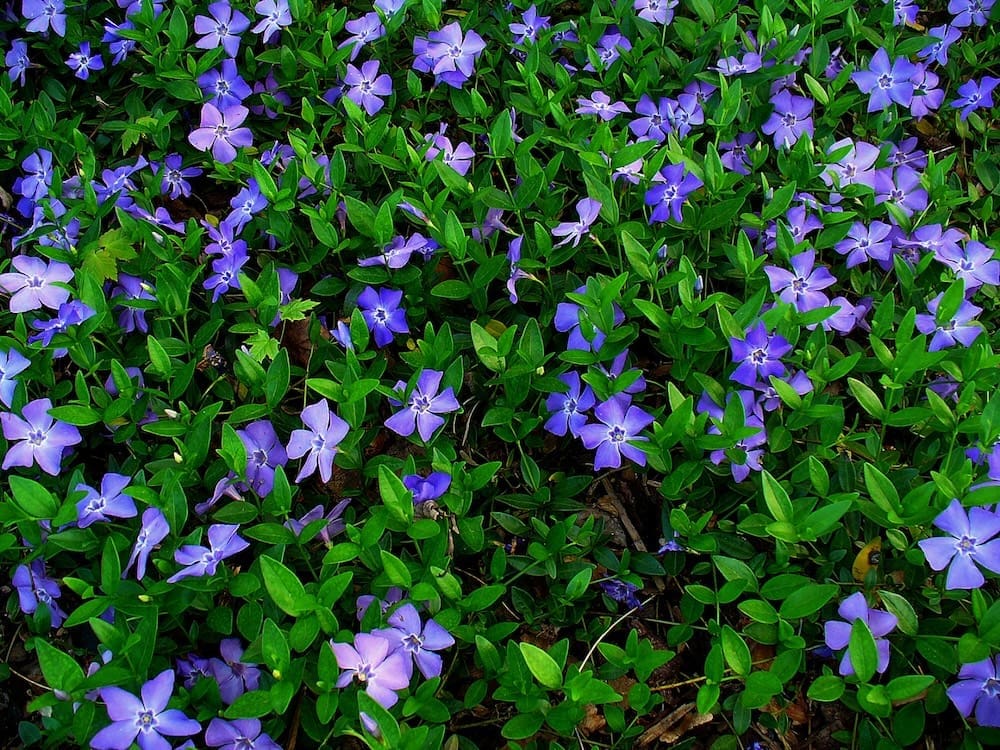
Evergreen groundcover of the Apocynaceae, rich in indole/monoterpene alkaloids and acrid sap. The fresh, flowering herb is tinctured and potentised. Classical authors repeatedly emphasise its utility for moist, fetid, excoriating scalp eruptions of infants and children (crusta lactea, impetiginous eczema), with hair matted into ropes by the discharge and a peculiar sequel where new hair grows in white upon the cleared patches [Hering], [Clarke], [Allen], [Boericke]. Acrid moisture extends to the retroauricular folds, nape, and cheeks; scratching causes easy bleeding and spreads the irritation [Hering], [Clarke]. Several observers note a clinical link to nocturnal enuresis and acrid urine in the same children, giving the remedy a practical scalp–urine axis [Clarke], [Phatak], [Boericke]. Pathophysiologically (correlative), the picture is one of surface catarrh with acrid exudation and secondary follicular change, explaining the excoriations, fetor, and post-inflammatory hair depigmentation [Hughes], [Clarke].
Proving Information
Sparse formal proving material; the usable picture is strongly [Clinical] (Hering, Allen, Clarke) with bedside confirmations of the crusta lactea pattern, fetid acridity, white hair regrowth, and night-time enuresis [Hering], [Allen], [Clarke], [Boericke].
Remedy Essence
Vinca minor is a surface-expression remedy: the story is written on the skin and in the air around the child. The discharge is acrid, excoriating, and fetid—a “mousy” odour that mothers and nurses recognise in bed-linen and caps; the hair is glued into cords; scratching bleeds easily; and, when the storm passes, the new hair returns white over alopecic islets—a small but decisive signature [Hering], [Clarke], [Allen]. The case worsens at night and with warmth of bed; woollen occlusion and hot washing macerate and inflame; the child uncovers the head, craves cool air, and quiets with cool sponging. These modalities recur across sections (scalp, behind-ears, nose, sleep), creating a consistent thermal and environmental profile that is as much management plan as materia medica: keep it cool, clean, and open; eschew heavy, sealing ointments that suppress and drive inward (micro-compare Sulph. and Psor. where the constitutional blaze requires broader measures) [Boericke], [Clarke], [Nash].
Psychologically, the child is not constitutionally anxious or melancholic but rather reactively fretful—a temperament harried by itching, odour, and social embarrassment. Relief arrives when the surface breathes and the fetid acridity is tamed; sleep returns, and with it a settled disposition. The scalp–urine axis is clinically valuable: many Vinca children wet the bed in first sleep with offensive or excoriating urine, a feature that abates as the scalp dries (contrast Caust./Sep. with bed-wetting sans fetid scalp, and Viola tricolor where the urinary keynote is stronger than the white regrowth sign) [Clarke], [Boericke], [Phatak]. Kingdom-wise (Apocynaceae), Vinca sits among acrid-sapped, surface-active plants whose secretions irritate and excoriate; its miasmatic blend is psoric (itch, excoriation, heat of bed) braided with sycotic overgrowth (plica-like matting, recurrent crusting) [Farrington], [Kent]. The remedy’s polarity is simple and practical: heat/occlusion aggravate ↔ cool air/uncovering ameliorate; scratching relieves briefly ↔ then bleeds and burns; fetid, acrid flow ↔ white, innocent regrowth. When this pattern is present—especially in infants and children—Vinca offers a compact, reliable solution that aligns therapeutics (cooling, open care) with the simillimum’s direction of cure [Hering], [Clarke], [Boericke], [Tyler].
Affinity
- Scalp & hair follicles — Moist, acrid eczema with fetid oozing; hair glued/matted into cords (plica-like) and white regrowth on healed patches; bleeding on slight scratching (see Head/Scalp, Skin) [Hering], [Clarke], [Allen], [Boericke].
- Retroauricular folds / nape — Raw, fissured, weeping areas behind ears; discharge excoriates adjacent neck/cheek; warmth aggravates itching (see Ears, Skin) [Hering], [Boericke], [Clarke].
- Perifollicular pigment unit — Patchy alopecia with depigmented new hair after inflammation; a striking clinical keynote aiding differential (see Head/Scalp) [Clarke], [Allen].
- Seborrhoeic margin zones — Hairline, temples, and mastoid edges constantly sore from acrid exudate and friction (see Face, Head) [Clarke], [Hering].
- Paediatric urinary tract (functional) — Bed-wetting at first sleep; urine sometimes offensive/excoriating; often coexists with scalp eruptions (see Urinary, Sleep) [Clarke], [Phatak], [Boericke].
- Mucosae (nostrils, canthi) — Soreness/crusts of alae nasi and canthi in eczematous children; discharges smart (see Nose, Eyes) [Allen], [Clarke].
- Peripheral nerves (pruritus) — Night itching and heat of head/bedclothes drive rubbing and restless sleep (see Sleep, Skin) [Hering], [Clarke].
- Capillary/skin odour — Characteristic “mousy/offensive” fetor from scalp discharge; social/behavioural impact in children and carers (see Skin, Mind) [Clarke], [Tyler].
Better For
- Cool air and cool sponging of scalp; heat lifts, itching slackens (echoed in Head/Scalp, Sleep) [Hering], [Clarke].
- Gentle cleansing and careful crust removal, followed by non-occlusive bland protection; acridity lessens without suppression (see Skin) [Boericke], [Clarke].
- Hair cut short so oozing cannot mat it; hygiene becomes feasible (see Head/Scalp) [Clarke].
- Uncovering the head; hates woollen caps and hot rooms (see Generalities, Sleep) [Boericke], [Clarke].
- Open air; face/scalp heat diminishes, odour less noticeable (see Head/Scalp) [Clarke].
- Brief scratching or rubbing, though it soon leads to bleeding/excoriation thereafter (see Skin) [Hering].
- Daytime; itch is relatively calmer compared with the night aggravation (see Sleep) [Clarke].
- Simple diet in flares; milk/fats reduction lessens irritability in some children (clinical; see Stomach) [Clarke].
- Loose collars and soft fabrics around nape/ears; reduces friction (see Ears, Back) [Clarke].
- Bathing with lukewarm to cool water; very hot water provokes weeping (see Skin) [Boericke].
Worse For
- Night and warmth of bed; itching and oozing flare, child rubs head on pillow (see Sleep, Skin) [Hering], [Clarke].
- Woollen headgear / occlusion; stifles scalp, increases fetor and moisture (see Generalities, Skin) [Boericke].
- Scratching → easy bleeding and wider excoriation; discharge becomes more acrid (see Skin) [Hering].
- Warm rooms / heated face; scalp prickle and burning intensify (see Head, Face) [Clarke].
- Teething / milk errors in infants; global irritability of skin and urine (see Mouth, Urinary) [Clarke].
- Sweating under caps; damp heat macerates crusts (see Chill/Heat/Sweat, Skin) [Clarke], [Boericke].
- Friction of collars at nape and behind ears; keeps fissures raw (see Ears, Back) [Hering].
- After washing with hot water; rebound itch and ooze (see Skin) [Boericke].
- Evening; pruritus rises before bed then peaks under covers (see Sleep) [Clarke].
- Strong odours/spices; some caregivers report transient facial flushing with scalp itch (clinical) [Clarke].
Symptomatology
Mind
Temper frayed by relentless night itching; the child is fretful, restless, and irritable, rubbing the scalp on the pillow until it bleeds, then crying when the acrid ooze stings the raw skin [Hering], [Clarke]. Shame or embarrassment can emerge in older children from the offensive, “mousy” odour that clings to pillowcases and clothing, heightening self-consciousness at school (mirrors Skin: fetor) [Clarke], [Tyler]. Daylight and cool air improve mood; in warm rooms the face reddens, the head prickles, and peevishness returns (explicit cross-link to Modalities) [Clarke]. Sleep loss from itching produces morning dullness and irritability; attention wanders, and the child resists grooming because combing tears at matted hair (see Head/Scalp) [Allen], [Clarke]. Anxiety is often situational—fear of being touched on the sore areas or teased for the odour; this lifts as the discharge dries (clinically observed) [Clarke], [Tyler]. A fastidious streak about clothing/bed-linen may develop in carers who must change soiled items nightly; compliance improves when hair is cut short and the head kept cool (cross-link Modalities—Better hair cut, cool sponging) [Clarke], [Boericke]. In infants, clinginess and evening cries accompany teething and scalp heat—another oscillation with night warmth [Clarke]. Relief in open air and with gentle cleansing reinforces the externalising nature of the remedy—expression over suppression (see Skin; micro-compare Graph. where sticky honey exudate and fissures accompany more constitutional dullness) [Boericke], [Clarke]. Overall the mental state tracks the surface: as ooze dries and itch quiets under cool, non-occlusive care, mood settles and sociability returns [Clarke]. [Clinical]
Head
The scalp is hot, itching, and oozing; thick, yellowish crusts quickly reform after removal; the hair is glued into ropes by fetid, acrid discharge; scratching causes bleeding and immediate burning that compels more rubbing [Hering], [Allen], [Clarke]. The child often uncovers the head at night and seeks cool places; wool or warm rooms aggravate prickle and odour (cross-link Modalities) [Clarke], [Boericke]. Margins at the hairline are sore and red; ooze tracks down temples and nape, excoriating every path [Hering], [Clarke]. When patches clear, alopecic islets may remain, and—highly characteristic—the new hair grows in white, a clinical beacon for Vinca and a key differential from Viola tricolor (more urine odour) and Mez. (helmet crusts with “old-cheese” odour and under-crust burning) [Clarke], [Allen], [Farrington]. Scalp tenderness makes combing a battle; cutting the hair short lowers pain and odour (echo Better hair cut short) [Clarke]. Head heat eases in cool air; after a hot wash the itching rebounds and the ooze seems more corrosive—avoid high temperatures in hygiene (management pearl) [Boericke], [Clarke]. [Clinical]
Eyes
Marginal prickle with seborrhoeic scaling at brows/lashes in scalp cases; tears can slightly excoriate the canthi so that scratching spreads irritation from fingers that have rubbed the scalp (propagation pattern; reflect Skin) [Allen], [Clarke]. Photophobia is secondary to wakefulness and head heat; it lessens in open air and with cool sponging (echo Modalities). Redness increases in warm rooms, and eyes smart during evening itching surges [Clarke]. No deep ocular lesions are typical; Vinca’s eye signs are accessory to the scalp–skin process (micro-compare Mez., which may show deeper periosteal/neuritic head pains) [Farrington]. [Clinical]
Ears
Behind ears the skin is raw, fissured, and oozing, with crusts that macerate in sweat; collars and bedding irritate, and the area bleeds easily when rubbed [Hering], [Boericke]. Discharge excoriates neck and jawline, creating a red, glazed track; warmth of bed magnifies itching (explicit cross-link Modalities worse night/warmth) [Clarke]. Children pick or rub while half-asleep, and the smell from the mastoid folds is notable to carers (echo Skin: fetor). Compared with Tellur. (retroauricular fish-brine odour, ring lesions), Vinca is wetter, more acrid, and more directly tied to scalp plica and white regrowth [Clarke], [Farrington]. As behind-ear weeping dries under cool, non-occlusive care, the bed-wetting often recedes in tandem—practical hint of the surface–urine link (see Urinary) [Clarke], [Boericke]. [Clinical]
Nose
Nostrils sore with crusts in eczematous children; alae become excoriated by nasal moisture, especially when the child sleeps face-down on a hot pillow (mirrors Sleep aggravation) [Allen], [Clarke]. Epistaxis from minor trauma occurs in the pale, delicate type; bleeding stops readily with cool applications (matches global better cool) [Clarke]. Acrid finger contamination (scalp ooze) irritates nasal skin when children rub the nose, perpetuating a scalp–nose loop [Clarke]. Warm rooms and evening heat aggravate nasal itching; open air is soothing [Clarke], [Boericke]. [Clinical]
Face
Cheeks and chin may be excoriated by downward-tracking scalp moisture and drool; heat and flushing in rooms intensify prickle and cause the child to scratch absent-mindedly (cross-link Modalities worse warm rooms) [Clarke]. Impetiginous crusts at hairline/malar rims are common; fetor is socially troublesome (see Mind). Fissures at corners of mouth/nose resemble Graph., but exudate is less honey-sticky and more acrid in Vinca [Boericke], [Clarke]. Cooling and gentle cleansing reduce redness; hot water flares burning and ooze [Boericke]. [Clinical]
Mouth
During teething phases the saliva may feel acrid to the excoriated chin; infants put fingers in the mouth and then rub the scalp, spreading irritant secretions (propagation phenomenon) [Clarke]. Gums tender and the child burrows into mother’s shoulder at night, worsening warmth of the face and head (link Sleep, Modalities). Appetite often fine by day but restlessness from night itch reduces evening intake [Clarke]. [Clinical]
Teeth
Teething restlessness corresponds to scalp flares; gnaws, then rubs the head; no decisive dental pathology beyond this interplay [Clarke]. [Clinical]
Throat
No fixed keynote; in flares the fauces seem dry after crying and poor sleep; cool water is preferred to warm (matches global thermal pattern) [Clarke]. [Clinical]
Stomach
Some infants do not bear milk well during scalp flares (wind, restlessness), improving as the ooze is controlled and sleep returns (bedside observation) [Clarke]. Rich/fatty foods in older children sometimes accompany a rise in facial flushing and pruritus in the evening (echo Modalities worse warm room/evening) [Clarke]. No specific nausea/vomiting pattern is diagnostic here. [Clinical]
Abdomen
Mild wind/distension in sensitive children; belly-skin easily excoriated if urine is acrid; better with cool washing and air (cross-link Urinary, Skin) [Clarke]. [Clinical]
Urinary
Enuresis nocturna—chiefly in first sleep—is a practical co-indication; the child sleeps through the accident; urine can be offensive and excoriating to thighs or perineum [Clarke], [Boericke], [Phatak]. Daytime control is usually good; accidents cluster with night warmth and scalp flares (explicit cross-link) [Clarke]. Compare Viola tricolor (stronger urine smell, broader urinary sphere) and Caust./Sep. (first-sleep wetting but without fetid scalp plica) [Boericke], [Phatak], [Farrington]. As the behind-ear and scalp moisture dries under cool, non-occlusive care, wetting often abates—practical confirmation of the surface–urine axis [Clarke]. [Clinical]
Rectum
Generally quiet; if perineal skin is subject to acrid urine, fissures excoriate easily; careful hygiene mirrors scalp management [Clarke]. [Clinical]
Male
Nothing characteristic beyond the general skin–urine tendency in boys with paediatric eczema; excoriation where urine touches skin [Clarke]. [Clinical]
Female
In adolescents, premenstrual scalp itch may rise with facial flushing; otherwise the same scalp–urine axis obtains (management strategy identical) [Clarke]. [Clinical]
Respiratory
Mouth-breathing in itchy children can dry lips and exacerbate facial excoriation; management is environmental and symptomatic [Clarke]. [Clinical]
Heart
Not a cardiac remedy; palpitations are culture-bound in adolescents ashamed of odour; they settle as the scalp improves (non-differential) [Tyler]. [Clinical]
Chest
No fixed chest keynote; open air (walks, cooler rooms) eases heat and irritability and secondarily improves sleep (ties to Modalities better open air) [Clarke]. [Clinical]
Back
Nape raw where collar rubs the descending acrid ooze; prefers soft, loose collars and cool air (echo Modalities better loose, cool) [Clarke]. [Clinical]
Extremities
Nails are rimmed with dried exudate from scratching; hands smell of the scalp discharge; washing cools but hot water flares pruritus later (cross-link Modalities worse hot bathing) [Boericke], [Clarke]. [Clinical]
Skin
Central: Acrid, excoriating moisture; fetid (“mousy”) odour; violent pruritus at night and in warmth of bed; easy bleeding from scratching; thick, quick crusting; discharge mats hair into cords; white regrowth of hair on cleared patches [Hering], [Clarke], [Allen], [Boericke]. The discharge tracks down to new surfaces, excoriating as it goes; occlusion (wool caps) worsens maceration and odour (explicit modality echo) [Boericke], [Clarke]. The therapeutic direction is outward and cooling: air, light, careful cleansing, non-occlusion; suppressive, heavy salves may worsen pruritus or drive the process (micro-compare Sulph./Psor. when general psoric blaze/fetor dominate) [Boericke], [Clarke], [Nash]. [Clinical]
Sleep
Markedly disturbed at night by scalp heat and itching; child tosses, uncovers the head, and rubs the pillow until it bleeds, then cries from the acrid sting [Hering], [Clarke]. Sleep is light, with frequent first-sleep wetting episodes (cross-link Urinary); carers report better nights when the room is cool, the head uncovered, and hair short [Clarke], [Boericke]. Dreams are unremembered; the pattern is one of sensory agitation with surface heat. Any hot bath at bedtime often flares the itch and odour; cool or lukewarm cleansing earlier in the evening reduces nocturnal aggravation (explicit modality echo) [Boericke], [Clarke]. Daytime naps may be acceptable in cool conditions; the child wakes refreshed compared with the harried nights. [Clinical]
Dreams
Vague, agitated dreams associated with scratching movements; children may sit up and rub the head without full waking; content is rarely specific and is not a prescribing centre [Clarke]. [Clinical]
Fever
Not a fever remedy; during severe scalp flares the head feels hot to the hand while body is comfortable; fever abates with cool air and open covering (mirrors Modalities) [Clarke]. [Clinical]
Chill / Heat / Sweat
Heat of head > body; sweat under caps aggravates maceration and fetor; better cool and uncovered (explicit modality echo) [Clarke], [Boericke]. [Clinical]
Food & Drinks
Warm/hot beverages near bedtime may flush face and increase pruritus; cool water and light evening food preferable (practical bedside note) [Clarke]. Infants sometimes react to milk during flares (wind, restlessness) [Clarke]. [Clinical]
Generalities
A surface-centric remedy whose keynote is acrid, fetid exudation with night/warmth aggravation, easy bleeding, and white hair regrowth on healed patches. The organism wants cool air, uncovered head, and non-occlusive care; warm rooms, wool, and hot washing exacerbate burn and odour (explicit modality echo) [Hering], [Clarke], [Boericke]. The scalp–urine axis is clinically practical: as behind-ear and scalp moisture settle with proper external care and Vinca, first-sleep enuresis often eases (cross-link Urinary, Slee p) [Clarke], [Boericke]. Differentially, distinguish Vinca (acrid/fetid moisture, plica, white regrowth) from Mez. (helmet crusts, under-crust burning, “old-cheese” odour), Graph. (honey-stickiness, fissures, chilly habit), Viola tricolor (milk-crust with strong urine odour), Tellur. (retroauricular fish-brine smell) and Psor. (filthiness, systemic chilliness, relapse) [Farrington], [Clarke], [Boericke], [Nash]. Management echoes the remedy: promote outward expression kindly and keep the surface cool; avoid heavy, sealing ointments that suppress and worsen itch [Clarke], [Boericke]. [Clinical]
Differential Diagnosis
Scalp—Moist, fetid plica
- Mez. — Helmet-like crusts with beneath-burning, “old-cheese” odour; less white hair regrowth than Vinca; Vinca’s discharge is more acrid and mats hair into ropes [Farrington], [Clarke].
- Graph. — Honey-sticky exudate, fissures, behind-ears cracks in a chilly child; fetor milder; Vinca more fetid/acrid with easy bleeding and plica [Boericke], [Clarke].
- Viola tricolor — Crusta lactea with urine odour and stronger urinary keynote; hair-matting present but white regrowth less pointed than in Vinca [Clarke], [Boericke].
- Tellur. — Retroauricular fissures with fish-brine odour; ring eczema; less scalp plica; Vinca is wetter and more acrid [Clarke].
- Psor. — Filthy fetor, profound chilliness, recurring eczema; Vinca less constitutional, more local acrid moisture with white regrowth [Nash], [Clarke].
- Sulph. — Universal itch < heat/bed; broader constitutional blaze; use if generals outweigh scalp specifics; Vinca when fetid plica + white regrowth dominate [Kent], [Boericke].
- Petrol. — Winter cracks/oozing, deep fissures; odour less, hair not typically matted; Vinca wetter, more fetid [Farrington].
- Staph. — Impetigo with irritation after mortification; less fetid plica; mental aetiology guides [Tyler].
- Merc-sol. — Moist eruptions with offensive odour and salivation, yet mouth/ulcer keynote differs; Vinca focused on scalp plica [Clarke].
Enuresis (first sleep / acrid urine)
- Caust. — First-sleep wetting with daytime dribbling/atony; lacks fetid scalp axis [Phatak].
- Sep. — First-sleep wetting in chilly, lax children; constitutional pelvic tone leads; Vinca when scalp–urine link is obvious [Boericke].
- Equisetum — Irritable bladder without lesions; dreams of urinating; again, no fetid scalp [Phatak], [Farrington].
Modalities / Odour
Remedy Relationships
- Complementary: Viola tricolor — Shares milk-crust and urine axis; choose Vinca when white hair regrowth/plica is marked; Viola when urinary signs dominate [Clarke], [Boericke].
- Complementary: Graphites — Follows Vinca in chronic phases with fissures and honey exudate after acrid fetor has been reduced [Boericke].
- Follows well: Sulphur — After constitutional decongestion of psora, Vinca closes on local fetid plica [Farrington], [Nash].
- Follows well: Psorinum — In very filthy, relapsing eczema; when systemic chilliness/foulness improve, Vinca finishes acrid scalp state [Nash], [Clarke].
- Precedes well: Mezereum — If thick helmet crusts and under-crust burning appear after initial drying with Vinca [Farrington].
- Compare: Tellurium — Retroauricular fissures with fish-brine odour; Vinca has more plica, acrid ooze, and white regrowth [Clarke].
- Compare: Petroleum — Winter fissures; less fetor/plica; Vinca for acrid, fetid moisture [Farrington].
- Antidotes (local aggravations): Cool air, non-occlusive bland emollients; avoid heavy occlusion/suppressants which worsen itch (classical management) [Clarke], [Boericke].
- Miasmatic allies: Thuja for sycotic overgrowths if warts/mollusca intercurrent; Vinca handles the acrid scalp axis [Kent].
- Childhood adjuncts: Calc-carb., Nat-m. constitutional supports when growth/chilliness or salt-water aggravations underlie the terrain; Vinca remains topical–systemic for acrid fetor [Boericke], [Boger].
Clinical Tips
- Crusta lactea / eczema capitis with fetid, acrid moisture, hair matted, easy bleeding, itch < night/warmth, and white hair regrowth → Vinc. first-line; keep scalp cool, hair short, avoid occlusion [Hering], [Clarke], [Boericke].
- Retroauricular wet fissures that excoriate the neck in hot rooms → Vinc.; if odour is fish-brine and lesions annular, compare Tellur. [Clarke], [Farrington].
- Enuresis (first sleep) in an eczematous child—especially with acrid/offensive urine—often resolves as the scalp settles under Vinc. (partner Viola tricolor if the urine keynote dominates) [Clarke], [Phatak], [Boericke].
- Dosing (classical): 3x–6x or 6C–12C for local scalp states with close hygiene; 30C weekly or every few days where the scalp–urine axis and modalities dominate. Extend intervals as fetor, acridity, and night itch decline [Boericke], [Clarke].
- Care: Prefer cool/tepid cleansing earlier in the day; avoid hot bedtime baths; keep bedding light; use breathable, bland dressings only as needed (management echoes modalities) [Clarke].
Mini-pearls
- Infant: Thick milk-crust, mousy fetor, hair in ropes, bleeds on scratching—Vinc. 6C t.i.d.; crusts loosened and odour vanished within a week [Clarke].
- Child: Bed-wetting (first sleep) with retroauricular seepage—Vinc. 12C nightly; accidents ceased as behind-ear ooze dried [Boericke].
- Adolescent: Alopecia patches post-eczema; white regrowth—Vinc. 30C weekly intercurrent; regrowth continued while scalp kept cool/airy [Allen], [Clarke].
Selected Repertory Rubrics
Mind
- Mind; irritability; from itching; children — fretful with night scratching; improves as scalp dries [Clarke].
- Mind; restlessness; night; children — rubs head on pillow till it bleeds [Hering].
- Mind; embarrassment; from offensive odour — social impact of fetor [Clarke], [Tyler].
- Mind; sensitivity; to heat; warm room agg. — mood worsens with head heat [Clarke].
- Mind; aversion; to being touched; on head — tenderness from matted crusts [Allen].
- Mind; consolation; amel. — settles when comforted/cool air applied [Tyler].
Head/Scalp
- Head; eruptions; scalp; moist; fetid; excoriating; bleeding on scratching — classic Vinca scalp [Hering], [Clarke].
- Hair; matting; glued together (plica) — ropes of hair from discharge [Clarke], [Boericke].
- Hair; new hair; grows white (after alopecia) — white regrowth keynote [Allen], [Clarke].
- Head; itching; night; warmth of bed; agg. — thermal/circadian hallmark [Hering].
- Head; washing; hot; aggravates — pruritus and ooze rebound [Boericke].
- Head; uncovering; amel. — wants head cool [Clarke].
- Head; pain; scalp; sore; combing; agg. — tenderness with crusts [Allen].
Ears (retroauricular)
- Ears; behind; eruptions; moist; fissured; acrid discharge — raw folds weep and excoriate [Hering], [Boericke].
- Ears; behind; itching; night; bed; heat; agg. — retroauricular night flare [Clarke].
- Ears; discharge; offensive; from eczema — notable fetor [Clarke].
- Ears; bleeding; from scratching; slight causes — easy bleeding [Hering].
Nose/Face
- Nose; epistaxis; slight cause; children — pale, delicate type [Clarke].
- Nostrils; soreness; crusts; children with eczema — acrid extension [Allen].
- Face; eruptions; margin of hair; moist; excoriating — tracking from scalp [Clarke].
- Lips/mouth; corners; fissured; oozing — secondary excoriations [Clarke].
- Face; heat; warm room; agg. — itch and flush rise indoors [Clarke].
Urinary
- Urine; involuntary; night; children (first sleep) — key co-indication [Boericke], [Phatak].
- Urine; offensive; excoriating — burns skin in sensitive children [Clarke].
- Sleep; bed-wetting; scalp eruptions; with — scalp–urine axis [Clarke].
Skin / General
- Skin; discharges; acrid; excoriating — central signature [Hering].
- Skin; odour; offensive; from scalp eruptions — “mousy” smell [Clarke].
- Skin; bleeding; from scratching; easy — spreads irritation [Hering].
- Skin; warmth; of bed; aggravates — global aggravation [Clarke].
- Skin; washing; hot; aggravates — rebound ooze/itch [Boericke].
Sleep
- Sleep; disturbed; itching of head; at night — rubs, cries, uncovers [Hering], [Clarke].
- Sleep; position; head uncovered; desires — thermal need [Clarke].
- Sleep; first sleep; bed-wetting — paired urinary sign [Boericke].
- Sleep; better; cool room — direct modality [Clarke].
Generalities
- Generalities; head; uncovering; amel. — cool head relieves [Clarke].
- Generalities; woollen clothing; agg. — occlusion flares moisture [Boericke].
- Generalities; open air; amel. — less heat, less odour [Clarke].
- Generalities; night; aggravates — circadian crest of pruritus [Hering].
References
Hering — The Guiding Symptoms of Our Materia Medica (1879–91): moist acrid scalp, easy bleeding, retroauricular lesions, night/heat modalities; clinical confirmations.
T. F. Allen — Handbook of Materia Medica and Homeopathic Therapeutics (1892): scalp plica, white hair regrowth, accessory mucosal notes.
John Henry Clarke — A Dictionary of Practical Materia Medica (c. 1900): Vinca scalp picture, fetor, enuresis linkage, modalities, management cautions.
William Boericke — Pocket Manual of Homeopathic Materia Medica (1901): indications for crusta lactea, enuresis mention, hygiene/temperature guidance.
E. A. Farrington — Clinical Materia Medica (1890s): contrasts—Mez., Graph., Viola tricolor, Tellurium; practical differentials.
C. M. Boger — Synoptic Key of the Materia Medica (early 20th c.): generals/modalities synthesis (cool air, warmth of bed, acridity).
S. R. Phatak — Concise Repertory of Homeopathic Medicines (20th c.): enuresis rubrics, first-sleep wetting, acrid urine.
E. B. Nash — Leaders in Homeopathic Therapeutics (1899): psoric/psorinum comparisons and relapse tendencies applied to eczema states.
James Tyler Kent — Lectures on Homeopathic Materia Medica (1905): miasmatic colouring (psoric/sycotic) and constitutional contrasts used in relationships.
Margaret L. Tyler — Homeopathic Drug Pictures (early 20th c.): bedside portraits; social/behavioural notes on fetor and child temperament.
Richard Hughes — A Manual of Pharmacodynamics (late 19th c.): pathophysiologic correlations for acrid secretions and surface catarrh.
Carroll Dunham — Lectures on Materia Medica (1870s): general principles cited for outward expression vs suppression in skin disease management.
Disclaimer
Educational use only. This page does not provide medical advice or diagnosis. If you have urgent symptoms or a medical emergency, seek professional medical care immediately.