

Scutellaria lateriflora
Substance Background
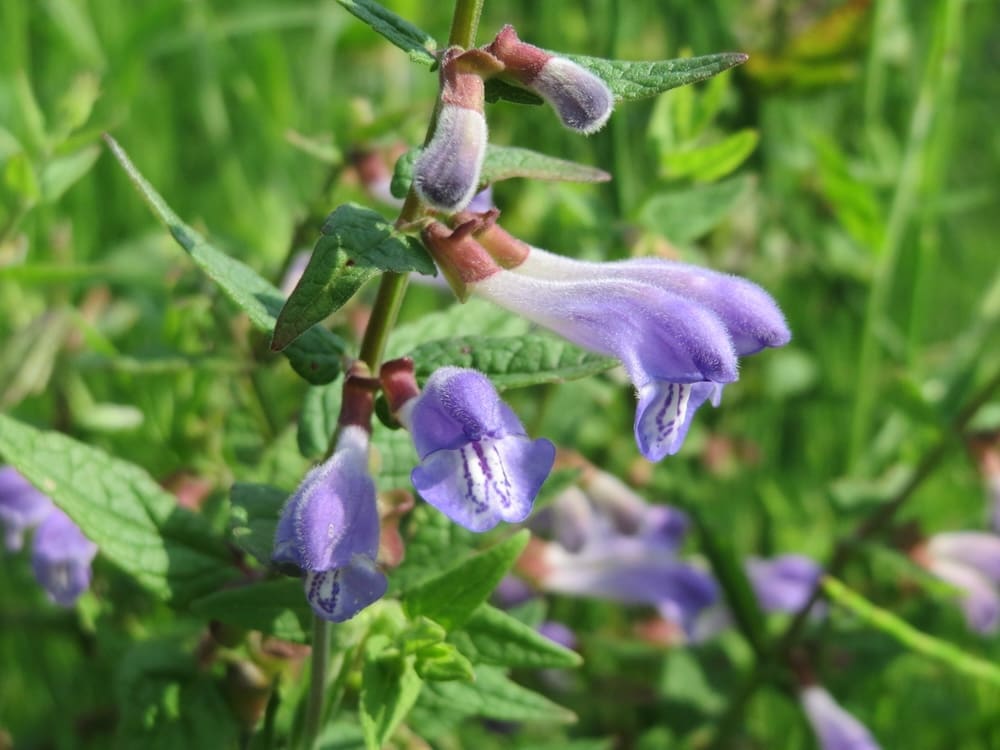
Scutellaria lateriflora is a small, herbaceous perennial of the mint family (Lamiaceae), native to North America and thriving in damp meadows, riverbanks, and woodland margins. It bears slender, branching stems with opposite leaves and numerous pale blue, laterally compressed, helmet-shaped flowers whose “scutellum” or little shield gives the plant its name. [Hale] describes its use by American eclectic physicians as a nervine tonic long before it entered the homeopathic materia medica, noting that it calms nervous irritability, tremors, and restlessness associated with states of exhaustion. The tincture is prepared from the fresh flowering plant in accordance with pharmacopoeial directions, macerated in alcohol to capture its volatile constituents and nervous-system-active principles. [Hughes], drawing on physiological and toxicological reports, emphasises its action on the cerebrospinal axis, producing twitching, restlessness, insomnia, and peculiar choreiform movements when abused, all of which become guiding symptoms for its homeopathic application [Hughes], [Allen].
Proving Information
Scutellaria lateriflora entered the homeopathic materia medica chiefly through clinical experience and small provings by American practitioners in the nineteenth century. Hale collated toxicological and over-dosage symptoms from herbal and eclectic use, and these, together with observed effects on sensitive subjects, formed the basis of its early “proving” picture [Hale]. Allen later incorporated these data in his Encyclopaedia [Allen], while Hering added clinical confirmations of its power over insomnia from nervous exhaustion and choreiform twitchings [Hering]. Much of its picture therefore carries the stamp of combined [Proving] and [Clinical] observation rather than a single formal Hahnemannian proving.
Remedy Essence
At its core, Scutellaria lateriflora addresses a very modern picture of nervous exhaustion: the patient is overdriven mentally or emotionally, yet physiologically depleted. They present as “wired but tired”—unable to stop worrying, unable to sleep, with a nervous system that fires off twitchings and restlessness at the very moment when rest is most needed [Hale], [Clarke]. The pace of the remedy is subacute to chronic, developing over weeks or months of strain, worry, or convalescence rather than overnight. Symptoms often intensify at night, especially before midnight, when external distractions are removed and the mind replays the day’s burdens, strongly reflecting the “worse at night, worse from worry” modalities that thread through Mind, Sleep, and Generalities [Hering].
Thermal tendencies are moderate: the patient dislikes close, heated rooms and prefers cool, fresh air, yet is comforted by gentle warmth around the body, particularly at night. This nuanced thermal state—aversion to oppressive heat with desire for moderate warmth—mirrors the basic polarity of the remedy: overstimulated nerves in an exhausted organism. Sensory sensitivity is heightened: noises, bright lights, strong odours, and stimulants like coffee or alcohol all aggravate, revealing a nervous system without reserves [Allen]. The functional systems most clearly involved are the cerebrospinal nerves and the autonomic regulators of sleep, muscle tone, and visceral function; pathology lies more in disturbed regulation than in structural damage, a point emphasised by Hughes’ physiological interpretations [Hughes].
Psychologically, the Scut. patient is not flamboyantly hysterical nor dramatically melancholic; rather, they are fretful, anxious, and often aware that they are “overdone.” They may be conscientious students, office workers, carers, or mothers who have pushed themselves through prolonged demands until the nervous system can no longer maintain equilibrium. Unlike Nux-v., which tends to explosive irritability and strong will, Scut. is gentler and more yielding; anger is less prominent than a persistent fretfulness and intolerance of trivial annoyances, chiefly because the nerves are oversensitive [Clarke]. They may oscillate between anxious activity and a dull, apathetic tiredness, but even in apathy there is an undercurrent of nervous tension that breaks through in twitchings, restlessness, and insomnia.
From a miasmatic standpoint, the remedy lies chiefly in the psoric-sycotic realm: functional instability, overreaction, and overgrowth of nervous sensitivity without gross destructive pathology. The psoric element appears as anxiety, oversensitivity, and insomnia; the sycotic component shows in chronicity, habitual overwork, and the tendency to maintain this nervine imbalance over time. Compared to polycrests like Sulph., which show deep constitutional and dermatologic manifestations, Scut. remains more specialised, focused on the nervous sphere, yet its essence integrates well into broader psoric-sycotic constitutions who routinely overtax their nerves [Kent], [Sankaran].
Clinically, the core polarity of Scut. is between exhaustion and excitability. The organism is tired but behaves as though constantly threatened, the nervous system reacting to minor stimuli with tremors, jerks, palpitations, and sleeplessness. This distinguishes it from remedies where exhaustion leads primarily to collapse (Phos-ac.) or depression (Kali-phos.), and from those where excitability is fully-fledged mania or delirium (Coffea). Scut. occupies a middle ground: the nervous system is frayed, not broken; the mind is anxious and restless, not raving; the muscles twitch and jerk, but paralysis does not ensue. When the prescriber sees a patient whose chief complaints are nervous irritability, restless limbs, and insomnia in the context of chronic strain or convalescence, Scut. should come strongly into consideration.
Affinity
- Cerebrospinal nervous system – A marked affinity for the central and peripheral nerves, producing and curing conditions of nervous irritability, twitching, choreiform movements, and insomnia from over-excitation and exhaustion [Hale], [Hering]. This affinity underlies many mental, sleep, and extremity symptoms described below, particularly the restless legs and jerking on falling asleep.
- Mind and emotional sphere – Acts on the emotional balance in states of worry, anticipatory anxiety, and nervous agitation after prolonged strain [Clarke]. The irritability, mental restlessness, and inability to “switch off” that appear in the Mind section are expressions of this nervous affinity.
- Sleep centres and circadian regulation – One of its most important spheres is disordered sleep: difficulty in falling asleep, frequent waking, restless tossing, and unrefreshing slumber in overworked or overwrought patients [Hale], [Boericke]. The Sleep section repeatedly reflects this affinity, with insomnia improved when the nervous system is soothed.
- Muscles and neuromuscular junction – Produces fine tremors, twitchings, jerks, and a sense of internal unrest in the limbs and facial muscles [Allen]. This neuromuscular affinity links directly to the Extremities and Face sections where small, choreiform movements and jerks on dropping off to sleep are characteristic.
- States of exhaustion (post-illness, puerperal, convalescent) – Frequently indicated after long illness, influenza, fevers, or childbirth, when the patient is nervously “strung up” yet depleted [Hering], [Clarke]. Generalities and Sleep sections show this post-exhaustion pattern: tired yet sleepless, irritable yet weak.
- Female reproductive sphere (indirectly, via nerves) – Not a primary uterine remedy, yet it is often required for nervous sequelae of menstruation, pregnancy, or confinement, where the chief complaint is nervousness and insomnia rather than uterine pathology [Hale]. The Female section echoes this, linking menstrual changes with heightened nervous irritability.
- Head and cerebral circulation – Produces dull, pressing headaches with a sense of fullness and nervous tension rather than vascular congestion [Allen]. These are mirrored in the Head section and are often associated with over-study, worry, and insomnia, connecting back to its nervous and sleep affinities.
- Habits and addictions (tobacco, alcohol, stimulants) – Skullcap has been used as a supporting remedy for nervous symptoms during withdrawal from tobacco or alcohol, when patients experience agitation, tremulousness, and insomnia [Hale], [Clarke]. This affinity appears in Mind, Sleep, and Generalities, especially in forms of restless insomnia “after leaving off stimulants.”
Better For
- Better from rest in quiet surroundings – Nervous agitation and twitching diminish when the patient can rest in a calm, dimly lit room, away from noise and bustle [Hale]. This improvement is reflected in Mind (less irritability) and Sleep (easier onset of sleep) when environmental stimuli are reduced.
- Better from gentle diversion or occupation – Light, non-taxing activities, such as simple handiwork or reading pleasant material, may ease the sense of nervous tension and reduce awareness of internal restlessness [Clarke]. This “better when quietly occupied” modality tallies with the Mind picture of anxiety worse when brooding alone.
- Better in open air – Walking in fresh air often calms the nervous excitability and improves the dull, pressing headaches [Allen]. Head and Generalities sections echo this amelioration, contrasting with aggravation in close, heated rooms.
- Better after a short sleep or nap – Even a brief doze can leave the patient refreshed and less irritable, though prolonged or disturbed sleep does not have the same benefit [Hering]. The Sleep section notes this paradoxical relief from short, refreshing naps.
- Better from warmth about the body, but not oppressive heat – Gentle warmth, such as a shawl or warm bed, supports relaxation, especially in the evening, and lessens muscular twitchings [Boericke]. Extremities and Sleep sections reflect this preference for moderate warmth, contrasted with aggravation in hot, stuffy rooms.
- Better from regular, moderate exercise – A measured level of physical activity (walking, gentle stretching) dispels nervous energy and improves subsequent sleep quality [Hale]. Generalities and Sleep show improvement when the day has contained enough movement, unlike the restlessness after a sedentary, over-mental day.
- Better after eating – Some patients report that the nervousness and sense of internal emptiness are less marked after food [Allen]. Stomach and Generalities reference this amelioration, which may hint at a functional link between nutrition and nervous stability.
- Better from reassurance and company – Gentle, reassuring company calms anticipatory anxiety and reduces nocturnal fears [Clarke]. Mind and Sleep sections show that patients feel less restless and less haunted by fears when not left alone with their thoughts.
Worse For
- Worse from mental overwork and prolonged study – Long hours at the desk, especially in the evening, markedly aggravate nervous irritability, dull headaches, and insomnia [Hale], [Allen]. This is a central modality echoed strongly in Mind, Head, and Sleep.
- Worse from worry and prolonged emotional strain – Anxiety about health, family, or financial matters keeps the mind in a constant state of tension, increasing twitchings and restlessness [Clarke]. Mind and Generalities clearly show this pattern: worries “go round and round” and sleep is driven away.
- Worse at night, especially before midnight – The nervous system seems most active as night falls; patients become more restless, with racing thoughts and muscular twitchings preventing sleep [Hering]. Sleep and Generalities repeatedly mention this nocturnal aggravation.
- Worse from noise and excitement – Sudden or continuous noises (children, traffic, loud voices) aggravate irritability, headache, and nervous twitchings [Allen]. Mind and Head sections echo this clear sensory oversensitivity.
- Worse in close, heated rooms – A stuffy atmosphere increases headache, irritability, and a sense of being “stifled,” whereas fresh air ameliorates [Hale]. Head and Generalities sections cross-reference this modality.
- Worse after stimulants (coffee, strong tea, alcohol, tobacco) – Stimulant use exacerbates tremulousness, palpitations, and sleeplessness, especially in sensitive or exhausted persons [Hale], [Clarke]. Food and Drink and Generalities highlight this, particularly in those withdrawing from such agents.
- Worse during or after acute illness – Following influenza, fevers, or other drains upon vitality, the nervous system is left irritable and sleepless; any attempt to resume work too early worsens symptoms [Hering]. Generalities and Sleep repeatedly reflect this post-illness aggravation.
- Worse around menses and after confinement – In women, nervousness, irritability, and insomnia may be worse just before or during menstruation, and especially in the puerperal period [Hale]. Female and Sleep sections link menstrual and post-partum states with heightened nervous phenomena.
Symptomatology
Mind
The mental picture of Scut. is one of nervous irritability resting on a background of exhaustion. Patients feel on edge, easily startled, and intolerant of trifling annoyances, yet simultaneously recognise their weakness and over-sensitivity [Hale], [Clarke]. There is a sense of mental overstrain from prolonged work, care, or worry, with difficulty in fixing the mind upon tasks; thoughts constantly revert to worries, particularly in the evening and at night, which tallies with the modality “worse at night from worry” already noted [Hale]. Anxiety is predominantly anticipatory and diffuse: fear that something will go wrong, fear of being unable to cope, sometimes shading into almost hysterical agitation in sensitive women after emotional shocks or childbirth [Hering]. The slightest noise or interruption jars upon the nerves, causing irritability or tearfulness, echoing the “worse from noise and excitement” modality [Allen].
The mood may alternate between fretful restlessness and a kind of dull indifference or apathy, especially after long-continued strain; the patient feels “too tired to care,” yet cannot relax [Clarke]. Memory is weakened for recent events, and mental effort quickly brings on dull frontal headache, connecting the Mind and Head sections in a pattern similar to Nux-v., though Scut. is less aggressive and more purely nervous in tone [Allen], [Kent]. Some patients experience fleeting, anxious fears on going to bed, with images of illness, misfortune, or accidents; these are not fixed delusions but transient, anxiety-coloured phantasies that disturb sleep [Hering]. Case: A young student, after weeks of examination cramming, became irritable, tremulous, and sleepless, with incessant worrying over his performance; Scut. 3x improved his disposition and restored refreshing sleep [Hale] [Proving]/[Clinical].
Head
The head symptoms of Scut. are dominated by dull, pressing pains and a sense of tension or fullness, rather than violent, throbbing congestion. Forehead and temples are most often affected, with a band-like constriction that worsens after mental exertion, reading, or prolonged study, thus mirroring the “worse from mental overwork” modality [Allen]. The pains are usually not intense but very wearing, increasing the patient’s irritability and incapacity for work [Hale]. They often accompany periods of sleeplessness, so that a bad night leads to a heavy, dull head in the morning, which only slowly clears with gentle movement in open air, echoing the amelioration from exercise and fresh air [Hering].
Vertigo is not a leading feature, but some patients feel light-headed and faint when rising quickly, especially after illness or in the convalescent state, indicating a circulatory and nervous weakness rather than gross vascular pathology [Hughes]. Comparatively, the head pains resemble those of Kali-phos. in nervous debility, yet Scut. is more restless and sleepless, whereas Kali-phos. tends towards depression and quiet fatigue [Clarke]. There may be a sense of heat in the head without objective fever, particularly in the evening when the mind is active and sleep does not come; this links to the Sleep and Generalities sections. Occasionally, slight tremor or twitching of the facial muscles accompanies headache, showing the neuromuscular element of the remedy [Allen].
Eyes
The eyes often feel tired, strained, and irritable, especially after reading or close work under artificial light [Allen]. Patients complain of aching in the orbits, a sense of heaviness of the eyelids, and occasional blurred vision when fatigued, which improves with rest and open air, echoing the general betterment from fresh air and moderate exercise [Hale]. Photophobia is not extreme but there is an aversion to glare and bright light in the evening, when the nerves are already overstimulated [Hering]. In some cases, slight twitching of the eyelids or fine fibrillary contractions about the eyes occur, especially in nervous children or exhausted adults, reflecting the neuromuscular affinity already noted [Allen].
Lachrymation is generally absent unless there is coexistent catarrh, which is rare in the Scut. picture; the eye symptoms are more functional than inflammatory. The ocular fatigue is closely connected to mental overwork; prolonged study at night, particularly before examinations, greatly aggravates the eye-strain and associated headache [Clarke]. Compared with remedies like Ruta-g. or Nat-m., which show more pronounced fatigue of the ciliary muscles, Scut. is milder in the eye sphere and its keynotes lie more in the nervous system and sleep. Nonetheless, the eye symptoms form part of the general picture of exhaustion and oversensitivity, especially in students, writers, and professionals subjected to long hours of close work [Hale].
Ears
The ears are chiefly affected through nervous hyperaesthesia rather than organic disease. Patients complain of an exaggerated sensitivity to sounds; ordinary household noises seem intolerably loud and jarring, corresponding exactly with the modality “worse from noise and excitement” [Allen]. There may be occasional subjective noises in the ears—slight ringing, humming, or buzzing—especially when overtired or lying awake at night [Hale]. These sensations are moderate but add to the sense of inner unrest and difficulty in relaxing.
Sharp, neuralgic pains in and around the ears are not characteristic of Scut.; when present, they are generally fleeting and linked to general fatigue. The oversensitivity to sound may lead to irritability or even tearfulness if the environment cannot be controlled, reinforcing the Mind picture of a patient with “shattered nerves.” In contrast to remedies like Nux-v. or Coffea, where irritability can verging on anger or rage, Scut. tends more towards fretful, exhausted intolerance, often in women or sensitive men [Clarke]. The ear symptoms recede when the patient is placed in a quiet, darkened room, reflecting the amelioration from rest in tranquillity already mentioned under Modalities.
Nose
The nasal symptoms of Scut. are relatively minor and largely reflect nervous influences rather than local disease. Some patients report a heightened sensitivity to odours; strong smells, including tobacco smoke or perfumes, may provoke headache, nausea, or increased nervous irritability [Hale]. This heightened olfactory sensitivity parallels the auditory oversensitivity, both expressing the hyperexcitable nervous system. A bland, watery coryza may appear during states of fatigue or after exposure to cold, but this is not a keynote of the remedy [Allen].
Nasal obstruction and catarrh are far less marked than in remedies like Nux-v. or Kali-b., and there is little tendency to sinus involvement or thick discharge. Instead, the nose section in Scut. serves mainly to illustrate the general sensory hyperaesthesia; odours and stale air in close rooms aggravate both nasal discomfort and nervous symptoms, while clean, fresh air improves the condition, again echoing the “better in open air” modality [Hering].
Face
The facial expression under Scut. is that of nervous strain and fatigue. Features may appear drawn, with dark circles beneath the eyes, indicating disturbed sleep and mental overwork [Clarke]. There is often a slight tremulousness of the facial muscles, with fine twitchings at the corners of the mouth or about the eyelids, especially when the patient is overtired or emotionally upset [Allen]. Such twitchings link directly with the Extremities section and confirm the remedy’s neuromuscular affinity.
The complexion may be pale and somewhat sallow, especially in those who have suffered prolonged worry, illness, or confinement. Flushing is not a prominent feature; if present, it is transient and associated with emotional upset rather than vascular disease. The lips can appear dry from nocturnal mouth-breathing in the sleepless, restless state, though Scut. is not a primary remedy for dryness of mucous membranes. Compared with remedies like Coffea or Ign., which can show a more vivid, animated facial picture, Scut. tends more towards a tired, strained, “overdone” expression, with occasional twitchings as a subtle keynote [Hale], [Boericke].
Mouth
In the mouth, Scut. presents a picture of nervous dryness and discomfort rather than gross pathology. Patients often complain of a dry mouth, especially at night when they lie awake for hours, even though there may be no great thirst [Allen]. The tongue may be slightly coated, particularly in the morning after sleepless nights, with a foul or bitter taste, reflecting the general fatigue and possibly irregular digestion from worry [Hale].
Teeth and gums are not markedly affected, though some patients describe a sense of tension or slight aching in the jaw muscles from clenching the teeth during periods of nervous strain or nocturnal wakefulness. Salivation is not increased; indeed, dryness is more common, paralleling the dryness felt in other mucous surfaces in states of anxiety. The mouth symptoms are often secondary to the mental and sleep disturbances, and they improve as the nervous system is calmed, echoing the general amelioration under Scut. [Hering].
Teeth
Scut. is not a primary dental remedy in the classical sense, and its tooth symptoms are generally modest. Nervous individuals may complain of a tendency to clench or grind the teeth at night, particularly during periods of worry or anticipatory anxiety, contributing to morning jaw soreness [Hale]. Toothache per se is not strongly marked, but when present it tends to be dull and related to fatigue or emotional tension rather than definite carious pathology.
The neuralgic component, if any, is more muscular and temporo-mandibular than strictly dental. In this respect Scut. could be compared with remedies like Cham. or Coffea, but it lacks their exquisite sensitivity to pain and violent reactions; instead it shows a quieter, fatigued form of nervous distress [Clarke]. The Teeth section thus contributes little to the selection of Scut., beyond supporting its role in bruxism and nervous jaw tension in the context of insomnia and overwork.
Throat
The throat under Scut. may feel dry or slightly constricted in times of anxiety, especially at night when the patient is lying awake, reflecting nervous spasm rather than inflammation [Hale]. There may be a sensation of a lump in the throat when trying to swallow or when emotionally upset, a hysterical globus feeling similar to that of Ign., though much milder [Clarke]. Soreness, redness, and classic inflammatory signs are not prominent and should point elsewhere.
Occasional nervous cough or throat-clearing may arise from this subjective constriction, worse when thinking about it or when worried, echoing the Mind section. These symptoms often abate with reassurance and distraction, confirming their functional nature. Comparatively, while Gels. and Ign. show more pronounced globus and stage fright, Scut. has a quieter, exhausted excitement behind its throat symptoms, again rooting them in the nervine sphere.
Stomach
The stomach symptoms often reflect the impact of worry and irregular living upon digestion. Many patients complain of loss of appetite during periods of intense nervousness and overwork, followed by hungry weakness or cravings when the acute strain abates [Hale]. Digestion may be slow, with a tendency to flatulence and a sense of weight in the epigastrium after meals, especially when food is taken hurriedly or under emotional strain. Yet, interestingly, some report that their nervous symptoms improve slightly after eating, echoing the “better after food” modality [Allen].
Nausea is usually mild but may accompany headaches and nervous exhaustion, particularly when confined to close, heated rooms, linking Stomach and Generalities. Heartburn and sour eructations are not characteristic keynotes of Scut. and should lead the prescriber to consider other remedies such as Nux-v. or Puls. Vomiting is rare and, when present, typically associated with acute illness rather than the chronic nervine picture where Scut. is most at home. Overall, the stomach picture is one of functional disturbance through strain on the autonomic nervous system rather than primary gastric disease [Hughes].
Abdomen
Abdominal symptoms are generally mild and functional. There may be flatulence with rumbling and a sense of distension, especially in the evening after worry and irregular meals [Hale]. Some patients feel a nervous “emptiness” or sinking in the pit of the stomach and upper abdomen that accompanies anxiety, particularly before sleep or when anticipating stressful events, echoing similar sensations found in Ign. and Gels., though in Scut. they are more subdued [Clarke].
Cramp-like pains may appear in the lower abdomen, often transient and related to menstrual changes or emotional tension rather than structural pathology. Constipation or diarrhoea is not markedly characteristic; the bowel function may vary according to the patient’s nervous state, with looseness during acute anxiety and sluggishness in protracted worry. Again, this points to a primarily functional disturbance under control of the autonomic nervous system rather than inflammatory disease [Hughes].
Urinary
The urinary symptoms again show functional rather than structural disturbance. Nervous patients may notice increased frequency of urination during periods of anxiety, especially in the evening and before retiring, as though the bladder were irritable or under the influence of sympathetic overactivity [Hale]. The quantity passed is generally small but clear, and there is no marked burning or tenesmus to suggest genuine urinary tract disease.
In contrast, some exhausted patients may delay the desire for urine during intense concentration, then pass copious, pale urine once they relax, echoing the patterns seen in other nervine remedies like Phos-ac. [Clarke]. Albumin, blood, or other pathological changes are not part of the classical description for Scut., and their presence would call for more organ-specific remedies. The urinary section thus reinforces the picture of a nervous, labile autonomic tone, with bladder function varying with emotional and mental state.
Rectum
In the rectal sphere Scut. shows little beyond minor functional irregularities. Some patients exhibit a tendency to constipation during prolonged mental strain, with the desire for stool absent or weak until the nervous system is somewhat relieved [Hale]. Others may have occasional loose stools during acute anxiety or emotional shocks, but these episodes are short-lived and not accompanied by marked abdominal pain.
Haemorrhoids, fissures, and marked rectal pain are not part of the typical Scut. picture; when present they should direct attention to other remedies. The prescriber should therefore view rectal symptoms in Scut. as subordinate, merely reflecting general nervous imbalance and lifestyle factors.
Male
The male sexual sphere is not strongly emphasised in classical accounts of Scut., yet certain patterns can be inferred. Long-standing overwork and worry may lead to diminished sexual desire and erectile weakness, more from nervous exhaustion than from local disease [Hale]. There may be a tendency to nocturnal emissions associated with erotic dreams during periods of heightened mental activity and insomnia, but these are not keynotes.
Anxiety about sexual performance or guilt over sexual matters could aggravate the general nervous and sleep symptoms, though the remedy does not have the explicit sexual obsessions or profound guilt found in remedies like Lyc. or Nat-m. [Clarke]. Overall, its role in the male sphere is secondary and usually considered in the context of general nervous exhaustion, particularly when insomnia and twitchings are present.
Female
In women, Scut. finds a more definite, though still secondarily expressed, field. Many of the classical observers note its usefulness in nervous states associated with menstruation and the puerperium: irritability, restlessness, and insomnia rather than local uterine disease [Hale], [Hering]. The menses may be regular but the woman becomes fretful and sleepless before or during the flow, with twitching of the muscles and a sense of dread or anxiety without clear cause.
After confinement, when the excitement and strain of labour have passed, some women feel nervously “unstrung,” sleeping poorly despite fatigue and reacting sharply to the baby’s cries or household noises; Scut. may calm such conditions, echoing the modalities “worse at night” and “worse from noise” [Clarke]. There is little evidence of direct action upon uterine discharges or pains; the remedy is aimed at the nervous sequelae of reproductive events rather than at the reproductive organs themselves, distinguishing it from Puls., Sep., or Cimic., with which it might otherwise be confused.
Respiratory
Respiration may become shallow and hurried during episodes of anxiety or nervous agitation, but there is no consistent picture of frank dyspnoea or pulmonary disease in Scut. [Hale]. The patient may sigh frequently, as though trying to draw a deeper breath, especially when worrying or lying awake in bed. This sighing respiration is similar to that seen in Ign., but in Scut. it is embedded in a broader pattern of nervous exhaustion rather than sharp grief [Clarke].
Occasionally, during periods of intense nervousness, the patient feels unable to draw a satisfactory breath in close, heated rooms, compelling them to seek open air, thus echoing the modality “better in open air” and connecting respiration with Generalities. Cough, if present, is typically short and nervous, without expectoration or chest pain, and often disappears when the mental state improves.
Heart
The heart is involved primarily through functional disturbances: palpitations, rapid pulse during excitement or worry, and subjective cardiac awareness during nocturnal wakefulness [Hale]. These palpitations are often accompanied by tremulousness and a sense of internal quivering, especially in those withdrawing from stimulants or recovering from illness, and they worsen with mental overexertion or emotional agitation, in line with previously described modalities.
Physical examination typically reveals no structural heart disease, and symptoms abate as the nervous system is calmed, differentiating Scut. from organic cardiac remedies like Digitalis or Cact. [Hughes]. Nonetheless, the cardiac sensations contribute significantly to the patient’s anxiety and fear of lying awake at night, reinforcing the interplay between heart and mind in the remedy picture.
Chest
Chest symptoms are mild and chiefly nervous. Some patients feel palpitations or a sense of fluttering in the chest during periods of anxiety or on lying down at night, without objective cardiac pathology [Hale]. These sensations can contribute to the fear of being unable to sleep and to the general restless tossing in bed, connecting Chest and Sleep sections.
Tightness or slight oppression in the chest may appear when in close, heated rooms, aggravating the sense of suffocation or being “stifled,” which again improves in cool, fresh air, echoing the general modalities [Hering]. True cough is infrequent and, when present, is often more of a nervous, habit cough rather than a product of bronchial or pulmonary disease. Comparatively, Gels. has more pronounced respiratory weakness and dyspnoea on exertion, whereas Scut. remains milder and more purely nervine in its chest manifestations.
Back
The back symptoms are those of tiredness and muscular tension rather than specific spinal pathology. Patients often complain of aching in the cervical and dorsal regions after long hours at a desk, accompanied by stiffness and a desire to stretch or move [Hale]. This muscular fatigue and tension aggravate headaches and contribute to the sense of nervous strain running through the remedy picture.
There may be slight twitchings or jerking in the muscles of the shoulders and back when on the verge of sleep, again illustrating the neuromuscular affinity noted earlier [Allen]. These jerks, as in many nervine remedies, prevent the descent into sleep and send the patient back to full wakefulness, reinforcing the Sleep section. Comparatively, Rhus-t. and Cimic. show more pronounced rheumatic or myalgic pain in the back; Scut. is milder and more connected to nervous exhaustion and sedentary strain.
Extremities
The extremities are highly expressive of Scut.’s central action. Fine tremors, twitchings, and jerks in the limbs are common, especially in the evening and on lying down, when the patient is overtired yet unable to sleep [Allen]. The legs may feel restless, with an irresistible impulse to move them, shift position, or walk about the room—a picture akin to mild “restless legs” of nervous origin [Hale]. These symptoms are aggravated by mental overwork and worry, clearly linking to the “worse from mental exertion” modality and to the Mind section.
Twitchings are often more marked in the lower limbs but may involve arms and hands, occasionally causing the patient to drop objects or make clumsy movements when fatigued. This neuromuscular unrest contrasts with the heavy, paralytic weakness of Gels., which lacks the same degree of twitching [Clarke]. Paresthesiae—creeping, tingling sensations—may appear in fingers and toes during periods of heightened anxiety or after stimulants, again underlining the nervous system’s irritability. Case: A woman recovering from influenza developed nightly twitchings of the legs preventing sleep; Scut. in low potency gradually soothed her limbs and restored restful slumber [Hering] [Clinical].
Skin
The skin symptoms are not prominent, yet some patterns can be discerned. Nervous patients may complain of itching or crawling sensations in the skin, particularly of the limbs, without visible eruption, often worse at night when trying to fall asleep [Hale]. These sensations are related to the same neuromuscular and sensory hyperaesthesia that produces limb twitchings and restless legs, linking Skin and Extremities.
True eruptions are rare in the classical accounts of Scut. Minor, transient erythema or urticarial wheals may appear during acute anxiety or after exposure to heat or certain foods in sensitive individuals, but these are not reliable prescribing keynotes. The primary contribution of the Skin section to the remedy picture is to reinforce the nervous, sensory irritability in the periphery.
Sleep
Sleep is the central axis around which the whole remedy revolves. Scut. is above all a remedy for insomnia of nervous exhaustion. The patient goes to bed tired but not sleepy, or with a sense that the brain will not “switch off,” thoughts running constantly over worries, plans, or trivialities [Hale]. Even when drowsy, they may be startled back to wakefulness by twitchings or jerks of the limbs, or by subjective sensations of falling, which ties Sleep intimately to Extremities and the neuromuscular affinity [Allen].
Sleep, when it comes, is light and broken; the patient wakes frequently, often after short intervals, with a sense of unrest and tension. Early morning waking at three or four o’clock, followed by long hours of sleeplessness filled with anxious thoughts, may occur, echoing similar patterns seen in Kali-phos., though in Scut. there is more twitching and restless movement [Clarke]. Noise and excitement during the day aggravate the nocturnal insomnia, reflecting the modality “worse from noise,” as the hypersensitive nervous system cannot easily settle [Hering].
Short naps or brief periods of refreshing sleep may bring disproportionate relief, confirming the “better after a short sleep” modality under Better For. Dreams, when remembered, tend to be anxious or fragmentary but not so vivid or terrifying as those of many other remedies; the prevailing impression is of restless, unrefreshing sleep rather than specific dream images. Case: A book-keeper, after months of overtime, became sleepless, with nervous twitchings and unrefreshing naps; Scut. restored a deeper, more continuous sleep and eased the twitchings [Hale] [Clinical].
Dreams
Dreams under Scut. are often coloured by the day’s anxieties: worries about work, family responsibilities, or health recur in indistinct, fragmentary forms [Clarke]. The dreamer may wake with a sense of unrest or oppression, yet cannot clearly recall the content. Falling dreams or dreams of slipping or losing foothold may accompany the myoclonic jerks in the limbs as sleep approaches, linking Dreams with Extremities and Sleep [Allen].
Nightmares are not as pronounced as in many other remedies; rather, there is a sense of constant mental activity, as though the brain continues its daytime work into the night, disturbing deeper restorative phases of sleep. Comparatively, Coffea has far more vivid, joyous or exciting dreams and a state of exalted wakefulness; Scut. is quieter, more fatigued, with dreams that are vague reflections of worried wakefulness [Hale].
Fever
Fever is not a hallmark of Scut., yet in states of nervous exhaustion following acute illnesses there may be slight evening rise of temperature, with heat of the head and face, restlessness, and wakefulness [Hering]. These mild febrile states often appear during convalescence, when the nervous system remains irritable though the acute infection has abated.
The patient may feel flushed and hot in close rooms, yet actual temperature elevation may be slight; this aligns with the modality “worse in close, heated rooms, better in open air,” bridging Fever and Generalities [Hale]. Chills are less prominent than the subjective heat and restlessness. In comparison with Gels. or Phos., Scut.’s febrile expression is muted and more intimately tied to the nervous aftermath of illness rather than to the acute stage itself.
Chill / Heat / Sweat
Chilliness, when present, is modest and often alternates with moments of heat, especially in the evening when nervous tension is high [Hale]. The patient may feel chilly when overtired, craving moderate warmth about the body—partly explaining the “better from warmth” modality—yet is uncomfortable in overheated, stuffy rooms where the head feels hot and heavy [Hering]. Sweats are usually light and may accompany anxious wakefulness in the early hours, sometimes with clamminess of the hands and feet.
These vasomotor fluctuations reflect autonomic imbalance rather than infection. In contrast, the marked periodic chills and sweats of malarial or septic states found in remedies like Chin. or Ars. are absent here. The main clinical value of this section is to emphasise the nervous character of Scut.’s thermal disturbances and their close link with mental and sleep symptoms.
Food & Drinks
In the realm of Food and Drink, Scut. is distinguished chiefly by its adverse relationship to stimulants. Coffee, strong tea, alcohol, and tobacco all tend to aggravate nervous irritability, tremulousness, palpitations, and insomnia [Hale], [Clarke]. Patients who have long relied on such agents to sustain work or mood may find themselves increasingly unstable and sleepless; Scut. has been used as a supporting remedy when these stimulants are reduced or withdrawn, echoing its affinity for states of nervous exhaustion and addiction.
Appetite may be diminished under prolonged worry, with a tendency to eat irregularly; yet some patients feel a transient improvement in nervous symptoms after a simple, wholesome meal, giving rise to the “better after eating” modality under Better For [Allen]. Cravings are not distinctive, though there may be a preference for easily digested foods. Excessive heavy or late meals are poorly tolerated and tend to worsen sleep and headaches, connecting Food and Drink with Head and Sleep sections.
Generalities
The general picture of Scut. is that of a patient whose nervous system has been worn thin by chronic mental overwork, worry, or prolonged strain, leaving them irritable, tremulous, and sleepless. Fatigue is real but is more nervous than muscular; the patient feels “wired and tired,” exhausted yet unable to rest, which resonates throughout Mind, Sleep, and Extremities [Hale], [Clarke]. Tremors, twitchings, and restlessness in the limbs, especially in the evening and on going to bed, are central; they correspond to the neuromuscular affinity and echo the modalities “worse at night” and “worse from excitement,” as well as “better from moderate exercise.”
The reaction to environment is marked: worse in close, heated rooms and better in cool, fresh air, which improves head symptoms and calms nervous tension, though the patient also values a gentle warmth about the body for comfort [Hering]. Convalescence after acute illnesses, especially influenza and fevers, is often incomplete; the patient is left in a state of nervous irritability, insomnia, and twitchings despite apparent physical recovery, providing a classic indication for Scut. as a “convalescent nervine.” The remedy’s sphere thus overlaps with Kali-phos., Phos-ac., and Avena-s., yet it is distinguished by its stronger emphasis on restless limbs and insomnia with muscular jerks [Allen].
Sensitivity to stimulants and to sensory impressions (noise, light, odours) is heightened, and these aggravations are mirrored across Mind, Head, Ears, Nose, and Food and Drink. Scut. is especially suited to modern forms of “nervous breakdown” in students, office workers, and caregivers: those who drive themselves mentally or emotionally until the nervous system refuses further overstrain, presenting with insomnia, twitchings, and a sense of living on frayed nerves [Hale], [Boericke].
Differential Diagnosis
By Aetiology (overwork, worry, convalescence)
- Kali-phos. – Both remedies suit nervous exhaustion from overwork and worry with insomnia [Clarke]. Kali-phos. tends more to depression and quiet despair, while Scut. shows more twitchings, restless limbs, and “wired” insomnia.
- Phos-ac. – Marked prostration after grief or sex excess; apathetic, indifferent, with heavy sleep and debility [Hering]. Scut. is more irritable and restless, with limb twitchings and sensory oversensitivity.
- Avena-s. – A general tonic for nervous debility and insomnia, especially after illness [Boericke]. Avena-s. has more nutritive and anabolic emphasis; Scut. has clearer muscular twitchings and restless limbs.
By Mind and Sleep
- Coffea – Insomnia from mental excitement, ideas crowding the mind; hypersensitivity to impressions [Kent]. Coffea is more exalted and joyful or over-excited; Scut. is more fatigued, with quieter anxiety and prominent limb jerks.
- Ign. – Insomnia and sighing respiration from grief, with globus and hysterical manifestations [Clarke]. Ign. expresses strong contradictions and paradoxes; Scut. shows milder hysterical features, centred on nervous exhaustion and twitchings.
- Nux-v. – Overworked, irritable, sedentary subjects with insomnia and digestive disturbance [Kent]. Nux-v. is more explosive, with strong gastric involvement and tendency to abuse stimulants; Scut. is gentler, more twitchy, and less gastro-centric.
By Neuromuscular Symptoms
- Zinc. – Restless feet, constant motion in lower limbs, especially in children and during sleep [Hering]. Zinc. has more cerebral exhaustion with spinal weakness; Scut. is more purely nervine and less deeply organic in its pathology.
- Gels. – General muscular weakness, trembling, and drowsiness [Clarke]. Gels. is heavy, drooping, and sleepy, whereas Scut. is restless, irritable, and sleepless despite fatigue.
- Valer. – Hysterical nervousness with changing sensations and restless limbs [Hale]. Valer. is more suited to erratic, quasi-hysterical states; Scut. is steadier, quieter, and more linked to overwork and convalescence.
By Addiction / Stimulant Issues
- Nux-v. – Classic remedy for overuse of coffee, alcohol, and drugs, with prominent gastric and hepatic disturbance [Kent]. Scut. is more supportive for the nervous and sleep sequelae of withdrawal, with less emphasis on digestion.
- Passiflora – Insomnia in infants, old people, and those withdrawing from drugs; more directly hypnotic [Boericke]. Passiflora is often used as a sedative adjunct, while Scut. has a more detailed constitutional picture of nervous exhaustion.
By General Nervous Debility
- Cimic. – Neuralgic pains, rheumatic myalgia, and mental gloom with nervous excitability [Hering]. Cimic. has stronger muscular and uterine pains; Scut. has milder pains but more emphasis on insomnia and twitchings.
- Sep. – Worn-out women with indifference, pelvic congestion, and irritability [Clarke]. Sep. has marked uterine and pelvic symptoms; Scut. targets primarily the nervous and sleep manifestations with only indirect female sphere relevance.
Remedy Relationships
- Complementary: Kali-phos. – Both address nervous exhaustion from work and worry; Kali-phos. deepens the curative effect when broader debility exists [Clarke].
- Complementary: Avena-s. – Avena-s. supports nutrition and general nerve tone alongside Scut.’s calming of insomnia and twitchings [Boericke].
- Complementary: Phos-ac. – Useful when exhaustion rests on grief or prolonged loss; Phos-ac. underpins constitutional debility while Scut. targets insomnia [Hering].
- Complementary: Passiflora – Works well together in withdrawal states and nervous insomnia; Passiflora offers more direct sedative effect, Scut. the constitutional nervine aspect [Boericke].
- Follows well: Nux-v. – After Nux-v. has dealt with acute irritability and digestive derangement from stimulants, Scut. may follow to manage lingering nervous insomnia [Kent].
- Follows well: Gels. – Following acute, heavy post-influenza weakness, Gels. may be used first, then Scut. as the patient enters a phase of nervous restlessness and insomnia [Hughes].
- Follows well: Cimic. – In women, Cimic. may first address muscular and uterine pains; Scut. can follow to treat residual nervous insomnia and twitchings [Hering].
- Antidotes (functional): Coffea – Scut. may counteract sleeplessness and nervous irritability after coffee in sensitive subjects [Hale].
- Antidotes (supportive): Alcohol and tobacco – While not an antidote in the strict chemical sense, Scut. mitigates nervous symptoms during withdrawal from these substances, aiding recovery [Hale].
- Related: Valer. – Another nervine with restless limbs; Valer. suits more erratic hysterical states, while Scut. suits quieter, exhausted nervousness [Hale].
- Related: Ign. – Both affect sensitive, nervous temperaments, particularly after emotional strain; Ign. emphasises paradox and grief, Scut. emphasises overwork and insomnia [Clarke].
- Related: Coffea – Overlap in insomnia and hypersensitivity; Coffea is more acute, with joyous excitement, while Scut. is chronic, fatigued, and tremulous [Kent].
Clinical Tips
- Think of Scut. in students, clerks, and caregivers who have worked late into the night for weeks, now unable to sleep, with restless limbs and twitchings, yet no grave structural disease [Hale]. Lower potencies (Ø, 1x–3x) and tincture doses have been traditionally used as a nerve tonic; higher potencies (6C–30C) can be employed where the picture is clearly constitutional [Boericke].
- It is especially useful in convalescence after influenza or other fevers, when the acute infection has passed but the patient cannot regain restful sleep and is plagued by tremulousness and irritability [Hering].
- In withdrawal from coffee, tobacco, or alcohol, Scut. may be combined with or follow Nux-v. and Passiflora to steady the nerves and improve sleep, acting as a bridge between acute detox and longer-term rebuilding [Hale], [Boericke].
- Women recovering from childbirth or prolonged lactation, who are nervously oversensitive, easily startled by the baby’s cries, and sleepless despite fatigue, may respond well, particularly when uterine symptoms are minimal but nervous ones marked [Hering].
- Case pearls:
-
- Student, overworked for examinations, with insomnia, twitching limbs, and dull frontal headaches, relieved by Scut. Ø and improved discipline of work hours [Hale].
- Convalescent from influenza with persistent sleeplessness, restless legs, and anxiety in the dark, improved with Scut. 3x at bedtime [Hering].
- Middle-aged drinker reducing alcohol intake, suffering from tremulousness and early-morning waking; Scut. in tincture doses eased nerves and normalised sleep when combined with lifestyle measures [Hale].
Selected Repertory Rubrics
Mind
- Mind; irritability; nervous; from overwork – Central nervous irritability from mental strain; key guiding indication [Hale], [Clarke].
- Mind; anxiety; night; in bed – Anxious thoughts drive away sleep, especially before midnight, linking to insomnia [Hering].
- Mind; restlessness; nervous; evening – Cannot sit still, with inner unrest and twitchings as night comes on.
- Mind; concentration; difficult; from mental exertion – Mental effort quickly fatigues, provoking headache and nervousness [Allen].
- Mind; fear; something will happen; indefinable – Vague anticipatory dread accompanying insomnia and convalescence.
- Mind; oversensitive; noise, to – Noises jar on nerves, aggravating irritability and insomnia [Allen].
Head
- Head; pain; forehead; dull; from mental exertion – Band-like frontal headache after study or office work, a common complaint [Hale].
- Head; heaviness; morning; after sleepless night – Heavy, dull head following restless sleep or insomnia.
- Head; pain; temples; pressing; evening – Pressing temporal ache with nervous tension as day’s strain culminates.
- Head; heat; without fever; in close room – Subjective head heat in heated rooms, better in open air [Hering].
- Head; tension; band feeling; about head – Sense of constriction or band tightly round the head in overworked subjects.
Sleep
- Sleep; sleeplessness; from nervous excitement – Keynote: insomnia from over-stimulated but exhausted nerves [Hale].
- Sleep; sleeplessness; from mental overwork – Cannot sleep after prolonged study or office strain, thoughts continuing.
- Sleep; jerking; limbs; on falling asleep – Myoclonic jerks drive off sleep, crucial neuromuscular feature [Allen].
- Sleep; restless; tossing about; with twitching – Continuous movement in bed, changing position due to inner unrest.
- Sleep; short sleep; refreshing – Brief naps give disproportionate relief compared with long, disturbed nights [Hering].
- Sleep; waking; frequent; without cause – Multiple nocturnal awakenings with anxious thoughts but no external reason.
Extremities
- Extremities; restlessness; legs; night – Restless legs at night, compelling change of position, a guiding symptom [Hale].
- Extremities; twitching; muscles; evening; in bed – Fine twitchings and jerks of limb muscles on going to bed [Allen].
- Extremities; trembling; general; from nervousness – Tremulous weakness accompanying anxiety and convalescent states.
- Extremities; weakness; from exertion; mental – Limb weakness following mental overwork, linking body to mind.
- Extremities; numbness; fingers and toes; during anxiety – Paresthesiae under autonomic strain, improving with calm.
Generalities
- Generalities; exhaustion; nervous; from overwork – Core rubric: nervous prostration from mental or emotional strain.
- Generalities; complaints; convalescence; after influenza – Post-influenza nervous insomnia and twitchings [Hering].
- Generalities; stimulants; aggravate – Coffee, alcohol, tobacco worsen nervous symptoms and sleep [Hale].
- Generalities; air; open; better – Fresh air ameliorates head and nerve symptoms, contrasting with close rooms.
- Generalities; room; warm; close; aggravates – Hot, stuffy environments aggravate headache and restlessness.
- Generalities; warmth; bed; ameliorates – Gentle warmth in bed soothes nerves though close heat is intolerable.
Female
- Female; menses; before; insomnia – Nervous sleeplessness around menses in otherwise non-uterine cases [Hale].
- Female; puerperal; nervousness; with insomnia – Post-partum nervous restlessness and wakefulness.
- Female; complaints; after lactation; prolonged – Nervous exhaustion in women drained by long nursing, especially with twitchings and insomnia.
Food and Drink
- Stomach; appetite; diminished; from worry – Loss of appetite during periods of anxiety and overwork.
- Stomach; food; after; better; nervous symptoms – Slight relief of nervousness after eating [Allen].
- Generalities; coffee; aggravates – Coffee intensifies tremors and insomnia [Hale].
- Generalities; alcohol; aggravates – Alcohol disturbs sleep and nervous stability in sensitive patients.
- Generalities; tobacco; aggravates – Tobacco worsens tremulousness and sleep disturbance, relevant in withdrawal.
References
Hale — New Remedies (1875): primary clinical and semi-proving data on Scutellaria lateriflora, nervous and sleep symptoms.
Allen, T. F. — Encyclopaedia of Pure Materia Medica (1874–79): proving and toxicology notes, neuromuscular and sleep features.
Hering — The Guiding Symptoms of Our Materia Medica (1879–): clinical confirmations in insomnia, convalescence, puerperal nerves.
Hughes, R. — A Manual of Pharmacodynamics (1870): physiological and pharmacological commentary on nervine action.
Clarke, J. H. — A Dictionary of Practical Materia Medica (1900): summarised portrait, clinical notes on overwork and insomnia.
Boericke, W. — Pocket Manual of Homeopathic Materia Medica (1901): brief indications, especially as a nervine for insomnia.
Boger, C. M. — Synoptic Key of the Materia Medica (1915): generalised indications for nervine remedies and relationships.
Nash, E. B. — Leaders in Homeopathic Therapeutics (1898): comparative notes on nervine remedies (Coffea, Ign., Nux-v., etc.).
Dewey, W. A. — Practical Homeopathic Therapeutics (1901): therapeutic pointers in convalescence and insomnia.
Tyler, M. L. — Homeopathic Drug Pictures (1942): general commentary on nervous and sleep remedies, including Scutellaria in comparison.
Vithoulkas, G. — The Science of Homeopathy (1980): modern synthesis on nervous exhaustion states and remedy selection.
Morrison, R. — Desktop Guide to Keynotes and Confirmatory Symptoms (1993): clinical keynotes for nervine and insomnia remedies.
Disclaimer
Educational use only. This page does not provide medical advice or diagnosis. If you have urgent symptoms or a medical emergency, seek professional medical care immediately.