

Pulex irritans
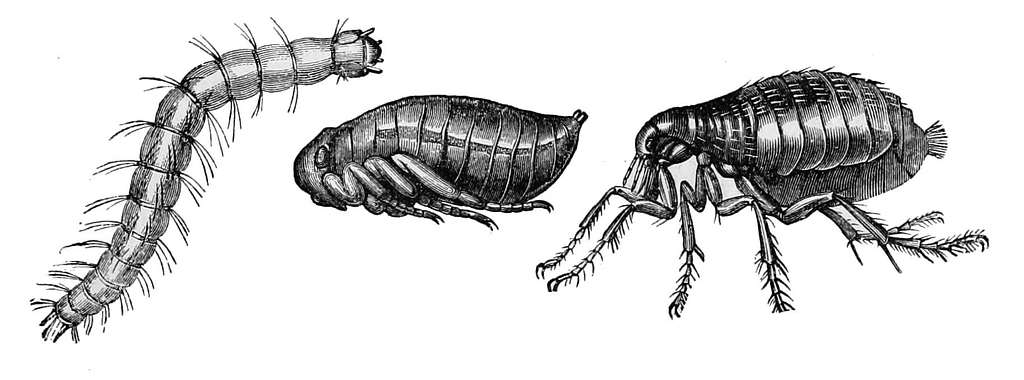
Substance Background
A blood-feeding ectoparasitic insect (order Siphonaptera) with piercing–sucking mouthparts. Salivary anticoagulants and proteins injected during feeding provoke a papular, whealing reaction with intense pruritus; repeated exposures may sensitise, producing papular urticaria and secondary eczematisation on scratching [Clarke], [Hughes]. The homoeopathic tincture is prepared from triturations of the insect material; the toxicologic signature—itching papules, grouped wheals, central punctum, intense scratching with secondary infection—maps to the remedy’s curative sphere in itching dermatoses, bite-reactions, and prurigo-like states [Allen], [Clarke]. [Toxicology]
Proving Information
No extensive Hahnemannian proving; symptomatology is drawn from toxicology (bite effects) and clinical experience, consolidated by Clarke and later summarists; a few minor testings exist in Allen’s compilation. The itch-wheal–papule triad, < warmth of bed, > cool applications, restless scratching with loss of sleep, and grouped lesions on ankles/waistline are repeatedly confirmed [Allen], [Hering], [Clarke]. [Proving] [Clinical] [Toxicology]
Remedy Essence
Pulex irritans speaks to patients whose skin becomes a battlefield after insect exposure: papules/wheals with a central punctum, intolerable itching that flames in warmth and quiets in cold, and a bite-map distribution at ankles, calves, and elastic/waist lines. The case language is vivid—stings, burns, must scratch, drives me mad, only cold helps—and the behaviour is diagnostic: they throw the covers off, stand by an open window, press rather than rub, and carry a cold cloth, sleeping only in brief cooled interludes. The mental sphere is secondary but palpable: peevish, easily vexed, focused on the skin’s irritation; children slap at spots and demand to “make it cold.” This is not the oedematous, puffy Apis state, nor the vesicular Rhus-tox with relief from hot bathing; it is the papular urticaria/prurigo pattern with central punctum, excoriation, crusts, and loss of sleep. In recurrent “bite-reactors,” Pulex breaks the cycle, restores sleep, and allows constitutional work (often Sulphur or Psorinum) to sustain the result. Keep the thermal polarity in front of you: < heat/bed/woollens; > cold/cool air/uncovering—when this triad is explicit, Pulex is rarely misplaced. [Clarke], [Boericke], [Allen], [Hering]
Affinity
- Skin and superficial vessels: Papular urticaria and prurigo-type eruptions, wheals with central punctum, excoriations, impetiginisation from scratching; itching burns and stings; > cold, < heat/bed. See Skin. [Clarke], [Allen]
- Peripheral sensory nerves (itch pathways): Hyperaesthesia, formication (“something crawling”), tactile intolerance in covered parts. See Generalities, Mind. [Hering], [Clarke]
- Sleep and neurovegetative tone: Insomnia from compulsive scratching; irritable, unrestful dozing; child tosses covers off to cool the itch. See Sleep, Mind. [Boericke], [Clarke]
- Lymphatics/follicles: Regional node tenderness when sites are excoriated; follicular papules at hair margins. See Skin. [Clarke]
- Lower extremities/waist line: Distribution keynotes—ankles, insteps, calves, and waistband/elastic pressure zones. See Extremities, Generalities. [Clinical]
Better For
- Cold applications, cool air, cold bathing (itch calms, burning subsides) [Clarke].
- Uncovering in bed, throwing off warm clothes (echoed under Sleep) [Boericke].
- Firm pressure without rubbing (dulls the itch briefly) [Clinical].
- Scratching until it stings, then transient relief (paves way to excoriation) [Allen].
- Bleeding a papule/wheal slightly, then cooling (old folk practice; clinical observation) [Clarke].
- Daylight/open air compared with close, heated rooms [Clarke].
- Loose clothing; removing tight elastic at waist/ankle [Clinical].
- Bland emollients cool (adjunctive; not curative by themselves) [Clarke].
Worse For
- Warmth of bed, heated rooms, after undressing (skin flush), night aggravation [Allen], [Clarke].
- Scratching (spreads eruption; induces burning; secondary infection) [Clarke].
- Bathing hot, sweating, exercise heat [Boericke].
- Woollens, tight bands at waist/ankle; sites where fleas collect (distribution keynote) [Clinical].
- Summer/close weather, dusty bedding, animal contact (kennels, rugs) [Clarke].
- Touch/light friction of clothes over papules [Hering].
- Emotional fretfulness (itch felt more keenly when irritated or overtired) [Boericke].
Symptomatology
Mind
Irritable, fretful, and oversensitive when the skin burns and stings; the patient cannot settle to tasks, is driven to scratch, and resents interference, especially at night when the warmth of bed brings out intolerable itching [Clarke], [Boericke]. Children become peevish, slap at the spots, and demand the covers be thrown off; they cry with the stinging and then relax for a moment when the skin cools, mirroring better cold, uncovering in the modalities [Clarke]. Anxious restlessness appears during flares; there is a nervous aversion to close rooms and a desire for fresh air. The itch heightens with vexation, and the patient may feel formication—a creepy-crawly sensation that suggests “something is on me,” a mind–skin loop often observed in bite-sensitive subjects [Hering], [Clarke]. Unlike Arsenicum, the anxiety is not of collapse but of irritation; unlike Sulphur, there is less philosophical indifference and more acute, local torment. The individual becomes self-absorbed with their skin, checking and scratching the same sites, then regretting the bleeding; shame or embarrassment can follow when the lesions are visible on legs and arms. Relief is sought by practical cooling measures rather than warmth or rubbing, contrasting with Rhus-tox where heat and hot bathing often soothe [Boericke], [Clarke]. [Clinical]
Head
Head feels hot and pricky in warm rooms; scalp itching occurs along hat-band and hair margins, with small papules and excoriations from scratching [Clarke]. The heat mounts on getting into bed and subsides if the head is uncovered at a window or fanned—tracking the general better cool air. Headache is not structural but irritative: a tight, heated feeling accompanying wakeful nights of scratching; it clears after a cool wash or once sleep comes towards morning [Allen], [Clarke]. The scalp may display follicular papules with a central point, bleeding on scratching. Differentially, Pediculus has crawling with nits and school exposure; Pulex shows grouped papules with bed-warmth aggravation and bite distribution elsewhere on the body. [Clinical]
Eyes
Smarting lids and canthi when the face flushes at night; the patient rubs until the skin about the brows is reddened and a few papules appear at the margin [Clarke]. Tearfulness accompanies fretfulness in children; relief comes in cool air. Not a primary ocular remedy; irritation is cutaneous more than conjunctival, and rubbing risks excoriation at lid edges. [Clinical]
Ears
Prickling of lobes and behind ears in bed warmth; small papules along spectacle arms or mask bands in modern contexts; better when uncovered and cooled. No middle-ear involvement. [Clarke]. [Clinical]
Nose
Itching of alae and nasal bridge with desire to rub; occasional sneezing fits in dusty bedding, more from environment than remedy organotropism. Scratching reddens and may crust, paralleling the skin picture elsewhere. [Clarke]. [Clinical]
Face
Papules along beard line or under chin straps; cheeks flush hot in bed and itch maddeningly until bathed with cold water, when relief is immediate but transient—again echoing better cold [Clarke]. Scratching leaves linear excoriations and small scabs; cosmetic embarrassment increases the mental irritation. Compare Urtica urens when wheals dominate with burning and stinging; Pulex is more papular and excoriated. [Boericke]. [Clinical]
Mouth
No specific mucosal picture; lips and perioral skin may itch in heat with small papules at the margin; licking worsens soreness; cold compresses help. [Clarke]. [Clinical]
Teeth
No proving constants; gritting from irritability has been noted in children during night itching; settles once cooled and comforted. [Clinical]
Throat
Itchy anterior neck and collar area in warm clothing; scratching induces burning; changing to loose, cool fabrics relieves, reiterating loose clothing better. No catarrhal keynote. [Clarke]. [Clinical]
Stomach
Appetite little affected; some children become hungry and wakeful at night from itch-fatigue; sweets may trigger more scratching by raising surface heat, an empirical observation rather than a fixed rubric. Cold drinks are preferred, aligning with the cooling theme. [Clinical]
Abdomen
Waistband and elastic areas show grouped papules/wheals with central puncta; friction and warmth aggravate so that undressing for bed paradoxically worsens the itch as the skin flushes [Clarke]. Scratching produces burning and secondary eczematisation; cool compresses relieve. Differential: Cimex (bed-bug) is often worse on pressure sites after sleep with bruised soreness; Pulex is sting-burning and papular with a clear bed-warmth aggravation. [Clarke], [Boericke]. [Clinical]
Urinary
External genital itching in warmth; scrotal or mons papules with intense desire to scratch; relief by cool air and bathing; secondary impetiginisation if torn. No urethral sphere. [Clarke]. [Clinical]
Rectum
Prickly heat and itching about anus and perineum in bed; scratching brings soreness; washing with cold water helps. No haemorrhoidal keynote beyond irritable pruritus. [Clarke]. [Clinical]
Male
Scrotal itching in bed, worse woollens; must uncover; after cold ablution can sleep again. Excoriations sting on passing warm urine if skin is broken. [Clarke]. [Clinical]
Female
Itching at thighs, groins, and along elastic lines of undergarments, worse before menses when surface heat is felt; better cool bathing. Nursing mothers may complain of areolar prickle in heat without primary mammary disease. [Clarke]. [Clinical]
Respiratory
Breathing seeks cool air at a window; close rooms intensify discomfort; respiration otherwise normal. The need for ventilation matches the global open air amelioration. [Clarke]. [Clinical]
Heart
Palpitation not characteristic; irritability and lost sleep exaggerate awareness of pulse; calms as itching is controlled and rest obtained. [Clinical]
Chest
Intermammary and sternal papules under warm clothing; burning after scratching; relief from cool air against the skin. No bronchial keynote. [Clarke]. [Clinical]
Back
Nuchal and interscapular itching where clothing rubs; small papules with crusts from scratching; worse in heated beds and on sweating; better cool ablution and airing the room. [Clarke]. [Clinical]
Extremities
Cardinal distribution: ankles, insteps, calves, sometimes wrists. Grouped papules with central bite point; intolerable itching worse at night and in warmth, better by cold applications; scratching leads to burning and bleeding with little lasting relief [Allen], [Clarke]. Socks’ elastic and shoe-top lines are common sites; the patient loosens clothing for relief—echoing loose clothing better. Compare Ledum in puncture-bites with oedema and better cold; Pulex is more papular-pruritic than puncture-arthritic. [Boericke]. [Clinical]
Skin
The essence: papular urticaria / prurigo-like eruption, intensely itching, with wheals or papules showing a central punctum, often grouped on distal limbs and friction zones; scratching transforms itch to burning, causes excoriations, serous crusts, and sometimes secondary impetiginisation [Clarke], [Allen]. Itch is < heat, warm bed, woollens, sweating, > cold, open air, and uncovering. Formication may trouble sensitive subjects—crawling as if something were moving on the skin, a toxicologic echo of the flea’s activity and a clinical keynote when anxiety magnifies itch [Hering], [Clarke]. Differentially, Apis has rose-pink wheals, oedema, and better cold but more “stinging–burning with swelling”; Urtica urens has nettle-rash with burning–stinging and may follow shellfish or chill; Rhus-tox has vesicles and > hot bathing (opposite of Pulex); Sulphur/Psorinum show filthy skin, offensive sweat, and > cool air but are constitutional backbones rather than bite-maps. [Boericke], [Clarke]. [Clinical] [Toxicology]
Sleep
Sleep is broken and fretful from itching, especially after first warming in bed; the patient tosses, throws off covers, and seeks cool places on the sheet; relief by cold sponging allows short naps until heat rekindles the itch [Clarke], [Boericke]. Children wake crying, slap at the ankles or waist, and only settle when the room is aired or a cool compress is applied—explicitly mirroring better cool air/cold applications. Dream-life becomes shallow and peppered by startle; sleep improves towards morning as the skin cools. Lack of rest breeds daytime peevishness and lowered threshold to scratch. [Clinical]
Dreams
Dreams of insects, crawling, or of being bitten; dreams break into wakeful scratching bouts; after cooling, sleep returns without recall. Symbolic repetition of the aetiology is common in children. [Clarke]. [Clinical]
Fever
No inherent pyrexia; heat is cutaneous and subjective, local to itchy tracts; flushing in bed without rise of temperature; a cool cloth quenches both burning and fretfulness. [Clarke]. [Clinical]
Chill / Heat / Sweat
Chill in open air is welcomed on the skin, yet general chilliness may alternate with surface heat on re-entering warm rooms; sweating worsens itch and spreads eruption in friction zones; drying and cooling relieve—reiterating the thermal polarity. [Clarke]. [Clinical]
Food & Drinks
Craving for cold water and iced cloths to dab itchy parts; warm soups or spices may subjectively increase surface heat and prickle in some, a practical though not pathognomonic observation; no fixed aggravations otherwise. [Clinical]
Generalities
A skin-surface, itch-driven remedy with a strong thermal polarity: < heat, warm bed, woollens, close rooms; > cold, cool air, uncovering, and cool bathing. Lesions are papules/wheals with central punctum, often grouped at ankles, calves, wrists, waist, and other friction/elastic sites; scratching converts itch to burning, induces bleeding and crusts, and steals sleep [Clarke], [Allen]. The mind is irritable and fretful from local torment rather than deep constitutional dyscrasia; compare Apis (wheals, oedema, > cold), Urtica urens (nettling rash), Rhus-tox (vesicles > hot bath—opposite), Psorinum/Sulphur (constitutional itch, < warmth of bed, dirty skin), and Ledum (puncture-bites > cold). In those over-sensitised to insect bites, Pulex often settles the papular urticaria picture and restores sleep. [Boericke], [Clarke], [Hering]. [Clinical] [Toxicology]
Differential Diagnosis
- Bites/urticaria/itch
- Apis — Rose-pink wheals, puffy oedema, burning–stinging, > cold, < heat; Pulex is more papular/excoriated with central punctum and habitual distribution (ankles/waist). [Clarke], [Boericke]
- Urtica urens — Nettle-rash with violent stinging/burning, often diet-triggered; Pulex is bite-mapped, prurigo-like. [Clarke]
- Rhus-tox — Vesicular eczema, > hot water, < cold damp; Pulex is opposite in thermal modality (> cold, < heat). [Boericke]
- Psorinum — Filthy skin, itching < warmth of bed, general offensiveness; Pulex is more local and eruptive with central puncta; Psorinum often needed chronically. [Clarke]
- Sulphur — Burning/itching, < heat/bed, scratches until raw; but Sulphur is broadly constitutional with heat at vertex and morning diarrhoea; Pulex is bite-patterned and > cold. [Hering]
- Bite-puncture remedies
- Ledum — Puncture-bites, bluish oedema, > cold, tendency to joint pains; Pulex lacks puncture-arthropathy, has papules/wheals. [Boericke]
- Cimex (bed-bug) — Bruised soreness of parts slept on, “feels as if beaten”; Pulex is stinging–burning with prurigo-like papules. [Clarke]
- Formication / crawling
Remedy Relationships
- Complementary: Urtica urens (nettling phase; alternates when wheals dominate), Sulph. or Psor. for chronic psoric groundwork when recurrent. [Clarke], [Boericke]
- Follows well: Ledum or Apis in acute bite swarms when oedema abates and a papular-itch residue persists. [Boericke]
- Precedes well: Sulph. as constitutional after acute control to prevent relapse in chronic bite-sensitivity. [Hering]
- Antidotes/Aggravations: Heat/warmth aggravate; cold and uncovering antidote the local torment (clinical). Related insecta: Cimex, Culex, Pediculus for comparison. [Clarke]
Clinical Tips
In acute papular urticaria from bites, many authors use 6x–30C repeated briefly to arrest the itch–scratch cycle, then pause as sleep returns; topical cold and loose clothing align with modalities [Clarke], [Boericke]. In bite-sensitised children, a single 30C at bedtime when scratching starts may prevent a night-long vigil; in chronic prurigo-like states, intercurrent Pulx. 30C can be alternated with Urtica urens or followed by Sulph./Psor. according to constitution [Clarke].
Pearls: when the parent says, “He only sleeps with a cold cloth on the ankles,” or the patient reports “It ignites in bed, I must throw the covers off,” consider Pulex first. [Clinical]
Selected Repertory Rubrics
Mind
- MIND — IRRITABILITY — itching — from. — Local torment breeds peevishness. [Clarke]
- MIND — RESTLESSNESS — night — itching; from. — Tosses until skin is cooled. [Boericke]
- MIND — SENSATION — insects — crawling on skin; of. — Formication in bite-sensitives. [Hering]
Head/Face
- SCALP — ITCHING — night — bed; in — warm. — Follicular papules at margins. [Clarke]
- FACE — ERUPTIONS — papular — itching — scratching — excoriates. — Excoriation and crusts are common. [Clarke]
Skin (core)
- SKIN — ERUPTIONS — papular — insects; from bites of. — Papular urticaria map. [Allen], [Clarke]
- SKIN — URTICARIA — itching — night — warmth — aggravates — cold — ameliorates. — Thermal polarity. [Clarke]
- SKIN — ITCHING — scratching — aggravates — burning — with. — Scratch → burn loop. [Clarke]
- SKIN — PAPULES — grouped — ankles; on. — Distribution keynote. [Clinical]
- SKIN — EXCORIATIONS — scratching — from. — Bleeding and crusts follow. [Allen]
Extremities/General
- EXTREMITIES — ITCHING — ankles — night — bed, in — warmth — aggravates. — Classic site and timing. [Clarke]
- GENERALITIES — HEAT — bed; in — aggravates. — Night warmth flares itch. [Allen]
- GENERALITIES — OPEN AIR — ameliorates. — Seeks window/cool air. [Clarke]
- GENERALITIES — CLOTHING — tight — aggravates. — Elastic lines provoke. [Clinical]
- GENERALITIES — BATHING — cold — ameliorates — hot — aggravates. — Cool water soothes; hot provokes. [Clarke]
Sleep
- SLEEP — DISTURBED — itching; from — throws off covers. — Uncovers to cool skin. [Boericke]
- SLEEP — FALLING asleep — difficult — itching; from. — Settles only when cooled. [Clarke]
References
Allen, T. F. — Encyclopaedia of Pure Materia Medica (1874–79): toxicologic and clinical notes on bite-reactions, papular urticaria, modalities.
Hering — Guiding Symptoms (1879): confirmations of itching, formication, thermal polarity, sleep loss.
Clarke — A Dictionary of Practical Materia Medica (1900): remedy substance overview, distribution, modalities, clinical usage in papular urticaria/prurigo.
Boericke — Pocket Manual of Homoeopathic Materia Medica (1901): keynotes—itching, < warmth of bed, > cold, bite-maps; comparisons with Apis, Urtica, Rhus.
Hughes — A Manual of Pharmacodynamics (1870s): toxicology of bite-saliva; rationale for skin–nerve irritation.
Boger — Synoptic Key (1915): relationships among bite/urticaria remedies (Apis, Urtica, Ledum, Rhus).
Nash — Leaders in Homoeopathic Therapeutics (1907): comparative remarks on urticaria/itch states (contextual).
Dewey — Practical Homoeopathic Therapeutics (1901): urticaria and pruritus groupings; clinical supports.
Tyler — Homoeopathic Drug Pictures (1942): practical bedside hints in itch/urticaria remedies.
Farrington — Clinical Materia Medica (late 19th c.): contrasts with Apis, Rhus, Sulphur in pruritic affections.
Disclaimer
Educational use only. This page does not provide medical advice or diagnosis. If you have urgent symptoms or a medical emergency, seek professional medical care immediately.