

Myrica cerifera
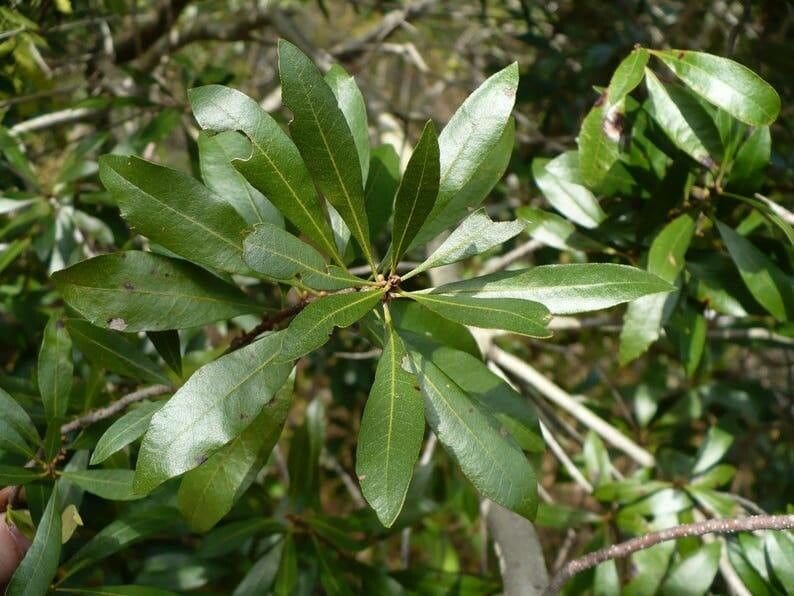
Substance Background
A coastal evergreen shrub (family Myricaceae) whose grey berries are coated with bayberry wax (historically boiled off to make candles). The bark and root-bark are rich in tannins and a small amount of volatile principles; traditional American herbalism used them as astringents for catarrhal mucosae, spongy gums, and diarrhoeal states [Hughes], [Clarke]. Homeopathic preparations utilise tinctures of the fresh bark/root-bark and attenuations thereof. Classical homeopathic records centre on catarrhal jaundice and hepatic torpor—“stools clay-coloured; urine dark; skin yellow”—with foetid mouth, thick, dirty, yellow tongue, and drowsy, heavy states; a pattern of fullness and tenderness in the liver and spleen with itching of jaundice and sluggish portal circulation recurs across authors [Hering], [Allen], [Clarke], [Boericke]. The astringent, mucosa-acting crude drug explains the mouth–pharynx affinities, while the clinic established its place in icterus and malarial–bilious dyscrasias [Hughes], [Clarke].
Proving Information
Data derive chiefly from clinical use and partial provings in the American school; Hering and Allen compiled observations in jaundice (catarrhal, malarial), foetid mouth/throat catarrh, hepatosplenomegaly with tenderness, drowsiness, and clay-coloured stools, with itching of the skin and dark urine [Hering], [Allen], [Clarke]. Tags: [Clinical] [Proving].
Remedy Essence
Essence: Myrica cerifera is a sallow, foetid, drowsy remedy for catarrhal jaundice and portal torpor where bile is absent from stools (clay-coloured), urine is dark, the skin and conjunctivae are yellow, and the mouth and fauces are foul, relaxed, and ropy, all worse in warm, close rooms and better in open, cool air and after a free, bilious stool [Clarke], [Hering], [Allen]. The psychomotor tone is torpid: the patient nods by day, resents disturbance, and feels heavy and oppressed until the bowels act; then the head clears, the itch lessens, and life returns. The kingdom signature (an astringent shrub long used to tone lax mucosae) shows in spongy gums, sticky mucus, and relaxed fauces; the pathophysiological thread runs from hepatic catarrh → stasis of bile → icterus with pruritus and mucosal foulness.
Polarities: Warmth of rooms/bed vs cool air; fatty foods vs light simple diet; before stool vs after stool; pressure/jar vs rest with trunk raised. Micro-differentiation: If right-scapular stitching and hot drink desire lead, take Chelidonium; if frontal headache with violent jaundice dominates, Chionanthus; if pure ropiness without jaundice, Hydrastis; if irritable, spasmodic gastric with chilliness, Nux-v.; if vascular liver with varices/piles, Carduus marianus; if painless bilious gushings, Podophyllum [Clarke], [Boger], [Boericke], [Allen]. In practice, the turning sign is colour returning to the stool and the patient saying, “I can keep the window shut now”—air no longer being felt as medicine. Until then, air and bile remain the bedside allies.
Affinity
- Liver & bile ducts (portal system) — Catarrhal jaundice, torpid liver, clay-coloured stools, dark scanty urine, aching/tenderness in right hypochondrium; heaviness and dullness as bile fails to reach the bowel [Clarke], [Boericke].
- Spleen (malarial edge) — Fullness and soreness in left hypochondrium with malarial history; splenic congestion in “bilious fevers” [Hering], [Allen].
- Mouth & gums — Spongy, bleeding gums, filthy foetor, thick yellow–dirty tongue; sticky mucus and relaxed fauces—an astringent sphere that mirrors the herbal tradition [Hughes], [Clarke].
- Pharynx & posterior nares — Relaxed, catarrhal throat with tenacious, shoelace strings of mucus (Hydrastis-like), worse mornings and in warm rooms [Clarke], [Boger].
- Skin (icterus, pruritus) — Yellow skin with itching worse warmth/at night; poor bile outflow and cutaneous irritation track the jaundice state [Allen], [Boericke].
- Stomach–bowel — Nausea with aversion to food; sinking at epigastrium; sluggish, light-coloured stools followed by foul flatus; diarrhoea alternates with constipation in malarial subjects [Hering], [Clarke].
- General blood/constitution — Sallow, earthy face; drowsy, heavy, apathetic; “bilious depression” with low reaction in hot, close rooms [Allen], [Boericke].
- Haemorrhoidal veins (portal) — Congested piles with aching sacrum in hepatic torpor; less knife-like than Ratanhia, more portal–venous [Boger], [Clarke].
Better For
- Open, cool air — Clears head and lessens drowsy oppression and foetor-induced nausea; tallies with “warm room aggravates” [Clarke].
- Gentle motion / short walking — Encourages biliary flow and relieves right hypochondrial fullness (clinical) [Clarke].
- After free, bilious stool — Head and itching ease as bile touches bowel (echo in Symptomatology) [Allen].
- Light, simple diet — Broths and easily digested foods sit better than rich fats in hepatic torpor [Boericke].
- Cold water rinses/gargles — Temporarily sweeten the foul mouth; soothe spongy gums [Hughes], [Clarke].
- Rest with trunk slightly raised — Offloads hepatic tenderness and lessens nausea [Hering].
- Periodic return of perspiration — When sweat breaks gently, skin itching abates for a time [Allen].
- Morning after first stool — The day brightens once the bowels move (clinical observation) [Clarke].
Worse For
- Warm, close rooms / bed heat — Heaviness, somnolence, and foetor rise; throat relaxation and mucus stringiness increase [Clarke], [Allen].
- Fatty, rich foods — Nausea, sinking, bilious eructations; stools become pale and pasty [Boericke].
- Damp weather / marsh air — Malarial–bilious relapses with spleen ache and jaundice deepen [Hering], [Allen].
- Morning on waking (before stool) — Mouth foulest; head heavy; nausea; catarrh ropy until the first evacuation [Clarke].
- Pressure over liver / jar — Tenderness and dragging in right hypochondrium [Hering].
- Exertion in heat — Faint, sleepy, yellow, with pruritus worse scratching [Boericke].
- Suppressed perspiration or checked stool — Oppression and itching return; urine darkens [Allen].
- Alcoholic excess — Rekindles hepatic torpor and foul breath (clinical) [Clarke].
Symptomatology
Mind
A dull, drowsy, indifferent mental state pervades, especially in warm rooms where the patient grows heavy-eyed and listless; attention flags, and there is little initiative to speak or act [Allen], [Clarke]. Irritability arises when disturbed from dozing; the sufferer resents questions and answers shortly. Anxiety centres vaguely in the epigastrium and right hypochondrium—an inner sense of “bilious oppression”—and is relieved somewhat after stool, which tallies with the modality better after free evacuation already noted. Memory feels sluggish and thought moves slowly, as if the brain were coated like the tongue; reading brings sleepiness unless the window is opened (cross-link Better: open, cool air). Apathy shades into mild hypochondriasis in malarial subjects who brood over their yellow skin and fear serious liver disease. The odour from the mouth causes self-disgust and social withdrawal; the patient covers the mouth and prefers solitude until rinsing offers temporary ease [Clarke]. Emotional upsets depress digestion at once, reproducing nausea and fullness below the ribs. There is no florid anxiety or tremulous alarm as in Arsenicum; the colouring is torpid and sallow—exactly the hepatic torpor that underpins the remedy. Improvement in mind parallels the appearance of bile in the stool, confirming the organ–mood axis.
Head
A heavy, dull, pressing head-ache sits over the eyes and at the root of the nose on waking, with the foulest mouth and ropiness in the throat [Clarke]. The scalp feels hot in close rooms and clearer in the open air, aligning with the remedy’s thermal modalities. Stooping increases pressure; rising slowly, sipping cold water, and moving the bowels lessen the weight—these bedside links recapitulate Better after stool. Vertigo appears on first rising, especially in malarial subjects after a hot night; it passes on airing the room. The face is sallow or yellowish, with dull expression and drooping lids, and the eyes have a bilious cast with a subicteric tint. Headaches are worse after rich food and better with light diet, underlining the fat-worse aggravation [Boericke]. Compared with Chelidonium (stitching pains radiating to the right scapula), Myrica’s head is dull–oppressive, with more ropy throat catarrh and mouth foetor [Clarke], [Boger].
Eyes
Conjunctivae show a subicteric tinge in jaundice; the whites are tinged yellow, and the eyelids feel heavy and sticky on waking [Allen], [Clarke]. Vision is not profoundly affected; it mists in warm rooms and clears in fresh air, paralleling the general torpor. Itching of the canthi may accompany skin pruritus; rubbing leaves a grease-like smear. Photophobia is slight but <a href="https://www.iqhomeopathy.com/materia-medica/sol/">sunlight aggravates head heaviness on bilious mornings. Tears may be scant and slightly sticky; the ocular surface reflects the mucous relaxation typical of the remedy. Improvement follows biliary stool, as if general toxicity lifts; this coherence with the Better after free stool repeats across sections.
Ears
Fullness and blocked feeling occur with head oppression in warm rooms; distant sounds irritate and increase the headache. Tinnitus is rare but may appear in malarial convalescents, subsiding with spleen relief. Itching of the canal reflects the systemic pruritus of icterus; scratching aggravates and leaves burning [Allen]. No primary otitis belongs here; the ear symptoms are accessory to hepatic blood-state and mucosal relaxation. Sensitivity to noisy, crowded rooms mirrors the worse warm, close room modality.
Nose
Dull, stuffy root and sticky posterior nares occur on waking; nose-blowing extrudes ropes of tenacious mucus that momentarily ease the frontal weight [Clarke]. The smell is blunted by catarrh; odours from a warm kitchen nauseate, particularly fat and frying. Occasional epistaxis in malarial relapse relieves head congestion slightly; blood is dark and scant. The nasal lining looks pale and lax, in keeping with the remedy’s astringent herbal identity. Symptoms improve in cool air and after bowel movement, linking back to key modalities. Unlike Hydrastis, the nasal catarrh is part of a hepatic totality rather than a local atony alone [Boger].
Face
Sallow, earthy, or frankly yellow hue with expression heavy and indifferent; lips dry, crack at corners; a bitter or foul taste is constant on waking [Clarke]. The parotid and submaxillary regions feel a little full on hot days, but true adenitis is not marked. The patient frequently wipes the mouth and lips of sticky mucus. Facial itching accompanies icterus and intensifies in a warm room or bed, easing by airing. Flushing is rare; pallor with sallowness predominates. The facial picture improves distinctly after a bilious stool, echoing the central remedy logic.
Mouth
Cardinal sphere with the liver. Foetid breath, spongy bleeding gums, and a thick, dirty, yellow coating on the tongue stand out [Clarke], [Hughes]. The mouth is pasty and sticky; strings of tenacious mucus hang from the fauces and provoke gagging on attempts to hawk them away—this relaxed catarrh parallels Hydrastis, but in Myrica one expects jaundice signs and clay stools [Clarke], [Boger]. Cold water swishes give brief comfort (Better), yet the foulness speedily returns in warm rooms (Worse). Aphthous patches and rawness may occur in debilitated, bilious patients, bleeding easily on brushing. Taste is bitter, flat, or nauseous; food seems loathsome on first waking but more tolerable after the bowels act. The mouth picture tallies with the morning worse before stool and fat-worse pattern.
Teeth
Gums are spongy and bleed easily; they feel loose and sore, improving with cool rinses and fresh air [Clarke], [Hughes]. Teeth feel coated; the patient is sensitive to pressure and avoids vigorous brushing in the morning. Toothache is dull and congestive rather than stabbing; it eases after the first meal or after evacuations. Halitosis is prominent and mortifies the patient, compelling repeated mouth-washing. Dental sensitivity increases in hot rooms and abates outdoors. There is no splinter pain as in Nit-ac.; it is the foetid, lax, bilious mouth that guides.
Throat
Relaxed fauces draped with thick, stringy mucus, most troublesome on waking; hawking is constant until a quantity is cleared [Clarke]. The smell and taste of this mucus nauseate; relief follows cold water or cool air. Voice is thick and dull in the morning and steadies as the day advances, especially after stool. The tonsils look flabby rather than inflamed; pain is slight, soreness more a lax catarrh than an acute angina. Swallowing is easy but loathsome; the appetite is put off by the throat state. Compare Hydrastis (pure atony without jaundice) and Merc-sol. (salivation and ulceration without clay stools): Myrica joins the hepatic to the pharyngeal [Clarke], [Boger].
Stomach
Nausea, sinking at epigastrium, and aversion to food, especially to fatty, rich dishes, announce the bilious day [Boericke]. Eructations are bitter and offensive; the epigastrium is tender to pressure and to tight clothing. Warm rooms and kitchen odours aggravate; open air and cool drinks ease. Vomiting is uncommon but may occur in malarial relapses with head oppression; contents are bitter and scant. Appetite improves after the bowels move and the head clears, tracking the better after stool. There is no gnawing hunger (contrast Chelidonium), only a torpid stomach in a torpid portal system [Clarke].
Abdomen
Right hypochondrium is tender, heavy, and sometimes dull-aching; the left hypochondrium is full in malarial subjects, hinting at splenic congestion [Hering], [Allen]. Clothing oppresses; the patient loosens the belt. Flatus is foul; a sense of dragging attends walking on hot days. The abdomen is distended in the evening, easier after a free morning stool. Sharp stitches are rare; the pain is more weight and fullness, worse on jar/pressure and in warm rooms. The whole abdominal set relaxes on a light diet and gentle motion, confirming the modalities.
Urinary
Urine is dark, scanty, sometimes stained with bile; odour strong; passage gives temporary relief to abdominal weight [Allen], [Clarke]. Frequency increases on hot days and in malarial relapses. Burning is slight; the symptom is one of quality and scantiness rather than intense dysuria. If bile begins to pass to the bowel, the urine lightens; this inverse relationship is remarked clinically. No true albuminuric picture; the kidney is secondarily engaged in jaundice. Night urination may disturb sleep on the worst bilious nights.
Rectum
Constipation with clay-coloured, pale, pasty stools alternates with a bilious stool that finally brings relief to head and skin itching [Clarke], [Allen]. Haemorrhoids ache dully with sacral heaviness; they are less exquisitely painful than in Ratanhia and bleed little—portal congestion is the keynote [Boger]. Tenesmus is slight; the urge feels incomplete on days when bile is absent. After stool, the mouth is less fetid and the mind brighter, echoing the remedy’s central axis. Evening brings renewed fullness if stool has been suppressed or scanty. Cold sitz-baths are disliked; warmth applied to the sacrum may comfort, though the patient as a whole is warm-room worse.
Male
Sexual desire is diminished in jaundiced states; erections are feeble, and there is a sense of pelvic lethargy [Clarke]. Prostate is not a sphere; complaints subside as hepatic torpor lifts. Sweaty scrotum itching in bed may reflect the general jaundice pruritus.
Female
Menses may delay in acute jaundice; when they appear, the flow is scant and dark, with increased drowsiness and head heaviness [Clarke]. Morning sickness-like nausea occurs in hepatic torpor regardless of pregnancy. Pruritus vulvae may accompany the jaundice itch, worse warmth of bed and relieved by cool air. Leucorrhoea is bland and slimy in lax mucosa; the mouth–throat catarrh often coexists. Pelvic fulness mirrors portal stasis; improvement follows bowel action and better bile-flow.
Respiratory
Shallow respirations in bed heat change to deeper breaths at the window; sighing accompanies disgust at kitchen odours (fat-worse). No wheeze or rale belongs; when the throat is loaded with ropy mucus, the first breaths of the day clear the larynx. Walking in cool air steadies rhythm and reduces oppression. Shortness worsens with the warm, close room modality and improves with open air.
Heart
Pulse tends soft and sluggish in torpor; in malarial relapses it becomes a little quick at night with heat and itching [Allen]. Palpitations abate in cool air and with mind quiet. There is no true anginal picture; the circulation is portal and cutaneous rather than coronary. The faintness of hot rooms yields to airing and to a free stool (cross-link). Anxiety is mild and heaviness is more typical.
Chest
Breath is short in warm rooms and during nausea; the chest feels oppressed until the window is opened (modalities) [Clarke]. Cough is rare; when present it is from pharyngeal ropiness in the morning and subsides as mucus is expelled. Palpitation stems from heat and closeness rather than structural heart disease. A bilious taste rises with each respiratory effort; deep breathing in open air refreshes. The chest symptoms are minor and belong to catarrh and heat-worse states.
Back
Aching sacrum and dorsal heaviness attend the haemorrhoidal, portal state; standing long increases the drag [Boger]. Right scapular ache is slight compared with Chelidonium; Myrica is more weight and soreness than stitch. Lying with trunk raised and on the back is preferred; pressure over right hypochondrium is avoided (Worse: pressure). The backache abates after stool and in open air. No rheumatic signature is central.
Extremities
Lassitude in the limbs, heavy thighs on stairs, and a tendency to sit and doze in warm rooms typify the drowsy torpor [Allen]. Hands are warm and a little moist; itching on the shins in jaundice worsens in bed. Cramps are uncommon; weakness is functional. Gentle walking improves circulation and bile-flow, reproducing the Better gentle motion. Tremor is absent; Myrica is not a nervous remedy but a portal–mucous one.
Skin
Yellow skin with itching worse warmth/at night, worse in bed, better by cool air and after bile appears in stool [Allen], [Boericke]. Scratching produces burning and small excoriations; sweat is stale and has a faint bilious odour. Eruptions are not specific; the skin is smooth, with scratch-marks the only feature. In malarial subjects the skin becomes sallow and muddy even without full icterus. The pruritus cross-links to the hepatic sphere and recurs whenever stools go clay-coloured.
Sleep
Drowsiness by day, especially in warm rooms; the patient nods in the chair and is vexed when roused [Allen], [Clarke]. At night, heat of bed renews itching, which breaks sleep until a cool draught or sponging is procured; this mirrors worse warmth and better cool air modalities. First sleep is heavy, yet unrefreshing; morning brings foul mouth, ropy throat, and head weight until the bowels move. Dreams are of disagreeable, domestic tasks and kitchen odours; they leave nausea on waking (fat-worse). If an evening walk in cool air precedes bed, sleep is sounder and morning less offensive, illustrating how open air improves the whole cycle. The sleepiness is torpid rather than narcotic; there is no stupor as in septic acids. Improvement parallels the day the stools regain colour.
Dreams
Dreams of cooking, rancid fats, and uncleanliness occur with morning disgust; dreams of falling into muddy water repeat in malarial subjects [Allen] [Clinical]. Dreams of business worries mirror hepatic irritability to mental work; they lighten when air and gentle motion precede bed. Erotic dreams are rare; the state is apathetic. Night itch intrudes into the dreamscape, awakening the dreamer with scratching. Upon waking, the mind is heavy until the mouth is rinsed and the bowels act—linking dream, mouth, and stool.
Fever
Low, bilious febricula in the evening with heat of face and hands and itching skin; in malarial cases, a subcontinued fever with splenic ache and sallow tint is noted [Hering], [Allen]. Sweats are slight and stale; the heat is worse in a close room and better by an open window. The fever recurs on dietary excess and resolves with biliary stool. There is no high septic curve; this is catarrhal–malarial rather than typhoid. Head heaviness accompanies every rise and subsides as bile reaches the bowel.
Chill / Heat / Sweat
Chill after damp or marsh air is followed by dull heat and itching skin; sweat faintly sour, not relieving the mouth foetor until stool appears [Allen]. Bed heat aggravates itching; airing the bedclothes helps. Alternations map to weather and diet. The trio of warmth-worse, open air better, and after stool better repeat in this section as elsewhere.
Food & Drinks
Aversion to fats and rich foods; desire for simple, light diet and cool drinks in small quantities [Boericke]. Bitter taste, loathing on waking, and nausea from kitchen odours direct the day’s fare. Alcohol renews oppression and foetor (Worse). Salt and acid drinks sting the lax mouth if aphthae are present. Appetite returns after stool and in open air. The section thus mirrors the modalities and mouth–liver axis.
Generalities
Myrica cerifera gathers into a hepatic–portal totality: catarrhal jaundice with clay-coloured stools, dark urine, sallow–yellow skin with itching, and a dirty, foetid mouth with thick yellow coating and ropes of mucus in the fauces [Clarke], [Hering], [Allen]. Drowsy torpor dominates mind and body, worse in warm, close rooms and better in open, cool air; many complaints lift after a free, bilious stool, a clinical refrain that threads through Head, Mouth, Throat, Skin, and Mind. The right hypochondrium is tender and heavy; the spleen is full in malarial strains; fatty foods and alcohol aggravate every axis. Micro-comparisons: Chelidonium (stitches to right scapula, desire for hot drinks, marked right-side neuralgia); Chionanthus (intense jaundice and frontal headache, less throat ropiness); Hydrastis (ropiness without the icteric stamp); Nux-v. (irritable, spasmodic, gastric with chilliness rather than sticky catarrh); Carduus marianus (vascular liver with varicosities, less mouth foetor); Podophyllum (painless gushing bilious stools rather than clay absence). In short, it is a sallow, sluggish, foetid picture that brightens with air and bile.
Differential Diagnosis
Aetiology / Jaundice
- Chelidonium — Right scapular pain, hot drinks desire, sharp stitching; Myric. has dirty, ropy mouth and warm-room drowsiness, with better after bile appears [Clarke], [Boger].
- Chionanthus — Violent frontal headache with catarrhal jaundice; fewer throat–mouth ropiness features; Myric. more foetid and astringent-mucosal [Clarke].
- Carduus marianus — Hepatic vascular engorgement, varices; less faucal ropiness; Myric. suits sticky mouth/throat [Boger], [Boericke].
- Podophyllum — Profuse, watery bilious diarrhoea; Myric. shows clay stools (absence of bile) and ropy catarrh [Allen].
- Mercurius — Salivation, metallic taste, night sweats; Myric. has less salivation, more dirty, thick coating and hepatic torpor [Allen], [Clarke].
Mouth–Throat Catarrh
- Hydrastis — Ropy mucus, atony; lacks icterus and clay stools; Myric. links mouth to liver [Clarke], [Boger].
- Kali-bichromicum — Stringy secretions with ulcers and punched-out spots; Myric. has relaxed fauces without ulcer-craters and is bilious [Boger].
- Lycopodium — Hepatic–portal with flatus at 4–8 pm; more fermentative gut and right→left symptoms; Myric. less windy, more foetid mucosa [Kent], [Clarke].
Skin / Itch in Jaundice
- Sulphur — Burning, scratching till raw; philosophical restlessness; Myric. is drowsy, warm-room worse, better after stool, with foetid mouth [Kent].
- Natrum sulphuricum — Chronic, damp-aggravated hepatic states; more asthmatic mornings; Myric. emphasises icterus + ropy throat [Boger].
Malarial–Splenic
- China — Debility from loss of fluids, tympany; Myric. targets portal torpor with jaundice, less flatulent tympany [Farrington].
- Arsenicum — Burning, restless anxiety; Myric. torpid, drowsy, warm-room worse, foetid mouth [Kent].
Remedy Relationships
- Complementary: Chelidonium — Follows when stitching pains and scapular radiation dominate after Myric. clears mouth/skin foetor [Clarke].
- Complementary: Hydrastis — Alternates in relaxed mucosa phases without frank icterus [Boger].
- Complementary: Carduus marianus — For vascular–venous liver features and piles alongside Myric. [Boericke].
- Follows well: Nux-v. — After dietary excess when gastric irritability settles but jaundice torpor persists [Clarke], [Dewey].
- Follows well: China — Post-malarial debility when splenic fullness and icterus remain [Farrington].
- Precedes well: Sulphur — To rouse chronic reactivity when itch and sallow torpor linger [Kent].
- Precedes well: Podophyllum — If a bilious diarrhoeal phase follows clay stools, with portal unloading [Allen].
- Related: Lyc., Merc., Kali-bi., Chion., Chel., Hydr., Card-m. — compare per Differentials.
Clinical Tips
- Catarrhal jaundice with filthy mouth and ropy throat; stools clay-coloured; itching worse warmth: Myric. ahead of Chel. when foetor + ropiness dominate [Clarke], [Boericke].
- Malarial subjects with splenic fullness, sallow tint, dark urine: consider Myric. when warm rooms stupefy and head clears after stool [Hering], [Allen].
- Chronic “bilious catarrh” of fauces with relaxed mucosa in hot-house workers: Myric. if open air habitually relieves [Clarke].
- Potency & repetition: Low–medium (3X–6X–30C) in jaundice and mucosal laxity, repeated until bile reappears; then pause. Higher (200C) single doses in constitutional sallow torpor, watching for stool-colour change before repeating [Boericke], [Dewey].
- Case pearls:
- “Icterus with clay stools, dark urine, filthy mouth; mental heaviness relieved after stool—Myric. restored colour to stools” [Clarke].
- “Malarial convalescent with splenic ache and jaundice; drowsy in warm room, better at window—Myric.” [Hering].
- “Relaxed fauces with ropes of mucus in a sallow clerk; cure followed return of bile” [Allen].
Selected Repertory Rubrics
Mind
- Indifference, drowsy apathy — torpor of hepatic states [Allen].
- Irritable when disturbed from dozing — warm-room aggravation [Clarke].
- Aversion to conversation in the morning — foul mouth/fauces [Clarke].
- Concentration difficult in close rooms — clears at window [Clarke].
- Anxiety from epigastric oppression — portal load [Allen].
- Better after stool — organ–mood link [Allen].
Mouth/Throat
- Tongue coated, dirty yellow — hepatic catarrh marker [Clarke].
- Foetor oris offensive — key bedside cue [Clarke].
- Mucus, ropy, hangs in strings — relaxed fauces [Boger].
- Gums spongy, bleed on brushing — astringent sphere [Hughes].
- Throat, catarrh, morning worse, warm room worse — modality cluster [Clarke].
- Rinsing with cold water relieves briefly — nursing measure [Clarke].
Stomach
- Nausea from smell of fat, kitchen odours — fat-worse [Boericke].
- Aversion to food on waking — bilious disgust [Allen].
- Sinking at epigastrium — portal torpor [Clarke].
- Better in open air — air as remedy [Clarke].
- Tight clothing oppresses epigastrium — pressure-worse [Hering].
- After stool, appetite improves — bile-flow link [Allen].
Abdomen/Liver/Spleen
- Liver, pain, right hypochondrium, tender — core affinity [Hering].
- Stool clay-coloured; bile absent — diagnostic axis [Clarke].
- Urine dark, bilious — complement to clay stool [Allen].
- Spleen enlarged, sore in malarial subjects — left hypochondrial fullness [Hering].
- Worse jar/pressure, heat of room — modalities [Clarke].
- Better gentle motion, after stool — portal unloading [Clarke].
Rectum
- Constipation with pale, pasty stool — bile withheld [Clarke].
- Haemorrhoids congestive, dull ache — portal stasis [Boger].
- Tenesmus slight, ineffectual in the morning — before-stool worse [Clarke].
- Relief after free, bilious stool — sine qua non [Allen].
- Flatus foul — hepatic dyscrasia [Allen].
- Evening fullness returns if stool suppressed — relapse pattern [Clarke].
Skin
- Icterus with itching worse warmth — hallmark [Allen].
- Itch worse in bed, better cool air — thermal polarity [Boericke].
- Skin sallow, muddy in malarial subjects — constitutional hue [Hering].
- Scratch marks, burning after scratching — secondary effects [Allen].
- Sweat stale, faintly bilious — odour cue [Clarke].
- Itching eases after bile appears in stool — organ–skin axis [Allen].
Generalities
- Worse warm, close rooms; better open, cool air — master modality [Clarke].
- Drowsy by day; heavy, apathetic — hepatic torpor [Allen].
- After stool better (head, mouth, skin) — definitive cross-link [Allen].
- Worse fatty foods, alcohol — dietary aggravation [Boericke].
- Tender to pressure over liver; worse jar — mechanical cue [Hering].
- Malarial damp aggravates; gentle motion ameliorates — terrain + activity [Hering], [Clarke].
References
Hering — Guiding Symptoms (1879): jaundice, hepatic/splenic fullness, modalities; mouth–throat catarrh.
Allen, T. F. — Encyclopaedia of Pure Materia Medica (1874–79): clinical notes on icterus, clay stools, dark urine, drowsiness.
Clarke, J. H. — Dictionary of Practical Materia Medica (1900): catarrhal jaundice picture; ropy fauces; open-air amelioration; diet aggravations.
Hughes, R. — Cyclopaedia of Drug Pathogenesy (1870): crude drug astringency; mucosal sphere; herbal background.
Boericke, W. — Pocket Manual (1901): keynotes—dirty yellow tongue, foetor, jaundice with itching; fat-worse.
Boger, C. M. — Synoptic Key (1915): relaxed mucosa vs hepatic remedies; portal–haemorrhoidal axis; comparisons (Hydrastis, Kali-bi.).
Farrington, E. A. — Clinical Materia Medica (1887): malarial–bilious states; differentiations with China, Chelidonium.
Kent, J. T. — Lectures on Homoeopathic Materia Medica (1905): comparisons—Sulph., Nux-v., Lyc., hepatic modalities.
Nash, E. B. — Leaders in Homeopathic Therapeutics (1899): bilious tendencies; stool–urine polarity notes.
Dewey, W. A. — Practical Homeopathic Therapeutics (1901): jaundice grouping; stage management with Nux-v., Chel., Pod.
Tyler, M. L. — Homoeopathic Drug Pictures (1942): bedside cues—air, bile, sallow torpor.
Phatak, S. R. — Materia Medica (1941): concise keynotes—icterus with itching, clay stool, foetid mouth, warm-room aggravation.
Disclaimer
Educational use only. This page does not provide medical advice or diagnosis. If you have urgent symptoms or a medical emergency, seek professional medical care immediately.