

Leptandra virginica
Substance Background
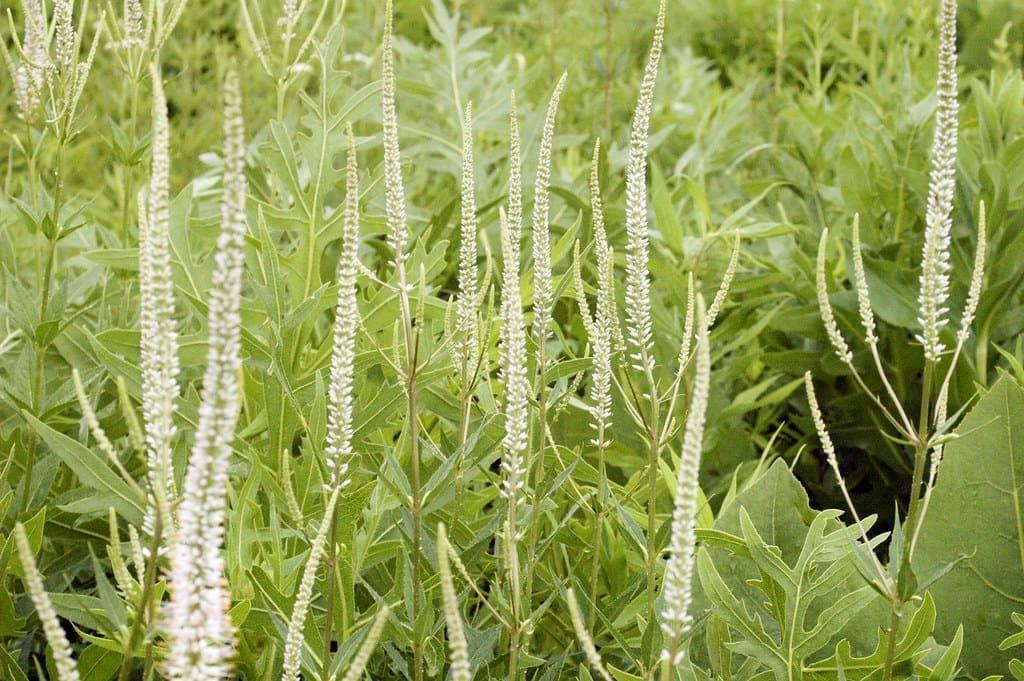
An indigenous North American herb (historically placed in Scrophulariaceæ; modern botany aligns it with Plantaginaceæ) long used by eclectic physicians as a cholagogue cathartic. The homœopathic tincture is made from the fresh root in autumn, when its bitterness and purgative principle are at their height [Hughes], [Clarke]. Chemistry was imperfectly defined in the older literature; the drug is rich in bitter extractives and resinoids that excite bile-flow and intestinal secretion [Hughes]. Toxicological and physiological effects include profuse bilious purging, abdominal soreness (especially right hypochondrium), prostration, and a tendency to black, pitch-like stools; from this groundwork arose its small but distinctive pathogenesis in bilious diarrhœa, catarrhal hepatitis, and some forms of jaundice [Allen], [Hering], [Boericke]. Synonyms in the botanical record include Veronica virginica and Veronicastrum virginicum (modern), but the remedy tradition retains Leptandra [Clarke].
Proving Information
Pathogenesis rests on small American provings (Burt and colleagues) and numerous [Clinical] confirmations assembled by Allen, Hering and Clarke, with emphasis on bilious diarrhœa, tar-like stools, hepatic soreness, dull frontal headache, and prostration [Allen], [Hering], [Clarke]. Repeated observations: early-morning painless or slightly griping watery stools becoming black and offensive, soreness in the right hypochondrium and umbilical region, nausea and bitter taste, and great weakness after stool [Allen], [Clarke], [Boericke]. [Proving]/[Clinical]
Remedy Essence
Leptandra virginica epitomises the bilious–portal crisis with a liver-first signature. The sufferer wakes heavy-headed, bitter-mouthed, sore in the right hypochondrium, and driven to stool; the bowels at first pour a watery bilious tide that soon turns black, pitch-like, and fetid, leaving him faint, chilly, and prostrate. The dull frontal headache (over the eyes), worse from motion and after stool, pairs with sallow or subicteric tint and a yellow-coated/black-centred tongue. The modalities are exact: morning predominance; worse after eating (especially fats or coffee), hot weather, jar and tight clothing; better rest, warm drinks, warmth and pressure over the liver, and a quiet routine. This picture situates Lept. between Podophyllum (painless gush, early hour, no hepatic soreness) and Mercurius (tenesmus/slime), and alongside Chelidonium and Chionanthus in the jaundice–gall axis, yet distinguished by its tarry evacuations and the peculiar post-stool collapse [Allen], [Clarke], [Farrington], [Boericke].
Kingdomly, as a bitter cholagogue herb, Lept. expresses a catarrhal–expulsive action: it brings bile down through the duodenum in a rush, explaining the alternation of clay (obstructed) and black (over-pouring) stools, and the relief once flow is regulated [Hughes], [Clarke]. Miasmatically it is psoric–sycotic: functional obstruction and catarrh, venous fulness, mucous foulness—without the ulcerative destructiveness of a syphilitic tone. The pace is morning-weighted, often summer aggravated, and linked to dietary indiscretion or heat–chill alternations. The psychological overlay is not irascible or anxious but dull and oppressed, matching portal stagnation. Prescription hinges on three pillars: (1) Stool—black, pitch-like, offensive with prostration; (2) Liver—right hypochondriac soreness with bitter mouth and yellow/black tongue; (3) Head—dull frontal ache worse motion and after stool, better rest. Regimen confirms the similimum: warm simple food, avoid fats/coffee, rest, warmth/pressure to the side; when Lept. is deserved, stools assume normal colour and consistency, the morning attack disappears, the head clears, and strength returns without the tenesmus or irritability that would call for Merc. or Nux.
Affinity
- Liver and biliary tree—catarrhal hepatitis, portal congestion, right hypochondriac soreness, jaundiced tint; bilious diarrhœa (see Abdomen/Rectum) [Clarke], [Hughes], [Boericke].
- Duodenum and small intestine—watery, pitch-like stools; black, tarry, offensive evacuations with prostration (see Rectum) [Allen], [Hering].
- Portal circulation—venous fulness with sallow face, dull head, malaise; ague-type bilious fevers (see Fever/Generalities) [Hughes], [Boger].
- Stomach—bitter taste, nausea, empty sinking; intolerance of rich foods and fats (see Stomach) [Clarke], [Boericke].
- Head—dull frontal headache (over eyes), worse motion/after stool; bilious cephalalgia (see Head) [Allen], [Clarke].
- Gall-bladder colic facsimile—aching under right scapula, nausea, dark stools or, at times, clay-coloured stools in jaundice phases (see Abdomen/Rectum) [Clarke], [Farrington].
- Mucous membranes—bilious catarrh, foul mouth, slimy tongue (see Mouth/Throat) [Hering].
- • General nutrition—prostration after stool; faintness and chilliness with evacuations (see Generalities/Chill) [Allen], [Boericke].
Better For
- Rest, lying quiet after stool; siesta calms the head and liver ache [Clarke], [Boericke].
- Warm drinks and simple warm food; broths settle the stomach [Clarke].
- Warmth over the abdomen/right hypochondrium; hot flannel eases soreness [Hering].
- Open air, gentle walking after the acute purge subsides; clears the dull head [Boericke].
- Pressure with the hand or band about the waist in hepatic soreness [Clarke].
- Side-lying with knees up; some prefer the right side for gall discomfort [Farrington].
- Early light breakfast after a night of biliousness (micro-case); empties gently [Clarke].
- Quiet evening without study; dull headache lifts with disengagement [Allen].
- Time—stools moderate by midday after a morning storm (clinical) [Clarke].
- Small, frequent sips rather than large draughts (nausea) [Hering].
Worse For
- Morning, especially after rising, 4–10 a.m.: bilious stools and head-dullness [Allen], [Clarke].
- After eating, particularly fat, rich foods; coffee may provoke a purge [Clarke], [Boericke].
- Motion; jar of walking increases hepatic soreness and head-ache [Allen].
- Hot weather, summer biliousness; damp heat before storms [Boger], [Clarke].
- Cold drinks during an attack; chill and nausea follow [Hering].
- Stooping or bending, pressure on liver region; also tight clothing about waist [Clarke].
- Mental work in the evening; the dull frontal ache returns [Allen].
- Sudden chill after overheating; “ague-bile” attacks [Boger].
- Neglect of stool; suppression increases nausea and headache [Clarke].
- During and after stool—prostration, faintness, sweat (echoed under Generalities) [Allen].
Symptomatology
Mind
Irritable, languid, and indifferent during bilious attacks; work seems impossible until the intestinal storm passes, which tallies with the better-for rest already noted [Clarke]. A depressive gloom accompanies the early morning with nausea and the sense of a “bad liver”; he anticipates the purge with dread. Mental effort in the evening revives the frontal ache and nausea (Mind ↔ Head/Stomach), and the patient seeks quiet and warmth, in keeping with the ameliorations. Anxiety revolves round the bowels and the ability to leave home safely—fear of sudden stool. A child under Lept. is peevish before stool, listless after. Unlike Nux-vomica, anger is muted; the weakness is the stronger chord. As the stools moderate and bile flows more naturally, mood rises and the head clears.
Head
A dull, heavy frontal headache, seated over the eyes and root of the nose, accompanies the hepatic disturbance; it worsens with motion and after stool, and lifts with rest, open air, and food taken with care [Allen], [Clarke]. The scalp feels tight; the brow must be knit to see clearly. A sick headache alternates with bilious stool; some attacks begin with the head, followed by nausea and purge, confirming the liver–head axis. Exposure to heat or a late night brings the headache back next morning. The contrast with Iris-v. is useful: Iris burns and vomits sour bile with periodical migraines; Lept. is heavier, more hepatic, with black stools.
Eyes
Scleræ may show a subicteric tint in longer attacks; lids heavy during morning nausea [Clarke]. Vision is blurred during the frontal ache; eyes feel hot while feet are cool, a portal-congestion sign. Photophobia is slight; the keynote is weight, not neuralgia.
Ears
Ringing or singing in the morning with faintness; noises subside after stool. No inflammatory ear picture. The least motion at that time increases the head-swim (Ears ↔ Head/Generalities).
Nose
Nasal tip cool; sense of foul odour in own breath; occasional sneezing preceding the bilious stool. No defining coryza.
Face
Sallow, bilious complexion; dark under the eyes; lips pale; sometimes a yellowish hue in prolonged catarrhal hepatitis [Clarke], [Hughes]. Expression is weary; perspiration beads on the upper lip during tenacious nausea. Heat of face with cold extremities before stool is common.
Mouth
Bitter taste on waking; tongue yellow-coated, sometimes with a darker or blackish centre; edges redder, tip pointed; excess saliva in nausea [Allen], [Clarke], [Hering]. Mouth feels foul, with stringy mucus; water is distasteful unless warm. The bitter taste relents after stool but returns with meals, echoing Worse after eating.
Teeth
No fixed toothache; teeth feel elongated and sensitive in the morning during bilious crises, a reflex of mucosal acidity; better after warm drinks.
Throat
Bitter, bilious mucus drains into throat; hawking brings slight relief but renews nausea (Throat ↔ Stomach). Swallowing cold water chills the epigastrium.
Stomach
Nausea on waking, with empty sinking at epigastrium; eructations bitter; vomiting of bile in some attacks precedes the black stool [Allen], [Clarke]. Appetite capricious; fats and rich dishes disagree; desire for warm broth and toast. Pressure or tight clothing at epigastrium is intolerable. The stomach feels better after a moderate breakfast than if fasting too long—small, regular meals suit the assimilative weakness.
Abdomen
Right hypochondrium sore, dull aching, sometimes extending to the right scapula; umbilical griping before stool; abdomen sensitive to jar and pressure of the belt [Clarke], [Farrington]. A sense of fullness in portal region with chilliness and languor hints at ague-bile states (Abdomen ↔ Fever/Generalities) [Boger]. Distension is moderate; gas moves with rumbling before the watery stool. Warmth and gentle hand-pressure ease the ache (echoing Better for warmth/pressure).
Urinary
Urine scanty and high-coloured during hepatic storms; later more copious and lighter as bile excretion normalises [Clarke]. Burning is absent; sediment may be bilious-looking. Nocturia rises when the day is free of stools.
Rectum
The axis of Leptandra: profuse watery stools that soon become black, pitch-like, tarry, horribly offensive, with great prostration—often worse in the morning and after eating [Allen], [Hering], [Clarke], [Boericke]. Stools may be painless or attended by dull umbilical griping; tenesmus is slight compared with Merc. There are alternating phases where stool is clay-coloured or very pale in jaundiced subjects, preceding the black stage—an alternation useful diagnostically [Clarke]. After stool there is faintness, chilliness, cold sweat, and an aggravation of the frontal headache, which tallies with the modalities (worse during/after stool). In children: greenish, dark loose stools with weakness and sallow face.
Male
Sexual sphere little marked; emissions weaken the lumbar region during bilious states; vesical dribbling after stool is an occasional reflex. Libido returns with appetite as the liver clears (Male ↔ Generalities).
Female
Bilious diarrhœa around menses or during pregnancy; offensive dark stools with nausea and great languor; right-sided abdominal tenderness aggravated by motion. Milk disagrees if rich; warm, small feeds tolerated (Female ↔ Stomach/Rectum).
Respiratory
Short breath on ascending stairs during bilious days; sighing to relieve epigastric tension; dyspnœa eases with warmth and rest (Respiration ↔ Stomach/Generalities).
Heart
Palpitation from weakness after stool; pulse soft, compressible in portal congestion [Hughes], [Clarke]. No true angina; faintness and chill are the cardiovascular stamp of depletion.
Chest
Oppression from abdominal fulness; must loosen clothing; stitching under right ribs toward axilla in some attacks (hepatic pleurodynia). Breathing shallow during cramps; better after stool. No primary bronchial catarrh.
Back
Aching in lumbar and right dorsal region (beneath right scapula), synchronous with liver soreness; jar aggravates; warmth relieves [Clarke], [Farrington]. Backache better lying on the side with knees up.
Extremities
Lassitude; heavy limbs; knees tremble after stool; feet cold with hot head. Cramps in calves in summer heat with biliousness; better warmth and rest.
Skin
Sallow or icteric tint in prolonged cases; itching slight; eruptions not characteristic. Sweat cool during faintness; skin feels greasy in hot weather biliousness [Clarke], [Boericke].
Sleep
Restless before dawn with urge to stool; sleep thereafter heavy but unrefreshing. Late-night study renews the morning headache and diarrhœa, echoing Worse (evening mental work). Drowsy after noon when stools subside; a short nap restores capacity [Allen], [Clarke].
Dreams
Of business worries and delays; anxious dreams before an attack; dreams vanish with hepatic relief. Children dream of being late to school, waking to stool.
Fever
Bilious remittents: chilliness and languor with frontal heaviness; later slight heat with flushed face and bitterness in mouth; crisis by stool and sweat, leaving prostration [Boger], [Hughes]. Periodicity manifests in morning exacerbations.
Chill / Heat / Sweat
Chill before and during stool; heat slight; sweat cool and weakening afterwards—this tallies with the general post-stool prostration already noted [Allen], [Clarke]. Summer damp heats provoke attacks; dry warmth soothes.
Food & Drinks
Aversion to rich, fatty foods; desire for warm, simple fare (broths, toast); coffee and cold drinks aggravate [Clarke], [Boericke]. Thirst moderate, prefers small warm sips; fasting too long worsens the head.
Generalities
Leptandra centres on liver–duodenum–portal dysfunction with bilious diarrhœa of a distinctive black, pitch-like, horribly offensive character, morning aggravation, right hypochondriac soreness, dull frontal headache, bitter taste, and prostration during and after stool [Allen], [Hering], [Clarke], [Boericke]. The modalities crystallise: worse morning, after eating (especially fats/coffee), motion, heat of summer, tight clothing, and during/after stool; better rest, warmth, pressure over liver, open air, and warm drinks. It spans phases from pale/clay stools in obstructed bile-flow to the characteristic black tarry evacuations as bile pours through—an alternation that, with right-sided soreness and head-dullness, separates it from Podophyllum (painless, gushing, often 4–5 a.m., no hepatic soreness) and Mercurius (marked tenesmus and slime) [Clarke], [Farrington]. Direction of cure runs from morning crises to even day, from black offensive stools to formed brown stools, from frontal heaviness to clear head, and from prostration to steadier strength.
Differential Diagnosis
- Aetiology—Bilious diarrhœa / hepatic catarrh
- Podophyllum: profuse, painless, gushing stools at 4–5 a.m., with much gurgling; less right hypochondriac soreness. Lept. has black, pitch-like stools and post-stool prostration, with hepatic ache. [Clarke], [Farrington].
- Mercurius: dysentery with tenesmus, slime, blood, offensive sweat and salivation. Lept. has little tenesmus; stools trend black; tongue yellow with bitter taste. [Hering], [Allen].
- Iris versicolor: periodic bilious vomiting and migraine, burning; stools not typically tarry. Lept. heavier, hepatic, with black stools and right soreness. [Farrington].
- Keynotes—Stool characters
- Baptisia: dark, putrid, offensive stools in typhoid states; general septic tone. Lept. lacks the septic stupor and exhibits hepatic soreness. [Hughes], [Clarke].
- Aloes: mushy stools with urgency and insecurity; much flatus; rectal fullness. Lept. more hepatic, with black pitch-like stools. [Boger].
- Sulphur: early morning diarrhœa driving out of bed; heat, burning anus; not the tarry blackness of Lept. [Kent], [Clarke].
- Organ affinity—Liver/gall
- Chelidonium: constant pain to right scapula, jaundice, yellow tongue with one-sided symptoms; stools clay from obstruction. Lept. alternates clay and black tarry stages with watery purging. [Clarke], [Farrington].
- Chionanthus: gall-stone colic, jaundice, clay stools, intense right hypochondriac pain. Lept. adds bilious purge and black stools. [Clarke].
- Myrica: jaundice with thick, sticky bile, muddy tongue; less diarrhœa. Lept. more purgative picture. [Hughes].
- Modalities—Morning, after eating, heat
- Nux-v.: morning nausea, irritability, dyspepsia from stimulants; stools small, frequent with tenesmus. Lept. has offensive tarry stools, prostration, softer temperament. [Kent].
- Nat-sulph.: bilious states worse damp weather, green watery stools; headache in occiput. Lept. black stool hallmark and right soreness. [Boger].
- Collapse / weakness after stool
Remedy Relationships
- Complementary: Chelidonium—right scapula pains and jaundice; Lept. for the bilious purge/black stools phase; Chel. to complete bile regulation. [Farrington], [Clarke].
- Complementary: Chionanthus—gall-colic/clay stools; follows Lept. when pain persists without purging. [Clarke].
- Complementary: China—to restore from post-stool weakness after Lept. has checked the torrent. [Dewey].
- Follows well: Nux-v.—after dietary excess and stimulants, when the picture passes from gastric to hepatic–intestinal with black stools. [Kent].
- Follows well: Iris-v.—when bilious vomiting/migraine abate and a hepatic diarrhœa remains. [Farrington].
- Precedes well: Myrica—for sticky bile and persistent sallow in convalescence. [Hughes].
- Related: Podophyllum, Merc., Baptisia, Aloes, Nat-s., Chel., Chionanthus, Myrica—see differentials.
- Antidotes (states): Rest, warmth, bland diet; medicinally Nux-v. or Puls. according to gastric excess. [Clarke], [Kent].
- Inimicals: None recorded; avoid alternation except on new totality. [Kent].
Clinical Tips
- Bilious diarrhœa with black, tarry, offensive stools, right hypochondriac soreness, dull frontal headache, and post-stool prostration—Lept. 6C–30C every 2–4 hours, taper as stools form [Allen], [Clarke], [Boericke].
- Catarrhal jaundice with alternating clay and black stools, bitter mouth, and right scapular ache—alternate regimen (warmth, bland diet) with Lept.; follow by Chel./Chionanthus if pain persists [Clarke], [Farrington].
- Summer biliousness after fat-rich meals/coffee—anticipate with Lept. in the evening; insist on warm drinks and early rest [Boericke], [Boger].
- Bilious cephalalgia: frontal weight worse motion, better rest; Lept. acts when head and liver move together and stool tells the tale [Clarke].
Selected Repertory Rubrics
Mind
• Indifference and languor during liver attacks—work seems impossible till after stool. Clinical guide in hepatic diarrhœa. [Clarke].
• Irritability before stool; peevish children with bilious stools—small confirmatory sign. [Allen].
• Anxiety about sudden stool when from home—practical prescribing cue. [Clarke].
• Aversion to evening study—revives head and nausea. [Allen].
• Better for rest and quiet—aligns with hepatic catarrh remedies. [Boericke].
• Dullness of mind with bitter taste—portal stagnation picture. [Hughes].
Head
• Headache, frontal, over eyes, with bilious diarrhœa—cardinal concurrence. [Allen], [Clarke].
• Headache worse motion, worse after stool—hepatic reflex. [Allen].
• Heaviness of head in morning with bitter mouth—choose over Nervines. [Clarke].
• Headache with hot face, cold feet—portal congestion sign. [Clarke].
• Better—rest, open air, warm drinks—modal trio. [Boericke].
• Pain to right occiput with right hypochondriac soreness—hepatic link. [Farrington].
Mouth / Stomach
• Tongue yellow-coated with blackish centre—Lept. colour-keynote. [Allen], [Clarke].
• Bitter taste on waking—hepatic catarrh. [Clarke].
• Nausea on rising; vomiting of bile—before black stool. [Allen].
• Aversion to fats; coffee aggravates diarrhœa—dietary selectors. [Clarke], [Boericke].
• Empty sinking at epigastrium, better warm drinks—comforting sign. [Hering].
• Tight clothing at epigastrium aggravates—pressure intolerance. [Clarke].
Abdomen / Liver
• Soreness—right hypochondrium; worse motion, belts; better warmth/pressure—hepatic keynote. [Clarke].
• Pain to right scapula—gall-link. [Farrington].
• Umbilical griping before stool—prelude sign. [Allen].
• Portal congestion with sallow face and dull head—terrain rubric. [Hughes], [Boger].
• Distension with rumbling preceding watery stool—sequence rubric. [Allen].
• Summer heat/damp aggravates hepatic symptoms—seasonal cue. [Boger].
Rectum / Stool
• Stools black, pitch-like, tarry, offensive—signature rubric. [Allen], [Hering], [Clarke].
• Diarrhœa morning; after eating—timing/food modalities. [Allen], [Clarke].
• Prostration during/after stool; faintness, chill—state rubric. [Allen].
• Stools painless or with dull griping; slight tenesmus only—differentiates from Merc. [Hering].
• Alternation—clay-coloured stools with jaundice phases—pathway rubric. [Clarke].
• Children—dark, loose, offensive stools with weakness—paediatric pointer. [Hering].
Skin / Generalities
• Sallow or icteric tint—hepatic involvement. [Clarke].
• Chill before stool; sweat cool after—characteristic sequence. [Allen].
• Weakness after evacuations; knees tremble—post-stool collapse. [Allen].
• Worse morning, summer heat, tight waist; better rest, warmth—modal cluster. [Boericke], [Boger].
• Desire for warm simple food; aversion fats—dietary concordance. [Clarke].
• Head clear as stools normalise—direction of cure marker. [Clarke].
References
Allen, T. F. — Encyclopædia of Pure Materia Medica (1874–1879): proving/clinical—bilious diarrhœa, black tarry stools, frontal headache, modalities.
Hering, C. — The Guiding Symptoms of Our Materia Medica (1879–1891): confirmations—hepatic soreness, morning aggravation, bitterness, prostration after stool.
Clarke, J. H. — A Dictionary of Practical Materia Medica (1900): remedy portrait—preparation from root; bilious catarrh; alternation of clay and black stools; relationships.
Boericke, W. — Pocket Manual of Homœopathic Materia Medica (1901): keynotes—black stools, liver soreness, summer biliousness; diet/modalities.
Hughes, R. — A Manual of Pharmacodynamics (late 19th c.): cholagogue/cathartic actions; portal congestion terrain; clinical analogies.
Boger, C. M. — Synoptic Key of the Materia Medica (1915): generalities—weather/season aggravations; ague-bile states; comparisons.
Farrington, E. A. — Clinical Materia Medica (1890): liver and gall differentials—Chelidonium, Chionanthus, Iris-v.; scapular radiation.
Dewey, W. A. — Practical Homœopathic Therapeutics (early 20th c.): convalescence and collapse after diarrhœa; sequencing with China.
Kent, J. T. — Lectures on Homœopathic Materia Medica (1905): gastric–hepatic remedy distinctions; Nux-v. relations in dietary excess.
Nash, E. B. — Leaders in Homœopathic Therapeutics (1899): bilious states; remedy ordering by stool qualities.
Phatak, S. R. — Materia Medica of Homoeopathic Medicines (20th c.): condensed keynotes—liver–bowel axis, modalities, exhaustion.
Dunham, C. — Homœopathy, the Science of Therapeutics (1877): philosophy of selecting by evacuations and concomitants in gastro-hepatic disease.
Disclaimer
Educational use only. This page does not provide medical advice or diagnosis. If you have urgent symptoms or a medical emergency, seek professional medical care immediately.