

Ledum palustre
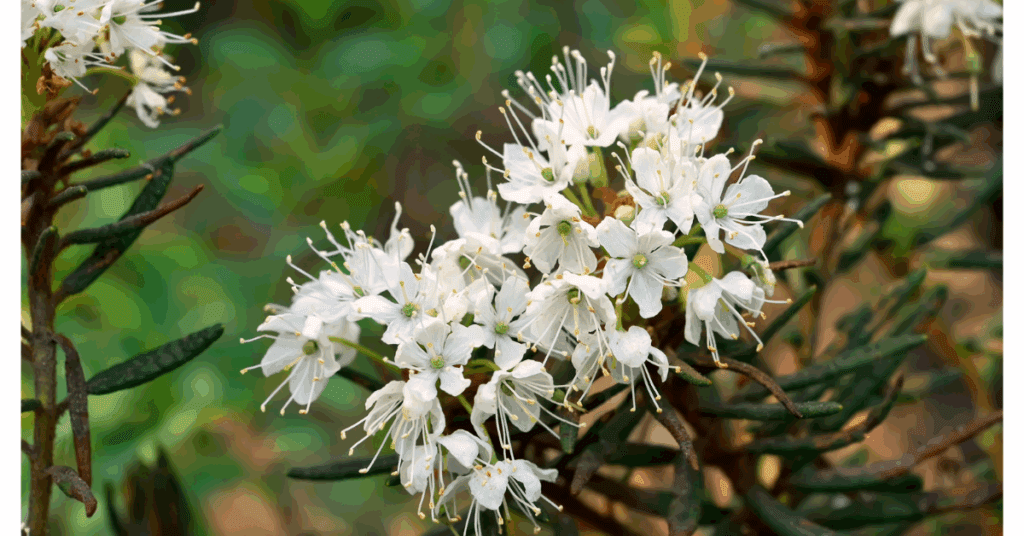
Substance Background
Ledum palustre is a small evergreen shrub native to the cold, marshy regions of northern and central Europe, Asia, and North America. It belongs to the Ericaceae (heath) family. The leaves are aromatic, with a bitter, astringent taste and a narcotic odour when crushed. The plant contains volatile oils including ledol, which are known for their narcotic and irritant effects.
Proving Information
Proved by Hahnemann and later expanded by Jahr and Hering. The proving was conducted using tincture and triturations of the fresh plant, with several reliable symptom accounts documented.
Remedy Essence
The essence of Ledum is coldness, inflammation, and stasis—physical and emotional. It is the remedy for wounds that do not bleed, cold joints that swell, and bites that turn blue. It embodies a system that fails to expel—whether toxins, emotions, or heat—and instead retains, hardens, and stagnates. There is a silent, brooding quality to the Ledum patient—unexpressed anger, slow reaction, and hidden pain. Cold compresses soothe their pain, and solitude suits their mind. From trauma to gout to puncture wounds, Ledum acts where others have failed.
Affinity
Ledum acts most profoundly on the joints, especially the small joints, producing inflammation, stiffness, and pain. It has a marked action on the skin and puncture wounds, particularly those from insect bites, animal bites, and stings. It affects the nervous system, producing a chilly, paralytic state with numbness or coldness of parts. The remedy also influences the connective tissues, especially in relation to trauma, bruising, and gout. The eyes, especially in the context of injuries, and the feet, with specific aggravation from stepping or standing, are key spheres of action. Its influence on blood, particularly in septic or ecchymotic tendencies, is also notable.
Better For
- Cold applications
- Rest
- Lying down
- Soaking affected parts in cold water
- Elevation of limbs
Worse For
- Heat, especially of bed
- Night
- Motion
- Touch
- Alcohol
- Injury, trauma, or puncture wounds
- Suppressed discharges or eruptions
Symptomatology
Mind
The Ledum patient tends to be melancholic, withdrawn, and indifferent to social interaction. There may be a tendency towards suspicion, taciturnity, and mental dullness. In more active states, there is irritability, especially when disturbed or when pain is aggravated. The mind appears oppressed by physical suffering. Hering notes a peculiar apathy and sluggishness, especially following injuries or during rheumatic episodes. Allen reports anxiety with palpitations, especially at night, and a general mental heaviness or indifference to surroundings. It suits individuals who retreat from heat, people, and noise—seeking cool, quiet environments.
Head
Dull, pressing headaches occur chiefly in the forehead and temples, often with a sensation of heaviness. Vertigo may arise on rising from bed or turning the head quickly. Kent mentions this as a remedy for chronic headache following injuries, particularly to the scalp. The scalp may be sensitive to touch, and the head feels congested. Frontal pain may extend into the eyes, with photophobia or a bruised sensation. The head often feels hot while the body is cold.
Eyes
Useful in black eyes or ecchymosis around the orbit, especially from blunt trauma. There is puffiness of lids and conjunctival haemorrhage following injury. Vision may be dim or blurred after a blow. Lachrymation is scant but burning. Clarke notes that Ledum can prevent infection after eye injuries. Shooting or pressure pains may radiate from the orbit into the temples. Bruised soreness of the eyeball after injury is marked.
Ears
Tinnitus with dull hearing. Stitching pains from behind the ear into the head. Occasionally useful in otitis following suppressed eruptions or skin disorders. Noises seem distant or echoing. Coldness may be felt in or behind ears.
Nose
Nosebleeds may occur at night, especially in the elderly or those with congestive tendencies. The nose may be swollen, with blue discolouration from a blow. Dryness and soreness of nasal passages may follow exposure to cold winds.
Face
Pale or bluish complexion. Face may be puffy with a bruised appearance. Acne or pustular eruptions, especially in young individuals with a sluggish circulation. The skin may feel cold, even when the face is hot. The face may swell following bites, stings, or blows, with pain that is relieved by cold applications.
Mouth
Dryness of mouth and lips, often with thirst for cold water. Metallic or bitter taste may be noted. Painful vesicles may form on the inner cheek or lips. Teeth may be sensitive to cold air or water. Saliva is scanty but sticky.
Teeth
Painful teeth on biting, especially when eating warm food. Toothache better from cold drinks and worse at night. Roots of teeth feel sore. Clarke notes its use in dental fistulas or abscesses where discharges are scanty and pain is stinging.
Throat
Rawness and scratching sensation, worse on swallowing. Sensation as if a splinter were lodged in the throat. Worse for warm drinks. Pain extends to ears. Tonsils may be swollen with bluish hue. Sore throat following exposure to cold damp weather.
Stomach
Loss of appetite with thirst for cold water. Nausea after eating or in the morning. Vomiting of bile or mucus. Pressure in the epigastrium, as from a stone. Craving for cold food and drink. Kent highlights aversion to warm food and aggravation from alcohol.
Abdomen
Cutting or stitching pains, especially in the left side. Sensation of coldness internally. Bloating with belching and flatulence. Bruised soreness following blows to the abdomen. Constipation with fullness and distension.
Urinary
Frequent desire to urinate, often with scanty flow. Burning during and after urination. Urine may be dark or contain sediment. Retention of urine after exposure to cold. Involuntary urination during sleep. Dribbling in old people.
Rectum
Constipation with ineffectual urging. Haemorrhoids that are pale and protrude, bleeding scantily. Burning and stinging pain after stool. Diarrhoea with offensive, watery stool and a sense of exhaustion. Anal itching, worse from warmth.
Male
Swelling and soreness of testicles following contusion. Sexual desire diminished. Painful erections. It has been used in orchitis resulting from mumps or suppressed discharges. Penis may feel cold or numb.
Female
Menses too late and scanty, with chilliness. Pain in ovaries from cold or bruising. It has been used in post-traumatic pelvic pain. Offensive leucorrhoea with itching, worse from warmth. Nipples may crack and ulcerate during lactation.
Respiratory
Shortness of breath on exertion or after climbing stairs. Feels better for cold air. Tightness across chest. Stitching pain under ribs. Inhalation causes aggravation of chest symptoms. Better lying quietly.
Heart
Palpitations at night with restlessness. Pulse may be slow or irregular. Stinging pain in region of the heart, worse from exertion. Cold sensation in chest and left arm. Used in cases of rheumatic endocarditis with chilliness and stiffness.
Chest
Bruised pain in chest, especially after injuries. Cough with scanty expectoration, worse from motion. Coldness in chest or sternum area. Oppression of breathing with stinging sensations. It has been used in chronic bronchitis in the elderly, especially where there is chilliness.
Back
Stiffness of neck and upper back, worse from motion. Bruised sensation in lumbar spine. Coldness felt along the spine. Useful in back pain following trauma or overexertion. Pain in sacrum extending to hips.
Extremities
A keynote of Ledum. Swelling, stiffness, and pain in small joints, especially ankles, feet, and fingers. Pain begins in feet and ascends. Worse from warmth of bed and motion. Better from cold applications and rest. Puncture wounds, bites, and stings often begin here. Rheumatic complaints that shift but are more severe in lower limbs. Ankles feel bruised or as if sprained. Chilblains with purple discolouration. Coldness of feet with numbness.
Skin
Puncture wounds, insect bites, and stings that become bluish, swollen, and painful. Better from cold and worse from warmth. Skin is pale, cold, and mottled. Tendency to ecchymosis, especially from slight trauma. Carbuncles and boils with hard centres and scanty suppuration. Ulcers with purple margins. Eruptions following suppressed discharges.
Sleep
Restless sleep with dreams of fighting or being pursued. Unrefreshing. Feels worse on waking. Falls asleep late due to physical discomfort.
Dreams
Dreams of violence, murder, or being chased. Themes of isolation and danger. May dream of animals or freezing environments.
Fever
Chilliness predominates. Coldness of limbs with heat of face. Alternating cold and heat. Low-grade fevers with joint pain or after insect bites.
Chill / Heat / Sweat
Chill in evening or after lying down. Sweat mostly on face and chest. Cold sweat in shock or trauma. Worse from warmth.
Food & Drinks
Desire for cold drinks. Aversion to warm food. Aggravation from alcohol. Thirst without appetite.
Generalities
Marked chilliness. Worse from heat, especially bed. Better from cold applications. Tendency to bruising and bleeding. Suited to injuries, bites, and joint complaints. Modalities are opposite to Arnica. Complaints ascend. Weakness following suppression or trauma.
Differential Diagnosis
- Arnica montana – Also used for trauma, but Ledum is better for puncture wounds and complaints better from cold. Arnica is worse from touch and pressure.
- Hypericum perforatum – Also for puncture wounds, especially with nerve pain. Ledum is more suited for cold, inflammation, and gouty conditions.
- Rhus toxicodendron – For joint pain, but Rhus-t is better from motion, while Ledum is worse.
- Apis mellifica – For stings and bites, but Apis is warm and puffy, Ledum is cold and bluish.
- Bryonia alba – Joint pain aggravated by motion, but Bryonia prefers pressure and warmth, unlike Ledum.
Remedy Relationships
Clinical Tips
Ledum is a first-choice remedy for insect bites, animal bites, and puncture wounds, especially when pain is better for cold and the affected part is swollen and bluish. It prevents tetanus in puncture wounds and should be used immediately after trauma. It is invaluable in black eyes, concussions, and bruising, especially when the skin is cold and discoloured. For gout, especially when beginning in the feet and ascending, Ledum is often curative. It is also suited to chronic joint pain, chillblains, and rheumatism that worsens with warmth and improves with cold. Think of Ledum wherever there is cold, bruised pain, and scanty discharges.
In acute injuries such as bites, stings, and puncture wounds, Ledum is best administered in 30C or 200C, repeated frequently at first (every hour or two), then spaced as improvement sets in. For chronic rheumatic or gouty conditions, 200C to 1M may be used, often once daily or weekly, depending on vitality. In trauma cases, it may follow or alternate with Arnica or Hypericum depending on the tissues affected. Sensitive patients may benefit from lower potencies such as 6C or 12C, especially in long-standing joint complaints.
Selected Repertory Rubrics
Mind
- Indifference to company
- Ailments from suppressed anger
Head
- Headache, after injury
- Scalp, sore to touch
Eyes
- Black eye
- Ecchymosis around eyes from trauma
Extremities
- Gout, beginning in feet
- Arthritis, small joints
- Ankle pain, worse for motion, better for cold
Skin
- Puncture wounds
- Insect bites
- Chilblains
- Ecchymosis from slight trauma
Generalities
- Better from cold applications
- Worse from warmth
- Injuries, punctured wounds
References
Hahnemann – Materia Medica Pura: Original proving
F. Allen – Encyclopaedia of Pure Materia Medica: Comprehensive proving symptoms
Hering – Guiding Symptoms: Detailed clinical and chronic confirmations
John Henry Clarke – Dictionary of Practical Materia Medica: Comparisons and keynotes
T. Kent – Lectures on Homoeopathic Materia Medica: Mental picture and keynote usage
Boericke – Pocket Manual: Therapeutic applications and remedy relationships
Disclaimer
Educational use only. This page does not provide medical advice or diagnosis. If you have urgent symptoms or a medical emergency, seek professional medical care immediately.