

Hyoscyamus
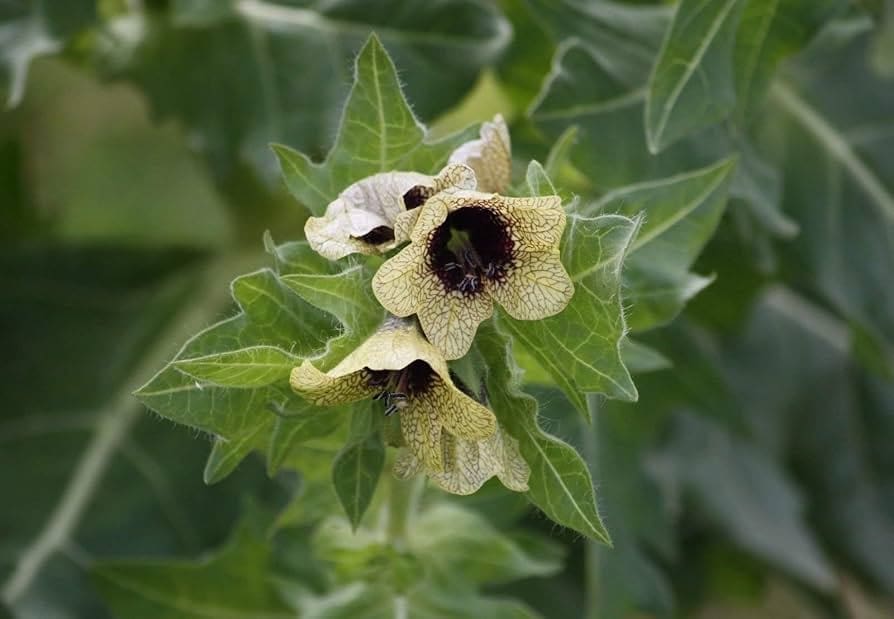
Substance Background
A toxic plant in the Solanaceae (Nightshade) family, Hyoscyamus niger contains powerful alkaloids such as hyoscyamine, atropine, and scopolamine. It has a long history of use in witchcraft, pain relief, and as a narcotic. In toxic doses, it produces hallucinations, delirium, and spasms.
Proving Information
Proved by Samuel Hahnemann and published in Materia Medica Pura. Additional confirmations by Allen, Hering, and Kent.
Remedy Essence
Hyoscyamus is the image of disinhibition, mania, and vulnerability of the mind under toxic or emotional pressure. It is a remedy for those who lose social control—who strip, babble, curse, and fear betrayal or poisoning. Behind its violent or sexual behaviour is a deep fear of abandonment, grief, and nervous exhaustion. In children, it is seen in night terrors, twitching, and jealousy of siblings. In adults, in states of toxic delirium, sexual mania, or acute psychosis.
Affinity
- Nervous system – spasms, twitching, convulsions, mania
- Mind – delirium, jealousy, loquacity, lasciviousness, suspicion
- Throat and larynx – dry, spasmodic cough, aphonia
- Eyes – dilated pupils, staring, photophobia
- Bladder – retention, involuntary urination
- Sexual organs – hypersexuality, exhibitionism
- Sleep – insomnia, twitching on falling asleep, frightful visions
Better For
- Warmth
- Lying with head raised
- Bending forward
- Profuse urination
- Sleep (if it comes)
- Darkness
Worse For
- Touch
- Lying flat
- Night (especially twilight and midnight)
- Fright, grief, jealousy
- Suppression of eruptions
- Mental excitement
- Bright light, strong odours, noise
Symptomatology
Mind
The mental sphere of Hyoscyamus is one of the most vivid and disturbing in the materia medica. The picture is dominated by delirium, restlessness, jealousy, lasciviousness, and suspicion. The patient may be found muttering, laughing, cursing, stripping naked, or talking nonsense. A classical keynote is talking of imaginary things: about imaginary people, false suspicions, and bizarre hallucinations. [Clarke] details wild jealousy, with suspicion of sexual infidelity in the spouse. [Kent] notes its importance in mania, where the patient shows inappropriate behaviour such as undressing in public, obscene gestures, or erotic talk, often with no shame.
Fear of being poisoned, of being watched, or of being laughed at pervades the mental state. Alternating states of mirth and rage are common. Laughter is loud, idiotic, or uncontrollable. Sleep is disturbed by fearful visions or loud shrieks. There is also loquacity—the patient talks continuously, rapidly changing topics, often in a silly or irrelevant manner. Children may scream suddenly, strike, bite, or become violent without cause.
The classic triad of insanity, lasciviousness, and suspicion makes Hyoscyamus essential in states bordering psychosis, post-ictal insanity, or toxic delirium.
Head
Vertigo, particularly when rising, walking, or bending forward. Head feels heavy, with pulsation in temples. The patient may hold the head with both hands. Headache is often pressive or congestive, with heat and confusion. During delirium, there may be head-banging or striking of the head against walls. Hair is pulled out during attacks of mania. The scalp is sensitive to touch.
Eyes
Eyes are wide open, staring, and glassy. Pupils are dilated, sometimes unequally. Vision is often blurred or double. Photophobia is marked during fever or delirium. Patients may roll their eyes in different directions or have spasmodic twitching of the lids. Eyeballs may jerk or be fixed. Lachrymation may be absent even with wide-eyed staring. [Boericke] mentions a tendency to see phantoms or ghosts during delirium.
Ears
Hears imaginary voices or music. Noises may be interpreted as threatening. In febrile states, hearing becomes overly acute, causing distress. Ears may feel blocked or congested during catarrhal states.
Nose
Twitching or grimacing of the nose may occur. Epistaxis (nosebleed) is common during fever or mental excitement. Coryza with dryness and itching may appear during catarrh, especially in children. Smell may be distorted—odours seem repulsive or overpowering.
Face
Face is red, flushed, and twitching. In states of fear or grief, the face may turn pale. Muscular movements of the face are often involuntary—grimacing, grinning, or frowning. Expression is either frightened or idiotic. Foam may collect around the lips during convulsions. One cheek red, the other pale is sometimes seen.
Mouth
Dryness of the mouth and throat is intense, often with inability to swallow liquids. Speech may be thick, muttering, or incomprehensible. The tongue may be dry, red, or trembling, sometimes protruding involuntarily. In mania, the patient may bite their tongue or lips. There is often salivation, especially during convulsions. Grinding of the teeth is a feature in children.
Teeth
Grinding of teeth during sleep or fever. Pain may be neuralgic, often one-sided. Teeth may be clenched tightly during convulsions.
Throat
Throat feels dry, constricted, and painful. There is difficulty swallowing, especially liquids. Liquids may be regurgitated through the nose. Spasmodic contractions of the pharynx and larynx may cause choking or a fear of suffocation. The voice may become hoarse, lost, or change in pitch during spasms.
Stomach
Marked desire for drink, but swallowing is difficult. Nausea and vomiting may occur during fever or excitement. Hiccoughs, spasms, and trembling may follow. Food may be refused in mania. Abdomen may distend with gas. Appetite is variable—ravenous or completely lost.
Abdomen
Tympanitic distension with crampy pains. Gurgling noises and borborygmi are frequent. Pain is spasmodic, especially in hysterical females. There may be a sensation of something moving in the abdomen. Children may cry and clutch the abdomen during attacks.
Urinary
Involuntary urination, especially at night or during seizures. Retention of urine from spasmodic stricture. Urine may dribble or come in spurts. Dark, scanty urine. Strong odour noted during febrile illnesses.
Rectum
Involuntary stool during convulsions or sleep. Diarrhoea may be painless but copious and offensive. Stool may pass unnoticed. In mania, patient may play with their own faeces or smear them. [Hering] mentions rectal prolapse during violent coughing or spasms.
Male
Marked sexual excitement with lascivious behaviour, exhibitionism, or masturbation in public. Erections may be persistent or absent during acute illness. Genitals may be exposed or handled compulsively. Priapism may occur in toxic states.
Female
Sexual delusions or increased libido. Acts of modesty or shamelessness alternate. Menses may be suppressed by grief or fright. Hysteria around menses is common. Convulsions or spasms may coincide with the menstrual flow. In puerperal mania, there may be violence, confusion, and refusal to nurse.
Respiratory
Breathing is irregular, sighing, or sobbing. Spasms of the glottis may cause choking. Patients may stop breathing momentarily during convulsions. There may be groaning respiration in unconscious states.
Heart
Palpitations from fear, fright, or sexual excitement. Pulse is rapid, irregular, and weak in convulsions. Faintness or collapse from emotional shocks.
Chest
Spasmodic, dry cough worse lying down, especially at night. The patient may cough continuously when reclining, and the cough ceases when sitting up. This is a keynote. Pain in chest from spasmodic coughing. There may be sighing or gasping respiration. Voice may be lost or tremulous.
Back
Back is arched during convulsions. Stiffness or twitching in dorsal muscles. Sacral pain after seizures. Shivering runs along the spine.
Extremities
Trembling, twitching, or jerking of limbs. Convulsions may be violent, with clenched fists and opisthotonos. Fingers may pick at bedclothes. Hands often cold, blue, or clenched. The feet may stamp or pedal during sleep. Inco-ordination of voluntary movements is typical during delirium.
Skin
Skin is hot, dry, and red in fevers. Suppressed eruptions often precede mental symptoms. Hyoscyamus is a remedy for post-scarlatinal mania or suppressed measles. Purplish mottling during convulsions may be seen. Skin may be scratched or torn during delirium.
Sleep
Extremely disturbed. The patient may lie with eyes open, start up screaming, or sleep in snatches. Twitching on falling asleep. Dreams are vivid and terrifying. Insomnia from mental excitement is prominent.
Dreams
Frightful, lascivious, or chaotic dreams. Dreaming of thieves, being murdered, or pursued. Children may scream and tremble in their sleep.
Fever
Fever is often high, remittent, or intermittent, with strong mental symptoms. Delirium precedes or accompanies fever. The skin is dry, hot, and burning. Profuse sweat follows the heat stage, sometimes offensive.
Chill / Heat / Sweat
Chill begins in the back, alternates with heat. Shivering even in warm room. Heat is burning, especially in head and face. Sweat is general or limited to head and upper body.
Food & Drinks
Desire for cold drinks. Loss of appetite in fevers. May refuse food from suspicion. Aversion to water or liquids due to fear of choking.
Generalities
Violent symptoms. Sudden onset. Spasms, tremors, and delirium dominate. Symptoms often right-sided, worse at night, and during emotional shocks. Suppression of discharges, especially eruptions, is a common etiology.
Differential Diagnosis
- Belladonna – More congestion and heat, less loquacity or erotic behaviour
- Stramonium – More violence, fear of darkness, religious mania
- Tarentula hisp. – Restlessness and dancing, but more cunning and destructive
- Veratrum album – More coldness, collapse, religiosity
- Lachesis – Jealousy and suspicion, but more loquacious with left-sided symptoms
Remedy Relationships
- Complementary: Belladonna, Lycopodium, Opium
- Antidotes: Camphor, Belladonna
- Follows well: Stramonium, Helleborus
- Precedes well: Sulphur, Calcarea
Clinical Tips
- For manic or psychotic states with lasciviousness and suspicion
- Useful in convulsions, especially post-scarlet fever or with suppressed eruptions
- Indicated in night terrors in children
- Classic for cough worse lying down and better sitting up
- Consider in puerperal mania, delirium tremens, and toxic encephalopathy
Selected Repertory Rubrics
Mind
- Delusion, poisoned
- Jealousy, sexual
- Lasciviousness, exposes genitals
- Talking, loquacity
- Suspicious, mistrustful
- Fear, being alone
Head
- Pain, occiput, pressing
- Striking head against wall
Eyes
- Staring, glassy
- Pupils, dilated
Cough
- Cough, dry, worse lying down, better sitting up
- Cough, spasmodic, night
Sleep
- Sleeplessness, from excitement
- Twitching, on falling asleep
- Screaming during sleep
Urinary
- Involuntary urination, during convulsions
- Retention of urine, spasmodic
Skin
- Eruptions, suppressed
- Skin, twitching
References
Samuel Hahnemann – Materia Medica Pura: Proving symptoms of mind, spasms, and sexual excess
James Tyler Kent – Lectures on Homoeopathic Materia Medica: Essence of mania, jealousy, lasciviousness
John Henry Clarke – Dictionary of Practical Materia Medica: Confirmatory symptoms in psychosis, cough, and delirium
William Boericke – Pocket Manual of Homoeopathic Materia Medica: Practical use in spasmodic cough, fever, and childhood conditions
C. Hering – Guiding Symptoms of Our Materia Medica: Involuntary stool, convulsions, and post-scarlatinal mania
Disclaimer
Educational use only. This page does not provide medical advice or diagnosis. If you have urgent symptoms or a medical emergency, seek professional medical care immediately.