

Formica rufa
Substance Background
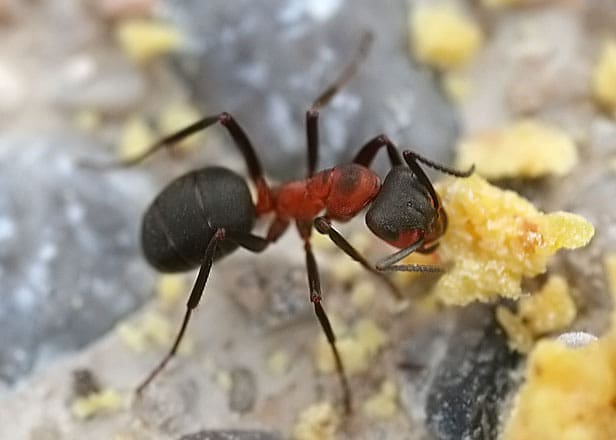
Formica rufa is a large European ant whose sting yields a volatile acid (formic acid) and allied amines; triturations/tinctures were historically prepared from the living insects, expressing a vesicant, rubefacient poison that provokes burning, stinging, urticarial wheals and neuro-muscular agitation [Hughes], [Clarke]. Toxicology of the crude acid shows increased muscular excitability followed by fatigue, congestion of fibrous structures, and cutaneous wheals—an a priori clue to the remedy’s spheres: fibrous tissue, periosteum, joints, large nerves (sciatic), and skin with urticaria [Hughes], [Allen]. In folk medicine ants and their acid were used as liniments for rheumatism (“ant-baths,” “ant-spirit”), reflecting an empirical grasp of the remedy’s affinity for chronic articular states, lumbago, and gouty diathesis [Clarke], [Hughes]. Homœopathically it has become a notable remedy for shifting rheumatism (especially cold-damp worse), “arthritis deformans,” sciatica and lumbago, gout with uric-acid excess, and nettle-rash or weather-rash—often in elderly, gouty, or broken-down constitutions [Hering], [Boger], [Boericke].
Proving Information
Our knowledge is chiefly clinical with fragmentary provings collated by Allen and early confirmations by Hering and Clarke, who emphasised rheumatism of muscles and joints (cold, damp, stormy weather worse), lumbago, sciatica (often left), gouty nodes with a stinging–burning character, and urticaria or “weather-rash” alternating with joint pains [Allen] [Proving], [Hering] [Clinical], [Clarke] [Clinical], [Boericke].
Remedy Essence
The essence of Formica rufa is the barometer-bound rheumatic–gouty organism: cold, damp, thawing, or stormy weather lights up stinging, fibrous pains in periosteum, tendons, and joints; the first movement after rest is worst; and warmth—especially hot bathing and friction—together with continued gentle motion restores function. To this add the alternation of joint pains with urticaria: when wheals rise before a storm, joints ease; when a chill represses the skin, the limbs stiffen. This alternation is not a curiosity but a prescribing law; respect the skin, and the case moves. The pain quality is the ant’s own: stinging, biting, burning, with crawling and twitching about the insertions. The localities are classic: lumbago “board-like on waking;” sciatica (often left) that hates rising from the chair yet improves after a few warm steps; periosteal tenderness of tibia and ulna in raw winds; gouty toe that flares after sour wine; and urticarial wheals before storms that crave heat, not cold. The patient is commonly elderly, gouty, “weather-broken,” weary of bad nights and chairs that glue him in place. Yet he is cheered by a settled, mild spell; a hot bath; a rubbed limb; a slow warm walk—tiny proofs of the remedy’s law.
Kingdom signature (Animal–Hymenoptera) lends speed and sting rather than dull heaviness; the reaction pattern is pricking, burning, restless. Miasmatically Sycotic–Psoric, it builds fibrous thickening and nodosity upon a base of itch and weather-sensitivity, not the destructive caries of Syphilitic states. The pace is chronic with seasonal exacerbations, demanding management that mirrors the modalities: keep rooms warm and dry; pre-empt dawn with a hot shower; stretch before bed; use friction; avoid wet feet and fog; and regulate diet (light, warm, avoiding sour wines and excess meats). Comparative edges: Rhus tox shares the kinematic law but lacks the nettle-rash alternation and the peculiar comfort from friction + heat; Ledum inverts the heat-polarity (better cold); Dulcamara is more mucous and warty with chill-damp causation; Colchicum storms in the acute gout; Causticum craves damp; Urtica addresses the rash but not the barometric joints. When a case declares—“I am a weather-glass; first stir is cruel; a hot bath and rubbing set me going; my hives and joints play see-saw”—Formica rufa stands at the centre.
Clinically, it does admirable service in chronic articular rheumatism and arthritis deformans (nodes, tendon insertions), lumbago with first-movement agony, sciatica of the weather type (often left), gout in elderly with urates and dietary triggers, and urticaria that heralds storms, better warmth and rubbing. Potencies: 3x–6x/6C for daily management of fibrous and joint states; 30C in weather-breaks or when the alternation skin↔joint is clear; 200C for sharply characterised barometric subjects with quick general response—repeat by need, typically around weather changes, spacing as the “first-movement” cruelty abates [Boericke], [Dewey], [Boger]. Intercurrent Benzoic acid helps when offensive urine and wandering gout predominate; Urtica urens during acute wheal flares; Rhus tox when an acute sprain-like phase overlays the chronic barometric terrain. Above all, do not suppress the skin: letting the wheals run their course under Formica is often the gate to joint relief [Hering], [Clarke].
Affinity
- Fibrous tissues & Periosteum — aching, tearing, stinging in tendons, aponeuroses, and periosteal surfaces; “cold-damp rheumatism,” deforming arthritis; see Back/Extremities. [Hering], [Boger], [Boericke].
- Joints (large > small) — chronic articular rheumatism, gouty swelling with stinging/biting pains, nodes; worse stormy weather; see Extremities. [Clarke], [Boericke].
- Sciatic & Great nerve-trunks — sciatica, lumbosacral neuralgia with drawing, burning, crawling, weather-aggravated; see Back/Extremities. [Hering], [Allen].
- Skin (Urticaria) — nettle-rash, weather-rash, wheals with burning–stinging, itching; alternates with rheumatism; see Skin. [Clarke], [Boericke].
- Kidneys–Uric-acid metabolism — gouty subjects with deposits, gravel tendency; urine high-coloured; pains shift with diet/weather; see Urinary/Generalities. [Boger], [Boericke].
- Muscles of back and neck — “board-like” lumbago; cervical myalgia; stiffness on rising; see Back. [Hering], [Clarke].
- Heart & Circulation (secondarily) — palpitation from exertion in gouty rheumatic, with weather-sensitivity; see Heart/Respiration. [Clarke].
- Elderly & broken-down constitutions — weariness, heaviness, “old rheumatic” type with alternation skin↔joints; see Generalities. [Boger], [Boericke].
Better For
- Warmth in general; warm wraps; warm bathing eases stiffness and urticaria (echoed in Skin/Back). [Clarke], [Boericke].
- Continued, gentle motion after limbering up; short walks in a warm, dry atmosphere (Back/Extremities). [Hering], [Boger].
- Dry weather and a steady, even climate; change from damp cold to mild dryness (Generalities). [Clarke].
- Rubbing and friction on painful tendons; stimulating liniments (substance signature) (Extremities/Skin). [Hughes], [Boericke].
- Rest after exertion, when pains have shifted and muscles are spent (Generalities). [Allen].
- Lying on a firm surface for lumbago; slight heat locally (Back). [Hering].
- Discharges becoming free (urine, sweat) in gouty congestion (Urinary/Generalities). [Boger].
- Restricting sour wines and rich meats (dietetic) lessens gouty stings (Food & Drink). [Clarke].
- Open, but not cold, air; a warm breeze (Respiration/Generalities). [Clarke].
- Gentle stretching at bedtime to prevent night-stiffness (Sleep/Back). [Clinical].
Worse For
- Cold, damp, thawing, or snowy weather; fog; before storms—grand aggravation (repeated across sections). [Hering], [Clarke], [Boericke].
- Rest at first; sitting long; “getting up” after rest (Rhus-like), then easing with motion (Back/Extremities). [Boger], [Hering].
- Over-exertion, carrying, climbing; next-day lameness (Generalities/Back). [Allen].
- Night, especially towards morning—stiffness, cramps, bone-pains (Sleep/Back). [Hering].
- Sudden changes of weather or room temperature (Generalities/Skin). [Clarke].
- Cold bathing; exposure after a sweat; damp clothing (Skin/Generalities). [Boericke].
- Pressure on tender periosteum; jarring a gouty joint (Extremities). [Hering].
- Suppressed skin eruptions or nettle-rash—joints flare (Skin/Generalities). [Clarke].
- Sour alcohol (claret, cheap wine) and rich meats—gouty stabbing returns (Food & Drink). [Clarke], [Hughes].
- Wet feet; walking on damp grass; sea-mist (Back/Skin). [Boericke].
- Currents of cold air on perspiring skin (Chill/Heat/Sweat). [Hering].
- Left side sciatica (often); long sitting, then rising (Extremities/Back). [Allen], [Clarke].
Symptomatology
Mind
The mental state is coloured by chronic physical restlessness and weather-sensitiveness. He is fretful before storms and becomes peevish in damp, cold seasons, a temper that eases conspicuously with warmth and comfortable movement—this tallies with the modality (better warmth, better gentle motion) already emphasised [Clarke], [Hering]. The pain’s stinging quality produces irritability to trifles, yet the disposition brightens with a spell of dry, mild weather (Generalities link) [Clarke]. Anxious foreboding accompanies barometric changes, as if he “felt” the storm in his bones; such meteoropathy is diagnostic in rheumatic–gouty constitutions [Boger]. Business application flags when night-stiffness has broken sleep; he becomes indifferent until movement warms the joints (Sleep cross-link) [Allen]. There is a restless, Rhus-like desire to move to obtain relief; stillness is dreaded because the first stir is painful (Extremities link) [Hering]. He may be touchy and suspicious during urticarial itching, ashamed of constant rubbing (Skin link) [Clarke]. Memory is not profoundly damaged; rather, there is dulness from chronic ache and bad nights that clears with warmth and walking (Generalities). Hypochondriasis arises in old gouty persons when nodes and stiffness threaten dependency; improvement during a warm spell reassures them (Extremities link) [Boericke]. The essence is a weather-driven mood: the barometer in the sky reads in the temper; stabilise the climate around him and his mind steadies—a practical cue to the prescription and regimen [Clarke], [Boger].
Head
Headache accompanies general rheumatism in damp, chilly winds; it is a tight cap or aching in the occiput and nape where muscular–aponeurotic tissues are sore, easing with warmth and gentle motion (Back link) [Clarke], [Hering]. The scalp may prickle and itch before a storm, an analogue of the nettle-rash tendency (Skin cross-link) [Boericke]. Congestive flush comes on walking into cold fog; a warm room relieves, but if the air is close the head becomes heavy (Generalities). Neuralgic stitches run from mastoid to shoulder when the neck is stiff; rubbing and a hot compress palliate (Back). Vertigo on first rising after long sitting points to the “first-movement worse” law (Extremities). Headaches alternate with urticaria—the clearer the skin, the quieter the head (Skin). If burning, intolerable headaches seek cold, Euphorbium; Formica wants warmth. [Clarke], [Farrington].
Eyes
Lids feel heavy and sore after sitting in draughts; better by warmth and gentle rubbing (modal echo) [Clarke]. Neuralgic orbit pains shoot with weather shifts; the ache extends to frontal sinus as a barometer reaction. Conjunctival irritation sometimes alternates with nettle-rash—an externalising tendency typical of psoric skins (Skin link) [Hering]. Lachrymation in cold wind is profuse but bland; in a warm room it checks with relief. Vision blurs momentarily on first moving from the chair, clearing as circulation stirs (Generalities). No strong photophobia; if glare causes throbbing, think Belladonna.
Ears
Dull ache behind ear along the periosteum in damp weather; tenderness to pressure; relieved by heat (Periosteal affinity) [Hering]. A venous humming occurs in rheumatic congestion but passes with exercise in warm air (Generalities). Catarrhal deafness from fog is incidental; as weather improves, the ears open (Nose/Skin parallels).
Nose
Sensitive to cold, damp air; coryza in fog with bone-ache and stiffness of neck; better in a dry, warmed atmosphere (Head/Back echoes) [Clarke]. Nostrils itch when nettle-rash is impending; sneezing after cold bathing renews pains (Skin/Generalities). Little epistaxis; if bright epistaxis relieves head, Ferrum-iod. rivals.
Face
Sallow, weathered look in chronic sufferers; cheeks flush during a warm spell when pains ease (Generalities). Facial neuralgia, stinging, on coming out of damp air into a draught, better with heat—an ant-signature “sting” [Clarke]. Subcutaneous nodes at the jaw in gouty person are tender to pressure (Periosteum). Erysipeloid flush may alternate with wheals (Skin cross-link).
Mouth
Aphthoid patches are not leading; the mouth often feels dry in a cold wind and moist in heat. Teeth ache on first opening the jaws after sleep; chewing warms them (Rhus-like “first movement worse”) [Hering]. Saliva slightly increased when nettle-rash is up (Skin). Taste flat in damp weather; returns with appetite in warm, dry air (Food & Drink).
Teeth
Sensitive to damp cold; periosteal tenderness in old carious roots; hot drinks soothe (Periosteal affinity) [Hering]. Gnashing pains shoot to ear on first chewing after rest (modal law). If tearing toothache prefers cold water and loathes heat, think Euphorbium; Formica seeks warmth.
Throat
Rawness and stiffness on first swallowing after rest; better after a few swallows (first-movement worse) [Hering]. Pharynx feels chilled by damp fog; warm drinks comfort (Generalities). Catarrh alternates with skin wheals—typical outward–inward swing (Skin link).
Stomach
Desire for warm food and drinks; cold drinks chill the stomach and are followed by joint ache (Food & Drink) [Clarke]. Appetite poorer in damp seasons, better in dry warmth. After a rich meal with wine, the old gouty stinging returns (Food & Drink). Eructations when rising from the chair after long sitting (first-movement echo). Nausea from cold bathing is noted in sensitive subjects (Generalities).
Abdomen
Abdominal wall stiff in cold mornings; bends with difficulty until warmed, as elsewhere (Generalities). Flatulence worse in damp weather; walking in a warm room disperses it. Hypogastric aching alternates with sacral stiffness (Back). No deep hepatobiliary signature; if right hypochondrium involvement with headaches dominates, compare Euonymus.
Urinary
Urine high-coloured, loaded with urates in gouty attacks; relief after a copious flow (Generalities) [Boger]. Frequency in damp cold; better when warmed. Burning urethra on exposure to drafts, not a Cantharis picture. Gravel tendency in old gout, with relief of joint stings as sediment increases (metabolic swing). No peculiar “before–after urine” backache (contrast Eupatorium purpureum).
Rectum
Constipation in cold seasons; stool hard with peri-anal soreness; warm sitz-bath relieves (Generalities). Hæmorrhoids itch with nettle-rash and weather changes; scratching stings and burns (Skin). Diarrhœa after cold bathing is occasional; as joints flare the bowels settle (alternation).
Male
Sexual desire depressed by chronic aches; erections tardy in damp weather; the whole improves in warm, dry seasons (Generalities). Prostatic irritation in elderly gouty men with night stiffness; warm bed and friction comfort (Back/Urinary). Sciatic pains after coitus in raw weather, better by heat (Back). Formica is not primarily a sexual remedy; the sphere is rheumatic–gouty with weather-mood.
Female
Menses may delay in raw seasons with increased lumbago; return in warm weather with cheer (Back/Sleep). Leucorrhœa clearer when urticaria is out (Skin alternation). Bearing-down and sacral stiffness on rising from seat, lessening with movement and warm wraps (Back). Climacteric pruritus often proceeds with nettle-rash—Formica covers the urticarial element better than the flush (Skin).
Respiratory
Short breath in fog; better by continued gentle walking and warm scarf about neck (Back/Chest). A first deep inspiration hurts when costal insertions are inflamed (first-movement law). Asthma of the gouty old man is weather-driven and improves as joints improve (Generalities).
Heart
Chest
Oppression in cold, damp fog; must keep moving gently in a warm room; stitching at costal cartilages on first deep breath (first-movement worse) [Clarke], [Hering]. Intercostal rheumatism tingles and stings; heat and rubbing soothe. Catarrh alternates with skin wheals or joint ache (Skin/Extremities).
Back
One of the core spheres. Lumbago—stiff, board-like back on waking or after sitting long; the first movement is cruel, then better by continued gentle motion, greatly better by warm applications and a firm bed—this exactly mirrors the modalities already given [Hering], [Clarke], [Boericke]. Sacro-iliac ligaments ache in damp cold; a hot bath and friction restore play. Cervical myalgia with scalp and trapezius tension in damp winds; a warm shawl relieves (Head link). Sciatica, often left, with drawing–stinging pains down the posterior thigh, worse sitting and on first rising, worse raw weather, better walking warmly wrapped (Extremities link) [Allen], [Clarke]. Periosteal tenderness of spinous processes in gouty subjects; pressure and jar aggravate; sustained warmth soothes (Affinity). Night aggravation towards morning, relieved by stretching and warming the bed (Sleep).
Extremities
Rheumatic–gouty joints swell and sting; nodes hard and tender; pains worse cold damp and before storms, better warmth, rubbing, and continued gentle motion—a Rhus-like pattern but with more stinging/biting quality (ant signature) [Hering], [Boericke]. Periosteal pains of tibia and ulna in raw winds; touch and jar hurt (Affinity). Sciatic tract sore and crawling; rising from chair is worst moment; after a few steps in a warm room it eases (Back cross-link). Hands stiff on first opening; then usable after warmth; damp kitchen work rekindles ache (Generalities). Feet cold and painful after getting wet; gout shoots to the great toe after sour wine (Food & Drink). Cramps at night in calves in raw seasons; a hot brick relieves (Sleep).
Skin
A prime sphere. Urticaria (nettle-rash) with large, red or pale wheals that sting and burn; intense itching before storms, in damp cold, after cold bathing; better warmth, hot bathing, and rubbing—modalities echo the joint picture [Clarke], [Boericke]. Eruptions alternate with rheumatism—when wheals subside abruptly, joints flare; letting the skin “speak” often quiets the limbs (Generalities) [Hering]. “Weather-rash” on exposure to sea-mist, snow-air, or chill winds; warmth settles it. Scratching changes itch to burn; friction then soothes (ant signature). Old eczematous patches wake with fogs and sleep in summer warmth. Stings/insect bites find relief in local heat rather than cold—contrast Apis (better cold) and Euphorbium (burning better cold) [Farrington], [Boericke].
Sleep
Sleep is broken towards morning by stiffness, cramps, and crawls in limbs; the first movements on waking are worst until heat and motion loosen the joints (Back/Extremities) [Hering]. Going to bed cold makes a bad night; warming the bed and gentle stretches improve rest (modal echo). Dreams of being benumbed in snow, of draughts and damp houses; after a warm bath he sleeps with fewer dreams (Skin). Napping in a warm chair relieves daytime aches; if he dozes in a cold room symptoms return on rising (Mind/Generalities). Urticaria amuses the hours with itching; hot sponging allows sleep (Skin). Weather-change nights are the poorest; indifferent nights come in settled, mild spells (Generalities). Morning finds him stiff as a board until a warm shower and movements restart the day. He dreads early rising in raw seasons; cheer returns after the joints thaw. Sleepiness after a warm meal with relief of pains is common (Food & Drink).
Dreams
Dreams of storms, snow, damp cellars and of being pricked or stung; waking to scratch (Skin link) [Clinical]. Dreams of walking but the legs are stiff at first and then limber—symbolic of the “first movement worse” keynote (Extremities). Not a deep psychical nightmare remedy; the dreams are meteorological and somatic.
Fever
Chilliness in damp, raw air; reacts poorly to cold fog; heat and sweat come with exertion in a warm room, easing joint pains (Generalities) [Clarke]. No septic odours; this is a rheumatic barometer fever. Alternation of slight evening heat with itching wheals during storms; ameliorated by hot bathing (Skin).
Chill / Heat / Sweat
Chill from wet feet or sea-mist renews lumbago and urticaria (Back/Skin) [Boericke]. Heat of bed at first stings the wheals but soon soothes; a hot pack gives grateful relief (Skin). Sweat on exertion in warm dryness eases stiffness; a cold draught on sweat rekindles pain (Generalities) [Hering].
Food & Drinks
Worse sour wines and rich meats—gouty stabbing and tender nodes increase; better light, warm diet (Generalities) [Clarke], [Hughes]. Desire for warm drinks; cold drinks chill and are followed by aches (Stomach). Salted foods may irritate skin in nettle-prone patients (Skin). Alcohol in damp weather makes him feel “stung” throughout (Generalities).
Generalities
Formica rufa is a weather-driven rheumatic–gouty remedy whose whole organism obeys two constant laws: (1) cold, damp, thawing, stormy weather aggravates; (2) warmth, hot bathing, friction and continued gentle motion ameliorate, with a striking aggravation at the first movement after rest. These grand generals recur in Back (board-like lumbago), Extremities (sciatica, periosteal pains), and Skin (nettle-rash), forming a triad that must be heard together [Hering], [Clarke], [Boericke], [Boger]. The pains are stinging, biting, burning—“ant-like”—and the tissues are fibrous: tendons, aponeuroses, periosteum. An alternation is characteristic: uriticaria ↔ joint pains; suppress the skin and the joints flare, let the skin “speak” and the limbs quiet—a practical key (Skin/Generalities) [Hering], [Clarke]. The constitution is often elderly, gouty, weather-broken; urine shows urates during attacks and joint pains ease after a free flow (Urinary). Rhus tox shares the “first motion worse, continued motion better,” but Rhus is more sprained, tearing, less stinging; Formica is more barometric and more burning–stinging, with urticaria and a strong craving for heat/friction [Farrington], [Boger]. Dulcamara shares cold-damp aggravation but prefers uncovering rather than friction and is more catarrhal; Ledum suits gout that is better cold and worse heat—the polar opposite; Colchicum answers gout with extreme sensitiveness and odour aggravations; Causticum suits tendino-aponeurotic stiffness better damp—opposite to Formica [Farrington], [Boericke], [Boger]. The pace is chronic, with relapses at seasonal turns; management should mirror modalities: avoid damp chill, keep warmly wrapped, use hot bathing and friction, and encourage gentle, regular motion.
Differential Diagnosis
Aetiology / Weather
- Rhus tox — sprain-like, tearing; first motion worse, continued motion better (like Form.), but less barometric, less stinging. Rhus often better hot dry; Form. craves heat + friction and shows urticaria alternation. [Farrington], [Boger].
- Dulcamara — rheumatism from cold damp, suppression of perspiration; more catarrh/skin warty tendency; less “sting.” Dulc. may be better uncovering cool air; Form. needs heat. [Clarke], [Boericke].
- Ledum — gout better cold, worse heat; ascending pains; pale, puffy joints; contrasts Form.’s better warm, stinging pains. [Farrington], [Boger].
- Colchicum — acute gout with extreme odour-sensitiveness, swollen, shining joints; less weather-itch alternation; Form. is more chronic, fibrous. [Clarke], [Boger].
Pain quality / Fibrous–periosteal
- Causticum — tendinous contractures, better damp weather, electric-like pains; Form. is worse damp, stinging, with urticaria. [Boger], [Farrington].
- Kalmia — shooting pains downwards, rheumatic heart; less warmth-desire and urticaria alternation than Form. [Farrington].
- Guaiacum — fibrous rheumatism, intolerable pressure; wants heat too, but more “stiff–contracted,” less barometric. [Clarke].
Sciatica / Lumbago
- Gnaphalium — sciatica with numbness; better sitting; Form. first rising is worst, then better gentle walking in warmth. [Boericke].
- Colocynth — violent sciatica better pressure/flexion; less weather-driven stinging; Form. is milder but more barometric. [Farrington].
- Hypericum — nerve injuries; burning; lacks strong weather modality; Form. is rheumatic–gouty. [Boger].
Skin / Urticaria
- Urtica urens — stinging nettle-rash; often better rubbing, worse cold bathing; near to Form. but Urtica less joint alternation. [Boericke].
- Apis — stinging oedema better cold; Form. wants heat and friction; joints and periosteum are stronger in Form. [Farrington].
- Psorinum — filthy, offensive eczema, despair, worse warmth of bed; Form. better warmth and is barometric. [Kent], [Clarke].
Gout
- Benzoic acid — gout with highly offensive urine; wandering pains; Form. has urticarial alternation and marked cold-damp [Boger].
- Lycopodium — chronic gout right great toe, digestive flatulence; warmth desire less decisive; Form. more weather-driven and stinging. [Clarke], [Boger].
Constitution / Elderly
- Arsenicum — burning pains better heat, restlessness, anxiety; but is anxious, chilly, fastidious; Form. is more barometric, with urticaria alternation and Rhus-like motion modality. [Farrington].
Calcarea fluor. — nodes, exostoses; less urticarial alternation; Form. more weather-sensitive and motion-modality. [Clarke], [Boger].
Remedy Relationships
- Complementary: Rhus tox — both share first motion worse, continued motion better; Rhus for acute sprain-like flares, Form. for chronic, barometric, stinging–urticarial states. [Farrington], [Boger].
- Complementary: Urtica urens — covers acute nettle-rash episodes while Form. holds the arthritis–urticaria alternation. [Boericke].
- Complementary: Benzoic acid — in gout with urinary excess and deposits; follows Form. when offensive urine predominates. [Boger].
- Complementary: Guaiacum — fibrous rheumatism—Guai. after Form. when contracture remains. [Clarke].
- Follows well: Dulcamara — after exposure has set rheumatism; Dulc. opens the case; Form. completes in chronic barometric types. [Clarke].
- Follows well: Colchicum — after the acute gouty storm abates; Form. in the chronic, weather-ridden aftermath. [Farrington].
- Precedes well: Calcarea fluor. — for bony nodes/exostoses when pains have yielded. [Clarke].
- Precedes well: Lycopodium — in chronic gout where digestive/urinary features assert after pains soften. [Boger].
- Related/Compare: Ledum, Causticum, Kalmia, Rhus, Dulcamara, Colchicum, Urtica u., Benzoic acid, Guaiacum, Lycopodium, Arsenicum, Calc. fluor. (see Differentials).
- Antidotes: Heat, friction (physiologic); Camphor for medicinal over-action. [Hughes], [Allen].
- Inimicals: none recorded; avoid alternation with Ledum (opposite heat modality) without clear indication. [Boger].
Clinical Tips
- “First step agony” lumbago in raw, damp mornings; walks out after a hot shower and friction: 6C–30C b.i.d. during the spell; add heat and stretching. [Hering], [Boericke].
- Sciatica (L>R)—worse sitting/first rising; worse before storms; better warm walking and rubbing: 30C once daily x 3–7 days; repeat at weather breaks. [Allen], [Clarke].
- Arthritis deformans with tendon-insertion sting, nodes, barometric flares, and alternate urticaria: 6x q.d.; intercurrent Urtica u. for wheal nights. [Clarke], [Boericke].
- Gout in elderly—urates ↑, toe stings after sour wine; better hot foot-bath and friction: 6x–6C; diet: avoid sour wine/meats. [Boger], [Clarke], [Hughes].
Selected Repertory Rubrics
Mind
- Weather-sensitivity; fretful before storms; mood brightens in warm, dry spells — barometric temperament. [Clarke], [Boger].
- Restlessness from stinging pains; cannot keep still long; first movement dreaded — motion psychology. [Hering].
- Indifference from bad nights and stiffness; improves after warm walk — sleep–motion hinge. [Allen].
- Irritable during itching; ashamed of constant rubbing — skin–mind bridge. [Clarke].
- Anxiety with change of weather; foreboding before a storm — meteoropathy. [Boger].
- Better warmth and gentle exercise; worse damp cold — grand general applied to mood. [Clarke].
Head
- Headache with neck–nape stiffness in damp winds; better heat and gentle motion — cervico-occipital rheumatism. [Clarke], [Hering].
- Scalp prickling before storms; alternates with nettle-rash — skin analogue. [Boericke].
- Vertigo on first rising after sitting; clears with walking — “first movement worse.” [Allen].
- Frontal sinus pressure in fog; relieved in warm dry room — weather-head. [Clarke].
- Neuralgic stitches mastoid→shoulder with draughts; better hot compress — periosteal track. [Hering].
- Headache alternates with skin wheals — alternation rubric. [Hering].
Back / Neck
- Lumbago, back board-like on waking; first motion worst; better continued gentle motion and heat — master rubric. [Hering], [Boericke].
- Sacro-iliac pain in damp cold; better hot bath/friction — ligamentous rheumatism. [Clarke].
- Cervical myalgia with trapezius tension in raw wind; shawl warmth relieves — weather-neck. [Clarke].
- Periosteal tenderness spinous processes; pressure/jar aggravate — bone-cover pains. [Hering].
- Night cramps calves/back in raw seasons; heat relieves — seasonality. [Boericke].
- Sciatica from lumbosacral roots, worse rising, better warm walking — nerve–motion law. [Allen], [Clarke].
Extremities
- Rheumatism of tendons/aponeuroses; stinging, biting pains; worse damp cold; better warmth and friction — ant signature. [Hering], [Boericke].
- Sciatica (often left), worse sitting and first rising, better continued gentle motion — laterality + motion. [Allen].
- Periosteal pains of tibia/ulna; tender to touch/jar; better heat — fibrous–periosteal. [Hering].
- Hands stiff on first opening; loosen with warmth — Rhus-like but stinging. [Boericke].
- Gouty toe after sour wine; hot foot-bath relieves — food-weather link. [Clarke].
- Night cramps in calves in damp weather; hot brick eases — bedside cue. [Boericke].
Skin
- Urticaria (nettle-rash) with large wheals, sting/burn, worse cold damp/bathing, better heat and rubbing — master skin rubric. [Clarke], [Boericke].
- Weather-rash: wheals before storms; alternates with joint pains — hallmark alternation. [Hering].
- Scratching changes itch to burn; friction thereafter soothes — ant paradox. [Clarke].
- Sea-mist/snow-air brings wheals — meteorological trigger. [Boericke].
- Old eczema wakes in fog, sleeps in warmth — seasonality. [Clarke].
- Insect stings better heat (vs Apis) — thermal discriminator. [Farrington].
Generalities
- Worse cold, damp, thawing, stormy weather — grand modality. [Hering], [Clarke].
- First movement after rest worse; continued gentle motion better — kinetic law. [Boger], [Hering].
- Better warmth, hot bathing, friction; worse cold bathing — thermal law. [Boericke], [Clarke].
- Alternation: skin (urticaria) ↔ joints (rheumatism) — case management key. [Hering].
- Jarring/pressure on periosteum aggravate — tissue affinity. [Hering].
- Elderly, gouty, weather-broken constitutions — constitutional type. [Boericke], [Boger].
Urinary / Gout
- Urates increased in attacks; relief after copious urine — metabolic hinge. [Boger].
- Gravel tendency in gouty; joint pains shift as sediment appears — gout meter. [Clarke].
- Frequency in damp cold; better warmed — weather–urinary echo. [Clarke].
- Burning urethra after exposure to draughts — cold-air trigger. [Boericke].
- Night calls in elderly gouty with lumbago — age–terrain. [Boericke].
- Diet (sour wine/meat) brings toe sting and urates — food–joint–urine link. [Clarke].
References
Allen, T. F. — Encyclopædia of Pure Materia Medica (1874–79): fragments of proving; rheumatic and sciatic modalities; “first movement worse” notes.
Boger, C. M. — Synoptic Key of the Materia Medica (1915): miasmatic colouring; barometric aggravations; gout–urine correlations; comparisons (Rhus, Ledum, Dulcamara).
Boericke, W. — Pocket Manual of Homœopathic Materia Medica (1901): keynotes—rheumatism, lumbago, sciatica, urticaria; modalities (cold-damp <, warmth/ rubbing >); clinical hints.
Clarke, J. H. — A Dictionary of Practical Materia Medica (1900): substance background (ant, formic acid); weather-sensitivity; alternation urticaria↔joints; gouty diet notes.
Hering, C. — The Guiding Symptoms of Our Materia Medica (1879): clinical confirmations—board-like lumbago; sciatica (first rising worst); urticaria before storms; suppression of skin => joint flare.
Hughes, R. — A Manual of Pharmacodynamics (1870): toxicology of formic acid; rubefacient uses; commentary on muscular/fibrous action and cutaneous wheals.
Farrington, E. A. — Clinical Materia Medica (1887): differentials—Rhus, Ledum, Apis, Colchicum, Kalmia; pain qualities and thermal oppositions.
Kent, J. T. — Lectures on Homœopathic Materia Medica (1905): miasmatic pointers; comparisons in rheumatic–gouty constitutions (contractures vs barometry).
Phatak, S. R. — Materia Medica of Homoeopathic Medicines (1977): condensed keynotes—cold damp <; warmth/motion >; fibrous–periosteal sphere.
Dewey, W. A. — Practical Homœopathic Therapeutics (1901): dosing and regimen in chronic rheumatism and gout; seasonal repetition strategies.
Tyler, M. L. — Homœopathic Drug Pictures (1942): lively sketches of weather-rheumatism and urticaria interplay under Formica.
Dunham, C. — Homœopathy, the Science of Therapeutics (1879): remarks on alternation of skin and joint symptoms in chronic rheumatism (contextual to remedy use).
Disclaimer
Educational use only. This page does not provide medical advice or diagnosis. If you have urgent symptoms or a medical emergency, seek professional medical care immediately.