

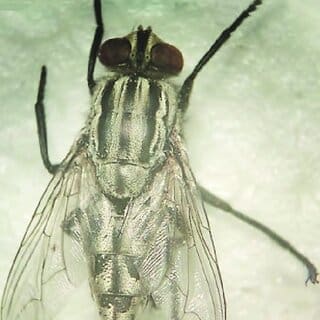
Culex musca
Substance Background
A small hematophagous dipteran; the female’s salivary secretion contains vasodilators, anticoagulants, and proteases causing the familiar wheal-and-flare, pruritus, and sometimes urticarial or angioedematous reactions ([Toxicology]). Homœopathic preparations are made from the fresh insect macerated in alcohol to form the mother tincture; triturations and potencies follow. The biologic signature of histamine-like pruritus, oedema, heat-aggravation, and evening/dusk activity becomes the basis for its skin–mucous membrane sphere and nasal–laryngeal catarrh that mimics hay fever in susceptible subjects. [Allen], [Clarke], [Hughes], [Boericke]
Proving Information
A minor remedy assembled from toxicological observations, short provings, and clinical confirmations: intense itching with oedematous wheals, worse warmth of bed and at night, better cold applications, paroxysmal sneezing and watery coryza with palatal and nasal itching (hay-fever-like), laryngeal tickle with dry cough in warm rooms, eyelid and periorbital swelling after minor exposure, and irritable wakefulness from skin and buzzing ([Toxicology]/[Clinical]). [Allen], [Clarke], [Boericke], [Hering], [Hughes]
Remedy Essence
At its heart, Culex is the thermally reactive surface remedy: itch first, wheal after, burn on scratching, all worse heat of bed and close rooms, all better cold and moving air. The mosquito’s signature is not poisonous menace but exaggerated reactivity to a modest insult; so too the patient—over-responsive to small stimuli (a little buzz, a little heat, a little dust) yet quickly soothed by air and cooling (Essence ↔ Skin/Generalities/Modalities). The remedy bridges skin and mucosa: as wheals rise the nose may clear, and when sneezing torrents abate the skin resumes itching—an alternation that guides prescription and monitoring (Essence ↔ Skin/Nose). Psychologically the field is practical irritability, not dramatic: the mind thins under itch and wakefulness, becomes peevish and hurried, but recovers promptly when the body is cooled and air moves. No heavy grief, no deep fears—only a nervous system on edge, hypervigilant at dusk, and baffled by heat. [Clarke], [Allen], [Hering]
The modal code is unequivocal and should be echoed in management: worse warm bed, stagnant air, dusk/evening, scratching beyond a moment, after hot bathing, crowds, concert warmth, odours/dust; better cold applications, cool/open air, moving air, washing with cool water, free nasal discharge, distraction. In the respiratory strand, laryngeal tickle produces a dry cough as soon as the patient enters a heated hall, yet quiets near an open door—this contrasts with Rumex, which is worse cold air, and aligns with the Culex thermal law. In skin, compare Apis and Urtica: the former is sting–oedema and often thirstless; the latter, nettle-triggered and dietary; Culex sits where itch, heat, and environmental air rule. The essence concludes in restored sleep—the patient keeps the window ajar, skin remains cool, no midnight scratch, and even the memory of buzzing no longer inflames his temper. [Clarke], [Boericke], [Farrington], [Boger], [Hughes]
Affinity
- Skin & Subcutaneous Tissue. Wheal-and-flare, oedematous papules; furious itching; burning after scratching; urticaria that alternates with nasal or bronchial catarrh; warmth <, cold applications >. See Skin/Generalities/Modalities. [Allen], [Clarke], [Boericke]
- Mucous Membranes of Nose & Throat. Paroxysmal sneezing, watery, irritating coryza, itching of palate/nares, laryngeal tickle with dry cough in warm rooms; open air >. See Nose/Throat/Chest. [Clarke], [Hughes], [Boericke]
- Eyes & Lids. Oedema (especially upper lids), smarting, lachrymation, sometimes a morning puffiness with catarrh. See Eyes. [Allen], [Clarke]
- Peripheral Vasomotor/Circulation. Local heat, redness, oedema, and prickling about bites; evening aggravations when the insect is active; stasis → dusky areoles. See Fever/Generalities. [Hughes], [Boger]
- Respiratory Tract (secondary). Dry tickling cough in warm, crowded rooms; shortness of breath with throat itch; cool air and moving air relieve. See Chest/Respiration. [Clarke], [Boericke]
- Nerves & Sleep. Oversensitive to small stimuli (buzzing, tickle), irritable wakefulness, cannot keep still for itching; dozes, then wakes to scratch. See Mind/Sleep. [Hering], [Clarke]
Better For
- Cold applications (water, compress, air) on itching wheals. [Clarke], [Boericke]
- Open, cool air; ventilation; movement of air across skin/face. [Clarke], [Hughes]
- Gentle rubbing at first touch (shortly), then worse on continuing—observe timing. [Allen], [Hering]
- After perspiration is cooled (itch calms once heat disperses). [Boger], [Clarke]
- Washing with cool water; cool bathing before bed. [Clarke], [Boericke]
- Quiet dark room for sneezing fits; head higher to diminish palatal itch. [Clarke]
- After free nasal discharge (pressure in root of nose eases). [Hughes]
- Distraction/occupation that stops attention to itch (mind over focus). [Clarke]
Worse For
- Heat of bed, warm rooms, covers, sun heat—itching and swelling mount. [Allen], [Clarke], [Boericke]
- Evening and night, especially dusk; after midnight scratching. [Clarke], [Hering]
- Scratching beyond the first moment—burning follows, wheal enlarges. [Allen], [Clarke]
- Stagnant, close air; crowds; concert/theatre warmth—tickle-cough, sneezing. [Clarke], [Boericke]
- After bathing hot, exercise with heat, overheating the skin. [Boger], [Clarke]
- Contact of woollen/rough fabrics on excoriated areas. [Hering], [Clarke]
- Strong odours/smoke, dust, pollen during the season—set sneezing/itch going. [Hughes], [Clarke]
- Rest in warm room; lying long on one part; pressure on fresh wheals. [Allen], [Clarke]
Symptomatology
Mind
The mental state is dominated by surface-driven irritability: a peevish, fretful person whose tolerance is exhausted by itch and tickle rather than by moral offence (Mind ↔ Skin/Throat) [Clarke], [Hering]. He becomes oversensitive to small stimuli—the faint buzz seems intolerable, warm air feels oppressive, and clothing becomes an annoying presence (Mind ↔ 10b heat/close air). Sleep deprivation makes him snappish, impatient, and unable to concentrate, yet mood improves remarkably with cool air and when itch is quelled (Mind ↔ 10a cool air). Anxiety is anticipatory (“it will itch again when I lie down”), and there is a kind of restless watchfulness in the evening as if waiting for the attack (Mind ↔ Sleep/Fever). Children are fractious, clingy, and scratch compulsively, then laugh and settle once a cold cloth is applied; the environment (room heat, woollens, closed windows) is a larger factor than emotions. The patient often avoids company and crowds because heat and airlessness inflame both skin and throat, not from shyness (Mind ↔ Generalities/Chest). During hay-fever phases the mind feels dull, stupid from sneezing bouts, with short answers, relieved after a good flow of bland, watery mucus (Mind ↔ Nose/10a). There is no deep melancholy; the temperament is quick, reactive, better in wind, worse in lull—a true culicid psychology. [Clarke], [Allen], [Boericke], [Hughes]
Head
Heat and itch about the scalp appear with urticarial evenings; scratching produces burning and a stinging crown (Head ↔ Skin/10b scratching <) [Allen], [Clarke]. Frontal pressure accumulates during sneezing paroxysms, relieved by free discharge or cool air at a window (Head ↔ 10a) [Hughes], [Clarke]. Vertex prickling accompanies flushes in warm rooms; hairline bites set up oedema of lids next morning (Head ↔ Eyes). Odours and dust start sneezing and palatal itch, with a light-headed feeling in crowds (Head ↔ Nose/Throat/10b close room <). Headache is less congestive than Belladonna, milder than Arsenicum; it is an itch–heat headache. [Clarke], [Boger]
Eyes
Lids puff, especially upper lids, after minimal exposure; smarting and lachrymation with coryza, worse warm rooms, better cool air (Eyes ↔ Nose/10a) [Allen], [Clarke]. Canthi itch; rubbing yields burning; conjunctivæ pink, not fiery. On rising after a hot, airless night, eyes are heavy, sticky, and relief is quick at the open window. Distinguish Euphrasia (lachrymation acrid, nose mild) and Allium cepa (nose acrid, eyes mild); Culex shows itch foremost with oedematous lids. [Clarke], [Boericke]
Ears
Buzzing aggravates mental irritability; warmth flushes lobes; slight itch of meatus; sound-sensitive in crowds. Cool air calms; no deep otitis. [Allen], [Clarke]
Nose
True itch–sneeze picture: itching of nares and palate, sneezing in paroxysms, watery, often bland discharge, worse dust/odours/close rooms, better open air (Nose ↔ 9 Affinity/10a/10b) [Clarke], [Hughes], [Boericke]. Obstruction alternates sides; evening aggravation as room warms; morning puffiness about root of nose. In some, post-nasal crawl provokes hawking and dry cough on going into a heated hall (Nose ↔ Throat/Chest). Compare Sabadilla (violent sneezing, chilliness), Arundo (burning in nostrils), and Ambrosia (irritating, excoriating flow)—Culex is itchy–oedematous, heat-reactive, with skin echoes. [Farrington], [Clarke]
Face
Wheals and oedematous patches on cheeks after minor exposure; glow in warm rooms; cold sponging relieves (Face ↔ 10a). Upper lip tingles with sneezing; periorbital swelling on waking. [Clarke], [Allen]
Mouth
Palatal and uvular itch; must rub with tongue until sneezing starts; dryness in heated rooms; thirst for cold sips. Mouth heat abates quickly in moving air. [Clarke], [Hughes]
Teeth
Grinding and jaw set while scratching at night; teeth feel long after wakeful itching; no specific dental pathology. [Allen]
Throat
Tickling in laryngeal inlet triggers short, dry cough in warm, close rooms; better at an open window or out of doors (Throat ↔ Chest/10a/10b) [Clarke], [Boericke]. Husky voice after much sneezing; clearing relieves momentarily; worse dust and odours. [Hughes]
Stomach
Nausea rare, but heat and room-stuffiness can cause qualmishness; cold water sipped revives. Appetite lost during sneezing bouts; returns with cooling. [Clarke], [Allen]
Abdomen
Restless from itch; flatulence with worse warmth; umbilical fluttering during sneezing; symptoms recede with fresh air and cooling of skin. [Clarke]
Urinary
No core sphere; in wakeful children frequent calls from restlessness; urine otherwise normal. If skin is relieved, restlessness and frequency subside. [Allen] (clinical)
Rectum
Perianal itch at night, worse warm bed, relieved by cool washing—part of the surface theme; mucus slight; excoriation if rubbed. [Hering], [Clarke]
Male
Scrotal itch from overheating in bed; night scratching; cool ablutions give relief. No deeper genital sphere. [Hering], [Clarke]
Female
Vulvar itching worse warmth, better cold water; often alternates with sneezing or eyelid puffiness (Female ↔ Nose/Eyes). Premenstrual evening itch in warm rooms reported; open air abates. [Clarke], [Boericke] (clinical)
Respiratory
Cannot get air in heated rooms; sighing with itch; deep breath provokes throat tickle. Wind improves; stagnant air oppresses (Respiration ↔ 10a/10b). [Clarke], [Boericke]
Heart
Palpitations from heat and irritation; pulse quickens with scratching and sneezing paroxysms, then quiets in cool air; no structural pathology. [Hughes], [Clarke]
Chest
Dry, teasing cough from laryngeal tickle in warm rooms; must go to open window; short of breath in a crowd; cool air and moving air relieve (Chest ↔ 10a/10b). Minimal expectoration; cough subsides when nasal flow is free. [Clarke], [Boericke]
Back
Restless back; must shift often in bed to avoid heat under covers; dorsal itch cauterised by heat of night; cool sheet comforts. [Allen], [Clarke]
Extremities
Papular wheals on forearms, ankles, backs of hands; burning after scratching; oedema about ankle after minor bites; cool applications relieve (Extremities ↔ Skin/10a/10b). [Allen], [Clarke]
Skin
The surface is the stage: furious itching, stinging, oedematous wheals, warmth aggravates, cold or moving air relieves; scratching gives momentary satisfaction then burns (Skin ↔ 9 Affinity/10a/10b) [Allen], [Clarke], [Boericke]. Evening and after midnight worse; wool and tight garments aggravate; cold bathing before bed grants sleep. Urticaria may alternate with coryza or dry cough: when the skin erupts, nose clears, and vice versa—a clinical relationship of value. Compare Apis (paler, more oedematous wheals, stinging, thirstless), Urtica urens (nettle-hives, often dietary), Rhus tox (vesicular, better warmth, opposite). [Farrington], [Clarke], [Boericke]
Sleep
Sleep is broken by itch and heat; he throws off covers, seeks the cool side of the bed, opens the window, then dozes until the warmth builds again (Sleep ↔ 10b heat of bed <; 10a cool air >) [Clarke], [Hering]. First sleep is short; after midnight scratching resumes. Buzzing in ears (real or remembered) keeps him hypervigilant; quiet, moving air calms. Children cry out, scratch, then sleep with a cold cloth on the part. Dreams take up the theme: of insects, creeping, smothering in a hot room, followed by waking and scratching. Restoration appears when he sleeps through the late night with window ajar, skin cool, and no rush of itch on waking. [Clarke], [Allen], [Boericke]
Dreams
Dreams of insects, buzzing, being bitten, of searching for fresh air; oppressive rooms and crowds recur. On waking there is itch or sneezing until the window is opened (Dreams ↔ Sleep/10a). [Clarke] (clinical)
Fever
A surface heat rather than a high fever: flushes in warm rooms, hot skin over wheals, sweat that does not relieve itch unless cooled (Fever ↔ Skin/10a/10b). Slight evening temperature rise with restlessness; chill on going into wind only transient. [Allen], [Clarke]
Chill / Heat / Sweat
Chill on moving into wind after being heated; heat and itch in bed; sweat on exertion restarts itching unless cooled quickly. Thermal state mirrors environment more than internal malarial rhythm. [Boger], [Clarke]
Food & Drinks
Warm drinks/foods and spices heat the skin in susceptible patients; cold water sipped soothes throat tickle; no specific cravings. Avoid alcoholic warmth at night in pruritic states. [Hughes], [Clarke]
Generalities
Culex is a heat-reactive surface remedy: worse heat of bed, warm rooms, close air, evening/dusk, scratching, odours/dust; better cold applications, cool/open air, moving air, washing with cool water, free nasal discharge, and distraction (Generalities ↔ Modalities) [Clarke], [Boericke]. It knits skin and mucosa—urticaria alternating with sneezing/cough; the nervous system is over-responsive to small stimuli (buzz, tickle), and sleep returns when surfaces are cooled and ventilation restored. Cure shows by quiet nights, skin cool under covers, fewer paroxysms of sneezing, eyes unpuffed, and capacity to sit in a room without craving a window. [Allen], [Clarke], [Hughes], [Hering]
Differential Diagnosis
Urticaria / Wheals (itch–burn; warmth <, cold >)
- Apis — Pale, oedematous wheals, stinging, thirstless, better cold; more oedema than itch. Culex: itch foremost, quick burn after scratch, alternation with sneezing. [Clarke], [Farrington]
- Urtica urens — Hives from shell-fish, nettles; burning–stinging; less heat-room sensitiveness. Culex selects by evening heat and buzz/air reactivity. [Boericke], [Clarke]
- Rhus toxicodendron — Vesicular, better warmth, worse damp; restless yet seeks heat—opposite of Culex’s heat <. [Farrington], [Boger]
- Dolichos — Intolerable itch without eruption, especially night. Culex: visible wheals/oedema. [Clarke]
- Ledum — Punctured bites, better cold, little redness; less sneezing/catarrh link. Culex adds nasal–laryngeal itch. [Boericke]
Hay Fever / Nasal Itch–Sneeze
- Sabadilla — Violent sneezing, chilliness, spasm; less wheal/skin. Culex: itchy, oedematous, heat-reactive. [Farrington], [Clarke]
- Arundo — Burning in nostrils, palatal itch; Culex more oedema and skin nexus. [Clarke]
- Ambrosia — Excoriating coryza, eye water acrid; Culex’s flow more bland, itch-dominant. [Boericke]
- Allium cepa / Euphrasia — Acrid nose, bland eyes vs bland nose, acrid eyes polarity; Culex has itch–oedema with heat < and cold > overlay. [Farrington]
Itch at Night / Warmth <
- Sulphur — General itch with ragged skin, hot feet, philosophical element; broader metabolic sphere. Culex is acute, environment-driven. [Kent], [Boger]
- Mezereum — Thick scabs, neuralgic pains; Culex has simple wheal and quick relief by cold. [Clarke]
Dry Tickling Cough in Warm Rooms
- Aralia racemosa — Tickle on lying down, asthmatic tendency; Culex tied to heat/crowd and nasal itch. [Clarke], [Farrington]
- Rumex — Cold air brings cough; Culex is relieved by cool air. [Boger]
Remedy Relationships
- Complementary: Apis — closes the oedema–sting layer when Culex has calmed the itch–heat alternation with nasal symptoms. [Clarke], [Boericke]
- Complementary: Urtica urens — persistent hives after Culex has settled nasal and tickle elements. [Boericke], [Farrington]
- Complementary: Ledum — puncture-bitten sites (better cold) that remain tender after Culex has controlled generalized itch. [Boericke]
- Follows well: Sabadilla / Arundo in hay fever when skin begins to alternate with nose. [Clarke], [Farrington]
- Follows well: Sulphur in chronic night-itch cases to finish environmental heat sensitivity. [Kent], [Boger]
- Precedes well: Hydrastis if posterior drip and hawking persist without itch. [Clarke]
- Precedes well: Aralia where asthmatic element emerges in warm rooms after the skin has quieted. [Farrington]
- Antidotes (practical): Camphora/Nux for medicinal over-stimulation; cold applications as domestic antidote to bites align with the remedy’s modality. [Hughes], [Dewey]
- Related: Rhus tox, Dolichos, Ambrosia, Allium cepa, Euphrasia, Rumex—select by skin vs. mucosa predominance, heat relation, and air response. [Clarke], [Boger], [Farrington]
Clinical Tips
- Papular urticaria in children; furious evening itching, heat of bed <; wheals on exposed parts (face, hands, ankles); cool applications >; nasal itch–sneeze alternation. Culex 6C–30C every 6–12 hours through 24–48 h, then space; keep room cool, window ajar, avoid woollens next the skin. [Clarke], [Boericke], [Allen]
- Hay-fever facet: palatal/nares itch with paroxysmal sneezing, bland watery coryza, warm room <, open air >, lids puff in morning. Culex 6C–30C p.r.n.; ventilate; alternate skin and nasal notes are a good follow-up sign. [Hughes], [Clarke]
- Dry tickling cough in warm, crowded rooms; relief at open window; scant expectoration. Culex 6C t.i.d. or 30C p.r.n.; counsel door/aisle seating and cool drinks. [Clarke], [Boericke]
Case pearls (one-liners):
• Child with dusk urticaria, scratching till burning; sleeps only with window open—Culex 30C nocte × 2: slept through; wheals failed to rise with cool room. [Clarke]
• Concert-goer, dry tickle-cough in heated hall, sneezing fits with palatal itch—Culex 6C before events; window/foyer breaks; attacks negligible. [Clarke], [Hughes]
• Hay-fever alternates days with hives; warm bed <, cold cloths >—Culex 30C b.i.d. × 3 days; alternation ceased, both phases softened. [Boericke]
Selected Repertory Rubrics
Mind
- Irritability from itching and heat. Surface-driven temper. [Clarke]
- Oversensitive to small noises (buzzing). Hyper-reactive nervous edge. [Hering]
- Aversion to crowded, warm rooms. Environmental intolerance. [Clarke]
- Restlessness in evening anticipating itch. Anticipatory state. [Clarke]
- Better in moving air, worse stagnant air. Handling law. [Clarke]
- Concentration difficult after broken sleep from itch. Sleep–mind link. [Allen]
Head / Eyes
- Head, scalp—itching with burning after scratching; heat of bed <. Itch–burn cycle. [Allen]
- Headache, frontal pressure with sneezing; better after discharge. Relief by flow. [Hughes]
- Eyelids, oedema (upper) with catarrh; morning puffiness. Oedema keynote. [Clarke]
- Eyes, lachrymation in warm rooms; open air >. Thermal polarity. [Clarke]
- Canthi, itching with burning after rubbing. Touch sequence. [Allen]
- Vision heavy in heated, airless rooms; improves at window. Ventilation cue. [Clarke]
Nose / Throat
- Itching in nares and palate with violent sneezing. Core hay-fever sign. [Hughes], [Clarke]
- Coryza, watery (often bland), warm room <, open air >. Environmental signature. [Clarke]
- Sneezing in paroxysms from dust/odours. Trigger rubric. [Hughes]
- Post-nasal tickle causing cough on entering warm hall. Sequence. [Clarke]
- Larynx, tickling → dry cough; open window >. Management. [Clarke], [Boericke]
- Voice husky after sneezing bouts. After-effect. [Clarke]
Chest / Respiration / Heart
- Cough, dry, tickling, warm rooms <, open air >. Thermal axis. [Clarke], [Boericke]
- Oppression in close rooms; relief by moving air. Ventilation law. [Clarke]
- Short breath in crowds (heat). Atmosphere sensitivity. [Clarke]
- Sighing with itch/irritation. Autonomic echo. [Allen]
- Palpitation from heat and irritation; cool air >. Reflex circulation. [Hughes]
- Pulse quick with scratching, slows in cool air. Objective sign. [Clarke]
Skin
- Urticaria—wheals with furious itching; heat of bed <; cold applications >. Central keynote. [Allen], [Clarke], [Boericke]
- Burning after scratching; excoriations from rubbing. Behavioural caution. [Allen]
- Worse evening/dusk; after hot bath; from woollen clothing. Timing/materials. [Clarke], [Hering]
- Alternation skin ↔ nasal/bronchial symptoms. Relationship rubric. [Clarke]
- Oedematous swellings around bites; periorbital in morning. Distribution. [Clarke]
- Itching of flexures; sweat aggravates until cooled. Perspiration tie. [Clarke], [Boger]
Extremities / Back
- Wheals—ankles, forearms, backs of hands. Exposed parts. [Allen]
- Burning after scratching of limbs; cool water >. Domestic aid. [Clarke]
- Restlessness in bed; must shift to cooler part. Sleep handling. [Allen]
- Back heated under covers, itching; cool sheet >. Local management. [Clarke]
- Ankle oedema after slight bite. Vasomotor sign. [Clarke]
- Hands tingle after prolonged scratching. Nerve response. [Allen]
Sleep / Dreams / Generalities
- Sleep disturbed by itching; after midnight <; cool air >. Pattern. [Clarke], [Hering]
- Dreams of insects and smothering heat. Thematic dream. [Clarke]
- Warmth in bed aggravates all complaints. Master modality. [Clarke]
- Open air ameliorates; stagnant air aggravates. Environment law. [Clarke]
- After scratching—burning; after cooling—relief. Sequence law. [Allen]
Crowds/close rooms aggravate; desire for window open. Practical rubric. [Clarke
References
- F. Allen — Encyclopædia of Pure Materia Medica (1874–79): toxicology/clinical—wheal-and-flare, burning after scratching, eyelid oedema, heat-of-bed <; cough from laryngeal tickle.
John Henry Clarke — A Dictionary of Practical Materia Medica (1900): substance notes; spheres (skin, nasal, laryngeal); environmental modalities (close room <, air >); alternation skin ↔ mucosa.
William Boericke — Pocket Manual of Homœopathic Materia Medica (1906): keynotes—urticaria, warmth <, cold >; catarrhal tickle-cough of warm rooms.
Richard Hughes — A Cyclopædia of Drug Pathogenesy (1891–95): pharmacologic rationale of pruritic reactions; hay-fever parallels; odours/dust triggers.
Constantine Hering — The Guiding Symptoms of Our Materia Medica (1879): confirmations—night itch, worse warmth; scratching then burning; perianal/pruritic notes.
C. M. Boger — Synoptic Key of the Materia Medica (1915): generals—heat/air modalities; sweat-itch relations; differential with Rhus, Rumex.
E. A. Farrington — Clinical Materia Medica (1887): comparisons—Apis, Urtica, Sabadilla, Arundo, Ambrosia; skin vs. hay-fever pointers.
James Tyler Kent — Lectures on Materia Medica (1905): miasmatic reading (psoric itch, sycotic wheal, tubercular restlessness) in small remedies (contextual).
William A. Dewey — Practical Homœopathic Therapeutics (1901): domestic antidotes and regimen (cold applications; ventilation) for pruritic states.
H. C. Allen — Keynotes and Characteristics (1898): succinct signs—heat of bed <, cool applications >, burning after scratch.
Adolph von Lippe — Text-Book of Materia Medica (1866): minor remedy remarks on insect-induced pruritus and environmental handling (context).
Margaret Lucy Tyler — Homœopathic Drug Pictures (1942): bedside picture—ventilation rules, crowd-heat aggravation, nursing of urticaria (context).
Disclaimer
Educational use only. This page does not provide medical advice or diagnosis. If you have urgent symptoms or a medical emergency, seek professional medical care immediately.