

Comocladia dentata
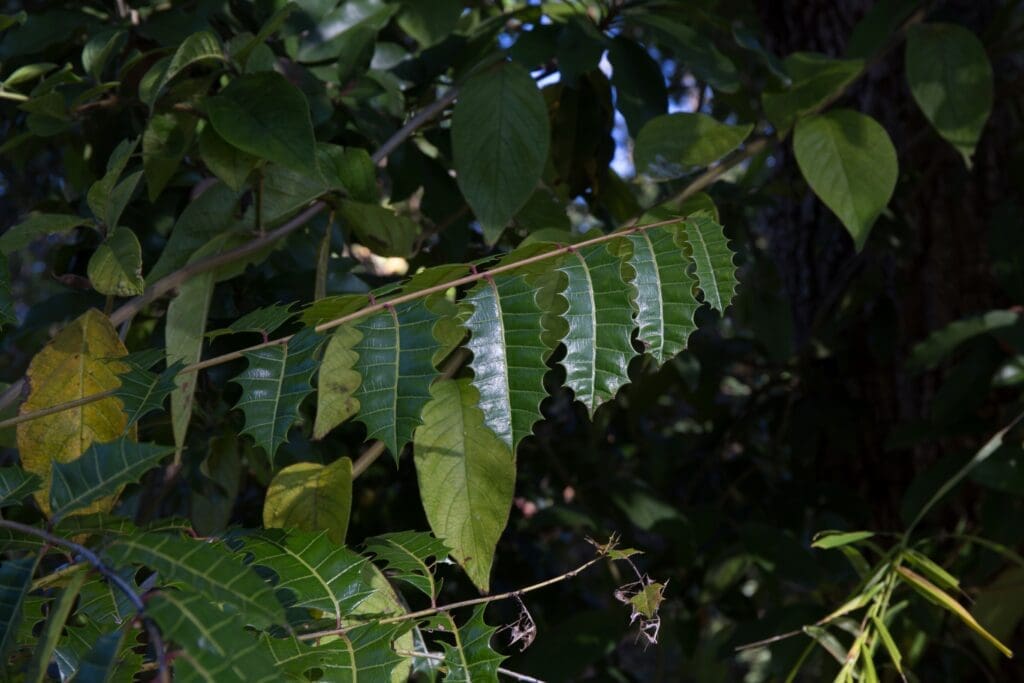
Substance Background
A resinous, highly irritant anacardiaceous tree allied to Rhus and Anacardium; the fresh juice is a powerful dermatitic and oedematous irritant (vesicating, erysipelatous), with marked ophthalmic irritation when brought near the eyes ([Toxicology]). Preparations in homœopathy are made from the fresh leaves/young twigs in tincture and potentised. Its sphere combines cutaneous–mucosal oedema, vesicular erysipelas, and a striking ciliary neuralgia with the keynote sensation that the eyeball feels too large for the orbit, often right-sided and worse from heat—especially the heat or glare of fire. [Allen], [Clarke], [Boericke], [Hughes], [Hering]
Proving Information
Our knowledge rests on provings and poisonings collated by T. F. Allen and Hughes, with numerous clinical confirmations (ophthalmic and dermatologic) summarised by Clarke, Boericke, Boger, and ophthalmic writers (Norton) showing ciliary neuralgia, chemosis, oedematous lids/face, photophobia, and the peculiar orbital distension feeling. [Allen], [Hughes], [Clarke], [Boericke], [Boger], [Hering], [Norton]
Remedy Essence
Comocladia is the heat-hater of the Rhus family. Where Rhus tox. often craves warmth, Comocladia suffers it: fire, stove, sun, and close heated rooms intensify a surface storm of oedema, erythema, and burning/itching, while at the same time they ignite ciliary neuralgia with photophobia and lachrymation. The psycho-sensory centre sits in the eye: a deep conviction that the globe is too large, pressing upon lids and orbit, dramatizes the remedy’s serous overfill. The patient becomes practical and avoidant, arranging life by a simple law: cold, air, dark. He backs from hearths, draws curtains, sits at the window, and sleeps only when the room is cool—behaviour that precisely mirrors the modalities (better cold/dark/air, worse heat/light/touch). The right eye is frequently singled, helping choose between otherwise similar neuralgias (cf. Spigelia left). [Norton], [Clarke], [Allen]
Kingdom-wise, as with Anacardiaceæ, there is an over-reactive surface: oedema, weeping vesicles, and tight, shining skin, but Comocladia adds a crisp ocular axis and an almost photophobic soul. Sycosis supplies the oedematous and weeping tendency; psora the itch/tingle and neuralgia; a syphilitic hue flashes only in erysipelas-like spread and vesication. The pace is paroxysmal with triggers: enter the warm parlour → lids balloon, eye bores, head throbs; step into the cool passage → pain slackens, eye opens. This valve-response to environment is the remedy’s clinical compass. In differential context, Paris gives the globe-too-large fantasy but lacks the heat odium; Spigelia gives supraorbital knives and left bias, often liking heat; Apis swells and stings but is not so neuralgic in the eye; Rhus blazes vesicles but commonly wants warmth. Thus, when poison-wood skin exists with warmth < and the eye adds distending pain and glare-intolerance, Comocladia crystallises. Cure is physically visible: chemosis subsides, lid-fissure widens, face loses shine, sleep returns without a vigil at the window, and the sufferer forgets the fire—the truest sign that the essence has been met. [Clarke], [Norton], [Boericke], [Boger], [Hering], [Allen], [Hughes]
Affinity
- Eyes (ciliary body & sclera). Ciliary neuralgia, deep globe pain, photophobia, lachrymation, chemosis, and the keynote “eyeball too large for orbit,” often right-sided; markedly worse from heat/glare (fire, stove, sun); sometimes momentarily steadied by cool air or shading. See Eyes/Head. [Allen], [Clarke], [Norton], [Boericke]
- Eyelids & Face (erysipelas/oedema). Great swelling, shining red, burning–itching, vesicular poison-wood dermatitis; lids baggy, eyes almost closed; better cold applications, worse warmth/room heat. See Face/Skin. [Hughes], [Clarke], [Hering]
- Skin (vesicular dermatitis). Fiery erythema → vesicles/bullæ with serous exudation; burning, stinging, oedema; a true Rhus-group skin but with stronger warmth < and ophthalmic tie. See Skin/Generalities. [Allen], [Hughes], [Boericke]
- Trigeminal/Orbital nerves. Radiating pains from eye to temple/occiput/teeth, with heat <; touch and ocular motion aggravate. See Head/Teeth. [Norton], [Clarke]
- Throat & Fauces. Oedematous fauces/uvula; raw, burning catarrh with surface oedema—a minor but characteristic echo of the skin/eye state. See Throat. [Clarke], [Allen]
- Joints & Peri-articular tissues. Rheumatic aching with puffy peri-articular swelling; pains worse heat, better cool air, contrasting Rhus (often better warmth). See Extremities/Generalities. [Boger], [Boericke]
- Right side (especially right eye/face). Lateral preference repeatedly noted in ophthalmic cases. See Eyes/Face. [Norton], [Clarke]
- Lymphatics/Serous tissues. Chemosis, oedema, weeping surfaces—general serous over-response. See Generalities/Skin. [Hughes], [Hering]
Better For
- Cold applications to eyes/skin; cool, moving air and shaded light. [Clarke], [Norton]
- Darkness, shading the eyes, closing lids lightly without pressure. [Norton], [Allen]
- Gentle rest with head elevated; quiet rooms with good ventilation. [Clarke], [Boericke]
- Bathing in cool water (short), sponging; brief relief of burning/itch. [Hering], [Boericke]
- Careful, even bandaging around orbit (some cases) to still the globe; too firm pressure aggravates. [Norton], [Clarke]
- Out-of-doors at dusk rather than day glare; sea-breeze style air. [Clarke]
- After perspiration ceases and the skin is cooled. [Boger]
- Keeping away from fire/heat sources; north light preferred. [Norton], [Clarke]
Worse For
- Heat in every form—near fire/stove, sun-glare, warm rooms, bed warmth. [Norton], [Clarke], [Boericke]
- Light—especially firelight or bright glare; looking at flames. [Norton], [Allen]
- Touch and motion of the globe; ocular movements, stooping, jarring. [Norton], [Clarke]
- Sweat/heat of exercise, warm bathing, covering warmly. [Boger], [Boericke]
- Night in a heated room; closed, stuffy atmosphere. [Clarke]
- Rubbing/scratching the eruption; oedema increases after warmth. [Hering], [Allen]
- Right eye particularly; right supraorbital region. [Norton], [Clarke]
- Damp heat/tropics—skin and eyes flare. [Hughes], [Clarke]
Symptomatology
Mind
The mental state reflects the sensory tyranny of heat and glare: the patient grows anxious before approaching a fire or heated room, anticipating the eye-storm that follows (Mind ↔ 10b heat/glare). He is irritable from burning/itching of the skin and restless because no position allows the eye to be quiet when warmth is near (Mind ↔ Skin/Eyes). A fear of blindness is often spoken in cases of ciliary neuralgia with chemosis, and though exaggerated, it guides the bedside (Mind ↔ Eyes). He seeks air and darkness, draws curtains, and keeps distance from stoves, which tallies exactly with the ameliorations already given (Mind ↔ 10a cool/dark). In severe dermatitis the face-swelling provokes shame and avoidance of company, but mood lifts rapidly as oedema recedes. Children become peevish at bedtime in heated rooms, yet settle at the window or when cool cloths are applied (Mind ↔ Sleep/10a). Conversation, if kept quiet and away from lights, soothes; asking to examine the eye under a lamp is dreaded (Mind ↔ 10b light). The patient is decided about arranging the room—cold air, no fire—showing a practical, not hypochondriacal, anxiety. Improvement is read in a willingness to sit among others, tolerate light, and forget the eye. [Clarke], [Norton], [Allen], [Boericke]
Head
Right frontal/supraorbital ache radiating to occiput accompanies the ciliary pain; there is a hot, pressive sensation as if fullness would burst the brow (Head ↔ Eyes/9 Affinity) [Norton], [Clarke]. Heat, firelight, and close rooms bring on the pain; cool air and dark relieve (Head ↔ 10a/10b). Stooping or shaking the head aggravates—the ocular muscle tug rekindles the neuralgia. A sense of puffy scalp or tight skin may be reported in erysipelas. Differentially, compare Spigelia (left-sided, motion of eyeball intolerable, often better warmth) and Paris (globe too large but less heat <; more neck/cord sensations). [Farrington], [Norton], [Clarke]
Eyes
This is Comocladia’s signature. Ciliary neuralgia with deep-seated, boring or stitching pain in and behind the eye, radiating to temple and teeth, sometimes making the globe feel too large for the orbit—as if it presses upon the lids (Eyes ↔ 9 Affinity) [Norton], [Allen], [Clarke]. The eye is watery, photophobic; chemosis and oedematous lids partly close the eye; conjunctiva looks red, gelatinous, weeping. Worse markedly from heat of fire/stove, warm rooms, sun-glare, light, and ocular movement; better in cool air, darkness, and by shading (Eyes ↔ 10a/10b) [Norton], [Clarke], [Boericke]. Often right eye is singled out, providing an important lateral cue (Eyes ↔ 9 Affinity). Compared with Spigelia (neuralgia, usually left, often relieved by warmth, sharp pains along supraorbital nerve), Comocladia is heat-intolerant and loves cold air. Paris shares the orbital distension feeling but lacks the warmth < and erysipelatous lids. Prunus spinosa gives sudden crushing ocular pains without the oedema and heat < hallmark. [Farrington], [Norton], [Clarke]
Ears
Tinnitus with congestion; stuffed feeling in heated rooms; ears burn with facial erysipelas (Ears ↔ Face/Skin/10b). Airing the room reduces the hum. No special otorrhœa. [Allen], [Clarke]
Nose
Smarting and burning in nostrils with watery coryza when the face inflames; oedema may make the nose look broad, shiny (Nose ↔ Face/Skin). Warm rooms increase drip and soreness; cold air eases. [Clarke], [Allen]
Face
Erysipelatous swelling—shining red, oedematous, vesicular at times—with burning and itching; lids heavy, cheeks puffed, eyes nearly closed (Face ↔ Skin/Eyes) [Hughes], [Hering], [Clarke]. Worse warmth, better cold applications; right side often more engaged. Tension as if the skin were too tight, paralleling the eye’s too-large sensation. Compare Apis (oedema, better cold, stinging; more thirstlessness) and Rhus (vesicles, better warmth), noting Comocladia’s heat intolerance in both eye and skin. [Boericke], [Farrington], [Clarke]
Mouth
Burning of lips/angles with facial inflammation; tongue tingles; saliva slightly increased when heat provokes. Taste flat; appetite small in hot rooms. Not a primary stomatitis remedy; mouth mirrors surface oedema. [Allen], [Clarke]
Teeth
Shooting from eye to upper teeth during ciliary storms; teeth feel long under the orbital pressure illusion (Teeth ↔ Eyes/Trigeminal). Cold air to the face reduces the tooth–eye stitch; warm drinks may briefly intensify head and eye throbs. [Norton], [Allen]
Throat
Oedematous sensation in fauces with rawness; uvula feels swollen; warm room increases choking feeling, cool air soothes (Throat ↔ 10a/10b). Husky voice if facial erysipelas spreads; swallowing tight things worsens. [Clarke], [Allen]
Stomach
General loathing of hot food/steam because heat worsens eye/face; prefers cold drinks in small sips. Nausea may accompany severe eye-pain in warm rooms; subsides with airing the room. [Clarke], [Boericke]
Abdomen
Not a primary sphere. Flatulence on being overheated; abdominal skin may itch with the general eruption. Improvement follows cooling measures. [Allen], [Clarke]
Urinary
Reflex frequent urging during eye-pain (autonomic sympathy); scanty during hot spells; normal once oedema subsides. Not a renal remedy. [Allen]
Rectum
No decisive keynotes; itching perianal skin may join the eruption; warm bed aggravates, cool bathing relieves—consonant with global modalities. [Hering], [Clarke]
Male
Heat of genitals with itch when room is warm; scrotal skin puffs with face in sensitive subjects. Sexual desire diminished during eye attacks. [Clarke]
Female
Menses may increase facial flushing in warm rooms; puffiness of lids/face cycles with ovarian congestion in some cases (clinical). Pregnant women with poison-wood susceptibility show marked oedema of lids worse heat, better cold—a minor yet confirmatory note. [Clarke], [Boericke]
Respiratory
Short breath under bed or stove heat; outdoor cool breathing eases; deep inspiration sometimes jars the eye (Respiration ↔ Eyes/10b motion). [Clarke], [Norton]
Heart
Palpitation during ciliary storms in hot rooms; pulse quickened by glare and heat; air slows it (Heart ↔ Eyes/10a/10b). No failure signs; a reactive neuro-vascular irritability. [Clarke], [Allen]
Chest
Oppression in close, heated rooms; longing for cool air by the window; sighing gives ease (Chest ↔ 10a/10b). No deep organic chest picture—the dyspnœa is atmospheric and surface-driven. [Clarke], [Boger]
Back
Nuchal tension when squinting against light; heat in upper back with burning face; cool air relaxes. Not a Rhus-like tearing stiffness. [Boger], [Clarke]
Extremities
Rheumatic aching with puffy peri-articular swelling—worse heat, warm rooms, better cool air and rest (Extremities ↔ 9 Affinity/10a/10b). Hands swell in hot rooms, ring feels tight. [Boericke], [Boger]
Skin
Poison-wood dermatitis pattern: fiery erythema, oedema, vesicles/bullæ with serous weeping, intense burning/itching; surfaces shiny and hot (Skin ↔ 9 Affinity) [Hughes], [Hering], [Allen]. Worse warmth of bed/room, worse by rubbing, better by cool applications and air (Skin ↔ 10a/10b). Face and lids often lead, but any exposed surface may suffer. Compare Rhus (vesicular, better warmth) and Apis (oedema, better cold, stinging, thirstless). [Clarke], [Boericke]
Sleep
Sleep is broken by burning/itching in warm bed; patient moves to the window, opens sash, and falls asleep when cooled (Sleep ↔ 10a/10b; Skin/Eyes) [Clarke], [Hering]. Dreams of fire, flames, or blinding light are sometimes reported; dread of going near the hearth at evening. Short dozes alternate with starts when room warms. Eye throbs pulse-like upon turning to the warm side of the pillow; flipping to the cool side helps. Morning is better until heat builds in the room. As cure advances, patient tolerates a light blanket and forgets the window. [Clarke], [Norton], [Allen]
Dreams
Dreams of glare, fire, crowded hot rooms, and of eyes swollen shut; anxious awakening to seek cool air. As the ocular neuralgia abates, dreams become neutral. (Dreams ↔ Sleep/10a). [Clarke]
Fever
Evening heat in face/head with burning skin; little thirst; heat excites ocular pains; chill follows when moved to cold air though the pains ease (Fever ↔ 10a/10b). No enteric or malarial periodicity. [Allen], [Clarke]
Chill / Heat / Sweat
Heat aggravates everything; sweat in a warm room may raise the itch/burn; cool breeze comforts. Night sweats local about face/scalp when room is too warm. [Boger], [Clarke]
Food & Drinks
Aversion to hot soups/steam; likes cold drinks; alcoholic heat-flush may rekindle oedema and eye pain; spices in a warm dining-room aggravate. [Clarke], [Boericke]
Generalities
A heat-intolerant, oedematous remedy with ciliary neuralgia and poison-wood dermatitis: everything is worse warmth, worse firelight/glare, worse ocular motion/touch; better cold, air, darkness, and shading (Generalities ↔ Modalities). The right eye and face frequently bear the brunt. Think Comocladia when Rhus-group skin is present but warmth aggravates, and when an eye case says the globe is too large and cannot endure fire. Outcome markers: tolerates light heat, eye opens, chemosis subsides, sleep continuous in a cool room, itch quieted by minimal measures. [Clarke], [Allen], [Hughes], [Boericke], [Boger], [Norton]
Differential Diagnosis
Ciliary neuralgia / ocular pains
- Spigelia — Left-sided, motion of eyeball intolerable, often better warmth; radiates to occiput. Comocladia: often right, worse heat/fire, oedematous lids. [Farrington], [Norton], [Clarke]
- Paris quadrifolia — Eyeball too large sensation with neck/cord pulling; heat < less marked; less chemosis. Comocladia adds poison-wood skin and firelight <. [Clarke], [Boger]
- Prunus spinosa — Sudden crushing intra-ocular pains; little oedema; heat modality not central. Comocladia shows oedema + heat <. [Farrington], [Clarke]
- Belladonna — Congestive photophobia, throbbing; dry hot skin, dilated pupils; not the globe-too-large keynote with cool >. [Clarke], [Boger]
- Gelsemium — Dull, heavy lids, blurred vision; heat modality mild; neuralgia less stabbing. Comocladia is acute, burning, oedematous. [Farrington]
Erysipelas / oedematous face
- Apis — Shiny oedema, stinging, better cold, thirstlessness; eye less neuralgic. Comocladia: adds ciliary pains and firelight <. [Clarke], [Boericke]
- Rhus toxicodendron — Vesicles, restlessness, better warmth, worse cold/damp. Comocladia worse warmth, better cool; eye-keynotes decisive. [Farrington], [Boger]
- Anacardium orientale — Vesicular dermatitis with intolerable itching; mental traits (dual will) distinct; ocular neuralgia not a keynote. [Clarke], [Kent]
Heat/light intolerance
- Glonoine — Sunstroke, bursting head, sun <; eye not “too large,” skin not vesicular. Comocladia couples glare < with oedema and ciliary pain. [Clarke], [Boger]
- Natrum carbonicum — Sun weakness, headaches; no poison-wood skin, no chemosis. [Kent]
Rheumatic/oedematous joints
- Rhus tox. — Better warmth/motion, worse rest/cold damp. Comocladia: worse heat, better cool; puffy peri-articular swelling echoes skin. [Boger], [Boericke]
- Dulcamara — Cold damp brings pains; skin warty/herpetic. Comocladia is heat-driven. [Clarke]
Right eye predilection
- Cedron — Right supraorbital neuralgia periodic, feverish; not ciliary pressure/chemosis; heat modality not core. [Clarke], [Farrington]
- Sanguinaria — Right-sided migraine with eye involvement; sun aggravates, but lacks oedematous lids and globe-too-large keynote. [Clarke]
Remedy Relationships
- Complementary: Apis — when oedema predominates and stinging with cold > persists after ciliary pains are eased. [Clarke], [Boericke]
- Complementary: Sulphur — to steady surface reactivity and chronic heat intolerance after acute eruptions; maintains cutaneous tone. [Boger], [Kent]
- Follows well: Rhus tox. — when a Rhus-like dermatitis has heat < and an ocular strand appears; Comocladia completes by cool > profile. [Farrington], [Clarke]
- Follows well: Belladonna — after vascular congestion is lowered but ciliary pains with heat/glare < remain. [Clarke]
- Precedes well: Paris — if globe-too-large persists without heat modality and with neck sensations after oedema subsides. [Clarke], [Boger]
- Precedes well: Spigelia — residual left supraorbital neuralgia once Comocladia has cleared heat-intolerant right eye oedema. [Farrington], [Norton]
- Related: Anacardium, Rhus, Toxicodendron group — skin kinship; choose by heat modality and eye. [Hughes], [Clarke]
- Compare (photophobia): Aconite, Glonoine, Nat-c.; Comocladia adds oedema + firelight <. [Clarke]
- Antidotes (practical): Rhus/Anacardium poisonings often relieved by Rhus-tox./ Anacard. measures; Camphora for sudden collapse from massive exposure (supportive tradition). [Hughes], [Clarke]
- Inimical: None fixed; avoid rotating within Rhus–Anacardium group without clear modality change. [Kent], [Boger]
Clinical Tips
- Ciliary neuralgia (often right), worse near fire or stove; globe feels too large; chemosis/oedematous lids. Comocl. 30C–200C, single dose or q8–12h in the acute phase; insist on dark, cool, airy room and ocular rest. [Norton], [Clarke], [Boericke]
- Erysipelatous, oedematous eyelids/face with burning–itching; heat <, cold applications >. Comocl. 6C–30C q6–8h; short cool sponging, avoid warm baths/heated rooms. [Hering], [Clarke], [Allen]
- Rhus-like dermatitis but warmth aggravates and eye is involved. Choose Comocl. rather than Rhus, dose as above; watch for rapid oedema fall with cool regimen. [Farrington], [Boericke]
Case pearls (one-liners):
• Right ciliary neuralgia, every approach to the stove caused boring globe pain, lids puffed—Comocl. 200C stat; dark, cool room; next day globe-size sensation gone, chemosis halved. [Norton], [Clarke]
• Poison-wood face: shiny, puffed, burning; warm bed intolerable; sleeps by open window—Comocl. 30C t.i.d.; slept through once room cooled; swelling receded in 48 h. [Hering], [Allen]
• Rheumatic woman, peri-articular puffiness worse heat, better cool air, with recurrent right supraorbital neuralgia—Comocl. 30C nightly one week; joints easier, eye-attacks ceased. [Boericke], [Boger]
Selected Repertory Rubrics
Mind
- Anxiety before approaching fire/heat. Behavioural marker of heat <. [Clarke]
- Irritability from burning/itching and light. Sensory overload. [Allen]
- Fear of blindness during ciliary attacks. Practical bedside cue. [Norton], [Clarke]
- Desire for cool air and darkness. Guides regimen. [Clarke]
- Aversion to examination by lamp light. Modality confirms. [Norton]
- Children peevish at bedtime in warm rooms; calm at window. Paediatric pointer. [Clarke]
Head / Eyes
- Ciliary neuralgia, right eye, heat/fire <, cold air >. Central selection rubric. [Norton], [Clarke]
- Sensation as if eyeball too large for orbit. Keynote confirmation. [Allen], [Norton]
- Chemosis with oedematous lids, photophobia. Objective sign. [Clarke]
- Pain radiates to temple/teeth/occiput. Trigeminal spread. [Norton]
- Light (firelight) aggravates; shading ameliorates. Practical management. [Norton]
- Motion of eyes aggravates; gentle rest >. Handling instruction. [Norton]
Face / Skin
- Erysipelas of face with great oedema; heat <; cold >. Poison-wood signature. [Hering], [Clarke]
- Vesicular/bullous eruption with burning–itching. Lesion type. [Allen], [Hughes]
- Shining, tense skin over cheeks and lids. Visual diagnostic. [Clarke]
- Rubbing/scratching increases swelling. Technique caution. [Hering]
- Right side more affected (face/eye). Lateral cue. [Clarke]
- Worse warm bed; must cool to sleep. Night guidance. [Clarke]
Throat
- Oedema of fauces/uvula; warm room <; cool air >. Minor but characteristic. [Clarke]
- Raw, burning fauces with facial erysipelas. Surface echo. [Allen]
- Swallowing warm drinks aggravates. Dietary detail. [Clarke]
- Desires cold rinses for relief. Simple measure. [Clarke]
- Voice husky from venous fulness. Extension from face. [Clarke]
- Better with room ventilation. Regimen rubric. [Clarke]
Chest / Respiration / Heart
- Oppression in heated rooms; open air ameliorates. Atmospheric intolerance. [Clarke]
- Palpitation with eye attacks in heat. Neuro-vascular tie. [Allen]
- Sighing with relief at window. Behavioural sign. [Clarke]
- Short breath in bed warmth; cool side of room >. Nocturnal pointer. [Clarke]
- Pulse quick on exposure to firelight. Modal stamp. [Clarke]
- Cannot bear crowd/overheated assemblies. Environmental rubric. [Clarke]
Extremities / Rheumatism
- Rheumatic pains with puffy peri-articular swelling; heat <; cool air >. Musculo-serous echo. [Boericke], [Boger]
- Hands swell in warm room; rings tight. Objective clue. [Clarke]
- Rest in cool place ameliorates. Practical advice. [Boger]
- Warm bathing aggravates aches. Modality check. [Boericke]
- Better evening breeze than day heat. Time/weather nuance. [Clarke]
- Walking in sun revives pain; shade >. Outdoor cue. [Clarke]
Generalities / Sleep / Fever
- Heat aggravates everything; cold and air ameliorate. Master modality. [Clarke], [Boger]
- Worse near fire/stove; better open window. Household law. [Norton], [Clarke]
- Warm bed aggravates itching/burning; cool side of pillow >. Night management. [Clarke]
- Right-sided tendency (chiefly eye/face). Lateral theme. [Norton], [Clarke]
- Sweat in warm room increases itching. Perspiration note. [Boger]
Sleep broken by heat; sleeps when cooled. Outcome marker. [Clarke]
References
F. Allen — Encyclopædia of Pure Materia Medica (1874–79): poisonings/provings—ciliary pain, chemosis, oedematous lids/face, heat/glare modalities.
Richard Hughes — A Cyclopædia of Drug Pathogenesy (1891–95): toxicology—Anacardiaceæ dermatitis; serous/oedematous responses; ocular irritant notes.
John Henry Clarke — A Dictionary of Practical Materia Medica (1900): synthesis—right-sided ciliary neuralgia, firelight <, cool air/darkness >; erysipelas-like face; regimen.
William Boericke — Pocket Manual of Homœopathic Materia Medica (1906): keynotes—globe-too-large sensation, heat <, cool >; skin and joint echoes.
C. M. Boger — Synoptic Key of the Materia Medica (1915): modalities—heat/glare <; cool air >; rheumatic–serous affinities.
Constantine Hering — The Guiding Symptoms of Our Materia Medica (1879): confirmations—poison-wood eruptions, oedema, vesication; ocular aggravations.
E. A. Farrington — Clinical Materia Medica (1887): differentials—Spigelia, Paris, Prunus; Anacardiaceæ comparisons.
A. B. Norton — Ophthalmic Therapeutics (1891): ophthalmic confirmations—ciliary neuralgia, right eye preference, fire/stove/glare <, shading and cold air >.
Richard Hughes — Manual of Pharmacodynamics (1894): family traits—Rhus/Anacardium vs Comocladia heat modality; surface over-reactivity.
James Tyler Kent — Lectures on Materia Medica (1905): miasmatic colouring and family relationships; practical selection among Rhus-group (contextual).
S. R. Phatak — Concise Materia Medica (1977): concise generalities—heat aggravation, eye and skin focus, cool air relief (summary).
Margaret Lucy Tyler — Homoeopathic Drug Pictures (1942): bedside vignettes—window >, fear of hearth, practical cooling regimen (contextual).
Disclaimer
Educational use only. This page does not provide medical advice or diagnosis. If you have urgent symptoms or a medical emergency, seek professional medical care immediately.