

Chenopodium anthelminticum
Substance Background
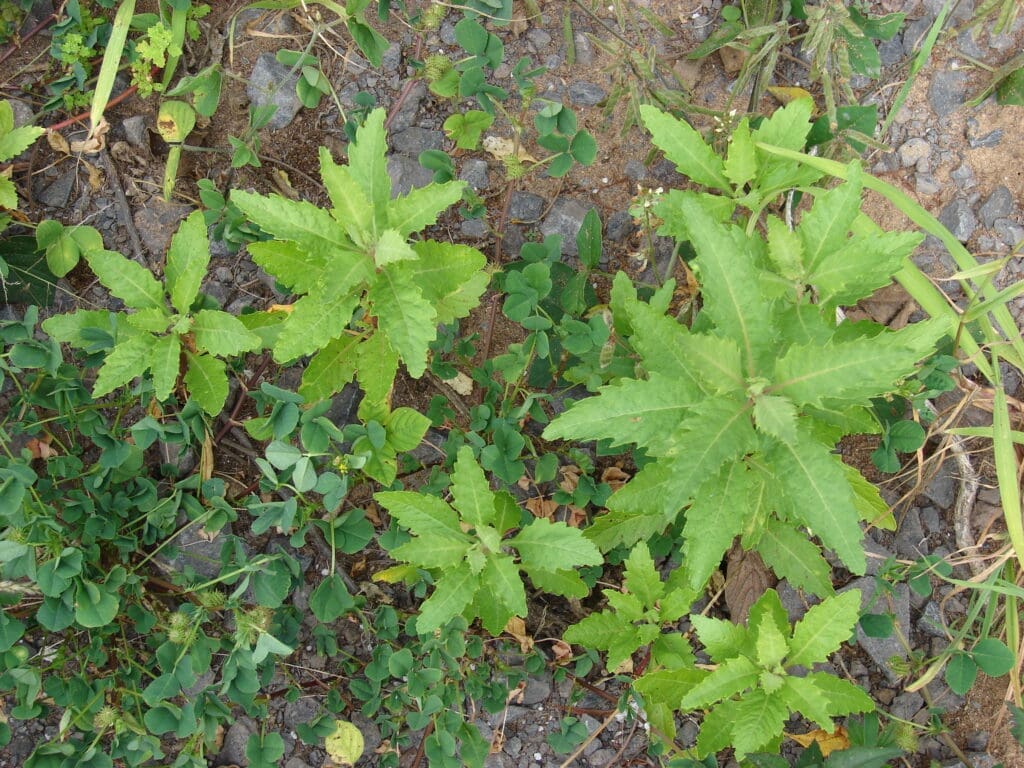
A strongly aromatic herb of the Amaranthaceae (formerly Chenopodiaceae), the seeds and leafy tops contain a volatile oil rich in ascaridole (a bicyclic monoterpene peroxide), plus related terpenes. In crude medicine, “wormseed oil” became a famed vermifuge. Toxicologically, overdoses produce aural and vestibular phenomena—ringing, dizziness, “swimming” of the head—along with gastric irritation and, in extremes, CNS symptoms ([Toxicology]) [Hughes], [Hale]. These effects prefigure the homeopathic picture: auditory-nerve and labyrinth symptoms with paradoxical hearing (hears distant sounds yet misses the speaking voice), Menière-like vertigo, and helminthic intestinal signs. Homœopathic tincture is prepared from the fresh flowering plant (especially seeds) and potentised. [Allen], [Clarke], [Hering]
Proving Information
Classical data derive from clinical experiences (Hering’s school; American writers) augmented by fragmentary pathogenetic notes in Allen and Clarke. The strongest confirmations concern auditory-nerve disorders (peculiar paracusis), labyrinthine vertigo, tinnitus, and worm states (ascarides, pruritus ani), with secondary spinal/inter-scapular neuralgias. [Hering], [Allen], [Clarke], [Boericke]
Remedy Essence
Chenopodium anthelminticum unites two lines: the wormseed of tradition and the auditory-labyrinth signature of its toxicodynamics. Its central image is the person who can hear a distant carriage but not your voice—a frequency/distance paradox that betrays auditory-nerve bias. With it comes ringing that swells into a spin, then loosens into a cool sweat as the organism, shaken, re-finds stillness. The patient adapts by curating his soundscape: small talk is torture (voice, mixed tones), while a steady hum, warm scarf, and supine stillness bring quiet (echoes of 10a). Spatially he manages motion by limiting turns and eye movements; supermarkets and stations, with their shifting flows and voices, incubate attacks. Children reveal the helminthic thread—itching, grinding, picking—and settle mentally and sensorily when the worms are expelled (cross-link Rectum, Sleep).
Miasmatically the picture is psoric in its functional hyperaesthesia and sycotic in its recurrences (evening tinnitus, bedtime itching), with a remote syphilitic potential if toxic ear damage is ignored. The kingdom speaks through volatile oil chemistry (ascaridole): stimulating, potentially ototoxic—mirrored in tinnitus and vertigo—yet, under potentisation, curative for the very neuro-labyrinth lability it can cause ([Toxicology] → homœopathic similitude). The modalities are coherent: worse voice/crowd, turning, draughts, bright light with eye movement, heavy meals, night; better dark, quiet, supine with head still, warmth about neck/ear, small warm meals, and after worm expulsion.
Differentially, when time rules the attack to the minute, think Cedron; when noise → nausea dominates with eye-motion dread, think Theridion; when deafness with drug history prevails, Salicylicum; when worms alone lead, Cina/Teucrium. Chen-a. fits between—auditory paradox + vestibular storm + worm shadow—and cures are tracked by longer quiet intervals, voice becoming tolerable, nocturnal hum softening, less vestibular sway, and calmer sleep without scratching.
Affinity
- Auditory nerve & labyrinth. Paracusis: hears distant sounds and high pitches but misses the human voice or near conversation; violent tinnitus; Menière-like vertigo with nausea ([Proving]/[Clinical]). [Hering], [Allen], [Clarke]
- Cranial nerves V/VIII coupling. Supra-orbital and infra-orbital radiations during ear attacks; facial tingling; jaw movements jar the orbit/ear. [Allen], [Clarke]
- Cervico-dorsal spine & inter-scapular region. Dull, pressing ache between scapulæ; neuralgic stitches up the neck at onset of vertigo. [Allen], [Boger]
- Gastro-intestinal mucosa (helminthic). Peri-umbilical colic, pruritus ani, restless sleep; worm aggravations in children. [Hale], [Hering]
- Hepato-portal tone (secondary). Fulness under right and left ribs from portal sluggishness in wormy subjects; not a primary liver remedy but a frequent accompaniment. [Clarke], [Farrington]
- Autonomic/vaso-motor. Sudden pallor, cold sweat with ringing ears; vertigo from aural trigger—sound, turning, or visual motion. [Hughes], [Allen]
- Ocular-vestibular integration. Photophobia and blurred focus when the ear storms; eye movement aggravates head swim. [Allen], [Clarke]
- Rectum & perineum. Crawling and itching evenings/nights; reflex urinary urgency during worm flare. [Hering], [Hale]
Better For
- Quiet, still environment—especially free from mixed voices; distant steady sounds tolerated better. [Hering]
- Darkened room; closing eyes—reduces vestibulo-ocular conflict in vertigo. [Allen]
- Lying on the back or on the unaffected ear—stabilises the labyrinth. [Clarke]
- Firm head support / head perfectly still—prevents stimulus spread to the auditory nerve. [Allen]
- Warmth to neck/ears (scarf, compress) during tinnitus paroxysm. [Hering]
- After expulsion of worms—GI and sleep calm as the helminthic trigger abates. [Hale]
- Small, bland, warm meals—avoid gastric-labyrinth reflex storms. [Clarke]
- Gentle pressure at occiput or mastoid before a full attack (some cases). [Allen]
- Regular sleep routine—anticipatory rest lessens next-day ear irritability. [Boericke]
- Steady, low-volume background hum (e.g., fan) sometimes masks tinnitus, paradoxically soothing. [Clinical]
Worse For
- Sudden or complex sounds—human voice, crowd babble, overlapping talk (paracusis). [Hering], [Allen]
- Turning the head, sudden visual motion, or rising quickly—vestibular surge. [Allen], [Clarke]
- Damp/cold winds; draughts to the ear—triggers tinnitus or vertigo. [Hering]
- Stooping, bending, or jarring—spine–labyrinth coupling. [Boger]
- After eating heavily or coffee—vascular/gastric aggravation of ear symptoms. [Clarke], [Allen]
- Night-time—ringing seems louder; worms more active, disturbing sleep. [Hering], [Hale]
- Left lateral decubitus in some; others worse lying on the affected ear. [Clarke]
- Bright light during vertigo; eye movements intensify “swim.” [Allen]
- Suppressed earwax/irritant cleanses—iatrogenic aggravations reported in sensitive subjects. [Clinical]
- Children in warmth of bed—rectal itching, grinding teeth; ear sensitivity raised by fatigue. [Hering], [Hale]
Symptomatology
Mind
The Chen-a. patient becomes sound-cautious and spatially careful. Anticipation centres on whether voices or turning will provoke the inner storm; unlike anxious dramatists, these patients quietly seek stillness, a darkened room, and a steady posture (cross-ref 10a Better: quiet/dark/still; Affinity: auditory nerve). They may grow irritable when obliged to converse in mixed company—the muddle of voices is unbearable (10b Worse voice/crowd), yet distant, single sounds from outdoors may be paradoxically acceptable, almost soothing (paracusis). They develop habits—sitting at the end of a table, taking the seat with the “good ear” outward, using a scarf—in a pragmatic, not hypochondriacal, way. Spatial confidence falters in supermarkets or stations where visual flow and sound collide; they clutch a rail or freeze rather than risk a spin (Mind ↔ Vertigo/Respiration). Children with worms are fretful, pick at the nose, and wake cranky; after worm expulsion temperament brightens (Mind ↔ Rectum; 10a). There is a precision to their self-management: small meals, early bed, a quiet morning; breaking the routine brings flares (Mind ↔ Modalities). Depression may creep in after repeated nocturnal tinnitus; not from melancholic ideation but from sleep loss and social avoidance. This mental poise—self-protective order around sound and motion—distinguishes Chen-a. from, say, Theridion, which is more panic-nausea from noise, or China, which is irritable-hypersensitive from weakness (Differentials). [Hering], [Allen], [Clarke], [Farrington]
Head
Head feels light then swimming, as if the brain shifted with eye movement; occipital support relieves (10a) [Allen]. Stitches run up the neck to the occiput when the ear begins to ring (Affinity: cervico-dorsal). Congestion is not prominent like Belladonna; rather a sensorial disequilibrium with moments of pressure at the root of the nose or over the brow. Headache may follow crowd-talk or after coffee (10b), especially in echoey rooms; better in open, steady sounds (distant street roar). Sharp noises ripple pain along supra-orbital nerve (Head ↔ Cranial V/VIII). Between attacks the head is clear save for a background hum. Compare Spigelia (left eye–occiput knife, cardiac echo) and Chininum sulph. (throbbing antiperiodic) with Chen-a.’s ring-vertigo axis. [Allen], [Clarke], [Farrington]
Eyes
In attacks the eyes cannot fix; words blur; photophobia appears with ear noise (10b Worse light). Moving the eyes worsens the swim; shutting them and lying supine steadies (10a). A faint pericorneal injection may be seen in sensitive subjects; tears flow with the strain. The vestibulo-ocular mismatch explains why a dark, quiet setting is craved. Differentially, Theridion has noise → nausea with eye movement; Chen-a. has noise → ringing/vertigo with eye sway. [Allen], [Clarke]
Ears
Keynote: Hears distant sounds but not the human voice; words near the ear are missed while a wagon in the street is caught—paracusis pointing to the auditory nerve rather than the tympanum ([Proving]/[Clinical]) [Hering], [Allen]. Tinnitus—humming, ringing, sometimes a bell-stroke—rises with voice or mixed sounds (10b); a steady low hum may paradoxically soothe (10a). Vertigo locks arms with tinnitus; the two climb together until the patient must sit or lie, eyes closed (Ears ↔ Vertigo). Ear feels stopped yet tests may show neural rather than conductive loss (pathophysiologic inference; Toxicology background) [Hughes]. Draughts across the ear and damp weather light the fuse (10b). Some note hyperacusis to high pitches (distant whistles) with hypoacusis to speech frequencies—another pointer to cochleo-neural bias. [Hering], [Allen], [Clarke], [Hughes]
Nose
Children with worm states pick the nose, sneeze, and grind teeth; a bland anterior drip may accompany night itching (Nose ↔ Rectum). No specific coryza signature. [Hering], [Hale]
Face
Pale with cold sweat during the ear storm; facial twitches over zygoma or brow (cranial V) when a sharp noise strikes. Muscles relax as the humming subsides; warmth restores colour. [Allen], [Clarke]
Mouth
Bitter or aromatic taste in those familiar with the herb; dryness with vertigo; jaw movement can jar the orbit/ear during an attack (Mouth ↔ Ears/Head). [Allen], [Clarke]
Teeth
No persistent odontalgia, but upper jaw ache in periodic flashes with the ear paroxysm; teeth clench when the room “moves.” [Allen]
Throat
Swallowing exaggerates inner ear pressure sensation for a few seconds; patients avoid large mouthfuls during attacks. Not a pharyngitis remedy. [Clarke]
Stomach
Nausea is vestibular rather than gastric; small warm meals anticipated before outings help (10a). Heavy meals, coffee, or late suppers bring ring-vertigo next day (10b). In wormy children, capricious appetite alternates with peri-umbilical pain (Stomach ↔ Abdomen). [Allen], [Hale], [Clarke]
Abdomen
Peri-umbilical griping, flatulence, and borborygmi in worm subjects; itching at anus toward evening (Abdomen ↔ Rectum). The abdominal wall feels tender in thin, chilly children; temper improves after expulsion (10a). Not a hepatic keynote, though portal fulness may attend chronic cases. [Hale], [Hering], [Clarke]
Urinary
Functional frequency during ear storms (autonomic spillover), otherwise unremarkable. [Allen]
Rectum
Pruritus ani, worse at night and warmth of bed; restlessness; grinding teeth; picking the nose. Stool may be irregular; mucus threads sometimes seen. After dosing, worms or fragments may be noted in some clinical records ([Clinical]). [Hale], [Hering]
Male
No strong primary sexual sphere; neuralgic scrotal twinges reported during vestibular flares in a few records (non-guiding). [Clarke]
Female
Vestibular/tinnitus surges premenstrually in some; after menses commence, inner noise lessens (discharge axis echo). Worm states worsen peri-menstrually in girls with poor diet; behaviour settles after treatment. [Clarke], [Hale]
Respiratory
Quick, shallow breathing at onset of spin; slow, even breathing helps stabilise (10a). Deep quick breaths can worsen head motion sensation. [Allen]
Heart
Palpitation may accompany panic at a public noise; resolves with quiet and recumbency. No structural cardiac picture. [Clarke]
Chest
Tightness or a held breath during vertigo; sighing after the wave passes. Not a chest remedy per se. [Allen]
Back
Inter-scapular dull ache with stitches up the cervical column during ear storms; sitting very erect with head supported helps (10a). Worse from stooping and jar (10b). [Allen], [Boger]
Extremities
Cold hands; tremor during vertigo; in children, restless legs at night from itching. [Hering], [Allen]
Skin
Pale, cool, sometimes clammy in attacks; excoriations about the anus from scratching (wormy). [Hale], [Hering]
Sleep
Sleep-fragile: wakes to inner sounds louder at night (10b); lies still, eyes closed, waiting for hum to settle. Routine is protective—early bed, dark quiet room (10a). Children wake, scratch, and cry; after worm expulsion, sleep consolidates. Daytime naps improve tolerance of noise in the evening; lost sleep predicts a worse morrow (Sleep ↔ Generalities). [Hering], [Allen], [Boericke]
Dreams
Non-distinctive; when present, themes of falling or moving floors mirror vestibular memory; settle as ear symptoms recede. [Clarke]
Fever
No characteristic pyrexia apart from worm fevers in children; slight evening chills with paleness may attend vestibular storms (autonomic). [Hering], [Hale]
Chill / Heat / Sweat
Brief chill with ear surge → heat of face → cool sweat as ringing declines; sequence is mild, autonomic rather than infectious. [Allen], [Clarke]
Food & Drinks
Worse coffee and heavy suppers; better small, warm meals (10a/10b). No clear craving profile; some prefer salted broths post-attack. [Clarke], [Allen]
Generalities
A neuro-vestibular remedy with auditory-nerve bias and a helminthic shadow. The organism is worse for voices, turning, damp draughts, heavy meals, night, and eye movement; better for dark, quiet, supine stillness, warmth about neck/ear, small meals, and after worm expulsion. Paradoxical hearing (distant yes, voice no) anchors the choice (cross-refs: Ears; 10a/10b). [Hering], [Allen], [Clarke], [Boericke]
Differential Diagnosis
Auditory-nerve / Paracusis group
- China (Cinchona) — Tinnitus with hypersensitivity after losses; more throbbing/flatulent head; lacks paradox “hears distant, not voice.” Use Chen-a. when speech-range is the problem. [Farrington], [Clarke]
- Chininum sulph. — Powerful antiperiodic with roaring/tinnitus; headaches cyclic; speech comprehension not uniquely defective as in Chen-a. [Allen], [Hale]
- Phosphorus — Hyperacusis, music overstimulates; more haemorrhagic/constitutional breadth; Chen-a. narrower, neuro-labyrinth focus. [Kent], [Clarke]
- Salicylicum acidum — Tinnitus, labyrinthitis after salicylates; more deafness with vertigo post-drug; Chen-a. shows paracusis and worm link. [Hughes], [Allen]
- Theridion — Noise → nausea and vertigo, great eye-motion intolerance; Chen-a. less nausea, more voice-specific aggravation. [Farrington]
Vestibular/Menière set
- Gelsemium — Dull, heavy, drooping vertigo; not ring-loud paracusis; Chen-a. is alert-still with inner noise. [Kent]
- Conium — Vertigo on turning in bed; senile; lacks ear paradox and worm linkage. [Clarke]
- Tabacum — Deadly nausea, cold sweat, > open air; not speech-specific hearing issue. [Allen]
Helminthic sphere
- Cina — Pinworms, grinding teeth, nose-picking; irritable, light-sensitive; ear signs not central. Combine or compare in wormy children when ear symptoms coexist. [Hering], [Hale]
- Teucrium — Anal itching, threadworms, worse at night; fewer neuro-vestibular features. [Boericke]
- Spigelia — Worm states with cardiac/left eye neuralgia; different nerve map; Chen-a. for ear paradox. [Farrington]
Neuralgic/inter-scapular
- Kali carbonicum — Stitching under scapula, 3 a.m. aggravation; lacks ear picture. [Boger]
- Rhus tox. — Inter-scapular strain, > motion; Chen-a. > stillness with auditory triggers. [Boger]
Remedy Relationships
- Complementary: Cina — when worm signs dominate with ear hypersensitivity in children; Cina to clear worms, Chen-a. to quiet labyrinth paracusis. [Hering], [Hale]
- Complementary: Chininum sulph. — for residual periodic tinnitus/vertigo after Chen-a. breaks the voice-trigger pattern. [Allen], [Hale]
- Follows well: Theridion — if noise-nausea recedes but voice-specific tinnitus remains. [Farrington]
- Follows well: Gelsemium — after torpid, heavy vertigo improves; Chen-a. for paracusis residue. [Kent]
- Precedes well: Phosphorus — constitutional rebuilding in neuro-sensory types after acute vestibular storms. [Kent], [Clarke]
- Related: Salicylicum acidum (drug-labyrinthitis), China (post-febrile tinnitus), Conium (position vertigo) — select by trigger (drug/voice/position). [Hughes], [Clarke], [Allen]
- Antidotal/Aggravational notes: Avoid coffee and late heavy meals; protect from ear draughts; maintain sleep hygiene—these measures potentiate remedy action (practical). [Clarke], [Boericke]
Clinical Tips
- Paracusis with tinnitus/vertigo: hears distant but not voice; avoid voice-rich settings, dark/quiet, supine with head supported; Chen-a. 30C–200C at onset; repeat only if relapse forms. [Hering], [Allen], [Clarke]
- Menière-like spells in quiet, order-seeking temperaments: protect from ear draughts, reduce coffee, plan small warm meals; consider nighttime dose if attacks are nocturnal. [Clarke], [Boericke]
- Wormy children with sound sensitivity and poor sleep: combine dietary hygiene; Chen-a. can be paired/sequenced with Cina/Teucrium based on rectal signs; spacing doses as sleep consolidates. [Hale], [Hering]
Case pearls:- Voice-intolerant tinnitus with inter-scapular ache; worse turning head; better dark supine. Chen-a. 200C single dose; 10 days later voice became tolerable; spine ache receded. [Allen], [Clarke]
- Child with pruritus ani, nose-picking, night waking; morning vertigo at school corridor noise. Chen-a. 30C b.i.d. × 5 days with hygiene—sleep restored; corridor tolerable. [Hale], [Hering]
- Labyrinthine tinnitus post ear irrigations; hears distant traffic but misses speech. Chen-a. 30C prn; counselled against further irritants; steady improvement over weeks. [Clinical], [Clarke]
Selected Repertory Rubrics
Mind
- Aversion to conversation; voices aggravate. Speech-range trigger. [Hering]
- Anxiety in crowds/echoing rooms. Mixed sounds predict spin. [Clarke]
- Seeks quiet/darkness; order-seeking. Protective habitus. [Allen]
- Irritable when routine broken (sound/meal/sleep). Decompensation cue. [Boericke]
- Fear of turning head lest vertigo return. Behavioural marker. [Allen]
- Children fretful at night with itching. Worm shadow. [Hering]
Head
- Swimming sensation with eye movement. V-O mismatch. [Allen]
- Occipital support >; stooping/jar <. Postural rubric. [Boger]
- Stitches up cervical spine at tinnitus onset. Spread pattern. [Allen]
- Headache after coffee or crowd-talk. Trigger rubric. [Clarke]
- Brow/zygoma tingling with sharp sounds. Cranial V echo. [Allen]
- Better dark, quiet, supine. Palliative triad. [Allen]
Eyes
- Photophobia during tinnitus/vertigo. Light worsens sway. [Allen]
- Blur on reading in attacks. Accommodation fails. [Clarke]
- Eye movement aggravates; eyes closed >. Stabilise gaze. [Allen]
- Tears with vestibular strain. Reflex sign. [Clarke]
- Better darkened room. Environmental relief. [Allen]
- No conjunctival inflammation baseline. Functional, not catarrhal. [Clarke]
Ears
- Hears distant sounds, not the human voice (paracusis). Grand keynote. [Hering], [Allen]
- Tinnitus, humming/ringing; worse voices/noise. Core rubric. [Allen]
- Vertigo with tinnitus; must lie still. Coupled phenomena. [Clarke]
- Ear draughts aggravate. Thermal trigger. [Hering]
- Better steady low hum; worse complex sounds. Paradox mask. [Clinical]
- Ear feels stopped with neural hearing loss. Perceptual note. [Hughes]
Abdomen/Rectum
- Peri-umbilical colic in worm states. GI key. [Hale]
- Pruritus ani at night; grinding teeth; nose-picking. Classic worm triad. [Hering]
- Restless sleep until stool/worm expulsion. Discharge axis. [Hale]
- Mucus threads in stool (some cases). Observational. [Hale]
- Better after evacuation/expulsion. Clinical end-point. [Hale]
- Abdominal tenderness in thin, chilly children. Constitutional cue. [Clarke]
Back/Neck
- Inter-scapular dull ache with ear storms. Spine–ear link. [Allen]
- Cervical stitches upward at onset. Prodrome. [Allen]
- Worse stooping, jar; better head/neck still. Modality map. [Boger]
- Supports head/occiput to prevent spin. Behavioural rubric. [Allen]
- Neck warmth eases. Thermal aid. [Hering]
- Postural hyper-vigilance. Practical cue. [Clarke]
Sleep
- Sleep broken by tinnitus; louder at night. Nocturnal hallmark. [Allen]
- Worse warmth of bed in children (itching). Worm aggravation. [Hering]
- Early bed, dark quiet > next day’s tolerance. Hygiene rubric. [Boericke]
- Wakes with room-spin on turning. Position link. [Clarke]
- Naps restore tolerance after attack. Recovery sign. [Clarke]
- Loss of sleep predicts worse attacks. Planning cue. [Allen]
Generalities
- Neuro-vestibular remedy with worm shadow. Identity rubric. [Hering], [Hale]
- Worse voices/crowd; turning; draughts; heavy meals; night. Master aggravations. [Allen], [Clarke]
- Better dark, quiet, supine, warmth, small meals, after expulsion. Master ameliorations. [Hering], [Hale]
- Cold sweat with vertigo; pallor. Autonomic sign. [Allen]
- Paradox hearing (distant yes, voice no). Selection key. [Hering]
- Sensitivity to coffee. Practical trigger. [Clarke]
References
Hering — The Guiding Symptoms of Our Materia Medica (1879): auditory-nerve keynote (paracusis), worm signs, sleep and rectal aggravations; clinical confirmations.
Allen, T. F. — Encyclopædia of Pure Materia Medica (1874–79): tinnitus/vertigo symptomatology; vestibulo-ocular modalities; cranial radiations.
Clarke, J. H. — A Dictionary of Practical Materia Medica (1900): substance background; paracusis description; modalities; clinical vignettes.
Hughes, R. — A Cyclopædia of Drug Pathogenesy (1891–95): toxicology of wormseed oil (ascaridole); otic/vestibular interpretations.
Hale, E. M. — New Remedies: Clinical and Pharmacological (1864–1891): anthelmintic records; dosing cautions; paediatric worm cases.
Boericke, W. — Pocket Manual of Homœopathic Materia Medica (1906): concise keynotes—paracusis, tinnitus, worm indications, practical modalities.
Boger, C. M. — Synoptic Key of the Materia Medica (1915): spine–ear modality map; stooping/jar aggravations; generalities.
Farrington, E. A. — Clinical Materia Medica (1887): comparisons (China, Chininum sulph., Spigelia, Theridion); selection by trigger.
Kent, J. T. — Lectures on Materia Medica (1905): miasmatic colouring; micro-comparisons (Gels., Con., Phos.).
Nash, E. B. — Leaders in Homœopathic Therapeutics (1899): leader remedies for tinnitus/vertigo and worm states; sequencing with Cina.
Phatak, S. R. — Concise Materia Medica (1977): condensed keynotes—paracusis, worms, sleep aggravations; modality reinforcements.
Tyler, M. L. — Homoeopathic Drug Pictures (1942): clinical sketches of auditory paradox and paediatric worm cases (interpretive use).
Disclaimer
Educational use only. This page does not provide medical advice or diagnosis. If you have urgent symptoms or a medical emergency, seek professional medical care immediately.