

Chelone glabra
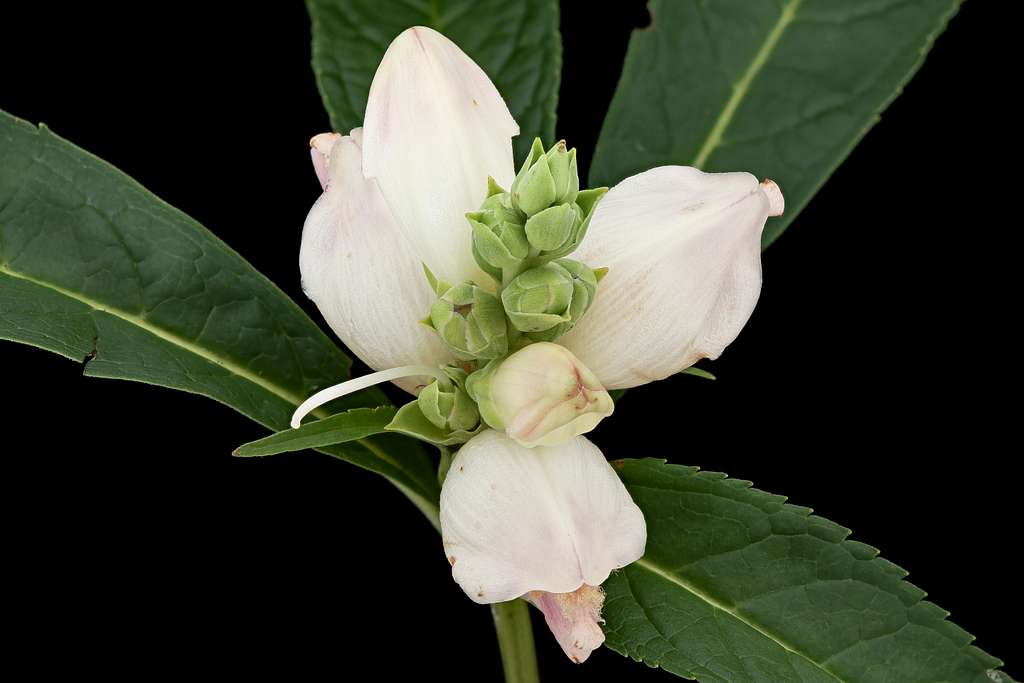
Substance Background
An erect, bitter, North American perennial of damp meadows and stream margins, Chelone glabra belongs to Plantaginaceae (formerly placed in Scrophulariaceae). The fresh, flowering herb is tinctured; triturations and centesimal potencies are prepared from the mother tincture [Clarke], [Boericke]. Eclectic physicians prized its intense amarous (bitter) principles and iridoid glycosides for their hepatic–biliary stimulation, “portal decongestion,” and anthelmintic action, a pharmacologic profile that helps to explain later homeopathic indications in biliary torpor, jaundice, “worm states,” and pruritic skins secondary to cholestasis [Hughes], [Clarke]. Classical compilers drew its picture largely from clinical experience, supported by modest provings and toxicologic notices [Allen], [Hering].
Proving Information
Fragmentary [Proving]s with digestive heaviness, bitter taste, dull headaches, and skin itching were compiled by Allen; the bulk of the picture rests on [Clinical] confirmations in liver–gall disorders, intestinal parasites, and cholestatic pruritus, later collated by Hering, Clarke, and Boericke [Allen], [Hering], [Clarke], [Boericke].
Remedy Essence
At its core, Chelone glabra expresses the bitter remedy for a loaded portal system: a physiology stuck in slow gear where bile drips rather than flows, the head feels banded and dull, the mouth is bitter at dawn, the skin itches without obvious cause, and the right hypochondrium broods under a soft ache. The organism reacts to heat and dietary richness with torpor and irritation, and is restored by air, coolness, and evacuation—a trifecta that appears repeatedly across the picture (Better cool, Better after stool, Better open air) [Clarke], [Hering]. The kingdom signature accords with Plantaginaceae bitters: a steady nudge to secretions and peristalsis rather than a violent purge—the patient is not explosive like Podophyllum nor knife-stitching like Chelidonium; instead, they are dull, itchy, and burdened, improving when the bile finally moves [Hughes], [Farrington]. Miasmatically, it reads psoric–sycotic: functional stasis with recurring, lifestyle-triggered aggravations, a circularity of congestion → partial relief → relapse with errors (late suppers, fats, alcohol) [Kent], [Clarke].
In paediatric worm states, the same polarity appears in miniature. The child is hot in bed, scratches and grinds teeth, wakes sour and peevish, picks at food yet craves odd items; once a worm or mucus is passed, there is an immediate but temporary lull—the intestinal mirror of the adult’s biliary relief [Allen], [Hering]. Skin and nerves simply register the gut-liver axis: itch is the skin’s bile, and dull headache is the head’s portal weight. Cross-links abound: the head clears after stool; the itch calms with cool sponging; the hypochondrial ache softens when the patient lies on the right side or ambles in fresh air. The pace is slow and congestive, the reactivity modest yet consistent, the thermal state heat-intolerant, the sensitivities culinary and climatic rather than emotional. If the prescriber hears the litany—“mornings bitter and dull; fats don’t suit me; I itch in the warm; my right side is heavy; I brighten after a good motion”—then Chelo. is close at hand. It thrives where dietary reform and the bitter reflex are allies, and it takes its place among the “bile remedies” as the cooling, decongesting member with a special nod to cholestatic itch and worm-coloured paediatrics [Clarke], [Hughes], [Boericke].
Affinity
- Liver and biliary tract. Portal congestion with “bilious” headaches, bitter mouth, yellowing, and stool/urine colour change; sluggish bile with colicky right-hypochondrial pains [Clarke], [Hughes]. See Head, Abdomen, Generalities.
- Gall-bladder. Biliary colic after rich foods; tenderness under right ribs; relief as bile passes (echoed in “better after stool” or after a bilious evacuation) [Clarke], [Boericke]. See Abdomen.
- Gastro-intestinal mucosa. Bitter eructations, nausea, flatulent distension, slow peristalsis, “liver-constipation” with pale, clay-coloured stools [Allen], [Boericke]. See Stomach, Rectum.
- Intestinal parasites (ascarides). Irritation at anus, grinding of teeth, disturbed sleep, capricious appetite; anthelmintic reputation (Eclectic) clinically echoed in children [Clarke], [Hughes]. See Rectum, Sleep.
- Skin (cholestatic). Generalised itching without eruption or with faint papules in “bilious” subjects; pruritus worse warmth, better cool applications [Clarke], [Hering]. See Skin.
- Spleen/portal system. Dull, heavy left-hypochondrial ache in malarial or congestive states; dragging abdominal sensation after meals [Clarke], [Hughes]. See Abdomen.
- Head (portal). Dull, vertex or frontal pain with heaviness of eyes, worse mornings or after dietary excess; improves with free biliary flow or stool [Allen], [Clarke]. See Head.
- General nutrition. Debility and anaemia in wormy or chronically “bilious” patients; slow convalescence until hepatic function is restored [Boericke], [Clarke]. See Generalities.
Better For
- After a free stool or bilious evacuation, headaches and right-sided pressure abate [Clarke].
- Cool applications and fresh air, easing pruritus and dull head (skin/liver linkage) [Clarke], [Hering].
- Bitter, light foods that stimulate bile gently (broths, greens) rather than rich dishes [Hughes].
- Resting on the right side for colicky gall-bladder pains (pressure quiets) [Clinical].
- Gentle walking in open air after a meal, promoting peristalsis without strain [Clinical].
- Avoiding fats and late suppers, which lessens nocturnal head and itching [Clarke].
- Passing worms or mucus, with transient relief of abdominal unease and anal irritation [Allen].
- Cold sponging in cholestatic itch (echoed in Skin) [Hering].
Worse For
- Rich, fatty foods and fried dishes, which provoke “biliousness,” nausea, right-hypochondrial pains, and portal headache [Clarke], [Hughes].
- Warmth of bed/room, increasing pruritus and head-heaviness in biliary states [Hering], [Clarke].
- Morning on waking, before stool, when taste is bitter and head is dull (portal stasis) [Allen], [Clarke].
- Inactivity and prolonged sitting, favouring congestion and constipation [Hughes].
- Late evening meals and alcohol, bringing gall-bladder aching and restless sleep [Clarke].
- Damp heat, with languor and skin itching (malarial/portal types) [Clarke].
- Pressure under right costal margin during acute congestion (until evacuation occurs) [Clinical].
- Teeth-grinding children at night, with anal itching—worm aggravations [Allen], [Hering].
Symptomatology
Mind
A sluggish, burdened mental state accompanies portal engorgement: patients complain of dullness, slow recall, and a disinclination for exertion, especially in the morning before stool, which mirrors the modality (worse mornings) already noted [Clarke], [Allen]. Irritability is low-grade, often attributed to persistent itching or abdominal weight; the patient is fretful over diet and routine, fearing the return of “bilious” headache after rich foods [Clarke]. Anxiety is practical and somatic—about meals, bowels, and sleep—and improves once a free stool is passed (explicitly cross-linking Better after stool) [Clarke]. In children with worms the disposition is peevish by day, excitable at night with grinding of teeth and talking in sleep; their moods improve after expelling worms [Allen], [Hering]. A melancholic colour may attend jaundice: indifference to company, dislike of noise, and a wish to lie quiet in a cool room (cross-link Better cool air) [Clarke]. Mental effort aggravates head-heaviness until the portal state is relieved; brief freshness follows outdoor air or a light, bitter meal [Hughes], [Clarke]. Case: a bookkeeper with morning bitterness of mouth and inability to “get going” until bowels moved and head cleared, recurring after late, fatty suppers, responded to Chelo. with diet regulation [Clarke].
Head
Dull, congestive headaches with a heavy, band-like pressure across the forehead or vertex are characteristic of “bilious” subjects; they tend to appear on waking, heighten after rich foods, and subside after stool or a bilious discharge (modalities echoed) [Clarke]. Eyes feel heavy and smarting; light annoys, yet the headache is not the stabbing photophobic type of Iris-v. or Glon.; it is a loaded, venous heaviness linked to hepatic stasis [Allen], [Farrington]. Nausea may accompany the headache, not as persistent as Ipecac., but relieved by open air and cold sponging (cross-link Better cool) [Clarke], [Hering]. In intermittent/“malarial” constitutions the head pain coincides with damp heat and portal fulness; a day of light diet and bitters often mitigates it [Hughes]. Case: a seamstress with weekly vertex heaviness following Sunday roasts lost the head pain once the stools became more bilious under Chelo. and dietary changes [Clarke].
Eyes
Aching and heaviness of lids accompany head pressure; sclerae may look faintly yellow in cholestatic subjects, with transient blurring on stooping—another sign of venous load [Clarke]. Itching at angles of eyes at night reflects the general pruritic tendency of the skin in “bilious” phases, worse warmth (modalities echoed) [Hering], [Clarke]. Lachrymation is mild; vision clears after open air or after stool (cross-link Better fresh air, Better after stool) [Clarke].
Ears
No sharp otic keynotes; yet dull, venous fulness may produce intermittent humming when the head is heavy, better after evacuation and fresh air [Clarke], [Clinical]. Children during worm aggravations are startled by noises at night and grind teeth; otic symptoms subside as the parasitic irritation eases [Allen].
Nose
Bland catarrh in damp, warm weather may accompany portal states; the patient notes worse stuffiness after heavy meals and better in the open air—another echo of the “loaded” venous picture [Clarke], [Hughes]. Itching wings of nose at night is noted in wormy children (micro-comparison: Cina shows more spasmodic sneezing and irritability) [Allen], [Hering].
Face
A “bilious” look—sallow, slightly puffy, with dark under-eye circles—appears during congestive episodes; the face flushes easily after rich foods then cools with fresh air or cold sponging (modalities echoed) [Clarke]. Lips dry on waking with bitter taste; expression dulled until bowels move [Allen].
Mouth
Bitter taste on waking and after rich dishes is a constant pointer; the mouth feels pasty, tongue coated yellowish or brownish down the centre, edges cleaner [Allen], [Clarke]. Saliva is not excessive; thirst is moderate, often for cool drinks which relieve mouth bitterness and head heaviness (cross-link Better cool) [Clarke]. Teeth-grinding at night in children, related to intestinal parasites, is repeatedly noted [Allen], [Hering].
Teeth
No primary dental pathology, but bruxism during sleep in worm cases, with morning jaw soreness; this improves notably after passing worms or under anthelmintic treatment (echoing Better after expelling worms) [Allen], [Hering].
Throat
Slight rawness or thick mucus on waking accompanies the bitter mouth; frequent clearing of throat after late suppers (reflux-like) and relief as the day advances, especially in open air [Clarke], [Hughes].
Stomach
Nausea with aversion to fats; eructations bitter; a sense of load soon after eating rich food marks the torpid, cholestatic digestion [Clarke], [Hughes]. Appetite is capricious—desire for bitter greens, dislike of sweets and grease; too heavy a meal brings right-hypochondrial aching and portal headache (cross-link Head, Abdomen) [Clarke]. Vomiting is rare and not the persistent retching of Ipecac.; rather a queasy fulness that lifts after stool or a bilious evacuation (modalities echoed) [Allen], [Clarke]. Hiccough after overeating is noted in some [Allen].
Abdomen
Right-hypochondrial soreness with a dragging, congested feeling across the epigastrium; the gall-bladder region is tender to pressure during attacks, yet gentle pressure/rest to the right side may soothe until the bowels act (cross-links Better right-side rest, Better after stool) [Clarke]. Abdomen distended with gas after rich food; flatulence is fetid in wormy states [Allen]. Left-hypochondrial (splenic) ache occurs in malarial constitutions with damp-heat weather (affinity echoed) [Hughes]. Sharp, short colics come in waves, then ease as bile passes or after a copious stool [Clarke].
Urinary
Urine may be high-coloured, scanty, with strong odour during bilious states; it lightens as bile flows and stools darken (liver linkage) [Clarke]. Slight burning at close of urination in wormy or acidic children appears in a few notes [Allen]. No violent vesical tenesmus as in Canth.; urinary symptoms are accessory to hepatic disorder.
Rectum
Constipation with pale, clay-coloured stools; or alternation with loose, bilious stools in congestive phases [Allen]. Itching of anus at night, worse warmth, better cool water, is a worm sign; children are restless, pick at nose, and grind teeth, improving after expulsion of worms (modalities echoed) [Allen], [Hering]. Tenesmus is mild; haemorrhoids belong more to Nux-v. and Aloes, yet portal patients may complain of fullness without bleeding [Clarke].
Male
Lassitude, diminished desire during “bilious” episodes; heavy, sleepy after meals; a tendency to late-night suppers aggravates nocturnal restlessness and morning bitterness (modalities echoed) [Clarke], [Clinical].
Female
Menses may come with increased itching of skin and a return of portal headaches after dietary indiscretion; nausea from fats premenstrually is noted in “bilious” constitutions [Clarke]. Post-cholecystectomy dyspepsia with itching improves under a strict light diet and hepatic bitters; Chelo. has been used where cholestatic pruritus colours the case (clinical) [Clarke].
Respiratory
Breathing feels easier after a walk in cool air; a sense of breath hunger occurs in stuffy warm rooms with itching skin, pointing again to the double modality (worse warm, better cool) [Hering], [Clarke].
Heart
Palpitation from dyspeptic loading or after alcohol late at night; soft, compressible pulse in congestive states, steadier after stool and exposure to cool air [Clarke], [Clinical].
Chest
Oppression and short sighing respirations accompany the heavy head after meals; this is venous and abdominal in origin, better open air and walking gently (modalities echoed) [Clarke]. No sharp pleurodynia (Bry.)—rather a loaded epigastric chest.
Back
Dull aching between shoulders (liver reflex) after rich foods; right scapular pain radiating from the gall-bladder region during colic—less sharp than Chelidonium’s stabbing under angle of right scapula, but recognisably hepatic [Clarke], [Farrington].
Extremities
Heaviness of limbs and easy fatigue; hands may itch at night in cholestatic patients; children throw off bedclothes with restless legs when worms irritate [Allen], [Clarke].
Skin
Generalised pruritus, often without marked eruption, worse warmth of bed and in heated rooms; cold sponging or fresh air calms (explicit cross-link to Better cool) [Hering], [Clarke]. Yellowness is slight and fluctuating; scratching yields transient welts. In worm states, perianal irritation is prominent with nocturnal aggravation [Allen].
Sleep
Sleep is unrefreshing when suppers are late or fatty; patients toss, grow warm, and scratch, then fall into heavy, dull slumber towards morning, waking with bitter mouth and heavy head (echoing Worse morning, Worse warmth) [Clarke], [Hering]. Children grind teeth, talk, and start in sleep; they rub nose/anus and wake cross, then oddly hungry—classic worm phenomena (micro-comparison: Cina is more spasmodic, more peevish and obstinate) [Allen], [Hering]. Short naps by day restore more than long nights—the system feels over-loaded until bowels move and air clears the head [Clarke].
Dreams
Anxious dreams of business, of eating unsuitable food, and of being too hot in a close room; children dream of animals and wake to grind teeth or scratch—themes that recapitulate the gastric/worm sphere and thermal modality [Allen], [Hering].
Fever
Little tendency to high fever; rather a venous, congestive heat in the evening after rich food, with flushed face and itching skin, followed by dull morning heaviness [Clarke]. Intermittent types in damp heat show portal fulness rather than true malarial rigor (contrast with China) [Hughes].
Chill / Heat / Sweat
Chilliness in draughts alternates with heat in warm rooms; sweat is not profuse except after rich meals or in anxious itching fits; cool sponging brings relief (cross-link Better cool) [Hering], [Clarke].
Food & Drinks
Aversion to fats; desire for bitter salad greens and cool water; aggravation from fried foods, pork, pastry, late suppers, and alcohol—dietary triggers that reproduce head–liver symptoms (modalities echoed) [Clarke], [Hughes].
Generalities
A remedy of biliary torpor with portal congestion: the organism feels loaded, dull, itchy, and reactive to heat and fats, yet lightened by air, cool sponging, and a free stool [Clarke], [Hughes]. The head echoes the abdomen—heavy, band-like, morning-worse until the bowels move (cross-link Head, Stomach). Right-sided hypochondrial soreness with radiation to right scapula indicates the gall-bladder focus, though less sharply than Chelidonium (micro-comparison) [Farrington], [Clarke]. Skin symptoms—itch without eruption—are the cutaneous register of the same cholestatic state (Skin cross-link), worse warmth of bed, better cool. Worm phenomena add a paediatric facet: nocturnal bruxism, anal pruritus, capricious appetite, fetid flatus, all easing after expulsion (Rectum, Sleep) [Allen], [Hering]. The global pace is slow congestion → brief relief after evacuation → relapse with dietary errors; management hinges on avoiding fats/late meals and recruiting the bitter reflex—Chelo. fits hand-in-glove with that physiology [Clarke], [Hughes].
Differential Diagnosis
Hepatic–Biliary Torpor / Right-sided
- Chelidonium. Sharp, stitching pain to the right scapular angle; marked desire for hot drinks; more pronounced jaundice. Chelo. is duller, bitter-mouth, heat-worse, with cutaneous itch and relief after stool [Farrington], [Clarke].
- Chionanthus. Intense frontal headaches with profuse bile, clay stools, and pancreatic element; Chelo. has milder cephalgia and prominent pruritus [Clarke].
- Carduus-m. Hepatic soreness with haemorrhoids and vascular engorgement; Chelo. is more cholestatic-itching, less venous haemorrhoidal [Clarke], [Boger].
- Leptandra. Black, tarry stools with aching in liver; more prostration; Chelo. has clay stools or bilious alternation, with itching [Allen], [Farrington].
- Nux-v. Gastric irritability and portal stasis in the sedentary, with morning aggravation; Chelo. is softer, bitter-mouth, less irascible, more pruritic [Clarke], [Kent].
- Podophyllum. Painless diarrhoea early morning, gushing, with gall-bladder association; Chelo. is less explosive, more loaded and itchy [Allen].
Worm States (Paediatrics)
- Cina. Marked irritability, boring in nose, spasmodic cough; Chelo. shares bruxism/anal itch but is calmer and more “bilious” [Allen], [Hering].
- Teucrium-m. Anal pruritus from threadworms, worse evening; Chelo. adds bitter mouth, sluggish liver, and portal head [Clarke], [Boger].
- Spigelia. Worm colic with peri-umbilical tenderness and neuralgic traits; Chelo. is chiefly hepatic-portal and cutaneous [Allen].
Cutaneous Pruritus (Cholestatic)
- Sulph. Burning, scratching till raw, heat-aggravated; Chelo. has itch sans eruption tied to bile stasis, better cool sponging [Clarke], [Hering].
- Urtica-urens. Urtication and hives, food-linked; Chelo. pruritus is more “bile-itch,” with hepatic signs [Clarke].
Remedy Relationships
- Complementary: Nux-v.—sedentary portal states; Nux clears gastric irritability, Chelo. sustains biliary decongestion [Clarke], [Kent].
- Complementary: Chelidonium—right hypochondrium, scapular radiation; used sequentially when cholestasis alternates with sharper colic [Farrington].
- Complementary: Carduus-m.—vascular liver and dietary errors; alternation by phase [Boger], [Clarke].
- Follows well: Leptandra—after black, tarry stools subside, lingering cholestatic itch and bitterness call for Chelo. [Farrington].
- Follows well: Chionanthus—when violent frontal “bilious” headaches abate yet portal heaviness persists [Clarke].
- Precedes well: Sulph.—constitutional regulation of heat/itch in chronic hepatic subjects [Kent], [Tyler].
- Precedes well: Sepia—in long-standing portal stasis with hormonal overlay and right-sided dragging [Kent].
- Related: Teucrium-m., Cina—worm complements in paediatrics [Allen], [Boger].
- Related: Taraxacum—bitter tonic states; Chelo. more gall-bladder focused [Clarke].
- Antidotes (functional): Cool air, light bitter diet, early suppers—physiologic “antidotes” echoed in modalities [Clarke], [Hughes].
Clinical Tips
- Biliary torpor with pruritus: Mother tincture (Ø) 5–10 drops in water, t.i.d. with meals for a few days, then space; watch for dietary triggers (fats, late suppers). Classical usage stresses light, bitter diet alongside the remedy [Clarke], [Hughes].
- Right-sided “bilious” headache: 3x–6x every 3–4 hours on the day of aggravation; if stabbing scapular pains dominate, compare/alternate with Chelidonium [Farrington], [Clarke].
- Worm states (children): 3x–6x twice daily for 5–7 days with hygienic measures; choose Cina/Teucrium when the nervous/anal signs are extreme; use Chelo. when “bilious” colouring and morning bitterness are present [Allen], [Hering].
- Convalescent dyspepsia: 6x b.i.d. with early, light evening meals; add open-air walks and cool sponging at bedtime for warmth-worse itch [Clarke].
- Case pearls:
-
- “Bile-itch” worse warmth, better cool sponging—think Chelo. [Clarke], [Hering].
- Morning bitter mouth + dull head that clears after stool in right-sided liver cases [Allen], [Clarke].
- Wormy child who grinds teeth, scratches at night, and is “bilious” by day [Allen], [Hering].
Selected Repertory Rubrics
Mind
- Mind—Sluggishness—morning—before stool. Portal stasis pattern; clears after evacuation [Clarke].
- Mind—Irritability—itching, from. Pruritus-driven fretfulness in cholestasis [Clarke], [Hering].
- Mind—Anxiety—health—about digestion. Practical, diet-centred worry [Clarke].
- Mind—Indifference—heat, in. Heat-worse torpor [Hering].
- Mind—Dullness—after rich food. Dietary aggravation [Clarke].
- Mind—Concentration—difficult—morning. Clears with air and stool [Clarke].
Head
- Head—Pain—frontal—morning—on waking. Bitter mouth concomitant [Allen], [Clarke].
- Head—Heaviness—vertex—after eating. Rich foods aggravate [Clarke].
- Head—Congestion—portal disorders. Hepatic linkage [Hughes].
- Head—Better—after stool. Bile evacuation relieves [Clarke].
- Head—Worse—warm room. Heat-worse [Hering].
- Head—Nausea—with headache—rich food after. “Bilious” type [Clarke].
Stomach
- Stomach—Nausea—fats, from. Cholecystic aggravation [Clarke].
- Stomach—Eructations—bitter. Bile taste [Allen].
- Stomach—Aversion—fat—fried things. Dietary key [Clarke].
- Stomach—Hiccough—after overeating. Minor sign [Allen].
- Stomach—Better—open air. Relieves heaviness [Clarke].
- Stomach—Pressure—epigastrium—after meals. Sluggish peristalsis [Hughes].
Abdomen (Liver/Gall)
- Abdomen—Pain—liver region—pressure—worse. During congestion [Clarke].
- Abdomen—Pain—gall-bladder region—right—radiating—scapula. Less sharp than Chel. [Farrington].
- Abdomen—Distension—after rich food. Flatulence [Allen].
- Abdomen—Spleen—pain—dull. Damp-heat, malarial types [Hughes].
- Abdomen—Better—lying on right side. Soothes colic [Clinical].
- Abdomen—Better—after stool. Portal decongestion [Clarke].
Rectum
- Rectum—Constipation—clay-coloured stool. Cholestasis marker [Clarke].
- Rectum—Itching—night—warmth—worse. Worm sign [Allen], [Hering].
- Rectum—Worms—threadworms—ascarides. Paediatric sphere [Allen].
- Rectum—Tenesmus—slight. Portal type [Clarke].
- Rectum—Flatus—fetid—worms, in. [Allen].
- Rectum—Better—cool applications. Itch soothes [Hering].
Skin
- Skin—Itching—without eruption—warmth—worse. “Bile-itch” [Clarke], [Hering].
- Skin—Pruritus—cholestatic. Hepatic linkage [Clarke].
- Skin—Itching—night—in bed. Warmth-worse [Hering].
- Skin—Better—cold sponging. Cooling modality [Hering].
- Skin—Jaundice—slight. Variable tint [Clarke].
- Skin—Heat—cannot bear. Thermal key [Clarke].
Generalities
- Generalities—Food and drinks—fat—aggravates. Central diet modality [Clarke], [Hughes].
- Generalities—Warmth—worse. Head/skin worsen [Hering].
- Generalities—Open air—better. Clears head and itch [Clarke].
- Generalities—Morning—worse. Before stool [Allen], [Clarke].
- Generalities—After stool—better. Portal relief [Clarke].
- Generalities—Right-sided—affection. Liver/gall focus [Farrington].
References
Hering — The Guiding Symptoms of Our Materia Medica (1879): clinical confirmations in hepatic torpor, cholestatic pruritus, and worm states; thermal modalities.
Allen, T. F. — Encyclopaedia of Pure Materia Medica (1874–79): proving fragments (bitter taste, dull head, gastric, skin itching) and paediatric worm notes.
Clarke, J. H. — A Dictionary of Practical Materia Medica (1900): substance background; hepatic–biliary indications; modalities; diet relations.
Hughes, R. — A Manual of Pharmacodynamics/Cyclopaedia (1870s–80s): Eclectic/physiologic rationale for hepatic bitters; portal congestion correlations.
Boericke, W. — Pocket Manual of Homeopathic Materia Medica (1901): concise clinical uses in biliary disorders, anthelmintic sphere, and skin itching.
Farrington, E. A. — Clinical Materia Medica (1890): comparative liver/gall remedies (Chelidonium, Leptandra, Chionanthus) and scapular radiation nuances.
Boger, C. M. — Synoptic Key of the Materia Medica (1915): relationships and dietary aggravations in hepatic remedies; Teucrium/Cina comparisons in worms.
Kent, J. T. — Lectures on Homeopathic Materia Medica (1905): miasmatic colour and constitutional management notes for digestive/liver types.
Nash, E. B. — Leaders in Homeopathic Therapeutics (1899): “bilious headaches” therapeutic comparisons (contextual).
Dunham, C. — Lectures on Materia Medica (1878): intermittent/portal states and climatic aggravations (context).
Tyler, M. L. — Homeopathic Drug Pictures (1942): practical clinical colour for liver/itch remedies and sequencing with Sulph.
Dewey, W. A. — Practical Homeopathic Therapeutics (1901): indications and alternations among hepatic and anthelmintic remedies.
Disclaimer
Educational use only. This page does not provide medical advice or diagnosis. If you have urgent symptoms or a medical emergency, seek professional medical care immediately.