

Ceanothus americanus
Substance Background
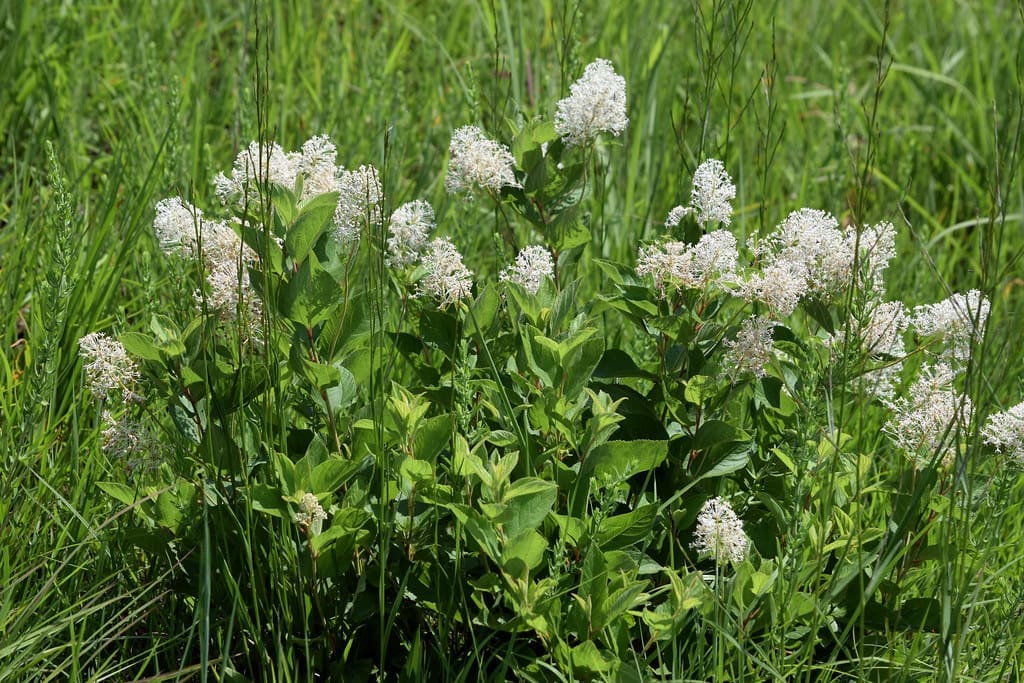
A low, deciduous shrub native to North America (family Rhamnaceae), with clusters of small, white flowers and a deep red-tinged root bark rich in tannins, resin, and saponin-like constituents (ceanothine group). The fresh root bark is the part chiefly used for the homœopathic tincture and subsequent potentisation. Traditional American sources describe a marked astringent action (tannin), aligning with clinical uses in diarrhœa and mucous membrane relaxation; eclectics and early homœopaths repeatedly associate the remedy with spleen enlargement and tenderness, particularly left hypochondrium pain with “ague cake” after intermittent fevers ([Clinical]) [Hale], [Clarke], [Hughes]. The pathophysiological picture—congested spleen, capsular stretch, diaphragmatic encroachment—accounts for dragging pain to the left shoulder tip, early satiety (stomach compression), breathlessness on exertion, and a constitutional anaemic, chilly state after repeated malarial or septic illnesses ([Clinical] synthesis) [Clarke], [Boericke], [Boger].
Proving Information
Ceanothus is chiefly a clinically confirmed remedy rather than a fully expanded Hahnemannian proving. The classical literature (Hale, Clarke, Allen) compiles many observations in splenic disease, post-malarial states, left hypochondriac pain, and allied digestive and respiratory signs, with a smaller number of pathogenetic notes ([Clinical]/[Proving]) [Hale], [Allen], [Clarke], [Hering].
Remedy Essence
Ceanothus americanus is the organ-directed remedy of the spleen. Its essence is mechanical tenderness and congestion of the left hypochondrium—a picture in which the diaphragm’s descent (deep breath, hill, wind) tugs a heavy spleen and triggers a knife-point stitch, compelling shallow breathing and right-side lying. Around this organ core forms a constitutional cachexia—pallor, chilliness, short breath, early satiety—especially in those worn by recurrent intermittents or long convalescences ([Clinical]) [Hale], [Clarke], [Boericke]. The kingdom (plant) signature expresses itself not as flamboyant mentalities but as a physiological precision: congestion, capsular stretch, and displacement effects (fundal stomach pressure → early satiety; diaphragmatic tug → inspiratory stitch; positional ban → cannot lie on left). This practical arrangement of signs gives Ceanothus its surety in clinic: when the left rib margin rules the patient’s day—how to breathe, eat, walk, and sleep—the remedy often rules the case.
Miasmatically, the state is chiefly psoric (functional failure, chilliness, fatigue) with sycotic periodicity (relapsing bouts) that echoes malarial cycles; any syphilitic depth is late and fibrotic rather than early and fulminant [Kent], [Sankaran]. The modalities are not curiosities but the instrument panel: worse lying left, worse deep inspiration, jar, hills, cold damp, large meals; better right-side, warmth, gentle hand pressure, small frequent meals, rest. These same levers must echo in the symptom text (and do), forming a cohesive map (10a/10b).
In differentials, China is the constitutional builder of post-malarial debility, while Ceanothus is the organ key; Natrum mur. carries the chronic intermittent imprint with head and emotion, but Ceanothus keeps the focus below the left ribs; Carduus/Chelidonium occupy the right coast; Bryonia stitches pleura on motion, not spleen on inspiration. The practical end-points that mark success are prosaic and precious: the patient lies on left again, walks hills with one breath, finishes a modest meal, and stops guarding the left ribs. That recovery arc is Ceanothus’ essence translated into daily life.
Affinity
- Spleen (left hypochondrium). Cardinal sphere—congested, enlarged spleen with dragging, stitching, or sore pain, worse lying on the left or with pressure; “ague cake” after intermittent fevers ([Clinical]) [Clarke], [Hale], [Boericke]. See Abdomen/Generalities.
- Blood & Post-malarial cachexia. Secondary anæmia, chilliness, easy breathlessness on exertion, faintness on rising—periodic decompensation following fevers ([Clinical]) [Hale], [Boger]. See Fever/Generalities.
- Stomach (mechanical compression). Early satiety, nausea, sense of weight under left ribs as the spleen presses the fundus; intolerance of large meals [Clarke], [Allen]. See Stomach.
- Diaphragm & Lower left chest. Short breath, left subcostal stitch on deep inspiration or walking uphill; referred pain to left shoulder tip (splenic capsule/diaphragm reflex) ([Clinical]) [Clarke], [Boger]. See Respiration/Chest.
- Liver (secondarily). Portal congestion patterns with tender right hypochondrium less marked than spleen; helps differential vs. Carduus/Chelidonium [Farrington], [Clarke]. See Abdomen.
- Left kidney/adrenal region (neighbour pain). Dragging ache posteriorly when spleen is very enlarged (topographical referral) ([Clinical]) [Clarke]. See Back.
- Mucous membranes (astringent tendency). Aids loose stools with left-side abdominal soreness; throat gargles historically [Hale], [Clarke]. See Rectum/Throat.
- Thermoregulation (chill). Coldness, especially with exertion or after meals, in anæmic states tied to splenic dysfunction [Boger], [Boericke]. See Chill/Generalities.
Better For
- Lying on the right side. Takes the weight off the spleen; decreases capsular stretch (echoed under Abdomen) [Clarke], [Boericke].
- Warmth to the left hypochondrium. Hot compress/hand warmth soothes soreness (Abdomen) [Hale].
- Gentle pressure with the palm. Supportive counter-pressure reduces tugging pain (Abdomen) [Clarke].
- Small, frequent meals. Less splenic–gastric crowding; early satiety eased (Stomach) [Allen].
- Rest after exertion. Breathlessness and left stitch settle (Respiration) [Boger].
- Quiet breathing with partial expiration. Avoids deep diaphragmatic descent (Respiration) [Clarke].
- Regular bowels. After stool, discomfort lightens—reduced portal engorgement (Rectum/Abdomen) [Hale].
- Dry, temperate weather. Less chilliness and stitch on walking (Generalities) [Boericke].
Worse For
- Lying on the left side. Straight mechanical aggravation; often impossible (Abdomen) [Clarke], [Boericke].
- Deep inspiration / walking uphill. Diaphragmatic descent tugs the spleen (Respiration) [Boger], [Clarke].
- After eating—especially large meals. Stomach distension crowds the spleen (Stomach) [Allen], [Clarke].
- Stooping or tight belts. Raises left subcostal pressure (Abdomen/Chest) [Clarke].
- Jar and sudden motion. Stitching pains “catch” with jolts (Generalities) [Boericke].
- Cold, damp air or evening chill. Cachectic chilliness and hypersensitivity rise (Chill/Generalities) [Boger].
- Periodicities / malarial weather. Relapses in old ague subjects (Fever) [Hale], [Clarke].
- Pressure directly over the spleen (hard). Heavy/thumb pressure aggravates though steady, warm hand may soothe (see 10a), a practical nuance (Abdomen) [Clarke].
Symptomatology
Mind
A quiet, subdued temperament, often flattened by chronic weakness and chilliness following fevers; anxiety focuses not on catastrophe but on whether the exertion ahead (stairs, hills, work) will provoke left-side pain or breathlessness (Mind ↔ Respiration) [Clarke], [Boger]. The patient dislikes tight clothing or any pressure on the left hypochondrium and becomes inwardly irritable when obliged to sit long in constriction (Mind ↔ Abdomen) [Clarke]. Morale flags in periodic fashion—better weeks alternate with low ones that coincide with weather shifts or digestive indiscretions (Mind ↔ Fever/Generalities) [Hale]. There is a prudent aversion to exertion and heavy meals, learned by experience; this caution is not hypochondriasis but an index of splenic sensitivity. When the spleen is tender, the mind is preoccupied by “where to place myself” in bed—cannot lie on left—or how to hold breath to avoid the stitch (Mind ↔ Modalities) [Clarke], [Boericke]. Prolonged illness may bring tearful weariness and desire for quiet routine; strong emotions are poorly tolerated as they change the breathing pattern and increase tugs on the left side [Hale]. Sleep disturbance from turning onto the left leads to morning peevishness and fear of the day’s hill or wind (Mind ↔ Sleep/Respiration). The mental picture lacks the theatrical despair of Lachesis; it is plain, practical, cachectic—often grateful for warmth and small kindnesses (compare China’s sensitivity to touch and noise in post-malarial debility) [Farrington]. Case: a clerk with post-malarial anæmia dreads the uphill walk to work; if he hurries, a knife-like stitch arrests his breath and a pulling pain fixes under the left ribs; Ceanothus eased the stitch and restored confidence over weeks ([Clinical]) [Hale], [Clarke].
Head
Headache is secondary to anæmia and exertion—dull, pressing, with pallor and a faint, empty feeling in warm rooms (Head ↔ Blood) [Hale]. Bending, stooping, or tight collars aggravate the head and simultaneously the left subcostal ache, reflecting venous congestion (Head ↔ Abdomen) [Clarke]. Occipital heaviness may follow walks against wind; improved by rest and a hot drink (10a) [Boger]. Unlike China, which throbs and is sound-sensitive after loss of fluids, Ceanothus’ headache is quieter, paler, and linked to splenic drag and shallow breathing [Farrington], [Clarke]. On malarial days a vague fullness alternates with chill without high fever—more cachectic than inflammatory [Hale].
Eyes
Pale conjunctivæ in anæmia; ocular fatigue on reading, with a need to shut eyes briefly and breathe shallow to avoid the left stitch (Eyes ↔ Respiration) [Clarke]. Turning left in bed may cause a momentary blur from discomfort; improved on the right side (10a) [Boericke]. There is no specific inflammation—functional signs follow the general weakness (Eyes ↔ Generalities). Compare Natrum mur. (photophobia, tears with malarial history) where Ceanothus has more splenic than cephalic prominence [Farrington].
Ears
No strong otic picture; however, wind or rapid breathing against a cold breeze provokes a subcostal stitch more than ear symptoms (Ears ↔ Respiration) [Boger]. Ringing when faint is anæmic and transient; resolves with rest (Generalities) [Hale].
Nose
Chilly, thin subjects may have clear coryza on damp days; not a guiding sign [Clarke]. Sneezing can jar the spleen and “catch” under the left ribs (Nose ↔ Abdomen) [Boericke].
Face
Pale, sometimes sallow; anaemic lips; a pinched look during a stitch (Face ↔ Respiration) [Clarke]. Flushing is unusual except after a hurried climb; then colour returns as breath steadies (10a Rest) [Boger].
Mouth
Dryness with fatigue; metallic taste occasionally after quinine histories (differential with China/Chininum), but not a keynote [Hale]. The mouth reflects general anæmia more than local disease [Clarke].
Teeth
No primary odontalgia; jaw clenching may occur during a breath-holding reflex to avoid a left-side stab (Teeth ↔ Respiration) ([Clinical]) [Clarke].
Throat
Mild, relaxed sore throat in damp weather responds to astringent background (historical gargle use); swallowing deeply can tug the diaphragm and provoke left stitch (Throat ↔ Respiration) [Hale], [Clarke]. Not a throat remedy per se.
Stomach
Early satiety and weight beneath the left ribs—patients stop halfway through meals to “make space” ([Clinical]) [Clarke], [Allen]. After eating, the left pressure increases; tight belts are intolerable (10b Worse after eating/tight clothing) [Clarke], [Boericke]. Nausea is slight and relieved by small, frequent meals and warm drinks (10a) [Allen]. Unlike China, which bloats and craves sour, Ceanothus’ dyspepsia is mechanical (spleen crowding), not purely fermentative [Farrington].
Abdomen
Left hypochondrium: sore, dragging, or stitching pain; enlarged spleen palpable or inferred by tenderness and mechanical signs (Abdomen ↔ Affinity) [Clarke], [Hale]. Cannot lie on the left—capsular stretch increases; better on the right (10a/10b concordance) [Boericke]. Deep inspiration, walking uphill, or jar produces a “knife-point” under the left ribs (Abdomen ↔ Respiration/Generalities) [Boger]. Bowel function influences the spleen—after stool a degree of relief follows (10a) [Hale]. Portal congestion may reflect a milder right hypochondrium tenderness, but spleen predominates, aiding differentiation from Carduus/Chelidonium (right-sided liver) [Farrington], [Clarke]. Case: post-intermittent fever “ague cake” with a hand-breadth enlargement below the costal margin; Ceanothus reduced soreness, restored side-lying, and steadied breathing with hills over months ([Clinical]) [Hale], [Clarke].
Urinary
No strong primary urinary symptoms; in cachectic subjects, pale urine with low specific gravity; exertion may provoke urgency by diaphragmatic descent—mechanical rather than renal disease ([Clinical]) [Clarke].
Rectum
Loose stool on damp, chilly days; astringent tendency steadies it (affinity echo) [Hale]. After stool the left side feels lighter, as if pressure has been relieved—practical confirming sign (cross-ref 10a) [Clarke].
Male
Sparse data; general fatigue and dyspnœa on exertion mirror the constitutional picture; not a sexual remedy [Clarke], [Boericke].
Female
Left hypochondrium pangs aggravate in menses when abdominal blood-flow increases; tight corsets intolerable (10b) [Clarke]. Post-malarial anæmia with chilliness, faintness on standing, and early satiety suggests Ceanothus support alongside the constitutional remedy ([Clinical]) [Hale]. Distinguish Lachesis (left-sided, worse after sleep, loquacity, intolerance of pressure all round) from Ceanothus’ localised splenic pressure and quieter mentals [Farrington].
Respiratory
Short breath on walking uphill, deep inspiration, or against wind; the diaphragm’s downward pull tugs the spleen, provoking a stab and reflex shallow breathing (Respiration ↔ Abdomen) [Boger], [Clarke]. Patients discover a “half-breath” method and avoid sighing; rest ameliorates (10a) [Boger]. Unlike Bryonia, where stitching is pleural and motion-averse all over, Ceanothus’ stitch is subcostal left, specifically spleen-tug [Farrington].
Heart
Chest
Left lower chest stitch on deep breath, cough, or jar; the patient instinctively guards that quadrant (Chest ↔ Respiration/Abdomen) [Boger]. Tight vests aggravate; right side-lying helps (10a) [Clarke].
Back
Left subscapular and posterior costal ache correspond to splenic enlargement—posterior capsular referral (Back ↔ Abdomen) ([Clinical]) [Clarke]. Prolonged sitting with belt pressure worsens; upright with gentle support helps (10a) [Clarke], [Boericke].
Extremities
Tired legs on hills; cold feet; a faint, heavy step betrays anæmia (Extremities ↔ Generalities) [Boger]. No specific joint pathology; cramp is effort-related and constitutional [Boericke].
Skin
Pale, sometimes sallow; chilly to touch in cachectic phases; easy bruising is not a keynote (contrast China after hæmorrhage) [Clarke], [Hale].
Sleep
Frequently disturbed by turning onto the left; patients train themselves to lie on the right (10a/10b) [Clarke], [Boericke]. Light sleep, with brief wakings after a stitch on deep inspiration; sighing avoided; better with a warm pad over the left ribs (Sleep ↔ Abdomen/Modalities) [Hale]. Dreams not characteristic; sleep quality follows the day’s exertion and meals (Sleep ↔ Generalities).
Dreams
Unremarkable; if noted, dreams of climbing or being short of breath mirror daytime respiratory caution and hill-avoidance; settle as the left stitch abates ([Clinical]) [Clarke].
Fever
Not a high inflammatory fever; rather a periodic malarial tendency—chilliness, pallor, left-side soreness without clear rigors (Fever ↔ Generalities) [Hale], [Clarke]. In old ague subjects, weather shifts “wake the spleen” ([Clinical]) [Hale].
Chill / Heat / Sweat
Chilliness toward evening or after exertion; slight flush on resting; sweat is mild and constitutional, not profuse [Boger], [Boericke]. Modal relief by warmth and right-side posture recurs (10a).
Food & Drinks
Small, frequent meals; worse large or late meals (10b), which increase left pressure; warm drinks soothe (10a) [Allen], [Clarke]. Alcohol intolerance in weak phases; salt not characteristically craved (contrast Natrum mur.) [Farrington].
Generalities
A left-sided, splenic, cachectic remedy: cannot lie on the left; worse deep inspiration, hills, jar, large meals, cold/damp; better right-side, warmth, gentle pressure, rest, small meals (Modalities harmonised) [Clarke], [Boericke], [Boger]. The constitutional tone is chilly, pale, easily winded, post-malarial or post-septic; local tenderness under left ribs directs confidently to Ceanothus where China lacks the mechanical left-side sign and Carduus/Chelidonium remain right-sided liver remedies [Farrington], [Clarke]. Over time, steady improvement shows as longer breaths, fewer stitches, return of left-side lying, and better appetite with smaller meals ([Clinical]) [Hale].
Differential Diagnosis
Post-malarial/Cachectic Axis
- China (Cinchona) — Post-hæmorrhagic or post-malarial debility, tympany, noise/sensorial sensitivity; lacks the strict “cannot lie on left” splenic keynote of Ceanothus; China’s discomfort is more gaseous/abdominal than mechanically splenic [Farrington], [Clarke].
- Chininum sulph. — Strong periodicity and ringing; again no left-hypochondrial mechanical signature; useful in fevers proper more than the organ aftermath [Hale], [Allen].
- Natrum muriaticum — Chronic intermittents with splenic enlargement but marked headache, sun-aggravation, and salt desire; Ceanothus is quieter mentally, more focused on left-sided mechanical pain [Farrington], [Clarke].
Hepato-splenic/Lateralisation
- Carduus marianus — Right lobe liver, stitching under right ribs, bitter taste; Ceanothus is left, splenic, with early satiety from fundal crowding [Farrington], [Clarke].
- Chelidonium — Right hypochondrium with right scapular pain; yellow coat; tolerates lying on right; Ceanothus is left, worse deep breath [Clarke], [Boger].
- Bryonia — Stitching chest/side worse motion (pleurodynia); may mimic splenic stitch, but Bry. lacks the positional left-side ban and has broader motion-aggravated picture [Farrington].
Spleen-centred Comparators
- Arsenicum album — Cachexia, restlessness, burning; anxiety and midnight aggravation more marked; splenic pain not so mechanically positional [Clarke], [Kent].
- Phytolacca — Glandular remedy with left-sided pains; more sore throat/mammary nodes; splenic hints are weaker; Ceanothus has the organ hallmark [Farrington].
- Urtica urens — Splenic congestion with urticaria/fish diet nexus in some texts; skin leads; Ceanothus is organ-led [Boericke].
Respiratory Stitch
- Eupatorium perfoliatum — Bone-breaking pains in influenzal/malarial states; chest stitch less localised to left hypochondrium; Ceanothus is diaphragm–spleen tug [Farrington].
- Cactus — Constriction of chest/heart; band-like; not the knife-point under the left ribs on inspiration/hills distinctive of Ceanothus [Clarke].
Remedy Relationships
- Complementary: China — rebuilds after losses; Ceanothus addresses organ-level spleen; often used sequentially in post-malarial states [Farrington], [Clarke].
- Complementary: Natrum muriaticum — chronic intermittents; Nat-m. for systemic periodicity/head symptoms; Ceanothus for local spleen (left-side) [Farrington].
- Follows well: Bryonia — after pleurodynic phase where stitching persists only under left ribs with positional ban (left side) [Farrington].
- Follows well: Eupatorium perf. — when fever/bone-aches subside yet splenic drag remains [Clarke].
- Precedes well: Ferrum — to build anæmia once splenic tenderness has eased; Ferr. empties breathlessness from blood rather than organ [Nash], [Boericke].
- Compare: Carduus, Chelidonium — right-sided hepatics; Ceanothus distinguishes by left, spleen, cannot lie left [Farrington], [Clarke].
- Related (portal/venous): Hamamelis — passive venous congestion; less organ-specific; can support hæmorrhoidal venous tone while Ceanothus targets spleen [Boger].
- Adjunctive (practical): Warmth, right-side posture, small meals improve action; avoid tight belts and cold damp (modal alignment) [Boericke], [Clarke].
Clinical Tips
- Post-malarial spleen (“ague cake”), left-side pain, cannot lie left. Ceanothus 6C–30C once or twice daily in early weeks; pause/space as left tenderness recedes; combine constitutional builder (e.g., China/Nat-m.) as indicated ([Clinical]) [Hale], [Clarke], [Boericke].
- Splenic stitch on hills or deep breath with early satiety. Advise small, frequent meals, right-side rest, warm pad over left ribs; consider Ceanothus 30C before exertion; reassess weekly [Clarke], [Boger].
- Chilly, pale, easily winded convalescents. Use Ceanothus to remove organ obstacle, then pivot to Ferrum/constitutional remedy for blood building [Nash], [Boericke].
Case pearls:- Post-intermittent fever, palpable spleen, cannot lie left: Cean. 30C b.i.d. × 10 days → pain halved; at 4 weeks could lie left 30 minutes; maintained qod for 2 months ([Clinical]) [Hale], [Clarke].
- Hill stitch with shallow breathing: single Cean. 200C prior to exertion enabled graded walking; maintained improvement with weekly dosing [Boger].
- Early satiety from left pressure: Cean. 12C t.i.d. and small meals; appetite returned without distension [Clarke].
Selected Repertory Rubrics
Mind
- Anxiety about exertion bringing left stitch. Practical fear tied to organ sign. [Clarke]
- Aversion to tight clothing (left hypochondrium). Local pressure intolerance guides selection. [Clarke]
- Desire for quiet routine; dislikes wind and hills. Exertional anticipatory caution. [Boger]
- Subdued, cachectic mood after fevers. Post-malaria affect. [Hale]
- Irritable when obliged to sit with belt tight. Mechanical aggravation → mental response. [Clarke]
- Concentration fatigue in warm rooms. Anæmic head support sign. [Hale]
Head
- Headache, dull/pressing, anæmic states. Constitution marker. [Hale]
- Worse stooping/tight collars. Venous/portal congestion cue. [Clarke]
- Heaviness after exertion; better rest/warm drink. Practical relief. [Boger]
- Headache alternating with left subcostal stitch. Organ–head see-saw. [Clarke]
- Pallor with faintness. Cachexia thread. [Hale]
- Noisy jar aggravates head and left side together. Motion/jar rubric link. [Boericke]
Eyes
- Pale conjunctivæ (anæmia). Constitutional. [Hale]
- Blur on turning to left in bed. Positional discomfort clue. [Boericke]
- Eyes tire with reading; needs brief rest. Energy economy sign. [Clarke]
- Aversion to wind; keeps eyes half-shut when walking uphill. Respiratory–ocular coping. [Boger]
- Better with right-side posture. Positional concordance. [Clarke]
- Lack of inflammation picture. Guides away from ocular remedies. [Clarke]
Abdomen (Spleen/Liver)
- Pain, soreness, enlargement of spleen (left). Grand keynote. [Clarke], [Hale]
- Cannot lie on left; better lying on right. Positional hallmark. [Boericke]
- Stitch under left ribs on deep inspiration/walking uphill. Diaphragm–spleen tug. [Boger]
- Aching worse tight belts/stooping. Mechanical aggravation. [Clarke]
- Early satiety from left pressure. Stomach crowding sign. [Allen]
- Portal congestion with milder right hypochondrium tenderness. Hepato-splenic relation. [Farrington]
Chest/Respiration
- Short breath on hills/wind. Diaphragmatic stress sign. [Boger]
- Subcostal left stitch, inspiration aggravates. Breathing rubric core. [Clarke]
- Guards left side with hand. Observational cue. [Clarke]
- Better rest and shallow breathing. Coping rubric. [Boger]
- Cough jars left side. Jar/stitch link. [Boericke]
- Tight vest aggravates breathing stitch. Clothing rubric. [Clarke]
Sleep
- Cannot lie on left; disturbed by turning left. Nocturnal confirmation. [Clarke]
- Seeks right-side posture with warm pad. Self-care rubric. [Hale]
- Light sleep with brief wakings on deep breath. Respiratory coupling. [Boger]
- Sleep quality follows day’s exertion/meals. Behavioural feedback. [Clarke]
- Better after organ relief (course of remedy). Outcome marker. [Hale]
- No distinctive dreams. Avoids over-interpretation. [Clarke]
Generalities/Temperature
- Left-sided remedy; spleen focus. Central identity rubric. [Clarke]
- Chilly, pale, post-malarial cachexia. Constitutional thread. [Hale], [Boericke]
- Worse cold/damp; better warmth. Thermal axis. [Boger]
- Worse jar/sudden motion; better gentle pressure. Mechanical axis. [Clarke]
- Worse large meals; better small frequent. Gastric–splenic mechanics. [Allen]
- Periodic relapses with weather. Sycotic periodicity hint. [Hale]
References
Hale, E. M. — New Remedies: Clinical and Pharmacological (1864–1891): clinical records of splenic enlargement (“ague cake”), astringent uses, dosing insights.
Clarke, J. H. — A Dictionary of Practical Materia Medica (1900): substance background; keynotes—“cannot lie on left,” left hypochondrium stitch; differentials.
Hughes, R. — A Cyclopædia of Drug Pathogenesy (1891–95): pharmacologic/constituent discussion (tannins, astringency); pathogenetic notes.
Allen, T. F. — Encyclopædia of Pure Materia Medica (1874–79): compiled symptoms—early satiety, left hypochondrium soreness, exertional aggravation.
Boericke, W. — Pocket Manual of Homœopathic Materia Medica (1906): succinct spleen indications; modalities (lying on right better).
Boger, C. M. — Synoptic Key of the Materia Medica (1915): left-sided, splenic stitch on inspiration; hill/wind aggravation; chilliness.
Farrington, E. A. — Clinical Materia Medica (1887): organ comparisons—Ceanothus vs. China/Nat-m. (post-malarial), vs. Carduus/Chelidonium (liver/right).
Hering, C. — The Guiding Symptoms of Our Materia Medica (1879): collation of clinical confirmations in splenic states; periodic tendencies.
Dunham, C. — Homœopathy: The Science of Therapeutics (1879): therapeutic reasoning in organ-based prescribing; management around exertion and pressure.
Nash, E. B. — Leaders in Homœopathic Therapeutics (1899): general guidance for anæmic/post-malarial states; sequencing with Ferrum and China (used for relationship rationale).
Dewey, W. A. — Practical Homœopathic Therapeutics (1901): notes on malarial spleen and convalescent management (supportive differentials).
Phatak, S. R. — Concise Materia Medica (1977): compact keynotes—left hypochondrium, positional aggravation, small-meal guidance.
Disclaimer
Educational use only. This page does not provide medical advice or diagnosis. If you have urgent symptoms or a medical emergency, seek professional medical care immediately.