

Bovista gigantea
Substance Background
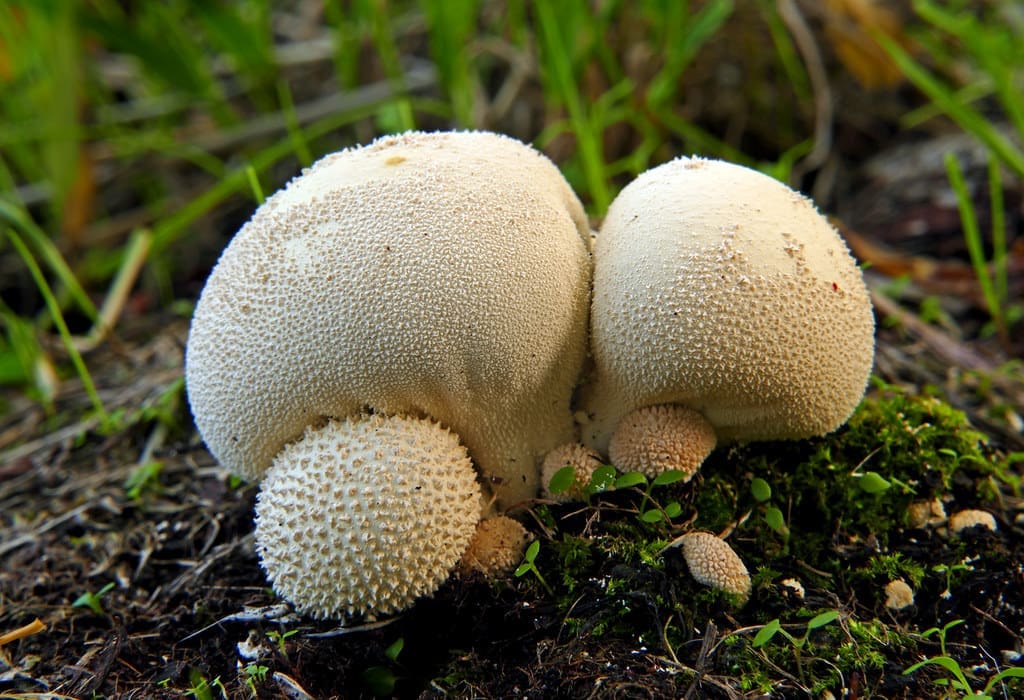
Prepared from the dried spores of the puff-ball fungus, a large Basidiomycete found in meadows, pastures, and open woods, particularly in Europe and North America. In its fresh state, the interior is white and edible; as it matures, the interior turns into a mass of dry spores, which disperse in clouds when pressed. Inhalation of large quantities of spores in crude form can produce marked respiratory and constitutional symptoms.
Proving Information
Proved by Franz in 1828, later incorporated into Hahnemann’s Chronic Diseases and Allen’s Encyclopaedia of Pure Materia Medica. Also clinically enriched by Clarke, Kent, and Hering.
Remedy Essence
Bovista centres on awkwardness, easy bleeding, and skin excoriation — a patient whose symptoms often revolve around the menstrual cycle. The clumsiness is not only mental but motor, leading to mishaps and injuries, which then bleed easily and heal slowly. The skin is delicate and easily irritated, and the constitution appears soft, pale, and sensitive.
Affinity
- Skin & Connective Tissue: Urticaria, eczema, excoriation.
- Circulatory System: Tendency to haemorrhage, bleeding diathesis.
- Female Reproductive System: Profuse menses, prolonged menstrual flow.
- Nervous System: Numbness, awkwardness of movement.
- Mouth & Throat: Aphthous ulcers, burning sensations.
- Gastrointestinal Tract: Diarrhoea before and during menses.
Better For
- Gentle motion (relieves stiffness) [Clarke].
- Open air (lessens confusion and headache).
- Rest after exertion.
Worse For
- Morning on waking.
- Warmth of bed (itching, skin irritation).
- Before and during menses (worsens weakness, diarrhoea).
- Touch and pressure on skin eruptions.
- Overexertion, especially manual work.
Symptomatology
Mind
The mental state is marked by confusion and dullness of comprehension, particularly in the morning on waking, as if the head were enveloped in a fog [Hahnemann]. There is a peculiar awkwardness — the patient makes clumsy mistakes, drops things, and misjudges distances when reaching for objects [Kent]. There can be absent-mindedness to the point of not recognising familiar streets or forgetting the purpose of one’s actions midway. Irritability is often present, especially before the menses, along with heightened sensitivity to trifles. Patients may become excessively talkative, speaking rapidly and disconnectedly, or conversely, become taciturn and withdrawn. A sense of hurry and internal restlessness is common.
Head
Dull, pressing headaches, especially in the morning, with heaviness and a feeling as if the head were larger than usual [Hering]. The sensation is often described as a constricting band across the forehead, worse in a warm room and better in open air. Vertigo is common, especially on rising from bed or turning quickly. There may be transient flushes of heat to the face with a congestive fullness of the head.
Eyes
Sensation of burning and dryness in the eyes, with occasional lachrymation. Vision can be blurred or clouded, with black spots or flickering before the eyes, especially after prolonged reading [Allen]. Lids may twitch or feel heavy.
Ears
Sensation as if stopped, with dulled hearing. Ringing and buzzing in the ears may occur in connection with circulatory congestion. Ears feel hot, especially during flushes.
Nose
Frequent sneezing with watery discharge in the morning. Nasal obstruction alternating from side to side. In some cases, bleeding from the nose accompanies menstrual irregularities.
Face
Pale, puffy, or bloated appearance, particularly around the eyes [Clarke]. Flushes of redness alternate with pallor. Eruptions about the mouth and chin are common before menses.
Mouth
Aphthous ulcers and soreness of the mouth, with a burning sensation on the tongue [Allen]. Tongue may feel as if swollen or scalded. Taste may be foul in the morning, with dryness of mouth despite normal thirst.
Teeth
Looseness of teeth with bleeding gums on slight pressure. Toothache often comes before or during menses.
Throat
Soreness and burning extending down the throat. Swallowing may be painful, especially for solids. There is sometimes a sensation of a lump in the throat, worse before menses.
Stomach
Loss of appetite in the morning, with aversion to warm food. Nausea on waking, better after eating. In some cases, ravenous hunger before menses, yet eating causes discomfort and fullness.
Abdomen
Distension with colicky pains, especially in the lower abdomen before and during menses. Sensation of heaviness as if something would fall out. Rumbling and flatulence are common, often worse in the morning.
Urinary
Frequent urging to urinate, especially during menses. Urine pale and copious, sometimes milky. Occasional involuntary dribbling in women, especially after exertion.
Rectum
Diarrhoea before and during menses, often urgent and watery [Hering]. Haemorrhoids that bleed easily, with soreness and itching. Sensation of incomplete evacuation.
Male
Little recorded; some cases note increased sexual desire followed by exhaustion.
Female
A principal sphere of action. Menses are often too early and too profuse, with prolonged flow of bright or pale blood [Kent]. Before menses there may be diarrhoea, skin eruptions, headache, and marked clumsiness. During menses: pallor, weakness, and tendency to bleed easily from other parts (nose, gums). Leucorrhoea may be profuse, watery, and acrid.
Respiratory
Short, hurried breathing on slight exertion. Oppression worse in warm, stuffy rooms.
Heart
Palpitation with flushing and heat. Pulse may be accelerated with menses.
Chest
Oppression and shortness of breath, especially before menses. Palpitation from slight exertion. Chest pains may be stitching or aching, aggravated by deep breathing.
Back
Aching between the shoulder-blades. Weakness and soreness in lumbar region, worse before menses. The back feels as if it could not support the body.
Extremities
Characteristic awkwardness — tendency to drop things, stumble, or misdirect movements [Lippe]. Numbness and tingling in hands and feet. Trembling of limbs after exertion. Swelling of hands in the morning.
Skin
A major keynote. Itching urticaria, eczema, or excoriations that are worse from warmth of bed and before menses [Hering]. Skin is easily excoriated from friction; even slight chafing from clothing produces soreness. Wounds bleed easily and take longer to heal. Tendency to small boils and pustules.
Sleep
Restless before menses with frequent waking. Dreams vivid, often anxious or confused. Sleepiness in daytime despite sufficient sleep at night.
Dreams
Dreams of danger, quarrels, or falling. Dreams may be highly coloured and remembered vividly.
Fever
Flushes of heat alternating with chills, especially around menses. Heat is often in the face with perspiration of the head.
Chill / Heat / Sweat
Chilliness in the morning on waking, followed by heat and sweating during the day. Sweats often sour-smelling.
Food & Drinks
Craving for cold drinks and fresh bread. Aversion to warm, cooked food in morning.
Generalities
Awkwardness and clumsiness are striking. Tendency to haemorrhage and easy excoriation of skin. Many complaints are closely connected to the menstrual cycle. Symptoms often appear in the morning and subside as the day progresses.
Differential Diagnosis
- Sepia – Menstrual irregularities with bearing-down; Sepia more indifferent emotionally, less clumsy physically.
- Lachesis – Premenstrual aggravations with congestion; Lachesis worse after sleep, more loquacious.
- Cyclamen – Menstrual troubles with vision disturbance; Cyclamen has aversion to open air, while Bovista is better in it.
Remedy Relationships
- Complementary: Sepia, Calcarea carbonica.
- Antidotes: Coffea, Camphor.
- Follows well: Sulphur in chronic skin conditions.
Clinical Tips
- Very effective in skin eruptions that worsen before menses.
- Useful for women with profuse, prolonged periods accompanied by diarrhoea.
- Can be considered for athletes or workers with skin chafing and excoriation.
- Beneficial in awkward, clumsy children with delicate skin.
Selected Repertory Rubrics
Mind:
- Awkwardness, drops things.
- Confusion on waking.
- Irritability before menses.
Head:
- Heaviness of head in morning.
- Constriction of forehead.
Eyes:
- Flickering vision.
- Heaviness of lids.
Stomach:
- Aversion to warm food in morning.
- Nausea on waking.
Skin:
- Excoriation from friction.
- Urticaria before menses.
- Wounds bleed easily.
Extremities:
- Numbness of hands.
- Trembling after exertion.
Generalities:
- Better in open air.
- Worse before menses.
References
Hahnemann S. – Chronic Diseases: Original proving symptoms, morning aggravations.
Allen T.F. – Encyclopaedia of Pure Materia Medica: Detailed proving records.
Clarke J.H. – Dictionary of Practical Materia Medica: Clinical notes, skin sphere.
Kent J.T. – Lectures on Materia Medica: Mental and menstrual aspects.
Hering C. – Guiding Symptoms: Skin excoriation, awkwardness.
Lippe A. von – Keynotes: Clumsiness before menses.
Boericke W. – Pocket Manual: Summary indications.
Boger C.M. – Synoptic Key: Premenstrual aggravations.
Nash E.B. – Leaders in Therapeutics: Menstrual diarrhoea.
Farrington E.A. – Clinical Materia Medica: Comparative menstrual remedies.
Disclaimer
Educational use only. This page does not provide medical advice or diagnosis. If you have urgent symptoms or a medical emergency, seek professional medical care immediately.