

Astacus fluviatilis
Substance Background
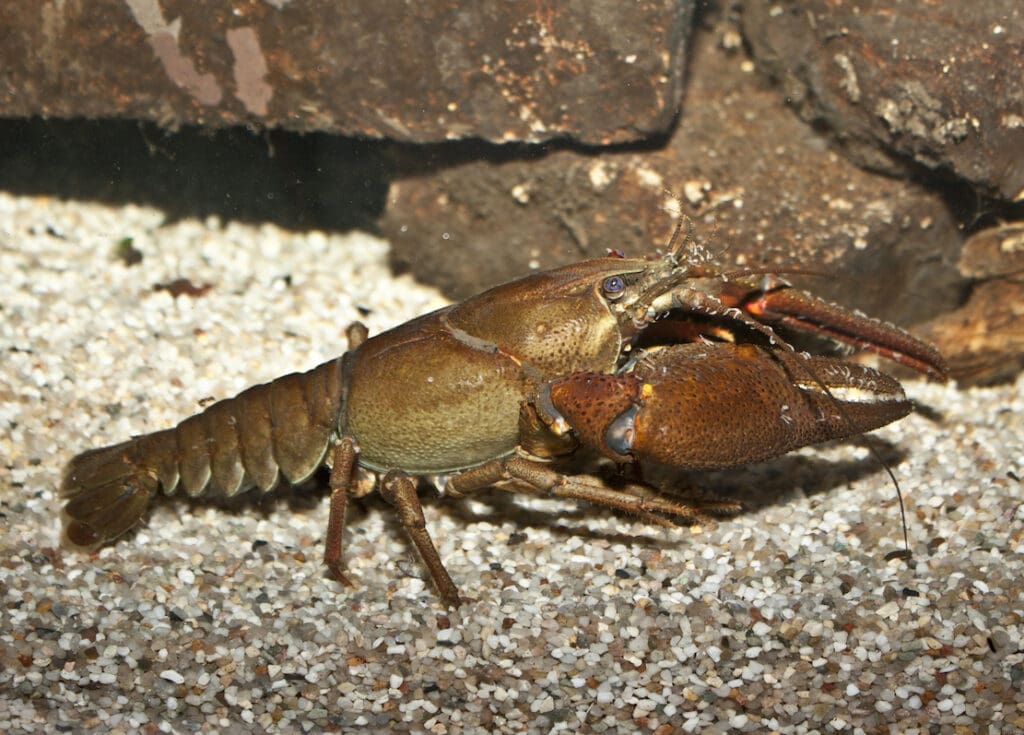
Astacus fluviatilis is a species of freshwater crustacean found in European rivers and lakes. The remedy is prepared from the entire animal, traditionally dried and triturated, sometimes roasted before trituration. In homeopathy, it is known for its deep constitutional action on the skin, blood, lymphatic system, and metabolism, with marked affinity for gouty and scrofulous diatheses. It is particularly noted for its power to provoke erysipelatous skin eruptions, urticaria, and arthritic node development, as well as for its role in conditions of chronic hepatic congestion and portal stasis [Hering].
Proving Information
Recorded in Guiding Symptoms [Hering] and Cyclopaedia [Hughes], largely from toxicological observations, empirical use, and clinical confirmations rather than a full Hahnemannian proving.
Remedy Essence
The essence of Astacus fluviatilis is inflammatory skin disease of erysipelatous or urticarial type with a constitutional tendency to gout and hepatic congestion. It acts on those with sluggish lymphatic and portal systems, where toxins manifest through recurrent skin flares or joint inflammations.
Affinity
- Skin: Erysipelatous inflammation, burning and stinging eruptions, urticaria [Hering].
- Lymphatic System: Swelling of lymphatic glands, especially cervical and inguinal [Clarke].
- Liver and Portal System: Congestion, enlargement, sluggish bile secretion [Hughes].
- Joints: Arthritic swellings, gouty nodes [Allen].
- Blood: Alterations in quality and circulation, tendency to inflammatory exudates [Hale].
Better For
- Warm applications to affected skin or joints [Hering].
- Rest and avoidance of pressure on inflamed parts [Allen].
- Gentle movement after prolonged stiffness [Hale].
Worse For
- Night, with aggravation of itching and heat [Hering].
- Cold damp weather, especially after exposure to river banks or marshy air [Clarke].
- Suppressed perspiration, leading to flare-ups of skin or joint symptoms [Allen].
Symptomatology
Mind
No direct mental proving symptoms are recorded, but patients needing Astacus fluviatilis often present irritability, restlessness from pruritus, and a preoccupation with the discomfort of skin or joint lesions [Hering].
Head
Congestive headaches may accompany hepatic torpor, with fullness in forehead and heaviness in the occiput. In gouty constitutions, there may be periodic vertex pain worse at night [Allen].
Eyes
Conjunctival injection may occur in erysipelatous or gouty states; lids may swell in synchrony with facial erysipelas [Hering].
Ears
Erysipelatous swelling of auricles possible in acute skin flare-ups [Clarke].
Nose
Redness and heat of nose as part of facial erysipelas; nasal mucosa may be dry with tingling [Allen].
Face
Astacus is especially prone to produce facial erysipelas — bright red, shining, hot swelling of the cheeks or entire face, often beginning near the nose and spreading rapidly [Hering]. Burning heat and stinging pain predominate, with possible vesicular eruption.
Mouth
Dryness of the mouth with thirst in fever; aphthous patches possible in scrofulous subjects [Allen].
Throat
Sore, burning sensation in fauces in some skin or blood toxic states [Hale].
Stomach
Loss of appetite with nausea in acute erysipelas; dyspepsia with hepatic congestion [Clarke].
Abdomen
Fullness and tenderness in right hypochondrium; hepatic edge palpable and sensitive. Constipation or sluggish bowels often accompany chronic liver involvement [Hughes].
Urinary
Scanty, high-coloured urine in febrile conditions; sediment possible in gouty diathesis [Allen].
Rectum
Constipation from portal congestion; piles with tenderness and heat [Hering].
Female
No specific sexual organ symptoms in proving, but general aggravation of skin and joint symptoms during menstrual suppression is noted [Clarke].
Respiratory
Breathing may be slightly hurried during febrile skin flare-ups [Hering].
Heart
Palpitation with flushing of face during erysipelas; sensation of fullness in precordial region during hepatic congestion [Allen].
Chest
Oppression of breathing during fever or skin eruptions; chest feels constricted in erysipelatous states [Hale].
Back
Aching across lumbar region from portal congestion or during gouty attacks [Clarke].
Extremities
One of its marked spheres of action: swelling, redness, heat, and tenderness of joints, especially the small joints of the hands and feet, in gouty constitutions [Allen]. Movement is painful, but complete rest may cause stiffness. Gouty nodes may form over time. The skin over joints may show urticaria or erysipelatous changes [Hering].
Skin
Highly characteristic. Astacus fluviatilis produces erysipelatous inflammation — bright red, hot, shiny skin with burning and stinging, spreading rapidly in streaks or patches [Hering]. Vesicles may form on the inflamed surface, oozing serum. Urticaria with intense itching, worse at night and from warmth of bed, is also common [Clarke]. It has a tendency to affect the face and extremities, though eruptions can appear anywhere. The skin feels tense, and the heat is oppressive.
Sleep
Disturbed by itching, heat, and joint pain; restlessness common [Allen].
Fever
Fever accompanies acute erysipelas: chilliness followed by heat, flushed face, and restlessness [Hering].
Chill / Heat / Sweat
Chill at onset of eruption; heat stage prolonged; sweat may appear after the eruption resolves, often with relief [Allen].
Food & Drinks
No peculiar cravings recorded, though aversion to food in acute illness is common.
Generalities
Acts deeply on skin, joints, and liver; especially suitable for scrofulous, gouty constitutions with periodic inflammatory attacks affecting skin or joints [Hering, Clarke].
Differential Diagnosis
- Apis mellifica – Similar erysipelatous swelling with stinging pain, but Apis is thirstless and more oedematous; Astacus has more burning, heat, and hepatic involvement.
- Rhus toxicodendron – Vesicular eruptions and erysipelas, but Rhus is worse from cold damp and better from warmth; Astacus may be aggravated by heat of bed in urticaria.
- Belladonna – Bright red, hot, tense skin; Belladonna has more throbbing, cerebral symptoms; Astacus is more gouty and hepatic.
- Urtica urens – Urticaria with itching, but without erysipelas or deep constitutional tendencies.
Remedy Relationships
- Complementary: Lycopodium, Sulphur, Apis.
- Antidotes: Camphora, Belladonna.
- Inimical: None known.
- Follows well: Apis in erysipelatous conditions with hepatic congestion.
Clinical Tips
Especially useful in erysipelas of the face with marked hepatic involvement, and in chronic gouty constitutions where skin and joints are alternately affected. Consider in urticaria with burning and stinging, worse at night, especially if linked to liver sluggishness.
Selected Repertory Rubrics
Mind:
- Restlessness from skin irritation
- Irritability with itching
Head:
- Congestive headache with hepatic disorders
- Flushed face during fever
Skin:
- Erysipelas of the face
- Erysipelas, vesicular
- Urticaria, worse at night
- Burning, stinging eruptions
Extremities:
- Gouty swelling of joints
- Pain, worse from rest
- Arthritic nodes
Generalities:
- Worse cold damp weather
- Better warm applications
- Worse suppression of perspiration
References
Hering C. – Guiding Symptoms: skin, joint, and hepatic spheres.
Clarke J.H. – Dictionary: urticaria and erysipelas descriptions.
Allen T.F. – Encyclopedia: toxicological and clinical observations.
Hughes R. – Cyclopaedia: hepatic and blood action.
Boericke W. – Pocket Manual: keynote symptoms.
Lippe A. – Keynotes: erysipelas modalities.
Hale E.M. – New Remedies: hepatic and lymphatic effects.
Kent J.T. – Lectures: comparative skin remedy analysis.
Farrington E.A. – Clinical Materia Medica: gouty and skin alternations.
Nash E.B. – Leaders: constitutional indications.
Disclaimer
Educational use only. This page does not provide medical advice or diagnosis. If you have urgent symptoms or a medical emergency, seek professional medical care immediately.