

Asclepias tuberosa
Substance Background
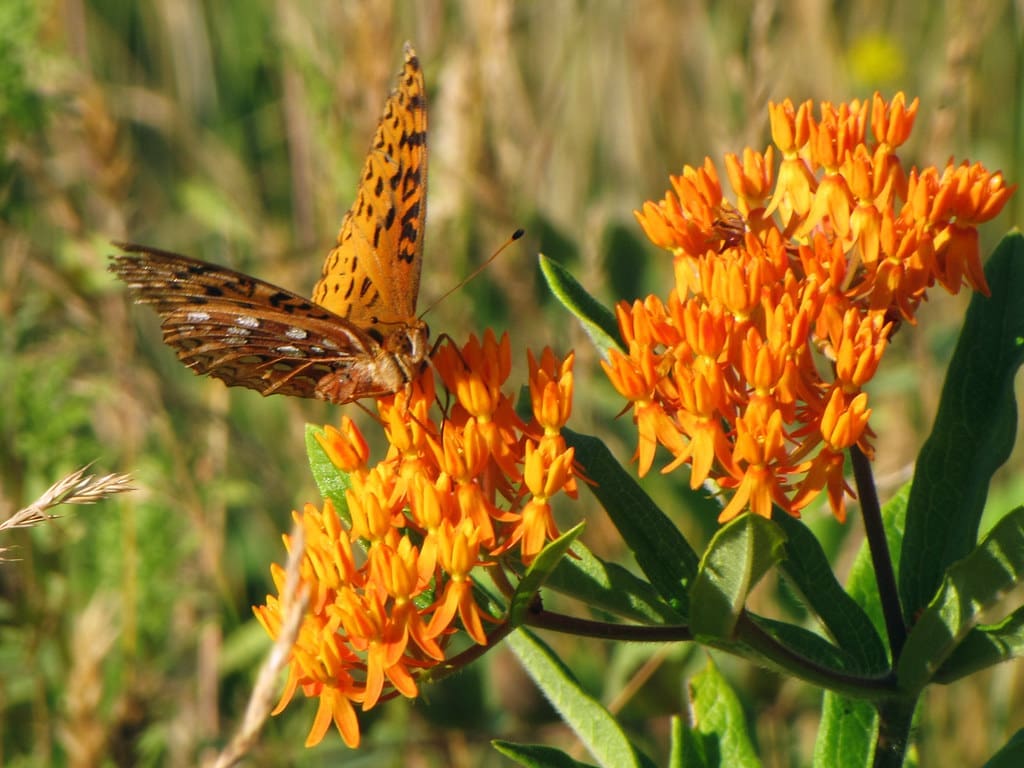
Asclepias tuberosa is a perennial herb native to North America, notable for its bright orange to yellow flower clusters and its traditional use by Native Americans as a remedy for pleuritic chest pains and respiratory complaints. Unlike other milkweeds, it contains little or no milky latex. Its root contains glycosides, resins, and volatile oils, exerting mild diaphoretic, expectorant, and antispasmodic effects. In crude form, it was valued for breaking up congestion in the lungs and facilitating easier breathing. In homeopathic potency, it is known for chest pains, respiratory restriction, and rheumatic tendencies linked to serous membranes.
Proving Information
Proved and clinically developed mainly in the United States in the mid-19th century; proving symptoms recorded by Hale and Allen, with clinical notes from Hale’s New Remedies and Hughes’ Cyclopaedia.
Remedy Essence
The essence of Asclepias tuberosa is serous membrane inflammation with restricted respiration — particularly pleurisy with sharp, stitching pains compelling the patient to breathe shallowly and lie on the affected side. It suits acute chest conditions where exudation is minimal but pain is severe, and where warmth and rest bring marked relief.
Affinity
- Pleura and Lungs: Direct action on pleural and bronchial serous membranes, reducing friction and pain [Hale].
- Respiratory Muscles: Relieves spasmodic restriction of breathing [Allen].
- Serous Membranes: Influence extends to pericardium and synovial membranes [Hughes].
- Digestive Mucosa: Mild irritant and stimulant effect [Hale].
- Musculoskeletal System: Rheumatic pains linked to serous inflammation [Hering].
Better For
- Warmth and warm dry air, easing pleuritic pain [Hale].
- Lying on the affected side to limit pleural motion [Allen].
- Rest and stillness, avoiding respiratory movement [Hering].
Worse For
- Cold, damp weather aggravating rheumatic and pleuritic symptoms [Hale].
- Motion, especially deep inspiration, which increases sharp chest pain [Allen].
- Sudden changes of temperature [Hering].
Symptomatology
Mind
No striking mental proving symptoms recorded. In pleuritic states, there may be irritability and restlessness from continual pain, with a mental focus on limiting movement to avoid aggravation [Hale].
Head
Headache may accompany febrile pleurisy — a dull frontal pain with heat and pressure, worse from coughing or taking a deep breath [Allen].
Eyes
No direct proving symptoms, but in pleuritic fever there may be injected conjunctivae and photophobia from general febrile state [Hale].
Ears
No direct proving symptoms recorded.
Nose
Dryness and obstruction in acute febrile states; coryza rare in proving [Hale].
Face
Flushed cheeks during fever; pallor during collapse stages of pleuritic illness [Allen].
Mouth
Dryness of the mouth with thirst for warm drinks; tongue coated white or yellow in acute chest conditions [Hale].
Throat
Dryness and rawness in upper throat preceding or accompanying chest symptoms [Allen].
Stomach
Loss of appetite with early satiety; nausea in febrile stages. Gastric symptoms often secondary to respiratory illness [Hale].
Abdomen
Distension and discomfort from diaphragmatic involvement in pleurisy; splenic or hepatic side pains possible from extended serous inflammation [Hering].
Urinary
Scanty, high-coloured urine during fever [Hale].
Rectum
Occasional diarrhoea in acute febrile stages, with yellowish stools [Allen].
Respiratory
Short, rapid breathing from pain on inspiration. A key characteristic is inability to take a full breath without sharp pain [Allen]. The respiratory distress is primarily mechanical, due to inflamed serous surfaces, rather than obstruction from secretions.
Heart
Palpitation and precordial oppression possible when pericardium shares in the serous inflammation [Hughes].
Chest
This is the grand centre of action for Asclepias tuberosa. The chest pain is sharp, stabbing, and distinctly pleuritic — worse from deep breathing, coughing, or the least movement of the ribs [Allen]. The pain may be localised to the lower ribs or the axillary line, sometimes extending to the shoulder or upper abdomen from diaphragmatic irritation [Hering]. Breathing is shallow and rapid to avoid pain, and the patient may instinctively lie on the affected side to still the motion of the pleura [Hale]. There is often a sensation of dryness or rawness in the bronchi, with a tight, dry cough. The expectoration, when present, is scanty, mucous, and difficult to raise [Allen].
Back
Pain in the interscapular region during coughing or deep breathing, reflecting pleural irritation [Hering].
Extremities
Rheumatic aching in the large joints during damp weather; may accompany or precede chest symptoms [Allen].
Skin
In acute febrile cases, skin hot and dry at onset, later becoming moist as diaphoresis sets in [Hale].
Sleep
Disturbed by chest pain; the patient seeks positions that immobilise the thorax [Hale].
Fever
Typical pleuritic fever: chilliness, then heat with dry skin and flushed face, followed by gentle perspiration as pain subsides [Allen].
Chill / Heat / Sweat
Chilliness marked at onset; heat stage prolonged in severe cases; sweat relieves tension [Hale].
Food & Drinks
Thirst for warm drinks; aversion to cold water in acute stages [Hale].
Generalities
Acts prominently on serous membranes of the thorax, especially the pleura, producing inflammation with sero-fibrinous exudation. Symptoms resemble early or mild pleurisy and certain cases of dry bronchitis with pleuritic pains [Hale, Hughes].
Differential Diagnosis
- Bryonia alba – Pleuritic pain worse from the least motion, but Bryonia is more irritable, dry, and constipated, with a stronger thirst for large quantities of cold water.
- Apis mellifica – Serous membrane inflammation with stinging pains and absence of thirst; Asclepias has sharper, localised pain and thirst for warm drinks.
- Kali carbonicum – Stitching chest pains worse at 3–4 a.m.; more chronic pleuro-pneumonic tendencies.
- Phosphorus – Pleuritic pain with burning heat and tendency to haemorrhage; mental state more fearful and impressionable.
Remedy Relationships
- Complementary: Bryonia alba, Apis mellifica.
- Antidotes: Camphora, Nux vomica.
- Inimical: None noted.
- Follows well: Aconitum in early inflammatory stage.
Clinical Tips
Extremely valuable in early pleurisy, dry pleurisy, and pleurodynia when the keynote modality of pain worse from deep inspiration is present. Also useful in certain cases of dry bronchitis with pleuritic pains, and in rheumatic conditions that alternate with chest complaints [Hale, Allen].
Selected Repertory Rubrics
Mind:
- Irritability from pain
- Desire for quiet and rest
Head:
- Headache during chest illness
- Heat in head with fever
Chest:
- Pain, stitching, pleuritic
- Pain, worse from deep inspiration
- Pain, compelling patient to lie on affected side
Respiration:
- Difficult breathing from pleuritic pain
- Shortness of breath on motion
Extremities:
- Rheumatic pains in large joints
- Pain, worse in damp weather
Generalities:
- Worse cold, damp weather
- Better warmth and rest
References
Hale E.M. – New Remedies: detailed account of pleuritic action and modalities.
Allen T.F. – Encyclopedia of Pure Materia Medica: proving symptoms of chest, pleura, and fever.
Hughes R. – Cyclopaedia: pharmacological notes on serous membrane affinity.
Hering C. – Guiding Symptoms: extension to back and shoulders.
Boericke W. – Pocket Manual: clinical uses in pleurisy.
Kent J.T. – Lectures: modality analysis.
Clarke J.H. – Dictionary: historical and clinical context.
Lippe A. – Keynotes: notes on pleuritic pains and modalities.
Farrington E.A. – Clinical Materia Medica: comparative chest remedy indications.
Hughes R. – Manual of Pharmacodynamics: relationship to Bryonia and Apis.
Disclaimer
Educational use only. This page does not provide medical advice or diagnosis. If you have urgent symptoms or a medical emergency, seek professional medical care immediately.