

Adenosine
Substance Background
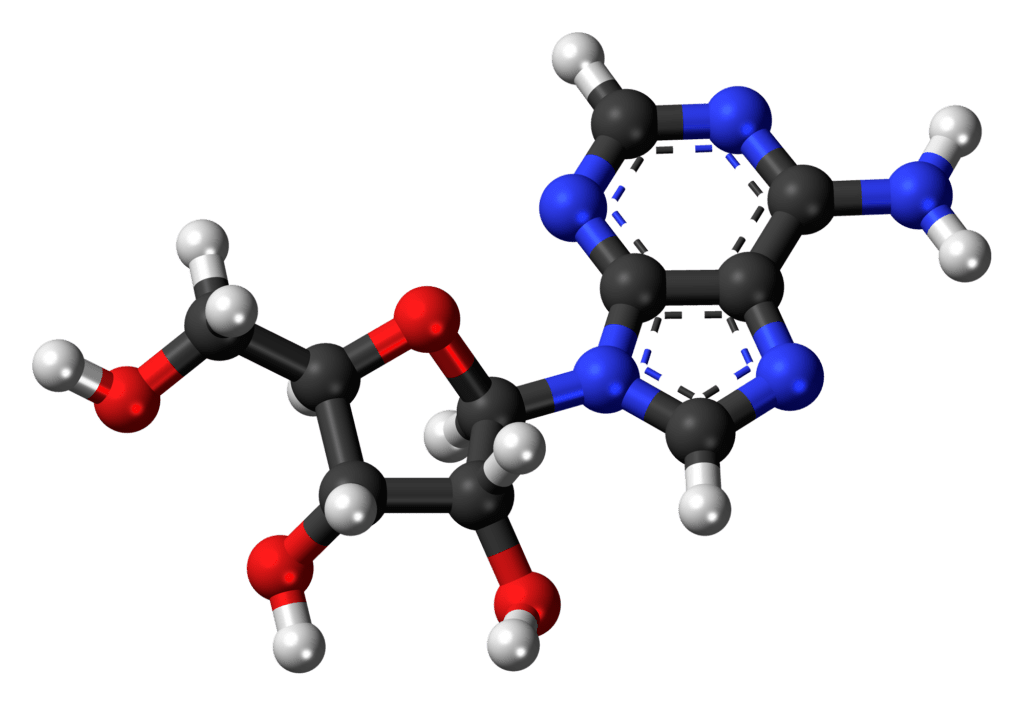
Adenosinum is the homeopathic preparation of adenosine, a naturally occurring purine nucleoside (adenine + ribose) found in every living cell as part of the energetic and signalling economy of life. In physiology it is born, in large part, from the breakdown of ATP and related adenine nucleotides, and thus rises when tissues are under load, relatively hypoxic, inflamed, or metabolically “spent”; it is a chemical signature of expenditure and recovery. [Katzung], [Rang] It acts through adenosine receptors (classically A1, A2A, A2B, A3) to slow and protect, to dilate vessels in many beds, to modulate neurotransmission, to dampen excitability, and to promote sleep drive; it is, in essence, a brake that appears when the system has been driven too hard. [Goodman], [Katzung] In the heart it is famous for transiently depressing AV nodal conduction; in the brain it is famous for building “sleep pressure,” and in the immune and vascular sphere it behaves as a local regulator of tone, perfusion, and inflammatory signalling. [Rang], [Goodman]
For homeopathic prescribing, such a substance naturally suggests a remedy-image where the organism oscillates between overdrive and enforced shutdown: sudden slowing, sinking, faintness, heavy eyelids, mental fog, and a need to stop, with bodily signs of vascular or autonomic shift (flushing, sweating, palpitations, breathlessness) appearing as concomitants. [Hughes] It is also a remedy whose material-dose narrative is unusually clear and “graphic” (especially through its cardiology use), and this provides a strong physiologic scaffold for symptom evolution: abrupt onset, brief but intense episodes, marked sensations of chest oppression or arrest, and then rapid subsidence leaving fatigue and fear. [Katzung], [Goodman] As with all modern biochemical remedies, the prescriber must keep Hahnemann’s discipline: use the substance-nature as a guide, but prescribe only when the patient’s characteristic totality, modalities, and concomitants truly match. [Hahnemann]
Proving Information
A classical nineteenth-century proving of Adenosinum is not prominent in the standard early materia medica corpus, which is unsurprising given its modern biochemical framing. [Hahnemann], [Hughes] The remedy-picture is therefore assembled from (1) physiological and toxicological observations in material context, (2) modern clinical experience with biochemical and neurotransmitter-oriented prescribing, and (3) careful repertorial thinking where the patient’s characteristic symptoms form a coherent, repeated pattern. [Hughes] Where modern authors employ “human chemistry” or neurotransmitter-style layers, adenosine is conceptually placed among remedies that influence sleep drive, exhaustion states, and autonomic tone, yet the classical requirement remains: the remedy must match the individual, not merely the label of insomnia, fatigue, or palpitations. [Hahnemann], [Kent]
Remedy Essence
Adenosinum represents the organism’s brake and recovery signal: when energy is spent and tissues demand protection, the system slows, sedates, and insists on rest. [Rang], [Hughes] Its essence is not merely “fatigue,” but a particular kind of fatigue that behaves like a switch: the patient can be functioning, even pushing through, and then suddenly the body applies an inner brake—heavy eyelids, mental fog, sinking in the stomach, faintness on standing, and the urgent need to lie down. [Hughes] This is why the remedy-image often carries an “attack-like” flavour: brief autonomic storms with palpitations, chest tightness, breathlessness, sweating, and nausea, followed by rapid settling and then profound weariness. [Kent], [Hughes] The emotional experience is often secondary to the physical event: anxiety appears because the body feels as if it is stopping, and fear follows the sensation of pause, not the other way around. [Kent]
The sleep sphere is central and clarifying. Adenosinum patients do not simply “sleep badly”; they often sleep under compulsion—nodding off, crashing after meals, collapsing in the afternoon—yet still wake unrefreshed, as if sleep has been pharmacological sedation rather than true repair. [Hughes] Alternatively, their night is broken because the same compelled napping disrupts rhythm, or because fear after palpitations makes them vigilant. [Kent] The remedy therefore sits at a crossroads: sleep drive that is too strong, and sleep restoration that is too poor. This distinction is important in differentiation from remedies like Gelsemium (droopy weakness) and Kali-phos. (nervous depletion), because Adenosinum’s signature is rhythmic braking with marked postural and exertional modalities. [Kent], [Boericke]
Its modalities mirror its essence: worse from exertion, hurry, heat, and standing; better from lying down, rest, cool fresh air, quiet, and often brief sleep. [Kent], [Hughes] Food can become a trigger because digestion itself is a metabolic load; the post-prandial crash is therefore a key confirming feature when it repeats consistently. [Hughes] Caffeine often plays a complicated role: it may temporarily lift the fog, yet maintains the cycle by pushing the system beyond its recovery threshold, leading to deeper subsequent shutdown. [Rang] In homeopathic terms, Adenosinum is considered when the totality speaks unmistakably of a system that cannot modulate its own braking—either braking too hard, too suddenly, or too often—and when the patient’s symptoms repeatedly form that same coherent pattern across mind, sleep, autonomic signs, and generalities. [Hahnemann], [Hughes]
Affinity
- Sleep–wake regulation and “sleep pressure” — Heavy eyelids, irresistible drowsiness, unrefreshing sleep, and rhythm disturbance; a key anchor sphere (see Sleep, Dreams, Generalities). [Rang], [Goodman]
- Autonomic nervous system — Sudden sinking, faintness, sweating, flushing, air hunger, and vagal-type episodes; the body “hits the brake” abruptly (see Generalities, Heart, Respiration). [Katzung], [Hughes]
- Heart conduction and rhythm sensations — Palpitations, sudden pauses, anxiety with skipped beats, brief intense episodes with rapid settling (see Heart, Chest). [Katzung], [Goodman]
- Vascular tone and head pressure — Throbbing or bursting headaches, heaviness, flushes; better in open air or by rest, worse after exertion or heat (see Head, Generalities). [Rang], [Hughes]
- Respiration and chest oppression — Tight chest, sense of not getting enough air, transient breathlessness with autonomic surge (see Respiration, Chest). [Goodman], [Katzung]
- Gastro-intestinal reactivity under autonomic shift — Nausea, abdominal sinking, loose stool during episodes, appetite changes with exhaustion (see Stomach, Abdomen, Rectum). [Hughes]
- Mental slowing and fog — Dullness, difficulty concentrating, irritability if pushed, desire to withdraw and sleep (see Mind). [Hughes], [Kent]
- Recovery after exertion — Marked post-exertional “collapse” feeling; the system demands rest and becomes heavy, sleepy, and chilled (see Generalities). [Hughes]
Better For
- Better from rest and stopping activity (general) — The chief relief is to cease exertion; symptoms settle when the system is allowed to “brake.” (see Generalities, Sleep). [Hughes]
- Better from lying down (general) — Faintness, sinking, palpitations, and air hunger often ease when horizontal. (see Heart, Respiration). [Kent]
- Better in cool, fresh air (general) — Openness steadies the autonomic and head pressure state; heaviness clears somewhat. (see Head, Generalities). [Kent]
- Better from gentle warmth when chilled after an episode (general) — After the “shutdown,” warmth restores comfort and reduces trembling. (see Chill/Heat/Sweat). [Kent]
- Better from small sips of water (general) — Particularly if nausea or sinking is present; large drinks may not be desired. (see Stomach). [Hughes]
- Better from quiet and reduced stimulation (mental) — The mind cannot tolerate demand; quiet allows symptoms to subside. (see Mind, Sleep). [Kent]
- Better after brief sleep or dozing (general) — Even short sleep can reset the episode-like fatigue and mental fog. (see Sleep). [Hughes]
- Better from moderate caffeine in selected cases (general) — Where the picture includes heavy drowsiness with inability to function, some report relief from coffee; this must be individualised and confirmed as a modality. (see Food and Drink). [Rang], [Hughes]
Worse For
- Worse from exertion, especially sudden exertion (general) — Exertion provokes sinking, breathlessness, and head pressure; the collapse comes quickly. (see Generalities, Respiration). [Hughes]
- Worse from heat and stuffy rooms (general) — Heat increases flushing, head throbbing, and autonomic discomfort. (see Chill/Heat/Sweat). [Kent]
- Worse from lack of sleep, night watching (general) — Sleep loss intensifies drowsiness, fog, and episode-like exhaustion. (see Sleep, Mind). [Kent]
- Worse from stress, hurry, and being pressed (mental) — Demand aggravates the “shutdown” response and intensifies palpitations and anxiety. (see Mind, Heart). [Kent]
- Worse after meals in some (general) — Post-prandial heaviness and sleepiness; the body sinks and wants to lie down. (see Stomach, Generalities). [Hughes]
- Worse in the afternoon “dip” (general) — Marked circadian drowsiness; heavy eyelids, yawning, inability to concentrate. (see Sleep). [Hughes]
- Worse from stimulants rebound (general) — Overuse of coffee/energy inputs can produce a later crash with heavier drowsiness and palpitations. (see Food and Drink). [Rang]
- Worse from standing long (general) — Upright posture aggravates faintness and sinking sensations. (see Generalities). [Kent]
Symptomatology
Mind
Adenosinum presents a mind that slows under load, as if the power supply is failing and the system insists on shutting down. There is marked mental fog, dullness, and inability to sustain concentration, especially after exertion or sleep loss, and the patient may describe a “cotton-wool brain” with heavy eyelids and an urge to withdraw. [Hughes] Irritability arises not from aggression but from depletion: they become short-tempered if questioned, hurried, or forced to continue when the body demands rest, which tallies with the aggravation from being pressed. [Kent] Anxiety can appear in a very specific context: sudden palpitations, perceived pauses, or breathlessness provoke alarm, and the person becomes frightened by the sensation of the heart “stopping” or the breath “not coming,” even if the episode is brief. [Kent], [Hughes] Emotion is often muted, not from indifference but from sheer heaviness and neurochemical “braking,” and this dullness can be misread as depression unless the concomitants (sleep pressure, sinking, post-exertional collapse) are recognised. [Hughes] A notable feature is the desire to be left alone to recover; conversation feels like exertion, and quiet is restorative, matching the amelioration from reduced stimulation. [Kent] In some patients there is a paradoxical relationship with caffeine: they rely on it to lift the fog, yet can become jittery or have palpitations if they overuse it, creating a cycle of forced wakefulness followed by deeper shutdown. [Rang], [Hughes]
Head
Head symptoms often reflect vascular and fatigue dynamics: heaviness, dull pressure, or throbbing headaches that arise after exertion, stress, or sleep deprivation. [Hughes] The patient may describe a “heavy helmet” sensation, as if the scalp and forehead are weighted, and this heaviness tracks closely with drowsiness and yawning, linking Head to Sleep and Generalities. Relief frequently comes from lying down, quiet, and cool fresh air, confirming the main ameliorations already noted. [Kent] Heat and stuffy rooms aggravate head pressure and flushing, and the headache can feel more pulsating when overheated, aligning with the heat aggravation. [Kent] Headaches may accompany palpitations or breathlessness in sensitive individuals, creating an autonomic cluster rather than a local head complaint alone. [Hughes] The head may feel clearer after a short nap, again illustrating the remedy’s central theme: the system improves when allowed to brake and reset. [Hughes]
Eyes
The eyes express the remedy’s sleep-drive signature: heavy lids, burning weariness, frequent yawning, and a desire to close the eyes even while trying to remain awake. [Hughes] Vision may blur from fatigue rather than pathology, and the patient may rub the eyes repeatedly as if to force alertness. [Kent] Light sensitivity can appear during headaches, but the more characteristic symptom is the inability to keep the eyes open, especially in the afternoon or after meals, linking Eyes to the post-prandial and circadian aggravations. [Hughes] There may be a dull ache around the orbits during exhaustion, relieved by resting the eyes and lying down. [Hughes] When autonomic episodes occur, the eyes may water or feel strained, as if the whole system is reacting, not merely the eye itself. [Hughes] Cool fresh air can brighten the eyes temporarily, consistent with the general amelioration from open air. [Kent]
Ears
Ear symptoms are rarely leading, but the ears can reflect circulatory and autonomic change through dull humming or a sense of fullness during headaches or flushing states. [Hughes] In fatigue, the patient may notice sounds as distant, not from deafness but from mental dullness and reduced alertness, linking Ears to Mind. [Kent] Tinnitus can appear transiently in states of exertional strain, then vanish when the patient lies down and rests, mirroring the remedy’s episodic nature. [Hughes] Irritability from noise is secondary: it is not a raw sensitivity but an intolerance because the nervous system is depleted and cannot process stimulation. [Kent] Warmth may relieve the sense of inner chill that sometimes accompanies exhaustion, yet cool air may relieve flushing headaches; the prescriber should note which state dominates. [Kent] Overall, ear symptoms are confirmatory only when they sit inside the broader pattern of sleep pressure and autonomic shift. [Hughes]
Nose
Nasal symptoms are not prominent, yet dryness of the nostrils and a sense of diminished airflow can be reported during fatigue states, especially in warm, stuffy environments. [Hughes] The patient may breathe shallowly when drowsy, as if respiration itself is slowed, linking Nose to Respiration and Generalities. [Hughes] If coryza occurs, it is usually incidental rather than characteristic, and the remedy should not be chosen on nasal discharge alone. [Hahnemann] The more useful observation is the patient’s preference for fresh air: they open windows, seek outdoors, and feel clearer when air is cool and moving, which again confirms the central modality. [Kent] During autonomic episodes, a brief sense of congestion or throat–nose tightness may appear, then subside quickly after lying down. [Hughes] These features, while minor, can support the totality when consistent with the remedy’s overall “braking” pattern. [Hughes]
Face
The face may flush suddenly during episodes, with warmth, perspiration, and a faint or sinking feeling, reflecting vascular-autonomic shifts. [Katzung], [Hughes] Alternatively, in the shutdown phase the face can become pale and tired, with drooping lids and an expression of exhaustion, reinforcing the heavy drowsy theme. [Hughes] The patient may look abruptly unwell, then recover quickly after resting, which is characteristic of transient autonomic episodes. [Hughes] Facial sweating may accompany palpitations and breathlessness, and the patient can become anxious about how they appear, especially if the episode comes in public. [Kent] Heat aggravates facial discomfort and flushing, while cool air improves, aligning with the general modalities already noted. [Kent] In some, the face feels slack and heavy as if muscles lack tone, an external sign of the internal braking state. [Hughes]
Mouth
The mouth can be dry from fatigue and shallow breathing, yet thirst may be modest and satisfied by small sips, particularly if nausea is present. [Hughes] The tongue may feel thick or slow, and speech can become sluggish when drowsiness is strong, mirroring the mental slowing. [Hughes] Taste can be dull, and food may seem unappealing when the system is in shutdown mode; the patient eats not from hunger but from habit, then becomes sleepier. [Hughes] Yawning is a frequent accompaniment, sometimes excessive and irresistible, linking Mouth directly to Sleep and Generalities. [Kent] In anxious episodes, the mouth may suddenly become dry and the throat tight, reflecting autonomic activation rather than true local disease. [Kent] Improvement often follows rest and cool air, which again reinforces the remedy’s global pattern rather than offering a separate oral keynote. [Hughes]
Teeth
Dental symptoms are not characteristic, but jaw heaviness and a sense of fatigue in the muscles of mastication can occur when overall exhaustion is prominent. [Hughes] Some patients clench lightly during palpitations or anxiety episodes, not from anger but from an instinctive attempt to stabilise the body. [Kent] Tooth sensitivity may be reported during headache states, as part of a generalized vascular throbbing picture, but it is secondary. [Hughes] After overuse of caffeine to fight drowsiness, some may grind teeth at night, then wake more exhausted, which links Teeth indirectly to the sleep-disruption cycle. [Rang], [Hughes] Warmth may soothe jaw tension when chilled after collapse, while cool air soothes flush headaches; these alternating needs should be recorded rather than assumed. [Kent] As with other minor sections, Teeth confirm the case only when they reflect the wider remedy theme of strain followed by enforced slowing. [Hughes]
Throat
The throat may feel tight or constricted during autonomic episodes, with a sense of air hunger or a need to swallow repeatedly, linking Throat to Respiration and Heart. [Kent] Dryness can appear at night or after prolonged fatigue, especially if the patient naps irregularly and wakes with a parched throat. [Hughes] Some describe a sinking sensation rising into the throat, as if faintness is moving upward, which is a classic functional expression of vagal-type discomfort. [Kent] Warm drinks may soothe a chilled, collapsed state, yet cool air may help the breathless flushed state; noting which is predominant is important for individualisation. [Kent] There can be a lump sensation associated with anxiety after palpitations, not from hysteria but from fear of bodily failure. [Kent] Throat symptoms often improve rapidly with lying down and quiet, reinforcing the overall modality picture. [Hughes]
Stomach
The stomach frequently shares in the remedy’s braking physiology: a sinking, empty, faint sensation in the epigastrium with drowsiness, especially after exertion or in the afternoon. [Kent] Nausea may arise during autonomic episodes, sometimes with sweating and breathlessness, creating a coherent cluster across Stomach, Perspiration, and Respiration. [Hughes] Appetite can be erratic: either diminished from exhaustion or increased as a compensatory attempt to “fuel,” yet eating then aggravates sleepiness and heaviness, which is a key observation in many cases. [Hughes] After meals, the patient may be compelled to lie down and doze, which is not simple laziness but a physiological shutdown that matches the remedy’s core. [Hughes] Caffeine may temporarily relieve the gastric sinking by stimulating alertness, yet later can worsen nausea or palpitations if taken in excess; this push–pull must be recorded as part of the case. [Rang], [Hughes] The stomach symptoms become most characteristic when they are inseparable from the global pattern: exertion → sinking + nausea + sleepiness → relief from lying down. [Kent], [Hughes]
Abdomen
Abdominal complaints tend to be functional and linked to autonomic shifts: gurgling, mild cramping, and a sense of internal emptiness or sinking that accompanies fatigue. [Hughes] In some, loose stool appears with anxiety episodes, especially when palpitations or breathlessness start suddenly, suggesting the bowel as an outlet during autonomic surge. [Kent] The abdomen may feel heavy and slack after meals, with a dragging sensation and desire to lie down, again linking Abdomen to the post-prandial aggravation. [Hughes] Heat can worsen abdominal discomfort when flushing dominates, while gentle warmth may comfort when chill and collapse dominate; the prescriber must distinguish these states rather than forcing one modality. [Kent] The abdomen often improves as soon as the patient rests, which shows the complaint is driven by systemic regulation rather than structural disease. [Hahnemann] When the remedy is correct, abdominal sinking is one of the first symptoms to lighten, because the entire “brake response” becomes less exaggerated. [Hughes]
Urinary
Urination may increase during anxious episodes, as part of sympathetic discharge, or diminish during collapse when the patient is quiet, still, and chilled. [Hughes] Frequency at night can occur if the person naps in the evening from fatigue, then wakes and cannot return to sleep, producing a disrupted rhythm rather than a true urinary pathology. [Kent] Some patients report a marked relief after urination during a sinking spell, as if emptying the bladder reduces internal pressure, which fits the remedy’s relief from discharge. [Hughes] There may be pale, copious urine after stimulants, followed by deeper fatigue later, again reflecting the push–pull between forcing wakefulness and subsequent shutdown. [Rang] Burning and true inflammatory symptoms are not typical and should prompt other remedies or medical evaluation. [Hahnemann] Urinary symptoms become significant only when clearly integrated into the same autonomic and sleep-pressure totality. [Hughes]
Rectum
Rectal symptoms are usually secondary, yet they may mirror the remedy’s oscillation: either constipation from slowed tone in profound fatigue, or sudden loose stool during autonomic episodes. [Hughes] The urgent stool, when present, often comes with sweating and trembling, and relief follows the evacuation, matching the theme of pressure release through discharge. [Kent] After stool, the patient may feel briefly lighter and clearer, which is a useful concomitant when it repeats reliably. [Hughes] Constipation tends to be associated with inactivity, prolonged sitting, and general shutdown, rather than with intense spasm; the stool may be difficult simply because the whole system is slowed. [Hughes] Heat and stress can provoke urgency, while rest steadies the bowel, consistent with the broader modalities. [Kent] Rectal symptoms confirm Adenosinum chiefly when they follow the same rhythm as mind and sleep pressure: overdrive → episode → relief by lying down and quiet. [Hughes]
Male
Male symptoms, when present, usually reflect general fatigue and autonomic lability rather than local genital pathology. Libido may be reduced by exhaustion and unrefreshing sleep, and the patient may describe desire as “switched off” because the whole system is in conservation mode. [Hughes] Performance anxiety can be present if palpitations or breathlessness episodes have frightened the patient, leading to guardedness and avoidance, which links Male to Mind and Heart. [Kent] In some, there is a post-exertional heaviness in pelvis and legs after intercourse, followed by sleepiness, consistent with the general collapse tendency. [Hughes] Warmth and rest improve, while exertion and heat aggravate, which matches the remedy’s broader modality structure. [Kent] A key clinical point is that male complaints should not be used to “target” Adenosinum; the remedy is chosen when the global pattern is unmistakable. [Hahnemann] When sleep and autonomic stability improve, male vitality returns naturally, confirming the central nature of the remedy. [Hughes]
Female
Female symptoms may show the same rhythm: exhaustion states with increased sleep need, and episodes of palpitations or breathlessness that disturb sleep and increase anxiety. [Kent] Premenstrually, some women experience heavier fatigue and drowsiness, with afternoon crashes and unrefreshing sleep, and this can strengthen the Adenosinum picture when the modalities match. [Hughes] Menstrual flow can be affected indirectly through stress and sleep disruption, rather than through a distinct uterine keynote; irregularity here is usually functional. [Hughes] If palpitations worsen around hormonal shifts, fear may rise and sleep may fragment further, linking Female to Heart and Sleep. [Kent] Warmth may soothe the chilled collapse state, while cool air may soothe the flushed anxious state; the prescriber should note which predominates in that individual. [Kent] As with the male sphere, the remedy is confirmed by the global totality rather than by local pelvic symptoms. [Hahnemann]
Respiratory
Respiration commonly reflects the same autonomic shifts: sudden breathlessness, sighing, and a sense of not getting enough air during palpitations or flushing episodes. [Hughes] The person may instinctively seek open air, loosen clothing, and sit or lie down, which confirms the amelioration from cool fresh air and rest. [Kent] There can be a brief tightness in the chest and throat, with rapid settling when the episode passes, again emphasising the transient, regulatory nature. [Hughes] After meals or in the afternoon crash, respiration can feel slow and heavy, as if the body is sedating itself, linking Respiration to Sleep pressure. [Hughes] Heat aggravates breath discomfort, and stuffy rooms are poorly tolerated, consistent with the broader remedy modality. [Kent] When sleep becomes more restorative, the breath becomes freer and less anxious, showing that the respiratory symptom is embedded in the overall regulatory pattern. [Hughes]
Heart
Heart symptoms are a major confirming sphere because adenosine physiology so directly shapes conduction and rhythm sensations. The patient may report sudden palpitations, a feeling of skipped beats or brief arrest, and intense anxiety at the moment, even if the episode is short. [Katzung], [Kent] There may be a vagal flavour: sinking, faintness, sweating, and nausea accompanying the heart sensation, forming a coherent cluster across multiple systems. [Hughes] After the episode, exhaustion follows quickly, and the patient may need to lie down and sleep, which is characteristic of the remedy’s “brake and collapse” theme. [Hughes] Exertion and hurry aggravate, while rest and lying down ameliorate, aligning exactly with the stated modalities and providing strong internal consistency. [Kent] Heat and crowded rooms can worsen palpitations, while cool fresh air improves, again matching the core modality picture. [Kent] Micro-comparison: it may resemble Aconite in sudden fear with heart symptoms, yet Aconite is more acute shock and panic of death, whereas Adenosinum is more a physiologic braking episode with heavy drowsiness and post-episode collapse. [Kent], [Hughes]
Chest
Chest symptoms often belong to autonomic episodes: pressure, tightness, or oppression with a sensation of air hunger, sometimes sudden and alarming, then rapidly easing after rest. [Katzung], [Hughes] The patient may describe the chest as “caught,” as if a breath cannot be completed, which increases anxiety and reinforces the cycle. [Kent] Heat and stuffiness aggravate chest discomfort, and cool fresh air ameliorates, consistent with the general modality pattern. [Kent] The chest may feel heavy after meals with sleepiness, as if the body is sinking inward, linking Chest to Stomach and Generalities. [Hughes] Lying down relieves many chest sensations, yet in some it can increase awareness of heartbeat; the prescriber must note the direction in the individual case. [Kent] When the episode passes, a profound weariness remains, which is often more characteristic than the chest symptom itself. [Hughes]
Back
Back symptoms are not primary, yet the back often expresses post-exertional heaviness and a desire to lie down, with an aching weakness in lumbar and shoulders after driving the system too hard. [Hughes] The patient may slouch from fatigue rather than from structural disease, and the posture improves after rest or a short sleep, which is characteristic. [Hughes] Tightness in upper back can accompany palpitations and anxious breathing, as if the thorax is bracing, linking Back to Chest and Respiration. [Kent] Heat can worsen muscular discomfort in those who flush easily, while gentle warmth can soothe those who collapse into chill; the key is the alternation and the episode context. [Kent] The back may feel worse after prolonged sitting because inactivity deepens the shutdown state, whereas gentle movement can restore tone slightly without provoking collapse. [Kent] Back symptoms confirm Adenosinum only when they track with the same rhythm: exertion or stress → heaviness and sinking → relief by rest. [Hughes]
Extremities
Extremities often feel heavy, weak, and sleepy, as if the limbs are filled with lead, particularly in the afternoon crash or after meals, linking Extremities closely to Sleep pressure. [Hughes] There may be trembling during autonomic episodes, with cold sweat and faintness, reflecting the body’s instability when the brake is applied abruptly. [Kent] Standing long aggravates weakness and faintness, and the patient may feel they must sit or lie down quickly, confirming the stated modalities. [Kent] After exertion, there can be a “rubber legs” feeling, and the person prefers complete rest rather than activity. [Hughes] In some, hands become cold after an episode, and gentle warmth comforts, supporting the amelioration from warmth in the collapsed state. [Kent] Caffeine may temporarily improve limb heaviness by lifting alertness, but overuse can provoke jitteriness and palpitations, creating the same push–pull cycle seen elsewhere. [Rang], [Hughes]
Skin
Skin signs are usually secondary and autonomic: flushing, sweating, and a clammy feel during episodes, or pallor and chill in the collapse phase. [Hughes] The patient may perspire on the forehead and palms during palpitations and breathlessness, with the sweat not relieving but rather signalling the body’s instability. [Kent] Heat aggravates flushing and sweating, while cool fresh air improves, confirming the modality pattern across Skin and Generalities. [Kent] In prolonged fatigue states, the skin can feel dry and lifeless, reflecting depleted vitality rather than a primary skin disease. [Hughes] Gooseflesh or shivering may occur after a strong episode, showing the alternation of autonomic tone. [Hughes] Skin becomes a confirming sphere chiefly when it participates with heart, breath, sinking, and sleepiness as concomitants. [Kent]
Sleep
Sleep is a central axis for Adenosinum and often provides the clearest prescribing confirmation. The patient is compelled to sleep, not as a gentle drowsiness but as an irresistible pull, especially after exertion, after meals, or in a predictable afternoon slump, as if the body demands repayment. [Hughes] There may be frequent dozing, nodding off inappropriately, and an inability to remain awake when the system is depleted, which strongly contrasts with remedies where fatigue produces nervous insomnia. [Kent] Sleep can be deep yet unrefreshing, leaving the patient foggy on waking, suggesting that the sleep is driven by biochemical braking rather than by true restoration. [Hughes] Night sleep may be disturbed indirectly: if the patient naps excessively in the evening from heavy drowsiness, they may wake later and find it difficult to return to sleep, creating a broken rhythm rather than a classic insomnia. [Kent] Some wake with palpitations or breathlessness episodes, then become afraid to sleep, illustrating how the heart sphere can invade the sleep sphere in this remedy. [Kent] Heat and stuffy rooms worsen sleep quality, producing restless, sweaty sleep with flushes, while cool fresh air improves, which is a repeated and valuable cross-link to modalities. [Kent] The patient may wake feeling “behind,” as if the brake never fully released, and they seek coffee to push through, setting up the cycle of forced alertness and later crash. [Rang], [Hughes] Dreams may be dull or fragmented during heavy biochemical sleep, yet in some they are vivid and anxious after palpitations, showing that autonomic fear can colour the dream life. [Kent] The best clinical sign that the remedy is acting is often a more natural rhythm: fewer compelled naps, clearer mornings, and sleep that restores without drugging heaviness. [Hughes]
Dreams
Dreams are not always prominent, but when present they often mirror the patient’s bodily fear: dreams of suffocation, being unable to breathe, sudden fright, or feeling the heart stop. [Kent] There may be dreams of falling or sinking, echoing the physical sensation of epigastric sinking and faintness, which can be strikingly confirmatory when it repeats. [Hughes] Some experience very little dream recall because sleep is heavy and dull, as if consciousness is switched off, which is itself a kind of “dream symptom” consistent with a sedating brake state. [Hughes] If naps are frequent, dream fragments can intrude into waking, creating a peculiar blurred boundary between sleep and wakefulness. [Hughes] Dreams can be worse after evening caffeine, with more anxious waking and palpitations, again showing the stimulant–rebound pattern as part of the case. [Rang], [Kent] When sleep becomes restorative and less forced, dreams often become more normal and less fear-coloured, which is a useful follow-up marker. [Hughes]
Fever
True febrile states are not a keynote, yet patients may report feverish flushes, warmth of face and chest, and sweating during episodes of autonomic disturbance. [Hughes] These flushes can mimic fever and may frighten the patient, especially if associated with palpitations and breathlessness, linking Fever-like sensations to Heart and Respiration. [Kent] Heat aggravates these flush states, and cool fresh air ameliorates, which is consistent and clinically valuable as a modality confirmation. [Kent] After an episode, a chilled, shaky state can follow, as if the body overshoots into coldness once the surge passes. [Hughes] The alternation itself is more characteristic than a steady fever picture, pointing again to regulatory instability rather than infection. [Hughes] When there is true infection, Adenosinum should only be considered if the characteristic sleep-pressure and sinking totality remains unmistakable and individualising. [Hahnemann]
Chill / Heat / Sweat
This sphere often shows alternation: heat and flushing during autonomic surges, then chilliness and trembling after collapse. [Hughes] Sweat may be clammy, especially on face and palms, and tends to accompany palpitations, nausea, and faintness, forming a coherent cluster that is far more characteristic than sweat alone. [Kent] Heat of crowded rooms aggravates, and the patient wants cool air even if they later feel chilled, which must be recorded as a real polarity. [Kent] In the collapse phase, gentle warmth comforts, with desire to be covered and to lie still, aligning with the amelioration from warmth when chilled. [Kent] The patient may report “internal sinking with cold sweat,” a phrase that captures the adenosine-like brake response remarkably well in sensation. [Hughes] When this alternating thermal state repeats with exertion or stress triggers, it becomes a strong confirming feature for the remedy. [Hughes]
Food & Drinks
The relationship with food is often marked: meals can trigger heaviness, yawning, and irresistible sleepiness, sometimes within a short time, and the patient wants to lie down. [Hughes] Appetite may be reduced during profound fatigue, yet cravings for coffee or stimulants can become strong because the patient is trying to push against the brake. [Rang], [Hughes] Coffee may temporarily clear the fog, and in some cases this becomes a genuine “better from coffee” modality, but overuse can aggravate palpitations, anxiety, and later crashes, so the pattern must be individualised carefully. [Rang] Heavy, rich foods may worsen post-prandial collapse more than light meals, and smaller portions can reduce the shutdown tendency. [Hughes] Thirst is not usually striking, yet small sips often feel best if nausea is present, and large drinks may feel burdensome. [Hughes] Alcohol may deepen the sleepiness and worsen next-day fog, reinforcing the central theme of slowed regulation and poor restoration. [Hughes]
Generalities
Adenosinum is a remedy of enforced slowing: the organism responds to load, stress, or depletion by applying an inner brake, producing heaviness, sinking, drowsiness, and the compelling need to stop. [Hughes] The totality often reads as: exertion or demand → sudden autonomic cluster (palpitations, chest pressure, air hunger, sweating, nausea, faintness) → rapid settling when lying down → profound fatigue and desire to sleep. [Kent], [Hughes] This episodic pattern is crucial; without it, one risks confusing Adenosinum with many other fatigue remedies. [Hahnemann] The patient’s rhythms are often disordered: afternoon crashes, post-prandial shutdown, and night sleep that is either too heavy and unrefreshing or broken by naps and fear episodes. [Hughes] Heat and stuffy rooms aggravate the flush–palpitation cluster, while cool fresh air ameliorates, and this cross-links repeatedly across Head, Chest, Skin, and Sleep. [Kent] Standing long aggravates faintness and sinking, and lying down ameliorates, giving a strong postural modality that helps to differentiate the remedy from purely emotional or purely digestive pictures. [Kent] The general energy is not merely “low”; it is reactive, with sudden collapses rather than a steady weakness, and the patient may appear normal between episodes yet fear the next downturn. [Hughes] Caffeine use often becomes a theme: the patient pushes wakefulness pharmacologically and then pays with deeper crashes, making the stimulant–rebound cycle part of the maintaining causes. [Rang], [Hahnemann] When Adenosinum is correct, the system becomes more stable: fewer compelled naps, fewer sudden autonomic episodes, and a more natural restorative sleep that lifts morning fog without forcing. [Hughes]
Differential Diagnosis
Aetiology and episode patterns
- Acon. — Sudden attacks with fear and palpitations; Aconite is acute panic and shock, while Adenosinum is more a physiologic brake with heavy drowsiness and post-episode collapse. [Kent]
- Gels. — Dullness, heaviness, tremulous weakness; Gelsemium is more paralytic, droopy, anticipatory, whereas Adenosinum has pronounced sinking and autonomic cluster with relief from lying down. [Kent]
- Carbo-v. — Collapse, air hunger, desire for air; Carbo-v. is colder, more asphyxiated, often with bluishness and profound venous stasis, while Adenosinum is more episodic braking with sleep-drive dominance. [Kent]
- Nux-v. — Exhaustion from stimulants with crashes; Nux is irritable and oversensitive, whereas Adenosinum centres on compelled sleepiness and faint sinking relief by rest. [Kent]
Sleep and fatigue polarity
- Kali-phos. — Nervous exhaustion with weakness; Kali-phos. is more “spent nerves” and mental fatigue, less the sudden sinking and autonomic episode pattern. [Boericke], [Phatak]
- Opium — Heavy sleep and dullness; Opium has stupor and insensibility, whereas Adenosinum is more rhythmic sleep pressure and reactive autonomic episodes. [Kent]
- Coff. — Sleepless excitation; Coffea is the opposite pole (wakeful overactivity), useful as an antidotal comparison when caffeine features strongly. [Kent]
Heart and autonomic focus
- Spig. — Palpitations with anxiety and pain; Spigelia is more neuralgic and left-sided cardiac pain, while Adenosinum is more conduction-like sensations with sinking, sweating, and rapid recovery by rest. [Kent]
- Ars. — Anxiety with restlessness and collapse fear; Arsenicum is chilly, burning, and restless with great insecurity, whereas Adenosinum is more sleepy, heavy, and brake-driven. [Kent]
Remedy Relationships
- Complementary: Kali-phos. — When the acute brake episodes calm, remaining nervous exhaustion and poor restoration may call for Kali-phos. [Boericke], [Phatak]
- Complementary: Gels. — Where trembling heaviness and anticipatory weakness remain prominent, Gelsemium may follow. [Kent]
- Complementary: Carbo-v. — If the case evolves toward profound collapse with air hunger and venous stasis features, Carbo-v. may be required. [Kent]
- Follows well: Nux-v. — After clearing stimulant-driven irritability and digestive strain, the deeper sleep-pressure collapse pattern may indicate Adenosinum. [Kent]
- Antidotes (functional): Coff. — Where excessive caffeine or stimulation produces nervous excitement and sleep disruption, Coffea may temporarily counter. [Kent]
- Antidotes (functional): Acon. — If acute panic overlays the autonomic episode, Aconite may be needed before the deeper pattern is addressed. [Kent]
- Clinical caution: stimulant dependence — Strong coffee/energy inputs may maintain the crash cycle and obscure remedy response; identify and reduce maintaining causes. [Hahnemann]
- Clinical caution: serious cardiac symptoms — Palpitations, syncope, or chest pressure require appropriate medical evaluation alongside homeopathic case management. [Hahnemann], [Hughes]
Clinical Tips
Consider Adenosinum when fatigue is episodic and compelling, with sudden sinking, faintness, palpitations, sweating, nausea, or air hunger that eases on lying down and resting, followed by marked drowsiness. [Hughes] Confirm it by modalities: worse from exertion and standing, worse in heat and stuffy rooms, better from cool fresh air, quiet, and rest, often better after a short doze. [Kent] Look for the food link: post-prandial heaviness and sleepiness are often highly characteristic when joined to the broader totality. [Hughes] Record caffeine faithfully: some cases show “better from coffee” as a real modality, while others show stimulant–rebound cycles that maintain the case; either way it is diagnostically valuable. [Rang], [Hahnemann] In potency management, follow classical caution: use the minimum stimulus and wait for stable rhythm changes (fewer crashes, clearer mornings, less autonomic fear) before repeating. [Hahnemann], [Kent] If palpitations, syncope, or chest pressure are significant, ensure appropriate medical assessment; homeopathy supports the patient’s vitality and symptom pattern but does not replace urgent evaluation where indicated. [Hahnemann], [Hughes]
Selected Repertory Rubrics
Mind
- Mind; dulness; clouded — Mental fog with heavy eyelids; the brain slows as if sedated. [Hughes]
- Mind; weakness; mental; from loss of sleep — Sleep debt directly worsens clarity and endurance. [Kent]
- Mind; irritability; when disturbed — Irritable from depletion; cannot tolerate being pressed. [Kent]
- Mind; anxiety; with palpitation — Fear arises with heart sensations, especially sudden episodes. [Kent]
- Mind; aversion; exertion; mental — Mental work feels like physical exertion, leading to shutdown. [Hughes]
- Mind; desire; solitude; to recover — Wants to be left alone to rest and reset. [Kent]
Head
- Head; heaviness — Heavy helmet sensation with drowsiness and yawning. [Hughes]
- Head; pain; exertion; after — Headache follows effort, signalling overspending. [Hughes]
- Head; pain; heat; aggravates — Heat increases throbbing and flushing discomfort. [Kent]
- Head; pain; lying; ameliorates — Relief by lying down parallels overall improvement. [Kent]
- Head; pain; with palpitation — Autonomic cluster linking head and heart. [Hughes]
- Head; confusion; morning; on waking — Wakes foggy, not restored by sleep. [Hughes]
Stomach
- Stomach; sinking; faintness — Epigastric sinking with drowsiness and collapse tendency. [Kent]
- Stomach; nausea; with perspiration — Nausea as part of autonomic discharge episodes. [Hughes]
- Stomach; sleepiness; after eating — Post-prandial crash is a strong confirming feature. [Hughes]
- Stomach; appetite; diminished; from fatigue — Eating declines when the system is braked. [Hughes]
- Stomach; nausea; exertion; after — Nausea after effort within the same collapse picture. [Hughes]
- Stomach; amelioration; lying down — Relief of sinking and nausea by horizontal rest. [Kent]
Rectum
- Rectum; diarrhoea; anticipation or anxiety — Loose stool during autonomic fear episodes. [Kent]
- Rectum; diarrhoea; with perspiration — Discharge state with sweat and trembling. [Hughes]
- Rectum; constipation; inactivity; from — Slowing and shutdown produce constipation. [Hughes]
- Rectum; stool; after which relief — Relief after stool as pressure release. [Hughes]
- Rectum; urging; sudden — Sudden urge as part of episode-like pattern. [Kent]
- Rectum; weakness; after stool — Further braked state after elimination, wants to lie down. [Hughes]
Heart / Chest
- Heart; palpitation; sudden — Sudden episodes with brief intensity and alarm. [Hughes]
- Heart; sensation; stoppage — Perceived pause/stop sensation with fear. [Hughes]
- Heart; palpitation; exertion; from — Exertion provokes autonomic heart symptoms. [Kent]
- Chest; oppression; with anxiety — Tight chest with fear and need for air. [Kent]
- Chest; amelioration; open air — Fresh air relieves chest discomfort and fear. [Kent]
- Heart; amelioration; lying — Lying down steadies episodes in many cases. [Kent]
Sleep / Dreams
- Sleep; sleepiness; daytime; irresistible — Compelled dozing, cannot keep awake. [Hughes]
- Sleep; sleepiness; after eating — Meals trigger shutdown and need to lie down. [Hughes]
- Sleep; unrefreshing — Sleeps but wakes foggy and heavy. [Hughes]
- Sleep; dozing; evening; then waking late — Naps disrupt night rhythm and fragment sleep. [Kent]
- Dreams; frightful; with waking startled — Fear dreams when heart/breath episodes intrude. [Kent]
- Dreams; falling; sinking — Dream image mirrors physical sinking and faintness. [Hughes]
Generalities
- Generalities; weakness; exertion; after — Post-exertional collapse is central. [Hughes]
- Generalities; faintness; standing; from — Upright posture aggravates sinking and weakness. [Kent]
- Generalities; heat; aggravates — Heat worsens flushing, palpitations, and discomfort. [Kent]
- Generalities; open air; ameliorates — Cool fresh air steadies the whole state. [Kent]
- Generalities; rest; ameliorates — Rest is the primary corrective; pushing worsens. [Hughes]
- Generalities; food; after; aggravation — Post-prandial heaviness and sleepiness confirm the pattern. [Hughes]
References
Hahnemann — Organon of Medicine (6th ed.): totality, individualisation, maintaining causes, minimum dose, repetition discipline.
Hughes — Pharmacodynamics: using physiological action to illuminate remedy spheres while preserving individualisation.
Kent — Lectures on Homeopathic Materia Medica: modalities, collapse states, anxiety with palpitations, sleep and generalities emphasis.
Kent — Repertory of the Homeopathic Materia Medica: rubric structure guiding characteristic symptom selection.
Clarke — Dictionary of Practical Materia Medica: clinical method and comparative remedy reasoning (for modern additions by analogy).
Boericke — Pocket Manual of Homeopathic Materia Medica: differentiation of exhaustion remedies and sleep patterns.
Phatak — Materia Medica: concise differentials and practical confirming features in fatigue and nervous weakness.
Boger — Synoptic Key: generalities and modalities as prescribing anchors in collapse states.
Katzung — Basic and Clinical Pharmacology: adenosine physiology and cardiac/vascular actions informing symptom scaffolding.
Goodman & Gilman — The Pharmacological Basis of Therapeutics: adenosine receptor actions, autonomic effects, and clinical phenomenology.
Rang & Dale — Pharmacology: adenosine in sleep pressure and caffeine antagonism, supporting modality observations.
Disclaimer
Educational use only. This page does not provide medical advice or diagnosis. If you have urgent symptoms or a medical emergency, seek professional medical care immediately.