

5-HTP
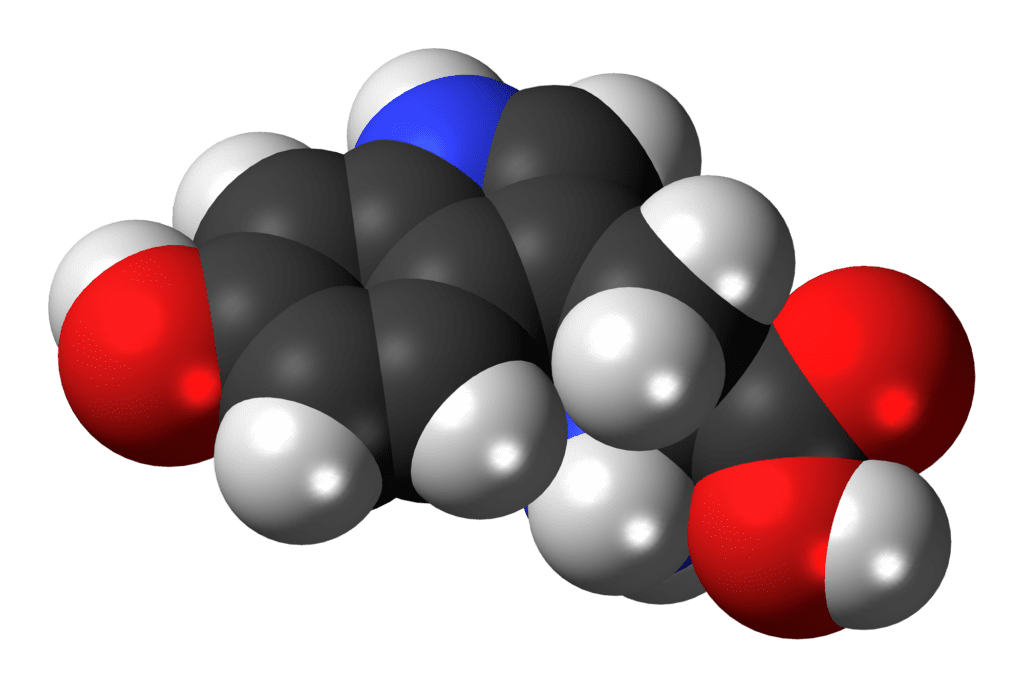
Substance Background
5-Hydroxytryptophanum (5-HTP) is a naturally occurring biochemical intermediate positioned between tryptophan and serotonin, and by extension connected to melatonin metabolism; it sits at a “gateway” in the neuroendocrine axis that governs mood, sleep, appetite, pain perception, and autonomic tone. In modern pharmacology, it is recognised as a direct serotonin precursor capable (in material doses) of shifting serotonergic signalling in the central and peripheral nervous systems, which explains why its physiological effects are often rapid, systemic, and multi-sphere rather than local. This is precisely the kind of substance that, in a homeopathic context, tends to present a remedy-picture defined by polarity: one pole resembling deficiency or depletion (flat mood, poor restorative sleep, reduced resilience), and the other resembling excess stimulation (agitation, heat, sweating, tremor, diarrhoea, disturbed sleep architecture). The toxicological narrative around serotonergic overload gives additional “edges” to the picture, clarifying that certain combinations (especially with serotonergic medicines) can produce a recognisable syndrome of mental, autonomic, and neuromuscular disturbance. In homeopathic pharmacy the remedy is prepared as triturations and potencies (rather than a mother tincture), consistent with its identity as a biochemical rather than a crude plant extract; some pharmacies explicitly list it only in potency form. In the modern homeopathic literature, 5-HTP is discussed within the category of neurotransmitter/biochemical remedies, most prominently within Ton Jansen’s Human Chemistry approach, where it is placed alongside other neurotransmitters and related biochemical regulators as tools to remove obstacles, correct iatrogenic layers, or restore functional balance. [Hughes], [Clarke], [Jansen], [Maffei]
Proving Information
A classical Hahnemannian proving for 5-HTP is not found in the nineteenth-century proving literature, which is expected given the substance’s modern biochemical isolation and clinical prominence. The remedy-picture is therefore constructed chiefly from (1) physiological/toxicological effects observed in material doses, (2) modern clinical observation in integrative settings, and (3) modern homeopathic usage within neurotransmitter and “human chemistry” frameworks. Ton Jansen specifically lists and discusses 5-HTP (5-Hydroxytryptophan) within his neurotransmitters chapter, placing it in a practical therapeutic hierarchy that often aims to address layers related to medicines, imbalances, or functional regulatory disturbances rather than purely constitutional prescribing. Contemporary availability in homeopathic potency form through pharmacies and complex products further confirms that it is being used as a remedy-substance (even where formal proving narratives are limited). For the strict prescriber, this demands a higher threshold of individualisation: one should look for repeated cross-links across systems (mind–sleep–gut–heat–tremor) and for clear modalities and triggers (especially medication/supplement layering) before selecting it. [Hahnemann], [Hughes], [Jansen], [DailyMed],
Remedy Essence
5-HTP is a distinctly modern remedy whose central theme is regulatory imbalance in serotonergic rhythm, expressed through mood, sleep architecture, autonomic heat/sweat, gut motility, and neuromuscular restlessness. It is not best understood as a simple “happy remedy” or “sleep remedy,” but as a medicine-picture of tone: either too low (flat, depleted, unrefreshed) or too high (wired, agitated, sweating, trembling), with the possibility of oscillation between the poles. This polarity is crucial, because it prevents superficial prescribing: the remedy is not chosen because the patient is “depressed,” but because the depression is accompanied by a characteristic pattern of sleep disturbance and bodily concomitants; likewise it is not chosen merely because the patient is “anxious,” but because the anxiety is bodily, hot, sweaty, tremulous, and linked to gut acceleration and night aggravation. The key signature is often “tired but wired,” where exhaustion fails to produce rest and instead fuels restless insomnia, vivid dreams, and unrefreshing mornings. Such sleep disturbance is not a mere symptom, but a central organising feature that shapes Mind, Heart, and Generalities.
The remedy also has a strong relationship to the environment and stimulation. Hot rooms aggravate, cool air ameliorates, noise jars the nerves, and quiet settles; these are not minor details but core modalities that repeat across sections and create internal coherence. The patient may seem unusually sensitive to stimulants and schedules: coffee, screen focus, late nights, emotional excitement, and hurry can throw the system into a distinctly reactive state. In this way 5-HTP resembles Coffea and Nux-v. in certain surfaces, yet it differs by the consistent presence of autonomic heat/sweat, motor agitation or tremor, and gut motility disturbance as concomitants, along with a prominent dream/REM texture.
Ton Jansen’s Human Chemistry approach gives a practical modern homeopathic context: 5-HTP belongs to a family of neurotransmitter and biochemical remedies used to address layers, obstacles, and regulatory imbalances often maintained by modern influences (medicines, environmental stressors, and chronic dysrhythmia). Within this framework, 5-HTP is not necessarily a “constitutional portrait” in the old sense, but a tool to restore order in a disrupted regulatory network, particularly when sleep, mood, gut function, and autonomic signs form a single repeating package. Nevertheless, classical discipline remains essential: because formal provings are limited, the prescriber must require a clear, multi-system totality and consistent modalities before selection, in keeping with Hahnemann’s insistence on individualisation and the totality of symptoms. In the right case, 5-HTP reads like a modern materia medica of dysregulated serotonin rhythm: heat, sweat, tremor, gut acceleration, vivid dreams, and a nervous system that cannot settle. [Hahnemann], [Hughes], [Clarke], [Kent], [Jansen], [Maffei]
Affinity
- Central nervous system (serotonergic regulation) – Strong affinity for the mental-emotional axis, especially states where mood, anxiety, and irritability fluctuate with sleep quality; the remedy-picture often reads like “serotonergic tone out of rhythm,” rather than a single fixed emotion. This is expressed most clearly in the Mind and Generalities sections, where polarity and reactivity are central. [Hughes], [Clarke], [Maffei]
- Sleep centres and circadian regulation – Marked connection to sleep architecture, with characteristic disturbance in the “switching off” process, vivid dreaming, and unrefreshing sleep; this aligns with its biochemical relationship to melatonin pathways and with Jansen’s placement among neurotransmitter regulators. [Jansen], [Maffei]
- Gastro-intestinal tract (motility and nausea) – Nausea, abdominal unrest, and diarrhoeic acceleration are prominent concomitants in many modern accounts, often appearing together with agitation and heat, making the gut a key outlet for the imbalance. [Maffei], [Health Canada]
- Autonomic nervous system (heat, sweat, pulse) – Tendency to autonomic activation: flushing, sweating, feverish sensations, palpitations, and a “wired” body feeling, especially in the excess pole; this links repeatedly to modalities (worse heat; better cool air). [Maffei], [Health Canada]
- Neuromuscular system (tremor, twitching, restlessness) – Fine tremors, inner vibration, myoclonic-type twitching, restless limbs and motor agitation may appear as part of the over-driven pole; clinically these are valuable differentiators from remedies that are purely emotional without bodily activation. [Maffei], [Health Canada]
- Drug-layer and interaction states – Particular affinity for cases triggered or complicated by serotonergic layering (medicines plus supplements), where the symptom picture becomes suddenly multi-system and reactive; Jansen’s method explicitly attends to such layered influences. [Jansen], [Health Canada]
- Appetite and satiety axis – Appetite reduction, early satiety, and altered cravings can accompany mood and sleep disturbance, tying food regulation to the remedy’s central axis rather than presenting as an isolated gastric problem. [Maffei]
- Sensory over-stimulation – Oversensitivity to noise, light, and interruption can appear when the system is “overcharged,” linking Mind to Head and Sleep and supporting the modality “better from quiet.” [Kent], [Clarke]
- Head pain as a concomitant – Headache appears chiefly as part of the over-driven state (sleep-loss + nausea + autonomic activation), rather than as an isolated local keynote; this patterning is clinically important. [Hughes], [Clarke]
- Exhaustion with paradoxical alertness – A signature pattern is fatigue with inability to rest, a mismatch that drives insomnia and irritability; this “tired but wired” state is the bridge between the two poles. [Kent], [Hughes], [Jansen]
Better For
- Better in cool, fresh air – Cooling steadies the nervous system, eases heat and sweating, and reduces motor agitation; this amelioration is repeatedly echoed across Generalities, Sleep, and Mind. [Maffei]
- Better from quiet and reduced sensory input – Silence, dim light, and fewer interruptions calm the over-stimulated state, particularly when irritability and insomnia are prominent. [Kent]
- Better lying still in a darkened room – Especially when nausea and headache accompany the nervous unrest; the body seeks “shelter” from stimulation. [Clarke]
- Better from gentle reassurance and calm company – The anxious, wired patient can settle when fear is soothed, preventing escalation into autonomic symptoms. [Hahnemann], [Kent]
- Better from regular routine and consistent sleep timing – Stabilising circadian rhythm often reduces dream intensity and improves restorative sleep, matching the remedy’s sleep-centred axis. [Jansen], [Kent]
- Better from small sips of cool water – Particularly when heat and nausea coexist; large drinks may aggravate the stomach. [Hughes]
- Better after passing stool – When abdominal tension and nervous restlessness are linked to bowel urgency, relief after stool may be a confirming concomitant. [Clarke]
- Better from gentle movement once the peak agitation passes – Some patients improve after slow walking when the “inner vibration” needs discharge, but vigorous exertion may aggravate if heat is present. [Kent], [Hughes]
- Better after a short, restorative nap – When possible, a brief sleep can reduce irritability and head symptoms, suggesting functional dysregulation rather than structural disease. [Maffei]
- Better when stimulants are removed – Withdrawal from coffee/energy drinks may allow the picture to settle and clarify, reducing insomnia and palpitations. [Kent], [Clarke]
- Better with simple, light food – Heavy meals may worsen nausea, while small, plain intake can steady the system and reduce abdominal unrest. [Hughes]
- Better when serotonergic layering is reduced – In cases driven by interactions, improvement follows removal of the exciting influences; clinically this is not merely “avoidance,” but a key to understanding the totality. [Health Canada], [Jansen]
Worse For
- Worse from heat and hot, stuffy rooms – Heat aggravates mind-restlessness, sweating, palpitations, and insomnia; this is a central modality that cross-links multiple sections. [Maffei]
- Worse at night – Especially the hours when the patient tries to “switch off”; mind becomes active, limbs restless, dreams vivid, and sleep unrefreshing. [Kent]
- Worse from stimulants (coffee, strong tea, energy drinks) – Heightens nervous excitation, worsens insomnia, and increases palpitations and heat. [Kent], [Clarke]
- Worse from emotional excitement, hurry, or fright – The system escalates quickly from mild anxiety into autonomic disturbance (heat, sweat, rapid pulse). [Hahnemann], [Kent]
- Worse after irregular sleep schedule – Late nights, shifting hours, and circadian disruption intensify dream activity and unrefreshing sleep. [Jansen], [Kent]
- Worse after dosing or “peaks” of stimulation (timed aggravation) – Symptoms may cluster after a triggering influence, especially in sensitive constitutions; the timing can be an important confirming feature. [Hughes]
- Worse from combining serotonergic influences – Interaction-driven aggravations show multi-system reactivity, with agitation, sweating, tremor, and GI acceleration as concomitants. [Health Canada], [Jansen]
- Worse from heavy meals or rich food – Can increase nausea, abdominal unrest, and disturbed sleep. [Hughes]
- Worse from alcohol – Often worsens sleep fragmentation, increases heat/sweat, and destabilises mood and dreams. [Clarke]
- Worse from mental overwork and prolonged screen-focus – Drives irritability, headache, and insomnia; the mind becomes “too active to rest.” [Kent]
- Worse from confinement indoors – Lack of fresh air aggravates the heat-restless state, matching the strong open-air amelioration. [Kent]
- Worse during states of depletion (overwork, convalescence, burnout) – Exhaustion paradoxically increases nervous reactivity and sleep disturbance, sharpening the “tired but wired” signature. [Hughes], [Jansen]
Symptomatology
Mind
The mental picture of 5-HTP is best understood as a disturbance of serotonergic rhythm, producing a polarity between flattened low mood and over-driven agitation, sometimes oscillating according to triggers and timing. In the depleted pole the patient feels emotionally dulled, less resilient, and easily overwhelmed by ordinary demands, yet still cannot sleep deeply; they describe a “worn” nervous system with poor restoration. In the stimulated pole there is inner restlessness, hurried thinking, and irritability that can be surprisingly physical, as if the mind agitates the body into motion, echoing the neuromuscular affinity. Sensory intolerance often appears: noise, interruption, and even ordinary conversation can feel like an assault, and the patient seeks quiet and dimness, which matches the modality “better from reduced sensory input.” Anxiety may be vague yet bodily, accompanied by heat, sweating, and palpitations, so that fear and autonomic symptoms feed each other. A key individualising feature is the patient’s awareness of “inner vibration” or “nervous electricity,” a phrase that often accompanies tremor and restless limbs, linking Mind to Extremities. When the case is interaction-driven, mental symptoms can shift abruptly into confusion, agitation, and a sense of danger, which should always be interpreted as part of a multi-system reactive state rather than a purely psychological complaint. Jansen’s clinical orientation to layered influences is especially relevant here, because the mind-state may be sustained by ongoing triggers rather than by constitution alone. [Kent], [Clarke], [Hughes], [Jansen], [Maffei]
Head
Head symptoms tend to occur as concomitants of over-stimulation and sleep disturbance rather than as isolated, local pathology. The headache may feel like a pressured, restless discomfort, aggravated by noise and mental effort, and relieved by quiet, darkness, and rest, confirming the modality structure. Heat often aggravates head complaints, producing a flushed, tense sensation, and this links strongly with the general “worse in hot rooms” modality. Nausea may accompany the headache, creating a combined head–stomach picture that is clinically useful for differentiation from purely tension-based cephalalgias. The patient may feel a “busy head” at night that prevents sleep, and this cross-links directly with the nocturnal aggravation in Sleep. In some cases the headache is secondary to palpitations and sweating, giving a vascular-autonomic flavour rather than a purely muscular one. A helpful micro-comparison is with Coffea and Nux-v.: like Coffea there can be sleepless excitation, and like Nux-v. there can be irritability and sensitivity, but 5-HTP is more strongly marked by heat/sweat and gut acceleration as recurrent concomitants. [Kent], [Clarke], [Hughes]
Eyes
The eyes reflect nervous and autonomic tone more than local ocular disease. In the over-driven pole, the gaze can appear too alert at night, as if the eyes will not “dim,” corresponding to difficulty falling asleep. Light may feel intrusive when headache and nausea coexist, and the patient prefers a darkened room, linking Eyes to Head and Stomach. A hot, dry sensation of the eyes can accompany flushing and sweating, confirming the heat modality. Visual strain may develop after prolonged mental exertion or screen-focus, and this aggravation matches the broader pattern of nervous overwork. The eyes may water or feel gritty during fatigue, but these symptoms are secondary and improve when the central sleep pattern improves. When the system settles through cool air and quiet, the eyes soften, suggesting functional dysregulation rather than structural pathology. [Kent], [Clarke], [Hughes]
Ears
Ear symptoms are usually expressions of sensory oversensitivity rather than primary ear pathology. The patient may complain that sounds are unbearable, especially in the evening, and that sudden noise provokes a whole-body startle and irritability, linking Ears to Mind. Tinnitus may appear in states of exhaustion with insomnia, and improves with more restorative sleep, showing its dependence on nervous tone. In the stimulated pole, pulsation or rushing sensations can occur alongside palpitations and sweating, suggesting autonomic vascular participation rather than local inflammation. Quiet is a marked amelioration, and busy environments aggravate markedly, supporting the remedy’s “over-stimulated nervous system” theme. Night aggravation is common: the ear becomes more sensitive as the patient tries to sleep, and the smallest sound prevents dropping off. The important clinical point is that the ear symptoms confirm the remedy’s reactivity and sensitivity rather than defining it alone. [Kent], [Clarke]
Nose
Nasal symptoms are not leading, yet the nose can participate in autonomic fluctuation. Dryness and heat of the nostrils may occur in hot rooms, aligning with the general heat aggravation. Some patients describe a faint queasiness rising into the throat and nose when nausea is prominent, linking Nose to Stomach. During sleep-loss, the nasal mucosa may feel dry and irritated on waking, reflecting the unrefreshing sleep pattern. Fresh air often gives relief, not because it “treats the nose,” but because it calms the whole nervous and autonomic state. If slight congestion appears during feverishness, it is part of the general heat-sweat picture rather than an isolated coryza. Improvement tends to follow overall stabilisation of sleep and nervous tone, confirming the secondary nature of these symptoms. [Hughes], [Clarke], [Kent]
Face
The face often shows the remedy’s heat-autonomic pole: flushing, warmth, and a tense expression as if the person is holding their system together. Perspiration on the face and scalp may accompany agitation and palpitations, linking Face to Perspiration and Heart. In nervous overdrive, the jaw can appear tight and the facial muscles strained, matching the neuromuscular affinity. In the depleted pole, the face looks tired and drawn from unrefreshing sleep rather than truly anaemic. The expression may change rapidly with environment: calmer in cool air, more tense in heated rooms, providing a visible confirmation of modalities. When nausea is prominent, the face can look faint or unsettled, as if the stomach disturbance colours the whole aspect. The face therefore supports the remedy’s constitutional state rather than offering a single keynote. [Hughes], [Clarke], [Maffei]
Mouth
The mouth participates chiefly through nausea patterns and nervous dryness. A coated or unpleasant taste may accompany gastric disturbance, and the patient may complain that food seems unappealing despite fatigue. Dry mouth is common at night, especially when the patient wakes repeatedly, linking Mouth to Sleep. In the over-driven pole, the mouth feels restless: the tongue seems too active, speech becomes hurried, and the patient may clench or move the jaw unconsciously, connecting Mouth to Teeth and the neuromuscular axis. Thirst is often for small sips rather than large drinks, particularly when nausea is present. After a calmer night, mouth dryness improves, showing again that it is secondary to the sleep-autonomic disturbance. The key is to read mouth symptoms as part of the gut–nerves link, not as primary stomatitis or local disease. [Hughes], [Clarke], [Kent]
Teeth
Teeth symptoms chiefly reflect tension and neuromuscular reactivity rather than dental pathology. The patient may clench the teeth when agitated, or report a “teeth on edge” sensation with irritability and noise sensitivity. In the heat pole, shivering and tremulousness can include teeth chattering, linking Teeth to Chill/Heat/Sweat and Extremities. Bruxism-like tendencies may worsen at night with vivid dreaming, connecting Teeth to Dreams. Relief often comes with quiet, cooling, and reduced stimulation, which confirms the remedy’s modality structure. Pain is not a keynote here; it is the tension and motor activation that matters. When sleep becomes deeper and less disturbed, jaw tension tends to lessen, reinforcing the centrality of the sleep sphere. [Kent], [Clarke], [Hughes]
Throat
Throat symptoms are typically functional, mirroring anxiety, nausea, and dryness. The patient may describe a dry, hot throat in heated rooms, linking Throat to the general heat aggravation. A lump sensation can appear with nervousness, especially at bedtime, and eases with reassurance and quiet company, connecting Throat to Mind. If vomiting occurs, the throat may feel sore afterward, but this is a sequela rather than a keynote. Cool drinks in small sips may soothe, while large gulps can aggravate nausea, connecting Throat to Stomach. Night aggravation is common: repeated waking leaves the throat dry and sensitive, confirming the sleep disturbance. Overall, throat symptoms serve as supporting evidence of the nervous-autonomic picture rather than leading it. [Hughes], [Clarke], [Kent]
Stomach
The stomach is one of the most reliable outlets for this remedy-picture, often providing the “body language” of serotonergic dysregulation. Nausea is common, sometimes with vomiting, and often accompanies agitation, heat, and disturbed sleep, making it a key concomitant rather than an isolated gastric complaint. Appetite may be reduced with early satiety, and the patient may skip meals, which then worsens weakness and irritability, creating a vicious cycle. Heavy, rich meals aggravate nausea and restlessness, while small, simple food may temporarily steady the system. The stomach disturbance is frequently worse in hot rooms and better in cool air, supporting the central modality. In the stimulated pole, nausea can be restless: the patient cannot lie comfortably and must change position, linking Stomach to Extremities. A micro-comparison with Nux-v. is often useful, but 5-HTP is more strongly characterised by the combination of nausea with heat/sweat and vivid dream disturbance. [Hughes], [Clarke], [Kent], [Maffei]
Abdomen
Abdominal symptoms follow the motility theme: gurgling, cramping, and nervous intestinal unrest as if the gut is “too active.” The abdomen may feel tense during anxiety, and calm when the mind is reassured, showing the mind–gut link. Diarrhoeic acceleration may appear with sweating and trembling, connecting Abdomen to Perspiration and Extremities. Heat aggravates abdominal discomfort, while cool, fresh air eases it, confirming the general modality. In the depleted pole, there may be dull abdominal unease from irregular eating and poor sleep rather than sharp cramps. The patient may report that the belly churns at night, waking them and preventing sleep, linking Abdomen directly to Sleep. Improvement often comes when routine, diet simplicity, and circadian stability are restored, reinforcing the functional nature of the symptoms. [Hughes], [Clarke], [Kent]
Urinary
Urinary symptoms are usually secondary and functional, reflecting autonomic reactivity rather than local bladder pathology. Frequency may increase during anxiety, particularly at night, linking Urinary to Mind and Sleep. In heat and sweating states, urine may become scanty and darker from dehydration, improving with cooling and small sips of water. Some patients report a general sense of internal agitation that drives frequent urination without true burning, resembling an anxiety outlet. The urinary sphere becomes more clinically significant when the case is clearly interaction-driven, because systemic reactions can show through multiple elimination channels, though this is more a clinical caution than a keynote. The prescriber should always separate material-dose supplement effects from homeopathic potency responses, yet still record the patient’s urinary changes as part of the totality. When circadian rhythm improves and the nervous system calms, urinary symptoms typically settle, confirming their dependence on the central axis. [Hughes], [Clarke], [Kent], [Jansen]
Rectum
Rectal symptoms are often diarrhoeic or urgent, again reflecting the gut as an outlet for nervous-autonomic activation. The stool may be loose with sudden urging, sometimes linked to anxiety or heat, and relief after stool may be marked, confirming the “better after stool” concomitant. Alternation between constipation and diarrhoea can occur in unstable cases, especially when routine is disrupted, and this can correlate with fluctuating mood and sleep quality. In the stimulated pole, diarrhoea may occur with sweating and tremor, a triad that strongly supports the remedy’s systemic picture. At night, bowel unrest may wake the patient, reinforcing nocturnal aggravation across systems. Burning is not a primary keynote; the emphasis is on acceleration, urgency, and nervous linkage. The rectal sphere therefore provides strong confirmatory evidence when it aligns with Mind, Sleep, and Heat modalities. [Hughes], [Clarke], [Kent], [Health Canada]
Male
Male symptoms are not primary keynotes and should be read through the remedy’s central pattern. Libido and sexual confidence may drop in the depleted pole due to exhaustion and low mood, while in the stimulated pole irritability and restlessness reduce the capacity for relaxation. Palpitations and heat may accompany performance anxiety, indicating autonomic over-activation rather than local genital disease. Sleep disturbance plays a large role: the patient may be “too wired” at night, preventing normal desire and intimacy, linking Male to Sleep and Mind. A secondary feature is muscular tension, including pelvic-floor tightness or general body tension, which aligns with the neuromuscular affinity. Differentiation is usually achieved not by male local symptoms but by the totality of mind–sleep–gut–heat–tremor. Improvement of sleep and nervous regulation often restores male vitality, confirming the central rather than local nature. [Clarke], [Kent], [Hughes]
Female
Female symptoms also tend to reflect the central sleep–mood–autonomic axis rather than a specific uterine keynote. Sleep disruption with vivid dreams may worsen premenstrually in sensitive women, not as a fixed law but as an expression of nervous susceptibility. Emotional reactivity may increase around hormonal fluctuation, and heat/sweat episodes can be more noticeable, linking Female to Chill/Heat/Sweat. Gastro-intestinal acceleration may also worsen around hormonal times, and when diarrhoea and insomnia occur together the remedy-picture becomes clearer. The depleted pole may resemble Nat-m. or Ign., yet 5-HTP is considered when the sleep architecture (vivid dreams, unrefreshing sleep) and heat/sweat-gut axis are central and repeatable. Jansen’s method is relevant where modern medicine layers or contraceptive/hormonal influences complicate the case, because the “terrain” may be maintained by ongoing influences rather than constitution alone. In clinical practice, female prescribing for this remedy rests on the same core signature: tired but wired, vivid dreams, heat/sweat, gut motility, and reactivity to triggers. [Kent], [Clarke], [Hughes], [Jansen], [Maffei]
Respiratory
Respiration is typically affected through anxiety and autonomic tone rather than primary respiratory pathology. The patient may sigh, breathe shallowly, or feel they cannot get a full breath during agitation. Heat aggravates this sense, while cool air improves it, again confirming the remedy’s dominant modalities. At night, awareness of breathing may increase, preventing sleep and intensifying restlessness. If the patient feels breathless with palpitations and sweating, it is usually a systemic over-activation picture rather than lung disease. Calm reassurance, quiet, and slow breathing may bring relief, showing the mind–breath connection. Differentiation from Gelsemium is useful: Gels. tends to weakness and heaviness, while 5-HTP tends to “wired” activation with heat/sweat and gut involvement. The respiration sphere thus supports the autonomic theme and the need for open air. [Kent], [Clarke], [Hughes]
Heart
The heart sphere is a key confirmer because autonomic activation is central to the remedy’s stimulated pole. Palpitations can occur with heat and sweating, and the patient may become frightened by the sensation, which then worsens the whole syndrome. The heartbeat may be perceived as too loud at night, linking Heart to Sleep and nocturnal aggravation. Irregularity sensations may appear during peak agitation, especially when triggers are active, and cooling often helps, confirming the modality “better cool air.” A pulse-state linked to nausea and diarrhoea supports a systemic picture rather than a simple “palpitation remedy” case. Micro-comparison is often made with Acon. (panic-palpitations) and Ars. (anxious restlessness), but 5-HTP is distinguished by the recurrent conjunction of palpitations with gut acceleration, heat/sweat, vivid dreaming, and neuromuscular restlessness. When the sleep pattern improves and the nervous system settles, palpitations diminish, reinforcing their functional-autonomic nature. [Kent], [Clarke], [Hughes], [Health Canada]
Chest
Chest symptoms are usually functional, reflecting autonomic tension and anxiety. The patient may feel tightness or oppression during agitation, often worse in hot rooms and better in cool, fresh air. Palpitation sensations may be felt in the chest, and these often accompany sweating and fear, linking Chest to Heart and Mind. A sense of needing more air can appear, yet the lungs are not diseased; it is the nervous system demanding relief through fresh air. At night, awareness of chest sensation can prevent sleep, reinforcing nocturnal aggravation. When nausea is present, chest discomfort may feel like a rising queasiness rather than true cardiac pain. The important clinical point is that chest symptoms confirm systemic over-activation; they do not define a local remedy picture. [Kent], [Clarke], [Hughes]
Back
Back symptoms reflect muscular tension, restlessness, and poor sleep rather than structural spinal disease. The patient may feel tightness or aching that worsens at night because the nervous system cannot settle, linking Back to Sleep. Heat aggravates muscular discomfort, and cooling improves it, again confirming the central modality. In the stimulated pole, the back may feel “wired,” with internal vibration or twitching sensations along the spine, echoing the neuromuscular affinity. In the depleted pole, there may be dull ache from fatigue and poor restoration, improved after a short nap or better routine. The back symptoms often accompany restless limbs, suggesting a system-wide motor agitation rather than local myalgia. Differentiation from Kali-phos. and Zinc. depends on the presence of vivid dreams, heat/sweat, and gut acceleration as concomitants. The back therefore plays a supporting role in the totality. [Kent], [Clarke], [Hughes]
Extremities
Extremity symptoms can be highly characteristic when they reflect the remedy’s neuromuscular activation: restlessness, trembling, twitching, and a need to move. The patient may pace, stretch, or shake out the hands and legs as if trying to discharge inner electricity, and relief is often partial and temporary. Restless legs at night are especially confirming when they accompany vivid dreaming, sweating, and inability to switch off, linking Extremities to Sleep and Perspiration. Fine tremor may appear during anxiety or heat, and improves in cool air, confirming the modality. In the depleted pole the limbs can feel weak and heavy, yet the mind remains active; this mismatch is a central clue. Micro-comparison with Zinc. is useful: Zinc. has constant fidgeting and nerve exhaustion, but 5-HTP is more strongly marked by heat/sweat, gut motility, and vivid dream disturbance as a repeating package. When triggers are removed and the nervous system steadies, the motor agitation settles, indicating functional dysregulation rather than neurological disease. Extremities thus provide strong confirmatory evidence for the remedy when linked to the broader axis. [Kent], [Clarke], [Hughes], [Maffei]
Skin
Skin is not a primary sphere, but it often reflects autonomic disturbance through sweating, warmth, and clamminess. The patient may perspire easily with agitation, especially about the face, scalp, and trunk, linking Skin to Perspiration. Heat aggravates skin discomfort and a sense of being overheated, while cool air brings relief, again confirming modalities. In depleted states the skin may feel dry and lifeless, reflecting unrefreshing sleep rather than a skin disease keynote. Occasional reactive sensitivity of the skin may appear in highly sensitive constitutions, but this is best interpreted as part of systemic reactivity rather than as a dermatological remedy picture. The skin can also become a “barometer” of nervous tension: when the mind becomes restless the skin sweats; when the mind is soothed the sweating diminishes. Differentiation from Sulphur is important: Sulphur’s skin keynotes are strong and central, while 5-HTP’s skin symptoms are secondary and tied to autonomic activation. The skin sphere therefore supports the general picture rather than leading it. [Kent], [Clarke], [Hughes]
Sleep
Sleep is one of the principal spheres and often the deciding one. The patient struggles with the transition into sleep, describing a nervous system that will not “power down,” despite bodily fatigue; this is the classic “tired but wired” pattern. Falling asleep may be delayed, and the mind may race or rehearse concerns, especially at night, confirming the modality “worse at night.” Sleep is often broken with frequent waking, and the patient rises unrefreshed, as if sleep lacked depth and restoration. Vivid dreams can dominate, and some patients wake from dreams with palpitations or sweating, linking Sleep to Heart and Perspiration. Restless limbs, twitching, or a need to move may intensify as the patient tries to fall asleep, linking Sleep to Extremities and confirming the neuromuscular affinity. Heat and stuffy rooms strongly aggravate sleep disturbance; cool air and a calm environment improve it, repeatedly confirming the remedy’s modalities. In depleted states there may be daytime drowsiness with night insomnia, a cruel alternation that marks dysregulated rhythm rather than simple sleeplessness. Jansen’s neurotransmitter framework is particularly relevant here because sleep disturbance may be maintained by biochemical imbalance or by medication layers, and the remedy may be considered as part of clearing and rebalancing that terrain. The prescriber should always look for repeated cross-links: sleep disturbance accompanied by vivid dreams, heat/sweat, gut acceleration, and motor unrest forms a coherent totality. [Kent], [Clarke], [Hughes], [Jansen], [Maffei]
Dreams
Dreams are often vivid, active, and memorable, and they may leave the patient more tired on waking than before sleep. Dream intensity may increase with irregular sleep timing, late nights, or overstimulation, linking Dreams to the modality “worse after circadian disruption.” The content can be anxious or hurried, matching the mental over-drive of the stimulated pole, and the patient may wake startled with palpitations or sweating, linking Dreams to Heart and Perspiration. Dreams can be numerous and fragmented, mirroring broken sleep and frequent waking. In the depleted pole, dreams may be dull yet oppressive, leaving a heavy emotional residue on waking, showing the remedy’s polarity even in dream-life. A micro-comparison with Coffea is useful: Coffea has excitation and sleeplessness, but 5-HTP tends to more physiological dreaming disturbance and autonomic signs as concomitants. When the nervous system settles through cool air, quiet, and routine, dream vividness reduces, confirming their dependence on the central axis. Dreams therefore become a valuable confirming feature in remedy selection. [Kent], [Clarke], [Hughes], [Maffei]
Fever
Feverish sensations typically belong to the stimulated pole: the patient feels internally hot, restless, and uncomfortable, sometimes with sweating and palpitations. Heat aggravates mental irritability and motor restlessness, linking Fever to Mind and Extremities. The patient may not have a true infectious fever, but rather a functional “overheated system” feeling, which is clinically important to recognise. Night can aggravate the feverish restlessness, preventing sleep and intensifying dreaming, linking Fever to Sleep. Cooling measures and fresh air often bring relief, confirming modalities. In cases where feverishness appears together with tremor, diarrhoea, and confusion, the prescriber should interpret it as a strong sign of systemic over-activation rather than a simple febrile complaint, and consider triggers and layers carefully. Thirst may be for small sips, particularly if nausea is present. Fever thus supports the remedy’s autonomic signature when it appears with the characteristic concomitants. [Hughes], [Clarke], [Kent], [Maffei]
Chill / Heat / Sweat
Heat predominates: flushing, internal warmth, and intolerance of hot rooms are common, with marked improvement from cool, fresh air. Sweating may appear during agitation, and can occur at night with broken sleep and vivid dreams, linking this sphere to Sleep and Dreams. Chill, when present, tends to be shivery or tremulous rather than a true “needs warmth” state, suggesting neuromuscular participation rather than simple coldness. The alternation of heat and shiver can feel like the body’s thermostat is unstable, which fits the remedy’s theme of regulatory dysrhythmia. Heat aggravates mental irritability and sensory oversensitivity, while cooling calms the mind, showing consistent cross-links across systems. The patient may complain of being “hot inside” even when the room is not especially warm, indicating internal autonomic activation. Sweat can accompany diarrhoea or nausea, reinforcing the gut–autonomic link. Overall, Chill/Heat/Sweat provides one of the most coherent confirmations of the remedy’s modality structure and systemic nature. [Kent], [Clarke], [Hughes], [Maffei]
Food & Drinks
Appetite is frequently altered, often reduced with early satiety, and this change usually parallels sleep and mood disturbance rather than existing alone. The patient may forget to eat or feel indifferent to food, then become weaker and more irritable, deepening the “tired but wired” state. Heavy, rich food aggravates nausea and abdominal unrest, while light, simple meals are better tolerated. Stimulants strongly aggravate: coffee and energy drinks increase nervous excitation, worsen sleep, and heighten palpitations, making this a key confirmatory modality. Alcohol often worsens sleep fragmentation and heat/sweat states, and can destabilise mood and dreams. Thirst is often for small sips, especially when nausea is present. Some patients feel briefly steadied by eating, which can reduce nervous shakiness; this relief after food is a useful concomitant when it repeats. Food and drink thus provide valuable modalities and triggers that tie the case together, particularly when stimulant sensitivity is marked and consistent. [Kent], [Clarke], [Hughes], [Maffei]
Generalities
The general state is defined by dysrhythmia and polarity: depletion with poor restoration, and stimulation with systemic over-activation, sometimes alternating in the same patient depending on triggers, timing, and layers. The hallmark sensation is “tired but wired,” where fatigue does not lead to deep sleep but instead produces restless insomnia, vivid dreams, and unrefreshing mornings. Heat is central: the patient is worse in hot, stuffy rooms and better in cool, fresh air, and this modality repeats through Mind, Sleep, Heart, and Perspiration, giving the remedy strong internal coherence. Gastro-intestinal acceleration (nausea, diarrhoea, abdominal unrest) often accompanies mental agitation and sweating, marking the gut as an outlet for the systemic imbalance. Neuromuscular signs (tremor, twitching, restless legs) commonly appear as concomitants and help differentiate from remedies that are purely emotional or purely digestive. Night aggravation is strong: as bedtime approaches, the nervous system seems to “rise,” with increased sensory sensitivity, palpitations awareness, and dream intensity, which further disrupts the sleep rhythm. Triggers are particularly important: stimulants, emotional excitement, irregular schedules, and serotonergic layering can all maintain the picture; this aligns closely with Jansen’s emphasis on timeline, layers, and obstacles to cure. The remedy is therefore often considered not simply as a constitutional portrait but as a regulatory tool where modern influences have destabilised the neurochemical terrain. Improvement typically follows cooling, quiet, simplification of inputs, and restoration of routine; when these measures relieve the patient markedly, it confirms the remedy’s modality structure. A key prescribing caution is that, because classical proving material is limited, the prescriber must insist on a clear, repeating pattern across systems rather than prescribing on diagnosis labels like “depression” or “insomnia.” When the totality is coherent — vivid dreams, unrefreshing sleep, heat/sweat, gut acceleration, motor unrest, and strong modality patterns — 5-HTP becomes a sharp, modern remedy picture rather than a speculative one. [Hahnemann], [Hughes], [Clarke], [Kent], [Jansen], [Maffei]
Differential Diagnosis
By Aetiology (stimulants, over-stimulation, layer complications)
- Nux-v. – Classic over-stimulation remedy (coffee, overwork, irritability, insomnia); differs by more pronounced digestive spasm/constipation and the typical “driven, angry” temperament, whereas 5-HTP is more defined by heat/sweat + vivid dream disturbance + motility acceleration as a repeating package. [Kent], [Clarke]
- Coffea – Sleepless from mental excitement; differs by brighter mental excitation and less consistent gut acceleration and autonomic sweating/heat as concomitants. [Kent], [Clarke]
- Acon. – Sudden fear with palpitation and restlessness; differs by acute fright aetiology and panic intensity, whereas 5-HTP tends to a regulatory dysrhythmia with sleep architecture and gut involvement. [Kent]
- Ars. – Anxious restlessness, insomnia; differs by chilliness, fastidiousness, and burning pains, whereas 5-HTP leans to heat, sweating, tremor, and motility. [Kent], [Clarke]
By Sleep and Dreams
- Passiflora – Functional insomnia and restlessness; differs by gentler sedative pattern without the strong heat/sweat and gut acceleration axis. [Clarke]
- Kali-phos. – Nervous exhaustion with insomnia; differs by “spent” debility and mental fatigue rather than heat/sweat-motility and vivid dream intensity as leading features. [Boericke], [Phatak]
- Opium – Sleep changes and vivid dreams; differs by heaviness, stupor, and reaction patterns quite unlike the “wired” restlessness of 5-HTP. [Kent], [Clarke]
By Neuromuscular Restlessness
- Zinc. – Restless legs, twitching, nerve exhaustion; differs by classic suppressed eruptions/brain exhaustion themes and more constant lower-limb motion, while 5-HTP is more distinctly tied to heat/sweat, gut motility, and vivid dreams as concomitants. [Kent], [Boericke]
- Gelsemium – Trembling and anticipatory states; differs by weakness, heaviness, and drowsiness rather than the hot, wired agitation picture. [Kent], [Clarke]
- Valeriana – Nervous excitability with changing sensations; differs by hysteriform variability and less clear heat/sweat-gut linkage. [Clarke], [Boericke]
By Mood Polarity
- Ignatia – Grief states, insomnia, contradictions; differs by marked hysteriform contradictions and sighing/globus prominence rather than the systemic heat/sweat-motility package. [Kent], [Clarke]
- Nat-m. – Silent grief, headaches, sleep disturbance; differs by reserved emotional portrait and characteristic headaches, with less autonomic discharge and motor agitation. [Kent], [Boericke]
Remedy Relationships
- Complementary: Kali-phos. – When the acute “wired” phase settles into exhaustion and nervous depletion, Kali-phos. may complete the picture by rebuilding nerve tone. [Boericke], [Phatak]
- Complementary: Zinc. – When restless limbs and twitching remain after the main triggers have settled, Zinc. may follow to address persistent neuromuscular irritability. [Kent], [Boericke]
- Complementary: Passiflora – In cases where insomnia remains functional and the autonomic heat pole is less pronounced, Passiflora may support sleep while the deeper pattern clarifies. [Clarke]
- Follows well: Nux-v. – After clearing stimulant-driven irritability and digestive disturbance, the remaining vivid dream + heat/sweat + motor restlessness pattern may indicate 5-HTP more clearly. [Kent], [Clarke]
- Follows well: Coffea – Where initial sleepless excitement is prominent, Coffea may precede; if a broader regulatory picture emerges with heat/sweat and gut motility, 5-HTP may follow. [Kent]
- Antidotes (functional): Coffea – If nervous excitation and insomnia are accidentally intensified, Coffea may be used classically to steady the erethism. [Kent]
- Antidotes (functional): Nux-v. – Where over-stimulation and irritability dominate with gastric upset, Nux-v. may antidote and clarify the case. [Kent], [Clarke]
- Clinical cautionary pairing: serotonergic layer cases – When the picture is clearly maintained by ongoing serotonergic influences, remedy response must be watched closely and triggers addressed; Jansen’s timeline method is particularly applicable. [Hahnemann], [Jansen]
Clinical Tips
Think of 5-HTP when the case centres on sleep dysrhythmia (difficulty switching off, vivid dreams, unrefreshing sleep) together with bodily autonomic signs (heat, sweat, palpitations) and gut motility (nausea/diarrhoea), with or without neuromuscular restlessness. It is especially confirmatory when the modalities are strong and repeated: worse in hot rooms, worse at night, worse from stimulants and excitement, better in cool fresh air and quiet. Jansen’s timeline emphasis is clinically useful: explore whether the pattern began or intensified after medicines, supplements, or modern stressors, and whether ongoing triggers are maintaining it. Do not prescribe it merely for “depression” or “insomnia” without the characteristic concomitants; in such cases the remedy-picture is too vague and classical differentials may be clearer. Where restless legs, twitching, and inner vibration dominate, compare Zinc. and Coffea closely, and only choose 5-HTP when heat/sweat and gut acceleration form part of the same repeating pattern. Where the case is clearly “spent nerves” without heat and motility, Kali-phos. may be more appropriate. Pharmacy note: some modern pharmacies list 5-HTP only in potency form and not as mother tincture, which aligns with its biochemical identity and modern remedy usage. [Hughes], [Clarke], [Kent], [Jansen],
Case pearls:
- Student, overstimulated by late nights and coffee, with vivid anxious dreams, sweating at night, nausea and urgent stool, better in cool air and quiet; relieved when the stimulating inputs were removed and the remedy totality addressed. [Kent], [Hughes]
- Burnt-out caregiver, exhausted by day yet wired at night, restless legs, palpitations on waking from vivid dreams, worse in heated rooms; improved as sleep rhythm and autonomic reactivity settled. [Jansen], [Kent]
- Sensitive patient with marked reaction pattern after layering stimulating influences, with heat, sweating, tremor, diarrhoeic urgency, and insomnia; totality clarified by identifying and removing maintaining triggers. [Jansen], [Hahnemann]
Selected Repertory Rubrics
Mind
- Mind; restlessness; internal – “Wired” inner agitation that drives motion and irritability, especially at night. [Kent]
- Mind; irritability; noise aggravates – Sensory oversensitivity confirming the over-stimulated nervous state. [Kent]
- Mind; anxiety; with heat and perspiration – Anxiety expressed bodily through autonomic discharge. [Clarke]
- Mind; confusion; during over-excitation – Confusion arising with systemic over-activation rather than mere sadness. [Hughes]
- Mind; depression; with unrefreshing sleep – Low mood tied to sleep dysregulation and poor restoration. [Kent]
- Mind; fear; impending; with palpitation – Fear feeding palpitations and vice versa, a strong confirming concomitant. [Kent]
Head
- Head; headache; from loss of sleep – Head pain as a consequence of broken, unrefreshing nights. [Clarke]
- Head; headache; with nausea – Head–stomach linkage supporting systemic dysregulation. [Hughes]
- Head; headache; noise aggravates – Sensory irritability extending into cephalalgia. [Kent]
- Head; headache; heat aggravates – Confirms the dominant thermal modality. [Kent]
- Head; fullness/pressure; evening – Restless head as night approaches, preventing sleep. [Kent]
- Head; dullness; morning; after vivid dreams – Morning clouding tied to dream-disturbed sleep. [Hughes]
Stomach
- Stomach; nausea; with restlessness – Nausea with inability to keep still, linking gut to nerves. [Clarke]
- Stomach; nausea; heat aggravates – Thermal aggravation repeated in the gastric sphere. [Hughes]
- Stomach; appetite; diminished; early satiety – Appetite reduction as part of the regulatory axis. [Hughes]
- Stomach; vomiting; with anxiety – Autonomic anxiety expressed through stomach upset. [Clarke]
- Stomach; aggravation; after rich food – Confirms digestive sensitivity and sleep disruption after heavy meals. [Clarke]
- Stomach; thirst; small sips – Useful concomitant when nausea and heat coexist. [Hughes]
Abdomen / Rectum
- Abdomen; rumbling; night – Abdominal unrest waking the patient, tying gut to insomnia. [Kent]
- Abdomen; cramping; with diarrhoea – Motility over-activation confirming gut outlet. [Clarke]
- Rectum; diarrhoea; with perspiration – Systemic discharge state linking bowel and sweat. [Hughes]
- Rectum; urging; sudden – Urgent acceleration as part of nervous-autonomic activation. [Clarke]
- Rectum; stool; after which relief – Relief after stool confirming the concomitant pattern. [Clarke]
- Rectum; alternation; constipation and diarrhoea – Instability of rhythm in dysregulated cases. [Hughes]
Heart / Chest
- Heart; palpitation; night; in bed – Night awareness of heartbeat preventing sleep. [Kent]
- Heart; palpitation; with anxiety – Fear–palpitation loop, confirming autonomic participation. [Kent]
- Heart; palpitation; with perspiration – Autonomic discharge pattern (pulse + sweat). [Clarke]
- Chest; oppression; with heat – Heat-driven chest discomfort relieved by fresh air. [Kent]
- Chest; wants open air – Open-air amelioration as a central modality. [Kent]
- Heart; rapid pulse; during agitation – Autonomic over-activation as a systemic confirming feature. [Hughes]
Sleep / Dreams
- Sleep; sleeplessness; cannot switch off – Central “tired but wired” state. [Kent]
- Sleep; waking; frequent – Broken sleep forming the remedy’s core. [Kent]
- Sleep; unrefreshing – Sleep lacks restoration, producing daytime fatigue and irritability. [Hughes]
- Dreams; vivid; many – Dream intensity as a characteristic texture. [Hughes]
- Dreams; anxious; with waking startled – Dream-driven autonomic waking with palpitations/sweat. [Kent]
- Sleep; restless; with restless legs – Motor agitation preventing settling into sleep. [Kent]
Generalities
- Generalities; heat; aggravates – Dominant modality repeating across systems. [Kent]
- Generalities; cool air; ameliorates – Central amelioration confirming autonomic settling. [Kent]
- Generalities; night; aggravation – Night intensifies mind, heart awareness, dreams, and motility. [Kent]
- Generalities; weakness; with restlessness – Fatigue paradoxically accompanied by agitation. [Hughes]
- Generalities; trembling; with perspiration – Neuromuscular + autonomic pairing. [Hughes]
- Generalities; stimulants; aggravate – Coffee/energy aggravation as a key trigger. [Kent]
References
Hahnemann — Organon of Medicine (6th ed.): totality, individualisation, minimum dose, observing maintaining causes.
Hahnemann — Materia Medica Pura: proving principles and the value of characteristic symptoms.
Hughes — Pharmacodynamics: physiological and toxicological effects used to understand remedy action.
Clarke — Dictionary of Practical Materia Medica: clinical differentiations for nervous, sleep, and digestive states.
Kent — Lectures on Homoeopathic Materia Medica: insomnia, nervous excitation, modalities, and remedy comparisons.
Kent — Repertory: rubric language and structural basis for repertorial representation.
Boericke — Pocket Manual of Homoeopathic Materia Medica: nervous exhaustion and twitching remedy differentials.
Phatak — Materia Medica: practical differentiations for nervous weakness and sleep disturbance remedies.
Jansen — Human Chemistry, Integrated Therapy (Book 1, neurotransmitters chapter): listing and clinical context of 5-HTP among neurotransmitter remedies and layer methodology.
Maffei — Review of 5-HTP physiology, occurrence, and toxicological considerations: serotonin–melatonin axis and systemic effects.
Health Canada — 5-HTP monograph: cautions, adverse effects, and interaction considerations (material-dose context informing remedy-picture edges).
DailyMed — Homeopathic labelling containing 5-Hydroxytryptophan potencies: evidence of modern homeopathic usage in complex preparations.
Disclaimer
Educational use only. This page does not provide medical advice or diagnosis. If you have urgent symptoms or a medical emergency, seek professional medical care immediately.