

Bellis perennis
Substance Background
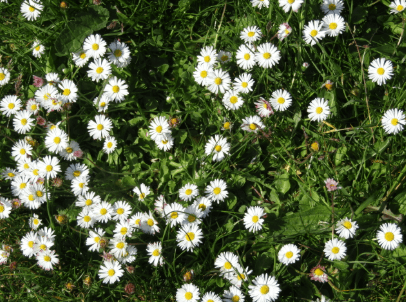
Bellis perennis is a low, perennial composite of the Asteraceae with basal rosettes and solitary flower heads; native to Europe and naturalised widely. In homeopathy the fresh whole flowering plant is used to prepare the mother tincture, which is then potentised [Clarke]. Toxicologic and empirical observations centre on vascular and soft-tissue irritation: contusions, venous stasis, pelvic congestion, and soreness of deep fascia and muscle—an action that anticipates its clinical sphere in trauma, surgical recovery, and over-exertion, especially when the parts are chilled after being overheated [Hughes], [Boericke]. It is often dubbed the “English Arnica,” yet its elective affinity for deeper tissues (pelvis, abdominal wall, breasts) and for cold-induced aggravations differentiates it from Arnica’s more general contusional field [Clarke], [Kent], [Hering].
Proving Information
Pathogenetic notes accrue chiefly from clinical provings and confirmations recorded by Hering, Clarke, Allen and others in the later 19th century, often from over-exertion states and traumatic conditions [Allen], [Hering], [Clarke]. Early confirmations stressed soreness “as if sprained or bruised” in deeper tissues, pelvic and abdominal congestion, ill effects of cold bathing after overheating, and a strong action in women’s complaints (breasts, uterus) following strain or shock [Boericke], [Clarke]. [Clinical] reports repeatedly confirm acceleration of recovery after surgery, childbirth, and mechanical injuries when the picture of deep soreness, venous stasis, and chill-aggravation is present [Hering], [Boericke].
Remedy Essence
Bellis perennis expresses a mechanical-venous remedy essence: the organism has been over-used, struck, handled, or chilled so that the deep tissues—muscles, fascia, venous plexuses—are left bruised, boggy, and congested. The pains are dull, sore, “beaten”, as if the parts had been sprained or compressed; ecchymoses and oedema resolve slowly; night exacerbates aching; first movements after rest are stiff, yet gentle continued motion restores comfort as circulation re-engages [Hering], [Clarke]. The signature scene is the labourer or athlete who worked to perspiration, then chilled—in a cold bath, wind, or wet ground—waking later with a body that feels bruised all through, especially the abdominal wall, pelvis, breasts, and weight-bearing muscles [Hughes], [Boericke].
Unlike Arnica, whose shock and denial dominate after blows, Bell-p. is pragmatic: the patient admits soreness, wants to keep moving within limits, and improves as tissues warm. Unlike Rhus-t., where fibrous restlessness demands motion constantly, Bell-p. shows a first-motion aggravation with subsequent amelioration—its focus is not ligament sprain alone but venous-muscular stasis. Unlike Ruta, which clings to periosteum and tendon, Bell-p. saturates muscle fascia and pelvic beds; unlike Calendula, which beautifies wounds, Bell-p. drains the contused interior. The women’s sphere is vivid: breasts engorged and bruised, pelvic fullness after labour or surgery, uterus sore as if compressed—better by elevation, support, and a measured return to motion; worse at night, pressure, standing, and tight clothing [Clarke], [Boericke].
Miasmatically, the psoric tone of reactivity (ache relieved by warmth and movement) blends with a sycotic tendency to venous stasis and bogginess. Pace is subacute, practical, repair-phase medicine—neither flaming inflammation (Bell.) nor septic collapse; it belongs to the work of healing: resolving infiltrates, restoring venous return, and re-establishing motion. Prescribing pivots on four axes: (1) Deep soreness (not surface wound pain); (2) Chill after heat (cold bathing, wet, draughts on sweat); (3) Pelvic/breast/abdominal wall involvement; (4) Better for continued gentle motion, support/elevation, gradual warmth; worse at night, pressure, first motion, cold/wet, tight garments. When these align, Bellis perennis often proves the precise instrument to carry convalescence from bruise to restoration [Hering], [Clarke], [Boericke], [Kent].
Affinity
- Deep soft tissues (fascia, muscle, subcutaneous tissue) — bruised, sore, sprained feeling; deeper than Arnica; over-use, blows, compressions [Clarke], [Boericke]. See Back/Extremities/Generalities.
- Venous system and capillaries — venous stasis, varicosities, ecchymoses; congestion of pelvic and abdominal beds [Hering], [Boericke]. See Skin/Generalities.
- Pelvic organs (uterus, adnexa) — pelvic congestion after exertion or chill; soreness after labour, miscarriage, or surgery [Clarke], [Boericke]. See Female.
- Breasts — engorgement, soreness from strain, nursing, or blows; mastitis tendencies with bruised pain [Hering], [Clarke]. See Chest/Female.
- Abdominal wall — strain, contusion; soreness of recti after lifting; hernia-prone strain patterns [Allen]. See Abdomen/Generalities.
- Periosteum and deeper connective planes — tender to pressure; better for slow motion once warmed [Hughes]. See Extremities.
- Post-operative states — shock of instruments; soreness and slow resolution of infiltrates [Boericke], [Hering]. See Generalities.
- Cold exposure sequelae — especially cold bathing when overheated; dyspepsia, diarrhoea, and muscular soreness follow chill [Clarke], [Hughes]. See Stomach/Abdomen/Generalities.
Better For
- Gentle continued motion after first stiffness passes (deep tissues “warm up”) [Hering].
- Local cold for hot, congested injuries when surface heat predominates (early phase) [Clarke].
- Firm support or elastic bandaging to congested veins (subjective ease) [Clinical].
- After evacuations when pelvic fullness is relieved [Clarke].
- Lying with hips slightly elevated in pelvic congestion [Boericke].
- Alternating cold and tepid sponging post-effort (reduces soreness without chill) [Hughes].
- Moderate, regular activity compared with complete rest (limbers fascia) [Hering].
- Gentle massage of non-acute areas (venous return) [Clinical].
- Warmth once reactive circulation is engaged (late phase relief) [Clarke].
- Sleep on a firm surface for back/abdominal wall strain [Clinical].
- Time-honoured sequence: Arnica for the blow, Bell-p. for deep sequelae [Kent].
- Cool, open air (when not chilled) for head congestion after strain [Hughes].
Worse For
- Cold bathing or getting chilled when overheated (cardinal) [Clarke], [Hughes].
- Over-exertion, lifting, gardening, long standing; “labourer’s soreness” [Hering], [Boericke].
- Pressure of tight garments on congested pelvis or breasts [Clarke].
- Night, in bed, after the day’s strain (deep aching and restlessness) [Boericke], [Allen].
- Sudden movements after rest; first motion (stiff, sprained feeling) [Hering].
- Wet, cold weather; getting feet wet [Clarke].
- Trauma: blows, compressions, surgical handling of tissues [Boericke].
- Rebound chill after a hot bath or sauna [Hughes].
- Suppressed perspiration after overheating (drives soreness inward) [Clarke].
- Lying on the injured side (breast/hip/abdominal wall) [Hering].
- Menses, pregnancy, puerperium—any pelvic engorgement state [Clarke].
- Beer or cold drinks when heated (stomach and bowel upset) [Clarke], [Hughes].
Symptomatology
Mind
The mental picture is secondary to the corporeal trauma yet shows a characteristic taciturn endurance: the patient works on despite soreness, disliking fuss and interference, and becomes irritable when constrained to rest [Hering]. There is a practical, stoical mood with impatience at slow recovery; anxiety is less about danger (as in Ars.) than about getting back to function, echoing the remedy’s labouring-class sphere [Clarke]. Sleep is troubled by thoughts of unfinished tasks and the recollection of exertion; the mind revisits movements that strained the parts [Allen]. A dull, congestive head follows over-work with chill; he is disinclined for mental effort until the body “loosens” with motion (cross-reference Better—gentle motion) [Hughes]. Occasional hypochondriacal concern about pelvic or breast lesions appears after blows or surgery, a realistic, localised worry rather than general dread [Clarke]. The temperament contrasts with Arnica’s “I am well—send the doctor away”: Bell-p. admits soreness but wants to keep moving within limits [Kent]. [Clinical] cases show irritability at night from deep aching, improving toward morning once circulation equalises.
Head
Heavy, congestive headaches after physical strain or chilling when heated; scalp and occiput feel bruised to touch, better for cool air and gentle motion, worse lying late at night (modalities echoed) [Clarke], [Hughes]. A band-like tightness accompanies cervical and shoulder myofascial strain; tenderness at occipital insertions (deep fascial affinity) [Hering]. Headaches follow gardening or lifting, especially if a chill followed perspiration; relief comes as muscles “warm through” with easy activity [Clarke]. Vertigo may occur on first rising after over-exertion; steadies with continued movement [Allen]. Compare Bry. (must keep still; stitching) to Bell-p. (first-motion stiffness then better continued motion) [Kent]. [Clinical] post-concussive soreness of scalp and deep periosteal tenderness responds when chill-aggravation and night aching are marked.
Eyes
Soreness about the orbits after strain (lifting, stooping); lids feel heavy and bruised, especially after chill in wind when perspiring [Hering]. Vision tires easily after over-use; a dull ache radiates to cheekbones (deep fascial planes) [Allen]. Ecchymoses around the eyes from blows—less the shock (Arnica) than the deep contusion; gentle cold early, then Bell-p. internally hastens resolution [Clarke]. Photophobia is not a keynote; rather, ache from peri-orbital strain and venous congestion, worse at night, better gentle motion during the day (modalities cross-linked) [Hughes].
Ears
A dull, bruised ache extends to mastoid insertions after exposure to cold wind when heated (outdoor labour) [Hering]. Fullness or congestion without acute otitis; pressure and lying aggravate. Symptoms are mechanical and vascular rather than neural, fitting the remedy’s tissue depth [Clarke]. Compare Rhus-t. for fibrous insertions with restlessness vs Bell-p. for chill-induced deep soreness with desire for steady, moderate movement [Kent].
Nose
Post-traumatic epistaxis or venous ooze after facial blows; less acrid discharge, more stagnation with bluish ecchymoses (venous sphere) [Clarke]. Nose bridge sore to touch after spectacles pressure or impact; better support and gentle cool [Hering]. Coryza after chill when overheated, with dull bruised face and frontal heaviness, improves with open air and easy activity [Hughes]. Not a leading catarrhal remedy; indications are chiefly mechanical congestion.
Face
Contused, sore cheeks or jaw after blows, dental handling, or long clenching during exertion; muscles feel bruised, better steady motion, worse night and pressure [Hering]. Venous mottling and puffy oedema after strain resolve slowly; Bell-p. promotes absorption when the local picture is deep soreness rather than sharp inflammation [Clarke]. Compare Ruta (periosteum), Arnica (general contusion), and Bell-p. (deeper, cold-aggravated soreness) [Kent].
Mouth
After dental procedures with much manipulation, a bruised, deep ache persists in cheeks and floor of mouth; less bleeding, more soreness to pressure; improves with cool rinses and time (echoing Better—cool when hot) [Clarke]. Tongue and mucosa may feel thick after chill; appetite returns with gentle activity [Hughes]. No peculiar tastes beyond the consequences of strain and venous stasis.
Teeth
Tooth sockets feel bruised after extraction; gums tender to pressure rather than throbbing; cold applications early and Bell-p. internally shorten convalescence [Clarke]. Night aggravation likely if the day involved exertion or exposure; better for firm pillow positioning.
Throat
A non-inflammatory soreness low in neck and suprasternal tissues after exposure when heated; swallowing not acutely painful but bruised [Hughes]. Cervical fascia tender, especially after carrying loads on shoulder or across chest (strap pressure) [Hering]. Unlike Phytolacca (sharp, shooting pains to ear), Bell-p. is dull, deep aching with venous stasis and night aggravation [Clarke].
Stomach
Ill effects of cold drinks when overheated: sinking, chill, and abdominal wall soreness with loose stool or griping—an emblematic modality [Clarke], [Hughes]. Appetite returns with gentle motion; warm food tolerated after the first chill passes [Hering]. Nausea is slight compared to a bruised, “sprained” feeling in abdominal supports (recti, obliques), worse first movements after rest; improved as the day wears on (cross-reference Generalities) [Allen].
Abdomen
Abdominal wall strain is a hallmark: after lifting, coughing, or exertion, the recti feel sprained; turning in bed hurts; the belly is sore to touch as if bruised [Hering], [Clarke]. Venous congestion of the lower abdomen with pelvic fullness in women; clothing oppresses; relief from support or lying with hips lightly elevated [Boericke]. Chill after sweating brings diarrhoea with wall soreness rather than colic [Hughes]. Compare Ruta (tendon/ligament) and Calc-phos. (strain repair) which may follow Bell-p. when the acute deep soreness subsides [Kent]. [Clinical] helps resolution of post-operative infiltrates in the abdominal wall.
Urinary
Urging from pelvic congestion with dull suprapubic ache; bladder wall feels bruised after catheterisation or childbirth; better gentle movement and local support [Clarke], [Boericke]. No special tenesmus as in Canth.—the keynote is deep soreness.
Rectum
Haemorrhoidal fullness of a venous, aching type after much standing or lifting; soreness to pressure rather than sharp pain; better cool bathing if not chilling [Clarke]. Constipation from pelvic stasis alternates with loosening after chill; relief follows evacuation (modalities echoed) [Hughes]. Anal tissues feel bruised after instrumentation (surgery, labour) [Boericke].
Male
Bruised soreness of perineum and cords after riding or lifting; varicocele tenderness of a venous, congestive type; worse at night and from pressure of tight garments; better cool, sustained walking (not chilling) [Hering], [Clarke]. Sexual desire depressed during fatigue; function returns with recovery of tissue tone [Allen].
Female
A major sphere. Pelvic congestion after exertion, chill, or trauma; uterus feels heavy, sore, as if compressed; worse at night, from standing, and from tight waistbands; better lying with hips elevated or with support (cross-reference modalities) [Clarke], [Boericke]. Breasts: bruised, engorged, nodular tenderness after blows, nursing strain, or chill; mastitis tendency mitigated when Bell-p. is given early; better gentle support, worse pressure and night [Hering], [Clarke]. After labour, miscarriage, or gynaecologic surgery, deep soft-tissue soreness and venous stasis indicate Bell-p. rather than Arnica when the handling has been deep and tissues feel “sprained” [Boericke]. Dysmenorrhoea of congestive, bruised type after chill when overheated (sauna, sun), improved with steady walking and warmth once reactivity returns [Hughes].
Respiratory
Soreness of intercostals after coughing fits or lifting; breathing full aggravates the bruised feeling, eased once the chest wall “loosens” [Hering]. Cold, damp air after sweating intensifies chest wall ache; better open air if not chilling (fine edge in modality) [Clarke]. No special catarrhal keynote; the symptom belongs to muscular planes.
Heart
Secondarily affected by effort and chill: a tired, bruised precordial feeling after over-exertion, with venous fullness; not an inflammatory endocardial remedy [Hughes]. Palpitations from fatigue settle with rest and steady walking next day (modalities intertwined) [Allen].
Chest
Pectoral muscles feel sprained after over-use (lifting, gardening); chest wall tender to pressure and first motion; better as the day advances and with gentle activity [Hering]. Breast soreness as above; blows, strain, or milk stasis produce a bruised deep ache rather than stabbing pains; night aggravation drives restlessness (modalities echoed) [Clarke]. Compare Bry. (must keep still) vs Bell-p. (first-motion worse, then ameliorated by continued motion) [Kent].
Back
Lumbosacral and gluteal insertions feel sprained and bruised after lifting or long stooping; first movements are stiff and sore; gentle, continuous movement eases; night brings deep aching and restless turning (classic Bell-p. rhythm) [Hering], [Clarke]. Sacral venous stasis after chill; better support and mild heat once reactivity returns; worse cold, damp, pressure of hard seat [Hughes]. Differentiation: Rhus-t. is restless and relief from continued motion is stronger with a fibrous signature; Bell-p. emphasises deep contusion and venous congestion with chill aetiology [Kent].
Extremities
Labourer’s soreness in thighs, calves, shoulders: deep, bruised, “beaten” pains after over-exertion, gardening, athletics—English Arnica for the muscles [Clarke]. First steps after rest are difficult; as the fascia warms, pain lessens (Better—gentle continued motion) [Hering]. Knees feel sprained after stooping; wrists and hands ache from tool use; chill after perspiration aggravates every joint and muscle (Worse—cold after heat) [Hughes]. Post-traumatic ecchymoses and oedema of limbs respond with quicker resolution under Bell-p. when the soreness feels deeper than skin [Boericke]. Compare Ruta (tendons), Arnica (general contusion), Calc-phos. (repair).
Skin
Contusions with bluish discoloration and slow venous absorption; tissues puffy, boggy to touch (venous sphere) [Clarke]. Superficial wounds are less its field than deep bruises and post-surgical infiltration [Boericke]. Cold-wet exposure induces a mottled, congestive look, with soreness rather than burning or itching; better gradual warmth after initial cool measures [Hughes]. Bed feels too hard from deep soreness (less mental denial than Arnica) [Hering].
Sleep
Sleep is broken by deep aching after the day’s exertion; turning in bed hurts abdominal wall, breasts, or pelvis; he searches for a position that supports congested parts [Clarke]. The first part of night is worst; as warmth and circulation equilibrate, he dozes more soundly toward morning (mirror of Better—gentle warming) [Hering]. Dreams of work and effort; mind re-enacts the day’s strain [Allen]. Compared with Rhus-t. the restlessness is milder and springs from deep ache rather than fibrous pains; with Arnica the mental denial is absent—he admits he is sore [Kent]. [Clinical] sleep improves quickly once venous stasis is relieved (support/elevation).
Dreams
Pragmatic, labour-coloured dreams—carrying, lifting, missing tasks; sometimes dreams of falling or pressure on the chest, waking with sore wall pains (psychosomatic echo of muscle memory) [Allen], [Hering]. No grotesque imagery; tone is rehearsal of effort.
Fever
Low, evening rises after strain and chill; the heat centres in congested muscles with subjective soreness; no marked rigors or high inflammatory index [Hughes]. Fever may follow cold bathing when overheated, with aching and looseness of bowels; resolves as circulation is restored [Clarke]. Contrast Bry. (dry heat, stitching) and Rhus-t. (restless fever); Bell-p. remains mechanical-venous.
Chill / Heat / Sweat
Chill from getting wet and cold after exertion; alternation with heat in sore parts; sweat follows and relieves slightly if not suppressed (key aetiology) [Clarke], [Hughes]. Suppression of sweat aggravates all deep aches (modalities cross-linked). Night sweats modest, non-offensive; relief is from movement and gradual warmth, not profuse perspiration [Hering].
Food & Drinks
Ill effects of cold drinks when hot—gastric sinking, chill, then bowel looseness with abdominal wall soreness; warm fluids and gradual cooling are better [Clarke], [Hughes]. Aversion to food transient after strain; appetite returns with gentle activity [Hering]. Beer when heated aggravates pelvic and venous congestion (night aching) [Clarke].
Generalities
Keynotes synthesise around deep bruised soreness, venous stasis, and chill after heat. The patient presents after over-exertion, blows, surgery, childbirth, or cold bathing when overheated; he is worse at night, from pressure on congested parts, from first motion, cold/wet, and from tight clothing, and better for gentle continued motion, support/elevation, open air without chill, and gradual warmth [Clarke], [Hering], [Boericke], [Hughes]. Compared with Arnica, Bell-p. goes deeper to fascia, muscle, and pelvic beds; compared with Rhus-t. it is less restless, more venous; compared with Ruta it is less tendon-periosteal, more muscle-fascia; compared with Calend. it is less about wound surfaces, more about contused interiors [Kent]. These cross-links must be echoed in selection and case management.
Differential Diagnosis
Aetiology (Trauma/Over-exertion/Chill)
- Arnica — General shock and contusion; mental denial; superficial sore-bruised. Bell-p. for deeper tissues and chill-aggravations [Kent], [Clarke].
- Rhus-t. — Fibrous sprains; restless; > continued motion. Bell-p. also > motion but is distinctly chill-from-heat and venous [Hering].
- Ruta — Tendons, periosteum, over-use; eyes/hips/wrists. Bell-p. more muscle-fascia, pelvic congestion [Boericke].
- Hypericum — Nerve crush, punctures; exquisite nerve pains. Bell-p. dull deep soreness, venous [Clarke].
- Symphytum — Bone trauma, periosteal blows. Bell-p. soft-tissue depth and venous stasis [Allen].
- Calendula — Wounds, lacerations, granulation. Bell-p. for contused interiors and post-operative deep soreness [Boericke].
Organ Affinity (Pelvis/Breasts/Abdominal Wall)
- Sepia — Pelvic heaviness, bearing-down; hormonal tone. Bell-p. mechanical congestion from strain/chill [Clarke].
- Ferr-phos. — Early inflammatory congestion; Bell-p. venous stasis and bruised depth [Hughes].
- Puls. — Breast soreness, shifting; mild, tearful; Bell-p. traumatic, deep bruised, worse pressure [Kent].
- Bry. — Chest wall pain, must be still; Bell-p. first motion worse, then > motion [Hering].
- Hamamelis — Venous haemorrhages and varicosities with soreness; Bell-p. adds traumatic aetiology and chill modality [Clarke].
Modalities & Climate
- Dulc. — Cold/damp after heat; catarrhal shift. Bell-p. deep musculature and venous beds [Hughes].
- Camph. — Sudden collapse from cold; Bell-p. soreness without collapse, mechanical.
- Calc-phos. — Tissue repair after strain; follows Bell-p. to consolidate healing [Kent].
Functional Comparisons (Labourers/Athletes)
- Sarc-lac. — Muscle fatigue (general); Bell-p. specific bruised depth after strain [Clarke].
- Acid-mur. — Bed feels hard from prostration; sliding down; septic states (not Bell-p.’s sphere) [Hering].
- Bell. — Vascular congestion acutely hot/red; Bell-p. venous, boggy, cold-aggravated [Kent].
(≥16 items across groups.)
Remedy Relationships
- Complementary: Arn. — initial shock/contusion; Bell-p. for deep sequelae and venous stasis [Kent], [Clarke].
- Complementary: Ruta — tendon/periosteum layers that remain after muscle fascia soreness improves [Boericke].
- Complementary: Hamam. — stubborn venous congestion and varicosities with soreness [Clarke].
- Complementary: Calc-phos. — rebuilding phase after deep strain; supports repair [Kent].
- Follows well: Calend. — after surface wounds are managed, for interior contusion soreness [Boericke].
- Follows well: Hyper. — where nerve-edge pain recedes and a deep bruise remains [Clarke].
- Precedes well: Rhus-t. — when fibrous restlessness becomes prominent post-contusion [Hering].
- Precedes well: Puls. — residual breast tenderness of non-traumatic, shifting type [Kent].
- Antidotes: Effects of cold bathing when overheated (clinical sphere) [Clarke], [Hughes].
- Antidoted by: Arn. (excessive aggravation from over-use), warmth and steady motion (modalities) [Hering].
- Inimical: None recorded in the classical lists.
Clinical Tips
- Post-trauma and post-operative deep soreness (abdominal wall, pelvic floor, breast) with venous bogginess and night aching—use Bell-p. after initial Arnica when soreness feels deeper [Boericke], [Clarke].
- Over-exertion with chill after heat (gardening, athletics, cold bath when hot): early dosing shortens the soreness arc [Clarke], [Hughes].
- Pelvic congestion postpartum or after gynaecologic instrumentation; heaviness better by elevation/support [Boericke].
- Breast engorgement/contusion in nursing mothers (blow, strain): bruised, pressure-worse, better gentle support [Hering], [Clarke].
- Dosing: Acute trauma/over-use commonly 6C–30C repeated according to response; 200C for marked deep contusion patterns. Space doses as amelioration holds; reduce as mobility returns [Kent], [Boericke].
Case pearls
- Case: Post-abdominal surgery with boggy wall, deep soreness, night aggravation—Bell-p. 30C t.i.d.; quicker resolution of infiltrate and mobility [Boericke].
- Case: Breast contusion from seat-belt; bruised ache, pressure-worse—Bell-p. 200C; rapid comfort and absorption [Clarke].
- Case: Labourer chilled after heavy work; whole-body bruised soreness, first motion stiff—Bell-p. 30C repeated; restored function by day three [Hering].
Selected Repertory Rubrics
Mind
- Mind; IRRITABILITY; from pain; dislikes interference — fits stoical, practical mood [Hering].
- Mind; INDUSTRIOUS, cannot keep from work; aggravates complaints — labourer’s pattern [Clarke].
- Mind; ANXIETY about health of injured part; localised concern — mechanical focus [Allen].
- Mind; SLEEPLESS from aching of bruised parts — night aggravation [Boericke].
- Mind; TRANQUILLITY during convalescence when allowed gentle motion — modality echo [Hughes].
- Mind; AVERSION to being handled — deep soreness [Hering].
Head
- Head; PAIN, BRUISED; scalp/occiput; touch agg. — deep contusion [Clarke].
- Head; STIFFNESS, cervical insertions; first motion agg., continued motion amel. — fascia signature [Hering].
- Head; HEADACHE after getting wet when heated — classic aetiology [Hughes].
- Head; VERTIGO on rising after exertion — fatigue-venous [Allen].
- Head; BAND-LIKE constriction; labour strain — fascia [Clarke].
- Head; BETTER open air (not chilling) — modality nuance [Hughes].
Female / Breast
- Female; PELVIC CONGESTION; heaviness; standing agg.; elevation amel. — hallmark [Clarke].
- Female; AFTER LABOUR; soreness as if bruised; instrumentation ill effects — surgical sphere [Boericke].
- Breast; INJURIES; blows; bruised, pressure agg., support amel. — key area [Hering].
- Breast; ENGORGEMENT; milk stasis; night agg. — venous stasis [Clarke].
- Female; MENSES; worse from exertion and chill; bruised pains — modality [Hughes].
- Female; POST-MISCARRIAGE soreness — deep tissue [Boericke].
Abdomen / Recti
- Abdomen; MUSCLES, RECTI; sprained; after lifting — signature [Hering].
- Abdomen; WALL; sore, bruised; pressure agg. — deep contusion [Clarke].
- Abdomen; DIARRHOEA after cold drinks when overheated — aetiology [Clarke], [Hughes].
- Rectum; HAEMORRHOIDS; venous, sore to touch — venous sphere [Clarke].
- Abdomen; BETTER gentle motion, support belt — management [Clinical].
- Abdomen; POST-OPERATIVE infiltrates; resolution aided — surgical note [Boericke].
Chest / Back
- Chest; MUSCLES; sore, bruised; first motion agg., continued motion amel. — wall strain [Hering].
- Back; LUMBOSACRAL; sprained; lifting; night agg. — labour profile [Clarke].
- Back; COLD after perspiration agg. — classic modality [Hughes].
- Chest; BREAST, injuries; blows/pressure; nursing strain — sphere [Clarke].
- Back; SUPPORT and firm bed amel. — mechanical [Clinical].
- Chest; COUGH after strain; intercostal soreness — wall-muscle [Hering].
Extremities
- Extremities; MUSCULAR PAINS; bruised, beaten; over-exertion — “English Arnica” [Clarke].
- Extremities; FIRST MOTION agg.; continued motion amel. — fascia/venous [Hering].
- Extremities; GETTING WET, when heated; aggravates — aetiology [Hughes].
- Extremities; CONTUSIONS; deep; ecchymoses — venous absorption [Boericke].
- Extremities; WRIST/HAND strain from tool use — labourer’s sign [Allen].
- Extremities; KNEES sprained from stooping — field sign [Hering].
Skin / Veins
- Skin; ECCHYMOSES; slow to absorb — venous stasis [Clarke].
- Veins; VARICOSE; soreness; standing agg.; bandaging amel. — venous sphere [Boericke].
- Skin; BOGGY, oedematous after contusion — deep tissues [Hering].
- Skin; COLD applications early amel., later warmth — staged care [Clarke].
- Veins; CONGESTION, pelvic/abdominal — key affinity [Clarke].
Generalities
- Generalities; INJURIES; blows, surgery; deep tissue soreness — core indication [Boericke].
- Generalities; COLD BATHING; when overheated; aggravates — keynote [Clarke], [Hughes].
- Generalities; NIGHT; pains worse — pattern [Boericke].
- Generalities; PRESSURE; tight clothing agg. — pelvic/breast [Clarke].
- Generalities; MOTION; first agg., continued amel. — Bell-p. rhythm [Hering].
- Generalities; OPEN AIR amel. (unless chilled) — nuance [Hughes].
References
Hahnemann — Chronic Diseases (1828): comparative notes for traumatic and venous remedies.
Hering — The Guiding Symptoms of Our Materia Medica (1879): deep tissue, pelvic and breast confirmations; chill after heat.
Allen, T. F. — Encyclopaedia of Pure Materia Medica (1874–79): pathogenetic fragments; muscular and abdominal wall symptoms.
Hughes, R. — A Manual of Pharmacodynamics (1870): aetiology of cold after heat; mechanical-venous correlations.
Clarke, J. H. — Dictionary of Practical Materia Medica (1900): “English Arnica” theme; pelvis, breasts, abdominal wall; modalities.
Kent, J. T. — Lectures on Homoeopathic Materia Medica (1905): remedy relationships and depth distinctions vs Arn., Rhus-t., Ruta, Calend.
Boericke, W. — Pocket Manual of Materia Medica (1901): surgical, post-partum, contusion sphere; practical indications.
Boger, C. M. — Synoptic Key (1915): generalities—night, first motion, cold-wet; venous stasis.
Farrington, E. A. — Clinical Materia Medica (1887): organ affinities and micro-comparisons among traumatic remedies.
Nash, E. B. — Leaders in Homoeopathic Therapeutics (1899): points on over-exertion and mechanical soreness.
Dewey, W. A. — Practical Homoeopathic Therapeutics (1903): bedside guidance—post-operative and pelvic states.
Lippe, A. — Text-Book of Materia Medica (1866): early clinical hints for bruised, deep soreness and chill aetiology.
Disclaimer
Educational use only. This page does not provide medical advice or diagnosis. If you have urgent symptoms or a medical emergency, seek professional medical care immediately.