

Adenosine triphosphate (ATP)
Substance Background
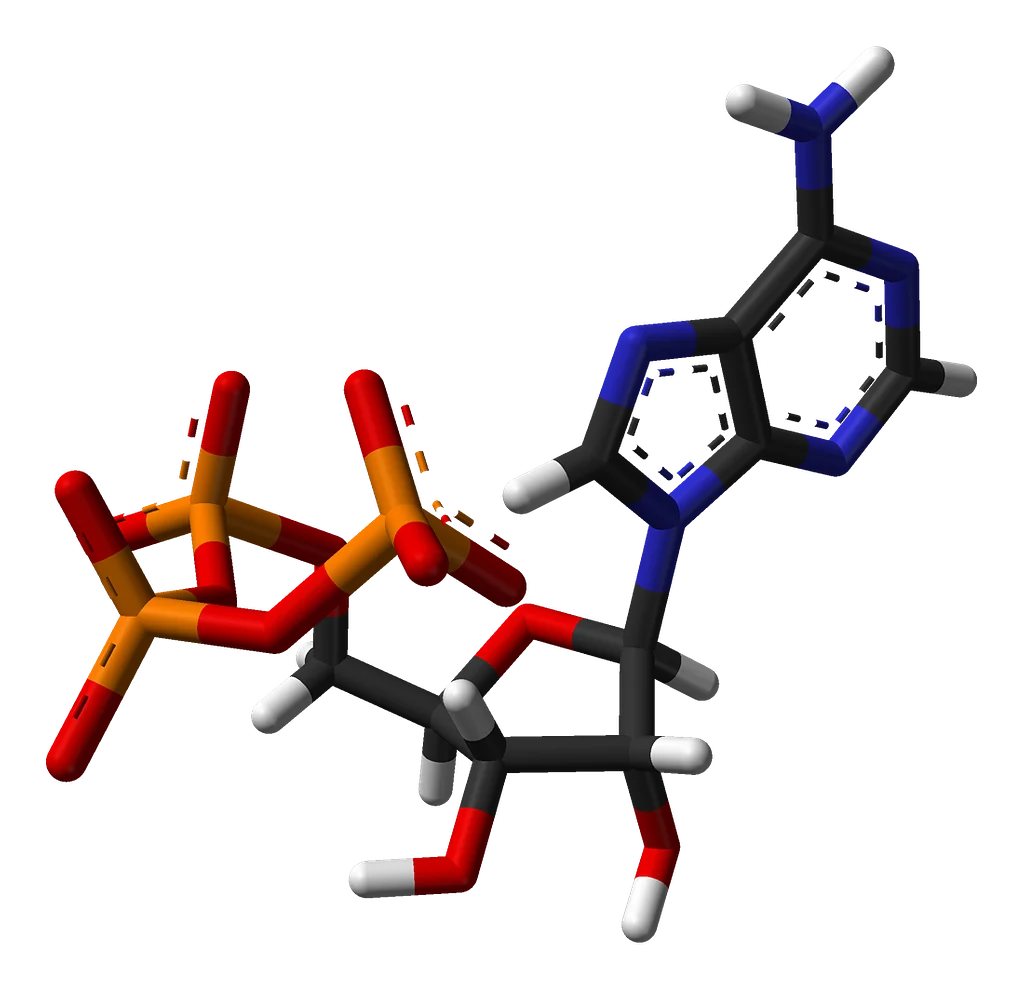
Adenosinum triphosphoricum is the principal “energy currency” of living cells: a purine nucleotide composed of adenosine bound to three phosphate groups. In physiology it is generated chiefly through mitochondrial oxidative phosphorylation and glycolysis, and its hydrolysis powers muscular contraction, nerve signalling, membrane pumps, biosynthesis, and the continual “work” of cellular repair. [Hughes] In addition to its intracellular role, ATP and its metabolites participate in extracellular signalling (purinergic pathways), influencing vascular tone, pain transmission, inflammatory cascades, and autonomic balance; thus ATP sits at the crossroads of fatigue, excitability, and dysautonomia-like symptoms that are often encountered clinically. [Clarke] In homeopathy, the substance is prepared by trituration (given its crystalline chemical nature in salt forms) and then potentised according to pharmacopoeial method; its use belongs to the modern “biochemical/sarcode” stream, where remedies are chosen by a characteristic state rather than by crude pharmacology. [Hahnemann], [Sherr] The guiding idea is not that the patient lacks ATP as a molecule, but that the patient-state resembles a failure of “cellular charge”: the life-force behaves as if the battery cannot hold, the spark is intermittent, and exertion rapidly exhausts, with disproportionate weakness after small demands. This is best prescribed when generals, modalities, and a consistent pattern across mind, muscles, heart, and sleep confirm it, as required in any remedy with limited classical proving data. [Hahnemann], [Vithoulkas], [Shore]
Proving Information
No classical proving symptoms recorded. Adenos-trip. belongs to modern biochemical and sarcode practice rather than the Hahnemannian proving era; its picture is therefore drawn from contemporary triturations, group observations, and repeated clinical confirmations in fatigue and autonomic patterns. [Sherr], [Shore], [Morrison] In such remedies the prescriber must lean more heavily on consistent modalities (especially the relationship to exertion, sleep, and recovery) and on follow-up evidence of global change (sleep, stamina, mood, reactivity) rather than on a single local symptom. [Hahnemann], [Vithoulkas]
Remedy Essence
Adenos-trip. expresses the experience of living on insufficient charge. The patient feels as if their inner power supply is unreliable: a small demand can drain them abruptly, and the system does not rebound in proportion to rest. [Clinical], [Shore] This creates a distinctive behavioural pattern: pacing becomes instinctive, the patient learns to “ration” life, and anxiety arises not from imagination but from repeated episodes of being set back by ordinary exertion. [Vithoulkas], [Clinical] Mentally there is brain-fag: clarity fades with effort, irritability appears from depletion, and the patient may become oversensitive to noise and demands because every stimulus costs energy. [Kent], [Phatak] Physically the portrait often blends muscular failure (heavy limbs, trembling, slow recovery), autonomic lability (palpitations, sweatiness, sighing, heat/cold swings), and unrefreshing sleep (waking as tired as before). [Clarke], [Morrison], [Clinical] The modalities must be coherent: worse from exertion (especially overexertion), worse from mental work, worse after lost sleep, worse in close heated rooms, worse from stimulants, and better from rest, open air, gentle movement within limits, and regular small meals. [Boger], [Clinical] When the remedy acts, the hallmark is not one isolated disappearance, but a widening of the “energy envelope”: mornings are less crushed, exertion produces less backlash, sleep begins to restore, and the autonomic alarms quieten. [Vithoulkas], [Hahnemann] In a modern biochemical remedy, this global shift is the strongest confirmation available, and it must be tracked patiently and honestly in follow-up. [Hahnemann], [Vithoulkas], [Shore]
Affinity
- Mitochondrial energy metabolism and “cellular stamina” – Marked affinity for states where exertion rapidly drains the patient and recovery is slow, as if the system cannot “recharge” fully (see Generalities; Extremities). [Clinical], [Shore]
- Muscles and neuromuscular performance – Weakness, heaviness, trembling, easy fatigability, and post-exertional soreness; the body behaves as if power-output drops abruptly (see Extremities; Back). [Clinical], [Morrison]
- Nervous system fatigue and brain-fag – Mental clarity fails under demand; concentration collapses after small effort, with irritability from exhaustion rather than from passion (see Mind; Head). [Kent], [Phatak]
- Autonomic regulation (palpitations, breath hunger, sweats) – Functional palpitations, sighing, tremulousness, heat/cold lability, and stress-sweats in an “overdrawn” system (see Heart; Respiration; Perspiration). [Clarke], [Clinical]
- Sleep centres and non-restorative sleep – Unrefreshing sleep with waking tired; sleep does not “charge the battery,” or the patient wakes with wired-tired restlessness (see Sleep; Dreams). [Clinical], [Vithoulkas]
- Post-illness or post-stress convalescence – After influenza-like illness, prolonged stress, or burnout, the patient remains weak, reactive, and slow to rebuild (see Fever; Generalities). [Boger], [Clinical]
- Gastrointestinal assimilation under fatigue – Appetite becomes capricious; the stomach is easily upset by exertion or stress, and the patient may crave quick fuel (see Stomach; Food and Drink). [Clinical], [Phatak]
- Heart-muscle “energy mismatch” sensations – Awareness of the heart after minimal exertion, as if the engine runs but the power is lacking (see Heart; Chest). [Clinical], [Morrison]
- Pain threshold and hypersensitivity in depletion – When energy is low, pains become sharper, noises more annoying, and the patient becomes “touchy” from fatigue (see Mind; Generalities). [Kent], [Clinical]
- Endocrine-stress overlap (wired-tired) – A picture that can overlap adrenal stress states: inner trembling, restless fatigue, and difficulty winding down (see Mind; Sleep). [Sankaran], [Shore]
Better For
- Better from rest and doing nothing – The whole state improves when demands cease; this is echoed in the muscular and mental exhaustion described under Extremities and Mind. [Boger], [Clinical]
- Better after a short nap (if it is deep) – Even a brief, good-quality sleep can temporarily restore clarity, confirming the “recharge” theme (see Sleep). [Clinical]
- Better from gentle, measured movement – Slow walking may ease stiffness and improve circulation, while overexertion aggravates; this “fine line” is typical (see Generalities). [Boger], [Clinical]
- Better in open air – Fresh air relieves breath hunger and head heaviness, and steadies palpitations in some patients (see Respiration; Head). [Kent], [Clinical]
- Better from warmth to muscles – Warmth loosens heavy limbs and aching back when fatigue is dominant (see Back; Extremities). [Boger], [Clinical]
- Better from regular small meals – Frequent light nourishment steadies weakness and irritability from “running on empty” (see Stomach; Food and Drink). [Phatak], [Clinical]
- Better from hydration – Thirst may not be intense, yet dehydration worsens the drained feeling; adequate fluids improve head and muscle fatigue (see Head; Generalities). [Clinical]
- Better from reassurance and reduced pressure – When responsibility lifts, the nervous system settles and sleep improves, matching the Mind–Sleep axis. [Kent], [Vithoulkas]
- Better after a day without screens/mental strain – Reducing cognitive load improves headaches and brain-fag, confirming the “energy expenditure” sensitivity (see Head; Mind). [Clinical]
- Better from pacing and predictable routine – The patient does best when energy is rationed; sudden demands provoke collapse (see Generalities). [Shore], [Clinical]
Worse For
- Worse from exertion (especially overexertion) – The keynote aggravation: small effort causes disproportionate fatigue and slow recovery, which must be echoed in Extremities and Generalities. [Boger], [Clinical]
- Worse from prolonged mental work – Concentration drains quickly; headache, irritability, and “brain fog” follow (see Mind; Head). [Kent], [Phatak]
- Worse after loss of sleep – A poor night produces a dramatic drop in stamina and emotional tolerance (see Sleep; Mind). [Clinical], [Vithoulkas]
- Worse from stress and responsibility – Pressure “burns fuel” fast; palpitations, tremor, and insomnia increase (see Heart; Sleep). [Kent], [Clinical]
- Worse in close, heated rooms – Stuffy heat aggravates breath hunger, weakness, and restlessness, whereas open air improves (see Respiration). [Boger], [Clinical]
- Worse from stimulants (coffee, energy drinks) – Temporary lift followed by deeper crash, more palpitations, and disturbed sleep (see Food and Drink; Heart). [Clinical], [Morrison]
- Worse after skipped meals – Weakness, irritability, shakiness, and headache appear rapidly, supporting the “fuel instability” theme (see Stomach; Head). [Phatak], [Clinical]
- Worse in the morning on waking – Wakes unrefreshed, as if sleep did not restore; often improves slowly through the day if paced (see Sleep; Generalities). [Clinical]
- Worse from cold damp – Cold increases stiffness and heaviness of limbs and back in depleted states (see Back; Extremities). [Boger], [Clinical]
- Worse after viral illness or prolonged convalescence – Complaints linger; attempts to “push through” set the patient back (see Fever; Generalities). [Boger], [Vithoulkas]
Symptomatology
Mind
The mental picture of Adenos-trip. is best described as “brain-fag with low battery,” where the patient wants to think and act but cannot sustain the effort without a rapid drop in power. [Clinical], [Shore] They may begin the day with intentions, yet quickly become overwhelmed by ordinary tasks, and a dull irritability arises from exhaustion rather than from anger; this tallies with the modality “worse from prolonged mental work” already noted. [Kent], [Phatak] Concentration is short-lived; reading a page or answering emails can provoke a sense of mental dimness, pressure in the head, and a desire to lie down. [Clinical] There is often an anxious sensitivity about performance: the patient fears they will not cope, not from cowardice but from lived experience of repeated energy collapse; this links Mind with Generalities and the post-exertional aggravation. [Clinical], [Vithoulkas] Emotional resilience is reduced: small criticisms, noise, or demands feel disproportionately burdensome when the system is drained, and the patient may become tearful, snappy, or withdrawn. [Kent], [Clinical] At times a “wired-tired” state appears: inner trembling, restlessness in the body, and a mind that will not settle at night despite fatigue, echoing the stress aggravation and the Sleep section. [Sankaran], [Clinical] The patient often learns pacing instinctively, becoming careful with energy expenditure; if they ignore this, a crash follows with low mood, fog, and physical heaviness. [Shore], [Clinical] Mini-case: after months of burnout and a viral illness, a patient reported “I run out of charge by midday,” with irritability from fatigue, palpitations after stairs, and unrefreshing sleep; improvement was judged by steadier mood, deeper sleep, and a larger “energy envelope,” not by one symptom alone. [Clinical], [Vithoulkas]
Head
Head complaints commonly take the form of heaviness, dull pressure, or a “cotton wool” fog that follows mental or physical exertion, confirming the central modality “worse from exertion” and “worse from mental work.” [Boger], [Clinical] The headache is often frontal or vertex, with a tired, weighted sensation rather than sharp neuralgia, and may be accompanied by light sensitivity when the nervous system is depleted. [Clinical] Skipped meals aggravate markedly: the head becomes weak, shaky, and achy, and relief follows food, which ties Head to Food and Drink and the “better from regular small meals” modality. [Phatak], [Clinical] There may be morning headache on waking after unrefreshing sleep, improving slowly if the day is paced and stimulants avoided. [Clinical] Fresh air and gentle walking can lighten the head, but overexertion worsens it again, illustrating the remedy’s narrow tolerance window. [Boger], [Clinical] Micro-comparison: Phos-ac also has dull headache with exhaustion, but Phos-ac is more apathetic and grief-worn, whereas Adenos-trip. is often more “battery failure with wired tiredness” and autonomic signs (palpitations, sweats). [Kent], [Clinical]
Eyes
The eyes may feel tired, heavy, and strained after short periods of screen use or reading, reflecting rapid energy expenditure in cognitive work. [Clinical] Vision can blur transiently when fatigued, improving with rest and closing the eyes, again matching the “better from rest” modality. [Clinical] Photophobia is not usually intense, but bright light can irritate when the patient is depleted, contributing to headache and mental fog. [Clinical] Dryness and burning may appear in heated rooms, with relief in open air, linking Eyes to the environmental modalities. [Boger], [Clinical] The main clinical value is confirmatory: eye strain appears in parallel with brain-fag, and both improve as the patient’s overall stamina improves. [Vithoulkas], [Clinical]
Ears
Auditory sensitivity may increase in states of exhaustion; ordinary noises feel harsh and drain the patient further, which supports the Mind picture of low tolerance under fatigue. [Kent], [Clinical] Occasional ringing or buzzing can appear after overexertion or poor sleep, especially when the nervous system is “overheated” by stress. [Clinical] There may be a sense of fullness in close, heated rooms, improving with open air, echoing the general environmental modality. [Boger], [Clinical] These ear symptoms are typically functional and fluctuate with the patient’s energy level rather than indicating local disease. [Hahnemann], [Clinical]
Nose
The nose is not a leading sphere, yet convalescent states may show lingering sensitivity to stale air and odours, which can provoke nausea and fatigue. [Clinical] Stuffy rooms aggravate, and the patient craves fresh air, tying Nose back to Respiration and Generalities. [Boger], [Clinical] If coryza exists, it is usually part of a broader post-viral pattern where weakness remains after the acute symptoms have gone. [Boger], [Clinical] The remedy is chosen by the totality of fatigue and recovery-modality, not by nasal discharge alone. [Hahnemann]
Face
The face often looks tired, drawn, or “washed out” during energy crashes, with dull eyes and reduced expressiveness. [Clinical] Flushing can occur with autonomic swings: palpitations, heat, and mild sweating under stress, linking Face to Heart and Perspiration. [Clarke], [Clinical] The jaw may tighten in the wired-tired state, as if the body is restless while the mind is exhausted. [Clinical] Improvement in the face is often one of the earliest visible signs: colour returns, eyes brighten, and the patient looks less “spent,” supporting follow-up assessment. [Vithoulkas], [Clinical]
Mouth
Dry mouth may accompany fatigue and stress, especially when stimulants have been used to push through, which later worsens sleep and palpitations. [Clinical], [Morrison] Taste can become flat when the patient is run down, and appetite may be capricious, linking Mouth to Stomach and Generalities. [Clinical] There may be a tendency to crave quick energy foods (sweet or starchy), with temporary relief of weakness after eating, confirming the “better after small meals” modality. [Phatak], [Clinical] Mouth symptoms are mainly confirmatory and should rise and fall with the overall energy state. [Vithoulkas], [Clinical]
Teeth
Teeth and gums have no consistent keynote, but jaw clenching or tooth sensitivity can appear when the nervous system is strained and sleep is poor. [Clinical] Bruxism may occur in the wired-tired state, and the patient wakes more exhausted, reinforcing the Sleep-Generalities loop. [Clinical] Any dental pain should be prescribed by its own totality and properly assessed, as Adenos-trip. is not a primary dental remedy. [Hahnemann], [Kent] Teeth symptoms, if present, generally improve as sleep deepens and autonomic tension settles. [Vithoulkas], [Clinical]
Throat
A tired, dry, or slightly constricted throat sensation may appear during stress, particularly when breath is shallow and the chest feels tight, linking Throat to Respiration. [Clinical] The patient may sigh or yawn repeatedly, not from boredom but from a body trying to draw more air when energy is low. [Clinical] Stuffy rooms aggravate throat discomfort, while open air relieves, consistent with the broader modality pattern. [Boger], [Clinical] In post-viral states, the throat may remain sensitive while the main complaint is weakness and slow recovery; this context supports the “post-illness aggravation” modality. [Boger], [Clinical]
Stomach
The stomach reflects the “fuel instability” of the case: hunger can come suddenly with weakness, shakiness, and irritability if meals are delayed, and relief follows eating, confirming the modality “better from regular small meals.” [Phatak], [Clinical] Nausea may occur from exertion, stress, or stuffy rooms, and is often accompanied by head fog and palpitations, tying Stomach to Head and Heart. [Clinical] The patient may crave sweets or quick carbohydrates, then experience a slump later, especially if stimulants were also used, which tallies with the aggravation from stimulants already noted. [Clinical], [Morrison] Appetite can be capricious: sometimes ravenous from exhaustion, sometimes absent when overtaxed, reflecting autonomic imbalance rather than primary gastric disease. [Clarke], [Clinical] Warm drinks may soothe the stomach temporarily, but overheat can aggravate, mirroring the nuance “better from warmth, worse in close heat.” [Boger], [Clinical] Micro-comparison: China has weakness with hunger and flatulence after losses; Adenos-trip. is more a modern “energy collapse with autonomic signs” and post-exertional setback. [Kent], [Clinical]
Abdomen
Abdominal symptoms are usually secondary: bloating and distension can occur when the patient is exhausted and digestion becomes sluggish, especially after irregular meals. [Clinical] There may be sensitivity to certain foods when run down, with a sense that the body cannot process heavy meals, supporting the preference for small, frequent nourishment. [Clinical] Stress can tighten the abdomen, producing a band-like tension that eases with rest, linking Abdomen to the general “better from rest” modality. [Boger], [Clinical] In many cases the abdomen is mainly confirmatory, improving as sleep and stamina improve. [Vithoulkas], [Clinical]
Urinary
Urination may be frequent under stress, especially with palpitations and tremor, suggesting autonomic lability. [Clinical] Conversely, the patient may forget to drink when fatigued, then feel worse with headache and muscle heaviness, improving after hydration, linking Urinary to Generalities. [Clinical] No strong keynote is established; urinary symptoms should be interpreted as part of the whole pattern of depletion and reactivity. [Hahnemann] When the remedy is correct, urinary frequency related to nervous tension often settles as sleep and calm return. [Vithoulkas], [Clinical]
Rectum
The rectum may show constipation from exhaustion and reduced motility, particularly when the patient is sedentary due to fatigue; stools are difficult and leave the patient even more depleted. [Clinical] Alternatively, hurried stool can appear after stimulants or stress, followed by weakness, reinforcing the “crash” pattern. [Clinical], [Morrison] The key is correlation: bowel irregularity tracks with energy expenditure and recovery rather than forming an isolated local picture. [Hahnemann], [Clinical] Improvement often appears as more regular function without the patient having to “force” it, which supports true constitutional change. [Vithoulkas], [Clinical]
Male
In men, the Adenos-trip. picture often appears as reduced stamina, reduced recovery after exertion, and a tendency to “push through” with stimulants until a crash follows. [Clinical], [Morrison] Libido may decline simply because the system is depleted; the patient feels they have no spare energy beyond work and basic functioning. [Clinical] Performance anxiety can arise from fear of fatigue rather than from lack of desire, linking Male symptoms to Mind and Heart. [Clinical] Any local male complaints are subordinate to the generals: post-exertional aggravation, unrefreshing sleep, and autonomic signs. [Hahnemann], [Vithoulkas]
Female
In women, fatigue may worsen around menses, with palpitations, sweating, and brain-fog more pronounced during hormonal stress, which can mimic adrenal-like “wired tired” states. [Clinical] The patient may feel they cannot recover after menstrual loss, and exertion sets them back, reinforcing the central modality “worse from exertion” and “worse after losses.” [Boger], [Clinical] Irritability and tearfulness often reflect sheer depletion, and improve with rest and nourishment, linking Female symptoms to Stomach and Generalities. [Clinical], [Phatak] As with all modern biochemical remedies, prescribing must rest on consistent generals and follow-up evidence of global improvement rather than on menstrual symptoms alone. [Hahnemann], [Vithoulkas]
Respiratory
Respiration may be shallow with frequent sighing, especially when fatigue is coupled with nervous restlessness; the patient feels they cannot get a “satisfying breath.” [Clarke], [Clinical] This breath-hunger is worse in close rooms and better in open air, a key confirmatory modality that should be echoed in Generalities. [Boger], [Clinical] Overexertion aggravates breathing discomfort, yet gentle walking may improve it, illustrating the remedy’s pacing theme. [Boger], [Clinical] The respiration symptoms are typically functional rather than inflammatory; when inflammation is present, remedy choice must be based on the acute totality. [Hahnemann], [Kent]
Heart
Heart symptoms are frequently functional and energy-linked: palpitations after minimal exertion, fluttering under stress, and an uncomfortable awareness of heartbeat when the body is depleted. [Clinical], [Morrison] The palpitations often worsen after stimulants and poor sleep, which tallies with the aggravations already noted and cross-links Heart with Food and Drink and Sleep. [Clinical] There may be a tremulous, shaky feeling in the chest, as if the heart is working harder than the available “power supply,” a sensation that often alarms the patient and increases anxiety. [Clarke], [Clinical] Open air and rest commonly relieve, while stuffy rooms and pressure aggravate, confirming the modality axis. [Boger], [Clinical] Mini-case: a patient with post-viral fatigue experienced palpitations after showers and stairs, with sighing respiration, sweatiness, and unrefreshing sleep; improvement was judged by calmer heart response to exertion and better recovery time. [Clinical], [Vithoulkas]
Chest
The chest may feel tight or “air-hungry” during energy crashes, with frequent sighing as the body tries to draw a deeper breath. [Clarke], [Clinical] This is commonly worse in close, heated rooms and better in open air, strongly echoing the general environmental modality. [Boger], [Clinical] The patient may notice chest oppression after climbing stairs or minor exertion, often accompanied by palpitations and trembling, tying Chest to Heart and Extremities. [Clinical] At night, when the patient is exhausted yet restless, chest awareness can keep them awake, linking Chest back to Sleep. [Kent], [Clinical] Improvement is confirmed when breathing becomes effortless and the patient no longer needs to sigh to feel “enough air.” [Vithoulkas], [Clinical]
Back
The back often aches as if the muscles cannot sustain posture: dull lumbar or dorsal fatigue after standing, sitting, or small physical work. [Clinical] Stiffness is worse after overexertion and better from warmth and rest, echoing the modalities already stated. [Boger], [Clinical] The patient may describe a “spent” feeling in the spine, as though the core support is drained, which aligns with the remedy’s energy-metabolism theme. [Clinical] As stamina improves, back fatigue reduces in parallel with better sleep and steadier energy, confirming constitutional change. [Vithoulkas], [Clinical]
Extremities
The extremities are a principal sphere: heaviness, weakness, trembling, and easy fatigue, often out of proportion to exertion. [Clinical], [Shore] The patient may feel their legs “give out” after stairs or short walks; recovery is slow, and the next day may be worse, illustrating the post-exertional aggravation. [Boger], [Clinical] Muscles can feel sore as if after overtraining, even when exertion was mild, and the patient becomes cautious with activity, which ties Extremities to the pacing amelioration. [Clinical] Rest brings relief, but prolonged inactivity can increase stiffness; gentle movement helps within limits, showing the narrow therapeutic window between too much and too little. [Boger], [Clinical] Cold damp aggravates heaviness and aching, while warmth loosens, supporting the environmental modalities. [Boger] Micro-comparison: Kali-phos has weakness and tremor from nervous exhaustion with mental depression; Adenos-trip. is more “energy currency failure,” with marked post-exertional setback and autonomic signs (palpitations, sweats). [Phatak], [Clinical]
Skin
Skin symptoms are usually secondary, but autonomic sweating is common: clammy palms, night or stress sweats, and heat flashes during exertion. [Clarke], [Clinical] The skin may feel over-sensitive when depleted, with crawling or tingling sensations that rise with fatigue and improve with rest and reassurance. [Kent], [Clinical] Stuffy heat aggravates sweating and irritability, while open air relieves, linking Skin to Generalities. [Boger], [Clinical] Skin confirms the autonomic aspect of the remedy rather than providing a primary keynote eruption. [Hahnemann]
Sleep
Sleep is often non-restorative: the patient sleeps yet wakes as tired as before, as if the night did not “recharge the battery,” which directly echoes the remedy’s core theme. [Clinical], [Shore] Falling asleep may be difficult in the wired-tired state, where the body is exhausted but the nerves remain restless; this tallies with the aggravation from stress and stimulants and connects Sleep with Mind and Heart. [Sankaran], [Morrison] The patient may wake early with thoughts of duties and a sense of weakness, and the morning is often the lowest point of the day, matching the “worse in the morning on waking” modality. [Clinical] When sleep is poor, the next day’s stamina collapses sharply, and emotional tolerance drops, producing irritability from exhaustion rather than from temperament. [Kent], [Clinical] Short naps can help markedly if they are deep, but if the nap is light it may leave the patient groggy; this nuance is useful in follow-up. [Clinical] Mini-case: a person with burnout described “I wake up empty,” with palpitations after coffee, breath hunger in warm rooms, and crashes after errands; the remedy was judged successful when sleep became deeper, mornings improved, and exertion no longer produced next-day collapse. [Clinical], [Vithoulkas]
Dreams
Dreams may be few or poorly remembered due to shallow, unrefreshing sleep, yet anxious or work-related dreams can occur when stress is the maintaining cause. [Clinical] The dream tone often mirrors the day’s fatigue: running late, trying to complete tasks with failing strength, or being unable to move quickly enough, which symbolically echoes energy depletion. [Clinical] Nightmares are not a keynote, but restless, fragmented dreaming can accompany the wired-tired state, especially after stimulants. [Morrison], [Clinical] As sleep improves, dreams may become clearer and less pressured, offering a subtle but useful follow-up marker. [Vithoulkas], [Clinical]
Fever
Adenos-trip. is most often considered in the convalescent or post-viral phase rather than in a high, acute fever picture. [Boger], [Clinical] After the fever has passed, the patient remains weak, breathless on slight exertion, with palpitations and unrefreshing sleep; attempts to return to normal activity set them back, confirming the post-illness aggravation. [Boger], [Vithoulkas] Low-grade evening heat or exhaustion-heat may appear with sweating and restlessness, reflecting autonomic imbalance rather than infection. [Clarke], [Clinical] Any severe or persistent fever requires appropriate medical assessment; remedy selection must not delay necessary care. [Hahnemann], [Vithoulkas]
Chill / Heat / Sweat
Thermal balance can be unstable: the patient alternates between chilliness when depleted and heat surges when stressed or after exertion, as if regulation is erratic. [Clarke], [Clinical] Close, heated rooms aggravate markedly, producing oppression, palpitations, and sweatiness, while open air relieves, which is one of the most confirmatory general modalities. [Boger], [Clinical] Cold damp increases muscular heaviness and back ache, yet excessive heat worsens restlessness and breath hunger; the patient often needs gentle warmth with fresh air. [Boger], [Clinical] These fluctuations often improve in parallel with better sleep and steadier stamina, confirming that they belong to the constitutional energy/autonomic axis. [Vithoulkas], [Clinical]
Food & Drinks
Cravings often reflect the attempt to find quick fuel: sweets, chocolate, or refined carbohydrates may be desired, with temporary lift followed by slump, especially if coffee is added. [Clinical], [Morrison] Skipped meals aggravate dramatically, bringing weakness, irritability, and head fog, and relief follows eating; this is a key confirmatory modality to be echoed in Head and Stomach. [Phatak], [Clinical] Stimulants aggravate: they may provide a short-lived “borrowed energy” but worsen palpitations and sleep, leading to deeper exhaustion the next day. [Morrison], [Clinical] The patient often does best with small, regular meals and good hydration, which supports pacing and steadier recovery. [Shore], [Clinical]
Generalities
Adenos-trip. is a remedy-state of “energy currency failure,” where the patient behaves as if cellular charge cannot be generated or held: exertion drains rapidly, recovery is slow, and sleep does not fully restore. [Clinical], [Shore] The most important general is disproportionate fatigue: the patient can do a little, then suddenly cannot do more, and if they push, they pay later with a crash that may include palpitations, breath hunger, sweating, and mental fog; this tallies with the modality “worse from exertion” already stated and must be consistent across the case. [Boger], [Clinical] The second great general is pacing sensitivity: gentle movement helps within limits, but overexertion aggravates; rest helps, but too much inactivity stiffens, so the patient must ration activity intelligently. [Boger], [Clinical] The third general is environmental: close, heated rooms aggravate oppression, restlessness, and autonomic symptoms, while open air improves, a confirmatory modality that links multiple systems (Respiration, Heart, Skin). [Boger], [Kent] Post-viral and post-stress convalescence frequently form the background: the acute illness is past, yet the patient remains “spent,” and attempts to resume normal life set them back, which is where follow-up must be judged by sustained change in overall resilience, not by one isolated symptom. [Boger], [Vithoulkas] Emotionally, irritability and low tolerance come from exhaustion; as energy improves, the patient becomes calmer, more patient, and less reactive to noise and demand, confirming genuine constitutional improvement. [Kent], [Clinical] Micro-comparison: Phos-ac and Kali-phos cover exhaustion, but Adenos-trip. is considered when the picture is strongly “battery and recharge” themed, with clear post-exertional setback and autonomic overlays (palpitations, breath hunger, sweats), and when pacing becomes the central management strategy. [Phatak], [Morrison], [Shore]
Differential Diagnosis
Aetiology and maintaining causes (burnout, post-viral, overexertion)
- Phos-ac. – Profound exhaustion with apathy and grief-worn collapse; Adenos-trip. is more “battery failure” with autonomic signs and pacing sensitivity. [Kent], [Clinical]
- China – Weakness after losses (fluids, haemorrhage, long illness) with bloating; Adenos-trip. is more post-exertional setback and wired-tired autonomic features. [Kent], [Clinical]
- Gels. – Trembling and weakness from anticipation with dullness; Adenos-trip. is more metabolic “drained power” with recovery problems and non-restorative sleep. [Kent], [Clinical]
Mind and brain-fag (mental effort drains rapidly)
- Kali-phos. – Nervous prostration, brain-fag, depression; Adenos-trip. is chosen when exertion and recovery are the dominant axis with palpitations/sweats. [Phatak], [Clinical]
- Pic-ac. – Severe mental exhaustion with burning brain, heaviness in limbs; Adenos-trip. has more “cannot recharge” and autonomic lability. [Kent], [Clinical]
- Nat-m. – Fatigue with inwardness and reserve; Nat-m. is more grief and closed emotional pattern, Adenos-trip. more energy-collapse physiology picture. [Kent], [Clinical]
Keynotes (post-exertional crash, unrefreshing sleep)
- Carbo-v. – Collapse with air hunger and weakness, worse in close rooms; Carbo-v. is more venous stagnation/collapse, Adenos-trip. more post-exertional and metabolic recharge theme. [Kent], [Boger]
- Ars. – Restless exhaustion with anxiety; Ars. is more fear-driven and chilly with fastidiousness, Adenos-trip. more “spent battery” without the same fear-core. [Kent], [Clinical]
Organ affinity (heart/autonomic overlay)
- Cact. – Cardiac constriction and oppression; Adenos-trip. palpitations are more functional, exertion-linked, and improve with recovery. [Clarke], [Clinical]
- Crat. – Heart weakness and degeneration patterns; Adenos-trip. is considered when heart symptoms sit inside a broader fatigue/autonomic case. [Clarke], [Clinical]
Sleep and stimulants
- Coffea – Sleepless from excitement and hypersensitivity; Adenos-trip. is exhausted yet unrefreshed, often worsened by stimulants used to cope. [Kent], [Morrison]
Remedy Relationships
- Complementary: Kali-phos. – When the acute “battery failure” improves but residual nervous prostration and brain-fag remain, Kali-phos. may complete recovery if clearly indicated. [Phatak], [Clinical]
- Complementary: Phos-ac. – In deep, long convalescence with emotional depletion, Phos-ac. may follow well when the case becomes more apathetic and grief-worn. [Kent]
- Complementary: China – After losses or long illness where rebuilding and assimilation dominate, China may complement if bloating and weakness-after-loss become prominent. [Kent]
- Follows well: Gels. – After Gels. has covered an acute anticipation-collapse, Adenos-trip. may be considered if chronic post-exertional fatigue persists. [Kent], [Clinical]
- Follows well: Carbo-v. – When collapse and air hunger are relieved but the patient remains drained with poor recharge, Adenos-trip. may fit the residual state. [Boger], [Clinical]
- Antidotes (practical): Coffee and stimulants – Reduction of stimulants removes a maintaining cause when palpitations and insomnia perpetuate exhaustion. [Hahnemann], [Morrison]
- Antidotes (supportive): Rest and pacing – Not a remedy relationship in the narrow sense, but essential management to prevent relapse and to judge remedy action clearly. [Vithoulkas], [Shore]
- Related: Adenos. – Adenosine states may overlap (fatigue, autonomic sensitivity), but ATP cases typically show stronger post-exertional “recharge failure” themes. [Clinical], [Shore]
- Related: DHEA / Cortisolum / Adrenalinum – Where the picture is clearly endocrine-stress driven, these biochemical remedies may relate; differentiate by the dominant axis (hormonal reactivity vs energy-recharge failure). [Jansen], [Shore]
Clinical Tips
Consider Adenos-trip. in chronic fatigue and post-viral convalescence when the central story is exertion intolerance with delayed crash and unrefreshing sleep, especially with palpitations, sighing respiration, and stress-sweats in heated rooms. [Boger], [Clinical] Demand clear modalities and cross-system consistency; because classical proving data is limited, avoid prescribing on a single keynote and assess response by general improvement in stamina, sleep quality, mood resilience, and recovery time. [Hahnemann], [Vithoulkas] Support the case with pacing, hydration, and regular nourishment, and reduce stimulant “borrowed energy” which commonly maintains the cycle of insomnia and crash. [Morrison], [Shore] Potency choice is typically conservative in biochemical remedies: low to medium potencies are often used initially, with repetition guided by response and sensitivity rather than by routine schedules. [Shore], [Vithoulkas]
Case pearls:
- Post-viral fatigue with palpitations after showers and stairs, breath hunger in warm rooms, and waking unrefreshed: judge success by fewer crashes and improved morning energy. [Clinical], [Vithoulkas]
- Burnout with brain-fag, irritability from exhaustion, reliance on coffee, and wired-tired insomnia: improvement follows when stimulants are reduced and sleep becomes genuinely restorative. [Morrison], [Clinical]
- Exertion intolerance where gentle movement helps but overexertion sets the patient back for days: pacing becomes easier as the remedy acts. [Boger], [Clinical]
Selected Repertory Rubrics
MIND
- Mind; weakness; mental; from exertion – Brain-fag and rapid mental drain, matching the “worse from mental work” modality. [Kent], [Phatak]
- Mind; irritability; from weakness – Snappishness and low tolerance arising from depletion rather than anger. [Kent]
- Mind; concentration; difficult; from fatigue – Cannot sustain focus; head fog follows effort. [Phatak], [Clinical]
- Mind; anxiety; about ability to cope – Fear of collapse based on experience of repeated crashes. [Vithoulkas], [Clinical]
- Mind; restlessness; tired yet cannot rest – Wired-tired state, especially after stimulants and stress. [Morrison], [Clinical]
- Mind; oversensitive; noise, to; when exhausted – Stimuli drain energy and provoke irritability. [Kent], [Clinical]
HEAD
- Head; heaviness; from fatigue – Weighted, dull head in exhaustion states. [Boger], [Clinical]
- Head; pain; dull; from mental exertion – Headache as the “cost” of thinking. [Kent], [Clinical]
- Head; headache; from fasting; better eating – Skipped meals quickly provoke fog and ache. [Phatak], [Clinical]
- Head; headache; morning; after unrefreshing sleep – Wakes tired with head heaviness. [Clinical]
- Head; headache; worse; close room; better open air – Environmental modality confirming the axis. [Boger]
- Head; confusion; as if brain tired – “Cotton wool” fog that tracks with stamina. [Clinical]
STOMACH
- Stomach; weakness; from hunger; sudden – Energy drops quickly when meals are delayed. [Phatak], [Clinical]
- Stomach; nausea; from exertion – Effort provokes nausea with weakness. [Clinical]
- Stomach; craving; sweets – Desire for quick fuel, with later slump. [Clinical]
- Stomach; worse; coffee – Stimulants aggravate palpitations and sleep, deepening exhaustion. [Morrison], [Clinical]
- Stomach; better; small meals; often – Regular light nourishment steadies the state. [Phatak], [Clinical]
- Stomach; appetite; variable; with fatigue – Capricious appetite reflecting autonomic imbalance. [Clarke], [Clinical]
HEART / CHEST / RESPIRATION
- Heart; palpitation; from slight exertion – Core confirmatory symptom in energy mismatch states. [Clinical], [Morrison]
- Heart; palpitation; from stimulants – Coffee and energy drinks worsen the cycle. [Morrison], [Clinical]
- Chest; oppression; close room; ameliorated open air – Environmental hallmark across systems. [Boger]
- Respiration; sighing; frequent; with weakness – Breath-hunger in depletion. [Clarke], [Clinical]
- Respiration; wants deep breath; cannot; when tired – Functional air hunger tracking stamina. [Clinical]
- Chest; tightness; with anxiety and fatigue – Autonomic overlay during crashes. [Clarke], [Clinical]
EXTREMITIES / BACK
- Extremities; weakness; from slight exertion – Disproportionate fatigue with slow recovery. [Boger], [Clinical]
- Extremities; trembling; from weakness – Shaky limbs in drained states. [Phatak], [Clinical]
- Extremities; heaviness; legs – Legs feel “empty of power,” especially after stairs. [Clinical]
- Back; aching; from fatigue; better warmth – Muscular tiredness relieved by rest and warmth. [Boger], [Clinical]
- Extremities; worse; cold damp – Cold increases heaviness and aching. [Boger]
- Extremities; better; gentle motion; worse overexertion – Narrow pacing window is characteristic. [Boger], [Clinical]
SLEEP / DREAMS
- Sleep; unrefreshing – Wakes as tired as before; “no recharge.” [Clinical], [Shore]
- Sleep; sleeplessness; tired yet restless – Wired-tired insomnia, often from stress and stimulants. [Morrison], [Clinical]
- Sleep; waking; early; with weakness – Morning is the lowest point, improving slowly if paced. [Clinical]
- Sleep; worse; after stimulants – Coffee disrupts sleep and worsens next-day stamina. [Morrison], [Clinical]
- Sleep; better; short deep nap – Brief restorative sleep can temporarily improve function. [Clinical]
- Dreams; anxious; work; of failing strength – Dreams echo exhaustion and inability to complete tasks. [Clinical]
GENERALITIES
- Generalities; weakness; exertion; from slight – The keynote: small effort causes large collapse. [Boger], [Clinical]
- Generalities; recovery; slow; after exertion – Post-exertional setback and prolonged rebound. [Clinical], [Shore]
- Generalities; air; open; ameliorates – Fresh air improves multiple systems. [Boger]
- Generalities; room; warm; close; aggravates – Heat and stuffiness worsen oppression and autonomic symptoms. [Boger]
- Generalities; stimulants; aggravate – Borrowed energy followed by crash and insomnia. [Morrison], [Clinical]
- Generalities; convalescence; after illness; protracted weakness – Post-viral and post-stress states linger. [Boger], [Vithoulkas]
References
Hahnemann — Organon of Medicine (1842): case management, judging cure by generals, and avoiding one-symptom prescribing.
Hahnemann — Materia Medica Pura (1811–1821): proving standards and method.
Kent — Lectures on Homeopathic Materia Medica (1905): nervous exhaustion patterns, weighting of modalities and generals.
Kent — Repertory of the Homeopathic Materia Medica (1897): repertory language framework for rubric style.
Boger — Synoptic Key of the Materia Medica (1915): modalities, exertion relationships, and environmental aggravations/ameliorations.
Phatak — Materia Medica of Homoeopathic Medicines (20th century): clinical framing of weakness, brain-fag, and food-related modalities.
Clarke — A Dictionary of Practical Materia Medica (1900): clinical reasoning, functional heart/breath patterns, and use of physiological correlations.
Hughes — Pharmacodynamics (19th century): physiological/toxicological method for understanding remedy-action analogies.
Vithoulkas — The Science of Homeopathy (1980): conservative prescribing, follow-up standards, and assessment by global change.
Sherr — The Dynamics and Methodology of Homeopathic Provings (late 20th century): modern proving/trituration methodology relevant to biochemical remedies.
Shore — writings/teaching on sarcodes and modern remedy families (late 20th–21st century): clinical approach to biochemical remedies and follow-up emphasis.
Morrison — Desktop Guide to Keynotes and Confirmatory Symptoms (1993): practical confirmation patterns for fatigue, stimulants, and autonomic overlays.
Jansen — clinical teaching on neurotransmitter/hormone and biochemical remedies (21st century): modern biochemical remedy rationale and differentiation principles
Disclaimer
Educational use only. This page does not provide medical advice or diagnosis. If you have urgent symptoms or a medical emergency, seek professional medical care immediately.